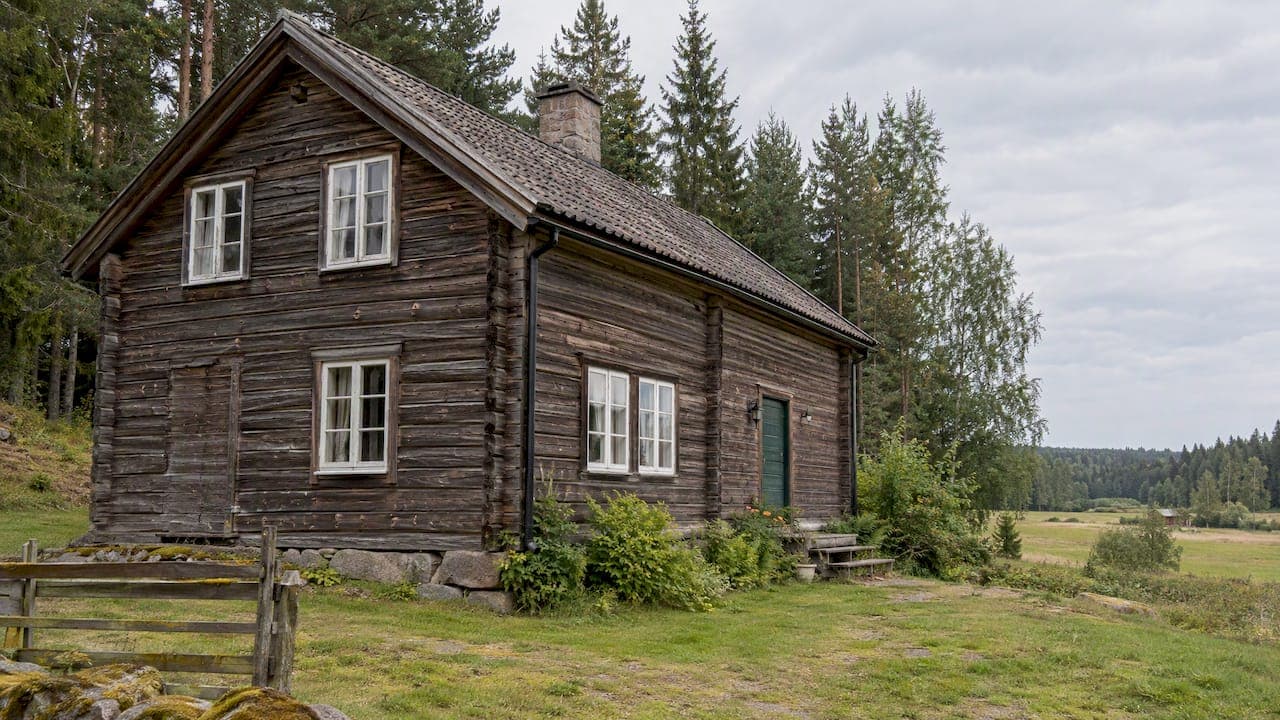
A music-free holiday, or musikfri semester as it is searched in Sweden, is a stay where nothing is playing in the background: no playlists in the kitchen, no speaker on the terrace, no festival across the road. What remains is wind in pines, a kettle, footsteps on a forest path and the odd bird. It is easier to find than you might think, and it suits a log farmhouse in the Swedish countryside very well. Below we describe how to plan one, what the evidence does and does not say about quiet and nature, and how to shape each day so that silence feels restful rather than awkward.
TL;DR
- A music-free holiday works best in a place where silence is the default: a whole house, no neighbours' speakers, forest and lake within walking distance.
- Build days around daylight, gentle movement, simple meals, sauna and early nights rather than a packed programme.
- Evidence for the benefits of nature and sauna is encouraging but modest: small studies and observational data, not guarantees.
- Agree quiet rules before you travel, especially with families, friends or a training group.
- We offer the whole of Villa Sakis, an 18th-century log farmhouse in Bergslagen, for exactly this kind of stay.
Table of Contents
- What a music-free holiday actually means
- Why the Swedish countryside suits it
- What the research says, and what it does not
- Shaping the days
- Who it suits, and how it differs
- Sauna and cold water, kept gentle
- Food without a soundtrack
- Our perspective
- Choosing a quiet place to stay
- A stay at Villa Sakis
- Practical notes before you go
- FAQ
- Sources
What a music-free holiday actually means
It does not have to mean total silence, and for most people it should not. Swedish countryside is never silent in the strict sense: there is rain on the roof, a woodpecker, a distant tractor in late summer. The point is the absence of added sound, the constant layer of music that follows us through shops, cafés, cars and phones.
In practice, a music-free stay has three parts:
- A place that is quiet by itself. Nobody next door, no bar below, no resort entertainment.
- A household agreement. Phones without speakers, headphones for anyone who truly needs them, and a shared understanding of when the house is still.
- A day with enough in it. Walking, cooking, sauna, reading, a swim. Silence is pleasant when there is something gentle to do inside it.
The search results for the phrase in Swedish are mostly festivals and music-school notices, which tells you the idea is still new as a way of travelling. Journalists have noticed the appetite, though: a Swedish weekend feature on holidays built around silence describes a cabin that monitors noise levels, which is rather more policing than most of us want from a holiday. We prefer the older approach: a house where quiet is simply the nature of the place.
Why the Swedish countryside suits it
Sweden has the space. Much of the country is forest and lake, and the right of public access, allemansrätten, lets you move freely through nature as long as you show consideration for animals, landowners and other people. That freedom is what makes a quiet holiday here feel different from a quiet room in a city hotel: you can step out of the door and walk for hours.
Visit Sweden's account of Swedish wellbeing names silence, nature, sauna, cold dips, fika and lagom as the recognisable ingredients. None of them is extravagant. That is rather the charm. A music-free holiday here is not a retreat programme with a timetable; it is ordinary Swedish life slowed down.
What the research says, and what it does not
We are a farmhouse, not a clinic, so we keep our claims modest. Here is what is worth knowing.
Nature, over a short stay. In a 2017 case study linked to Karolinska Institutet, five participants spent 72 hours in Swedish nature. They reported stress falling by as much as 70%, systolic blood pressure moving from 128 to 117 mmHg and well-being rising from 3.2 to 3.8 on a four-point scale. Five people is a very small sample, and the researcher quoted describes the result as a short-term improvement, not a promise. We read it as encouragement: three days is long enough to arrive, unwind, spend time outdoors and sleep properly without rushing.
Sleep and daylight. 1177, the Swedish healthcare guide, advises switching off screens about an hour before bed and notes that activity outdoors in the daytime often has the best effect on sleep. A house with no music and no screens in the evening makes that advice easy to follow. If sleep is your main reason for travelling, our notes on shifting your sleep clock with morning light and a two-week circadian reset go further.
Recovery is not doing nothing. According to 1177's stress guidance, movement, better sleep routines and rest work together. A quiet holiday can therefore include a daily walk or a light run without losing its restorative character.
Sauna. The 2022 Northern Sweden MONICA study found that sauna bathers, about 66% of those who answered, reported less pain and hypertension, more satisfying sleep and better general and mental health. It was observational, so it cannot show that sauna caused those differences, and the associations were similar for 1 to 4 sessions a month as for more frequent use. More heat is not automatically better. Treat sauna as one pleasant practice, not a treatment.

Shaping the days
The 72-hour idea gives a useful frame. Here is how we would spread a long weekend.
Day one: arrive and let the noise drain away
Get there in daylight if you can. Light the stove or the sauna, unpack slowly, cook something simple. Do not plan anything for the evening. Many guests find the first night strangely loud with silence, and that is normal; by the second night it feels like relief.
Day two: move outdoors
An early walk through meadow and forest, a long lunch, perhaps a swim in the lake if conditions allow. The afternoon can be reading or a nap. Finish with sauna and an early night.
Day three: one gentle thing, then leave slowly
Choose a single outing, a longer forest loop or a paddle, and keep the rest empty. Leave after a late breakfast rather than at dawn. If you can, keep the evening after you return home free of demands, as 1177's advice on regular routines and screens suggests; the benefits of a quiet stay carry over better that way.
Longer stays simply extend the middle: more walking, more reading, deeper sleep.
Who it suits, and how it differs
Quiet means different things to different travellers. The Swedish national care programme stresses that recovery is individual, so think of a menu rather than a formula.
| Traveller | What quiet looks like | Worth agreeing beforehand |
|---|---|---|
| Families | Agreed quiet periods, such as mornings and after dinner, rather than total silence | Board games, books and outdoor tasks for children; screen limits that adults follow too |
| Couples | Silent walks, shared sauna, long dinners | Whether phones come out at all; see our romantic nature weekend notes |
| Friends | Cooking together, evening conversation, a no-speaker rule | Who is bringing what to eat, and when the house goes still |
| Athletes and fitness travellers | Purposeful training, then real recovery | A written plan for rest days so that silence does not become another training block |
| Digital-detox guests | Phones parked, daylight rhythm | Telling family or work how to reach you in an emergency; our digital detox guide helps |
If you are recovering from burnout
A quiet holiday is supportive care, not medical treatment. Keep the schedule light, and do not turn the stay into a test of how well you can relax. The national care programme notes that persistent or worsening stress symptoms call for further adjustment and possibly help from healthcare, so if that describes you, speak to your vårdcentral or GP as well as planning a break. Our piece on a restorative nature retreat for burnout suggests blocking two to four days and keeping the plan small.
Sauna and cold water, kept gentle
A private sauna is one of the best things about a quiet house: no schedule, no crowd, no chatter. Keep sessions short and optional, drink water, and leave the lake for when you feel well. Cold dips should be gradual and never done alone or after alcohol; if you have heart conditions or high blood pressure, ask your doctor first. Our guides to a private sauna weekend and a private sauna holiday in Sweden cover hygiene, session length and etiquette.
Food without a soundtrack
A self-catering kitchen suits a music-free stay because cooking becomes part of the rhythm: chopping, simmering, the table laid. Plan a few easy dinners, buy staples before you arrive, and keep fika as a fixed afternoon pause. If you are cooking for several people, these tips on getting the most from self-catering stays help with comfort across different travelling groups, and we have shared seven host-tested dinners and a full weekly meal plan of our own.

Our perspective
We look after an old house, and an old house teaches you about sound. Timber absorbs and softens it; a log wall hums quietly in the cold and settles in the evening. After generations of care, the farmhouse has a stillness that nothing we could add would improve. So we do not offer a programme. We offer the whole house, the meadow, the pines, the lake and the sauna, and we trust guests to find their own pace.
What we have learned is that people rarely miss music after the first evening. They miss the habit of filling every gap. Once that passes, ordinary things become the entertainment: the light changing on the meadow, the sound of someone else making coffee, the sauna door closing softly. We would rather you left with a slower rhythm than with a list of activities ticked off.
— Christian
Choosing a quiet place to stay
When you compare options, whether farmhouses, cabins or guesthouses, ask a few plain questions:
- Is the whole property yours, or shared with other guests?
- How far are the nearest roads, neighbours and shared facilities?
- Can you walk straight into forest or to water from the door?
- Is there a sauna you can use at your own pace?
- Does the kitchen let you cook for yourselves?
- Are there house rules about noise that suit your group?
Staffed retreats with set silent programmes suit some people, particularly those who want guided stillness. Others prefer a private house where they set the rules, and that is what we provide.
A stay at Villa Sakis
Villa Sakis is a log farmhouse dating from the 1700s, set among meadows and pine forests in Bergslagen, and you book it as a whole house for your own party. It has honest timber rooms, a private sauna, lake access, a self-catering kitchen and direct access to forest and meadow. Read more about the house, see what to expect from a Swedish countryside holiday, or go straight to booking the whole farmhouse.
Practical notes before you go
- Tell people how to reach you. A fixed contact arrangement for emergencies makes switching off easier.
- Bring analogue company. Books, cards, a notebook, a map.
- Pack for weather. Layers, walking shoes, a towel for the lake.
- Respect the land. Follow the principles of public access: leave no trace, keep noise low, close gates.
- Plan a soft landing. Keep the first evening at home free.
FAQ
Does a music-free holiday mean complete silence?
No. It means no added music or background noise. The countryside has its own sounds, such as wind, birds and water, and most guests find these are what they come for. Families usually do better with agreed quiet periods than with a total ban on talking.
How long should a quiet stay last?
Three days is a sensible minimum, giving time to arrive, settle, spend time outdoors and sleep. The often-quoted 72-hour nature study was a small case study, so treat it as a planning guide and not a guarantee. A week lets the pace slow further.
Is a quiet holiday a substitute for treatment for burnout?
No. It can support recovery through sleep, daylight and gentle movement, but long-lasting or worsening symptoms should be assessed by healthcare. Contact your vårdcentral or GP, and use the holiday as a supportive break.
Can I train during a music-free stay?
Yes. Walking, running and bodyweight work fit well, and 1177 notes that movement helps recovery. Alternate training with real rest days, and keep sauna and cold water as optional extras, not performance targets.
Sources
- Allemansrätten, Naturvårdsverket
- Semester på tystnad, Dagens PS
- The Swedish Prescription, Visit Sweden
- 72 Hour Cabin case study results, Visit Sweden
- Sömnsvårigheter, 1177
- Vad kan jag göra för att minska stress?, 1177
- Sauna bathing in northern Sweden: MONICA study 2022
- Stressbesvär, Nationella vård- och insatsprogram