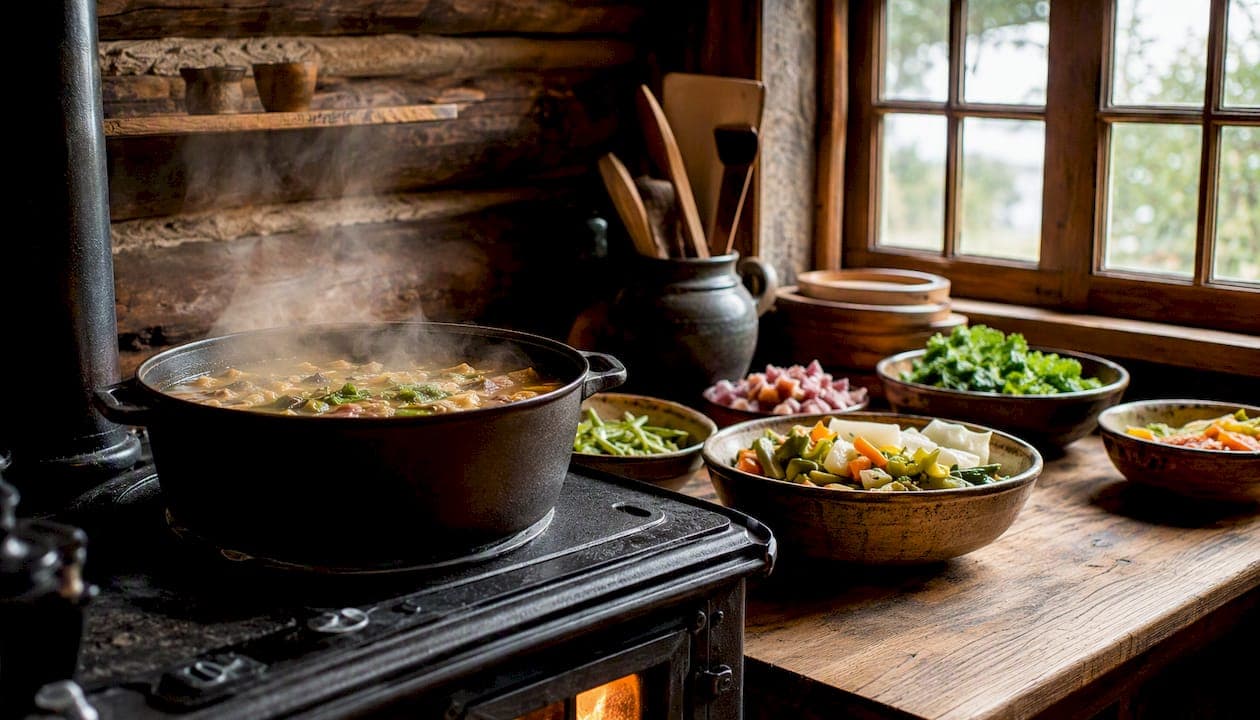
A ready-made veckomeny for a stugsemester removes the single biggest source of daily friction on holiday: deciding what to eat. Food experts note that travellers who plan meals in advance avoid decision fatigue and enjoy their time away more fully. Here is a sample week you can use straight away, followed by everything you need to shop, pack and cook with minimal fuss.
Sample week at a glance:
- Monday: Porridge and fruit / packed wraps / pasta with tomato sauce
- Tuesday: Eggs and crispbread / leftover pasta / grilled sausages and potatoes
- Wednesday: Yoghurt and granola / energy bars and fruit / sheet-pan salmon and veg
- Thursday: Porridge / wraps with tuna / one-pot chicken and rice
- Friday: Eggs / picnic box (cheese, crackers, cured meat) / grilled meat with corn
- Saturday: Pancakes / leftovers / slow-cooked stew (brought frozen from home)
- Sunday: Yoghurt and fruit / open sandwiches / pasta with pesto and cherry tomatoes
Three rules that make cabin cooking genuinely low-effort:
- Pre-prepare at home. Chop vegetables, marinate proteins and batch-cook at least two dinners before you leave. Frozen stews travel as natural cold packs and are ready to serve the same evening.
- Pack for one-pot cooking. One good pan, a sheet tray and a sharp knife cover almost every recipe in this plan. Fewer tools means less washing up in a small stugkök.
- Buy fresh locally, bring everything else. Pantry staples, dried goods and frozen meals come from home. Meat, fish and dairy come from the nearest local shop or market, keeping luggage light and produce fresh.
Key takeaways
A cabin holiday meal plan built around batch-cooking, one-pot methods and locally sourced fresh produce removes daily cooking stress and frees the whole day for rest, nature and recovery.
| Point | Details |
|---|---|
| Plan before you pack | Write the full veckomeny at home; decision fatigue on site is the main source of meal stress. |
| Frozen meals travel as cold packs | Batch-cook two dinners, freeze them, and place them in the cooler — they thaw en route and are ready the same evening. |
| One-pot and sheet-pan cooking | These methods need minimal kit and produce less washing up, making them ideal for any stugkök. |
| Buy fresh locally | Bring pantry staples from home; source meat, fish and dairy from local shops on arrival to keep luggage light. |
| Villa Sakis | The fully equipped farmhouse kitchen in Bergslagen gives guests a practical, ready base for a low-effort cabin week. |
Table of Contents
- What does a full veckomeny for a stugsemester look like?
- What should you buy before you leave and what can you source locally?
- How do you cook well in a small or rustic stugkök?
- Short recipes for the week's main dinners
- When should you shop, batch-cook and pack before you leave?
- How Villa Sakis guests actually manage meals on a stugsemester
- Why a meal plan is the quietest gift you give yourself on holiday
- Villa Sakis: a fully equipped base for effortless cabin cooking
- Sources
What does a full veckomeny for a stugsemester look like?
A complete cabin holiday meal plan works best when it is built around repetition and simplicity. One-pot and sheet-pan methods suit rustic stugkök well because they need fewer tools and produce less washing up. The plan below runs Monday through Sunday with breakfast, lunch and dinner for a family of four. Adjust quantities upward for larger groups.
Monday to Wednesday
Monday
- Breakfast: Porridge with berries (pre-portioned oats in a zip-lock bag)
- Lunch: Wraps with hummus, cucumber and cheese (no cooking required)
- Dinner: Pasta with a simple tomato and herb sauce — prep flag: sauce can be made at home and frozen
Tuesday
- Breakfast: Scrambled eggs and crispbread
- Lunch: Leftover pasta, cold from the fridge with olive oil
- Dinner: Grilled sausages, boiled new potatoes and a green salad — on-site, low-effort
Wednesday
- Breakfast: Yoghurt, granola and sliced banana
- Lunch: Energy bars, fruit and a handful of nuts (ideal for a day trip)
- Dinner: Sheet-pan salmon with courgette and cherry tomatoes — prep flag: marinate fish at home the night before departure
Thursday to Sunday
Thursday
- Breakfast: Porridge with honey
- Lunch: Tuna wraps with sweetcorn and mayonnaise
- Dinner: One-pot chicken and rice with frozen peas — prep flag: portion and freeze chicken pieces at home
Friday
- Breakfast: Fried eggs and toast
- Lunch: Picnic box: sliced cheese, crackers, cured meat, cherry tomatoes — portable and energy-dense, ideal after a morning hike
- Dinner: Grilled chicken thighs or pork chops with corn on the cob
Saturday
- Breakfast: Pancakes with jam (a slow, restorative morning ritual)
- Lunch: Leftovers from Friday's grill
- Dinner: Frozen beef or vegetable stew, brought from home and thawed in the fridge — families report that repeating a dish like this once mid-week saves significant effort without anyone minding
Sunday
- Breakfast: Yoghurt, fruit and the last of the granola
- Lunch: Open sandwiches with smoked salmon or egg salad
- Dinner: Pasta with pesto, cherry tomatoes and pine nuts — quick, no prep needed
Vegetarian swaps: Replace chicken or sausages with halloumi, lentil patties or a tin of chickpeas in any dinner. Child-friendly swaps: Swap salmon for fish fingers on Wednesday; replace the stew with a mild pasta bake on Saturday.
Pro Tip: Standardised breakfasts — rotating between porridge and eggs — save time every morning and satisfy varied appetites without extra planning. Family bloggers who travel with children consistently recommend this approach.
What should you buy before you leave and what can you source locally?
Pantry staples (bring from home)
- Pasta, rice, oats (enough for the full week)
- Tinned tomatoes, tinned tuna, tinned chickpeas
- Olive oil, salt, pepper, dried herbs (oregano, thyme)
- Pesto jar, soy sauce, honey
- Crispbread, crackers, energy bars, nuts, granola
Fridge and fresh (buy locally or pack in a cooler)
- Eggs (enough for a family of four over the week)
- Yoghurt, milk, butter, cheese
- Fresh vegetables: courgette, cherry tomatoes, cucumber, corn on the cob
- Salad leaves (buy locally to avoid wilting in transit)
Freezer items (bring frozen, use as cold packs)
- One large batch of beef or vegetable stew (Saturday dinner)
- Pre-marinated chicken pieces in a zip-lock bag (Thursday dinner)
- Frozen peas and sweetcorn (versatile sides)
Combining brought staples with locally sourced meat or fish is a practical strategy that saves packing space and lets you enjoy fresh regional produce. Many cabin areas have small farm shops or a single supermarket; plan to visit on arrival day for meat, fish and dairy rather than relying on what you can carry.
Packing checklist for the car
- Cooler bag (kylväska) with frozen gel packs and frozen meal blocks
- Sharp chef's knife wrapped in a tea towel
- One large non-stick pan and one oven tray
- Wooden spoon, spatula, ladle
- Tin opener, grater, colander
- Washing-up liquid, sponge, a roll of kitchen paper
- Zip-lock bags in two sizes (for marinating and storing leftovers)
Space-saving tip: Pack dry goods inside a single large tote bag that doubles as a pantry shelf in the cabin. Frozen meals go directly into the cooler alongside gel packs, keeping everything cold for the journey.
How do you cook well in a small or rustic stugkök?
Cabin kitchens vary enormously. Some have a full oven and four-ring hob; others offer a two-ring camping stove and a single pot. The approach that works in both is the same: reduce the number of components, cook everything together and clean as you go.
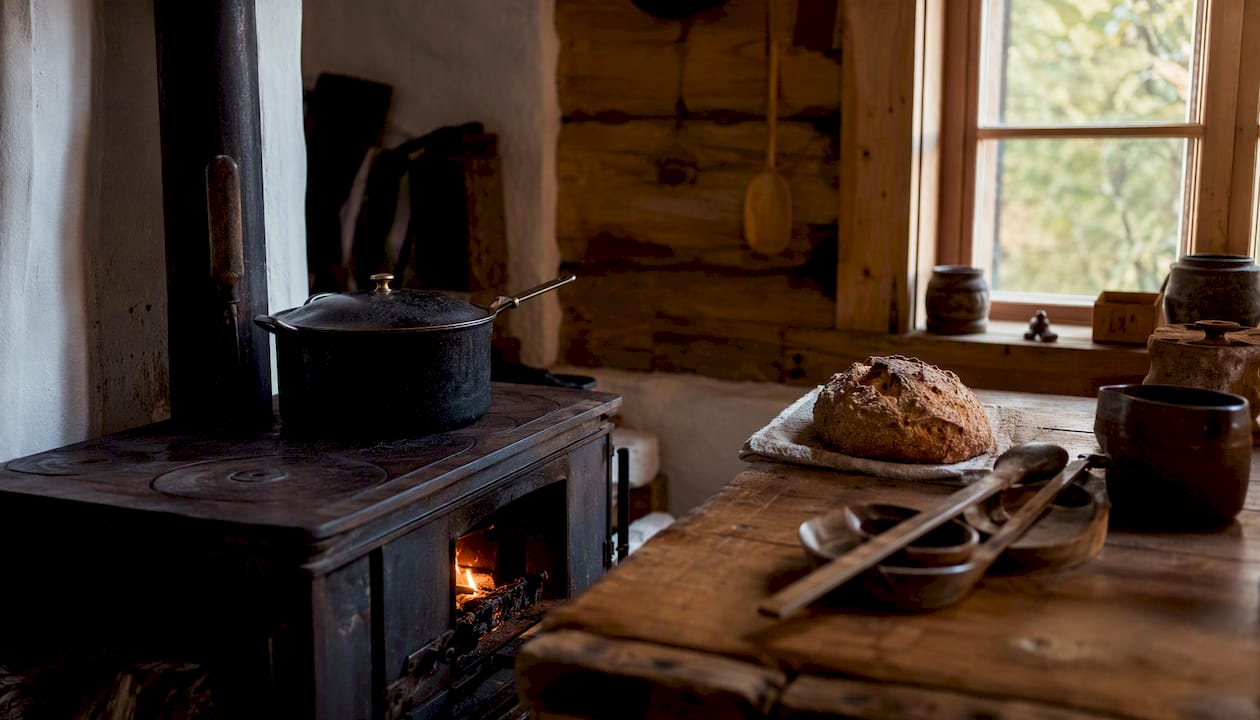
Pre-chopping vegetables and freezing meals at home means the on-site work is mostly reheating and assembling. Frozen casseroles placed in the cooler at departure thaw slowly during the drive and arrive ready to warm through on the hob — no defrosting time needed on site.
One-pot and sheet-pan shortcuts:
- Brown protein in the pan, add veg and stock, cover and simmer. One pot, one wash.
- Sheet-pan dinners (salmon, chicken thighs, root vegetables) go into the oven together and come out at the same time. Line the tray with foil to avoid scrubbing.
- Pasta dishes need only a pot of boiling water and a jar of sauce. Keep a jar of good pesto and a tin of tomatoes as your fallback every time.
For simple, tested recipes suited to limited kitchens, sheet-pan dinners are particularly well suited to cabin cooking because the oven does the work while you are outside.
Pro Tip: Place frozen stew blocks at the bottom of your cooler bag. They act as ice packs during the drive and are fully thawed by dinner on arrival day — saving both cooler space and cooking time.
Food safety matters on any trip. Keep raw meat below other foods in the cooler, and do not leave cooked food at room temperature for more than two hours, particularly in warm summer conditions.
Short recipes for the week's main dinners
These outlines are written for a small kitchen. Each takes 30 minutes or under on site, assuming the prep-ahead steps have been done at home.
Sheet-pan salmon (Wednesday)
- Preheat oven to 200°C.
- Place salmon fillets on a lined tray with sliced courgette and cherry tomatoes.
- Drizzle with olive oil, season, add a squeeze of lemon.
- Roast for 18–20 minutes.
- Serve straight from the tray.
Make-ahead: Marinate fish in olive oil, lemon and herbs at home; store in a zip-lock bag in the cooler. Grill option: Cook fillets in foil parcels on the grill for 15 minutes.
One-pot chicken and rice (Thursday)
- Brown pre-portioned chicken pieces in oil (5 minutes).
- Add one cup of rice, two cups of stock, frozen peas and seasoning.
- Cover and simmer on low heat for 20 minutes.
- Rest for 5 minutes before serving.
Make-ahead: Portion and freeze raw chicken at home; it thaws in the cooler during transit. Grill option: Grill chicken separately; cook rice on the hob alongside.
Frozen beef stew (Saturday)
- Transfer the frozen block to the fridge on Friday evening.
- Warm through in a pan over medium heat for 15 minutes, stirring occasionally.
- Serve with boiled potatoes or crusty bread bought locally.
Make-ahead: Cook the full batch at home two days before departure; freeze in a sealed container. This is the lowest-effort dinner of the week and the most satisfying after a long day outdoors.
For a broader range of simple, made-from-scratch recipes that translate well to limited kitchens, the Forkward recipe collection is a practical reference to browse before you pack.
When should you shop, batch-cook and pack before you leave?
A clear pre-departure timeline removes the last-minute scramble. Here is a practical schedule for a Friday or Saturday departure.
- Five days before: Write the full shopping list from your menu. Order online or plan your supermarket run. Check what is already in your pantry.
- Three days before: Do the main shop. Buy all dry goods, tinned items and frozen vegetables. Pick up meat for the stew.
- Two days before: Batch-cook the beef or vegetable stew. Let it cool completely, then freeze in a sealed container. Marinate chicken pieces and freeze in a zip-lock bag.
- One day before: Buy perishables: eggs, yoghurt, fresh vegetables, bread. Chop any vegetables that will keep overnight (store in sealed bags in the fridge). Pack dry goods into the tote bag. Lay out the cooler and utensils.
- Morning of departure: Load the cooler: frozen meals at the bottom, gel packs alongside, dairy and fresh produce on top. Place the cooler in the car last so it stays accessible. Pick up locally sourced meat or fish on arrival rather than transporting it.
If the nearest shop to your cabin is small or unreliable, buy meat and fish from a larger supermarket on the way and store it in the cooler. Many remote cabin areas have a single village shop with limited stock; arriving with your staples already packed means you are never dependent on it.
How Villa Sakis guests actually manage meals on a stugsemester
At Villa Sakis, a historic 18th-century log farmhouse in Bergslagen, the fully equipped self-catering kitchen means guests arrive and cook from day one without hunting for equipment. The oven handles sheet-pan dinners for groups of six without difficulty. The large kitchen table becomes the natural gathering point for slow breakfasts and relaxed lunches between walks through the surrounding pine forest and meadows.
Guests who stay for a full week tend to settle into a rhythm quickly: a standardised breakfast (porridge or eggs), a light packed lunch for days spent outdoors, and one proper dinner that the whole group cooks together. The sauna, used after active days, pairs naturally with a recovery-focused meal — something warm, balanced and ready without much effort.
At Villa Sakis, we suggest guests bring two frozen dinners from home, use the local farm shop in the village for fresh meat and dairy, and keep the rest of the week's cooking simple. The kitchen is well stocked with basics, but the real secret is arriving with a plan. A quiet evening meal after a day in the forest is one of the most restorative parts of the stay.
Local suppliers near the villa offer seasonal produce and, depending on the time of year, freshly caught fish. Combining these with the pantry staples you bring from home keeps both the shopping and the cooking genuinely light. The Villa Sakis journal has further notes on provisioning and what to expect from the surrounding area.
Why a meal plan is the quietest gift you give yourself on holiday
There is a tendency to plan every detail of a trip except the food. Accommodation, routes, activities — all mapped out — and then the first evening arrives and nobody knows what is for dinner. Zeina Mourtada, cited in Dagens Nyheter's expert guide to weekly menus, puts it plainly: a simple weekly plan is often the single most effective thing travellers can do to avoid daily food stress on holiday.
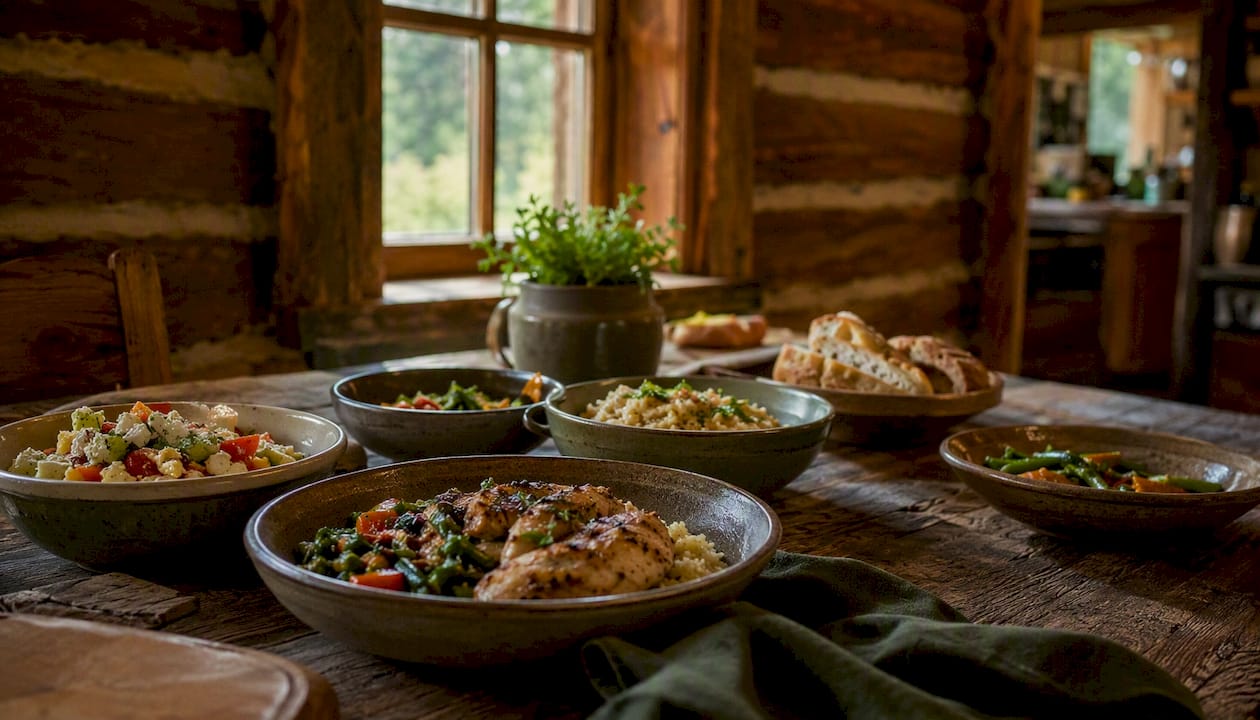
The practical effect is real. When dinner is already decided, the afternoon stays open. You walk further, stay in the sauna longer, let the children play without watching the clock. Balanced meals after active days — carbohydrate, protein and fat together — also support recovery after hiking or swimming, which matters when the whole point of the trip is to come home feeling restored rather than depleted.
A cabin holiday planned around a restorative, unhurried rhythm does not need elaborate cooking. It needs meals that are ready when you are hungry, require little thought on the day, and leave the kitchen clean in twenty minutes. That is exactly what this plan is designed to do.
Villa Sakis: a fully equipped base for effortless cabin cooking
The hardest part of cooking on a stugsemester is usually the kitchen itself: missing equipment, a small hob, nowhere to prep. At Villa Sakis, that problem is already solved. The 18th-century farmhouse in Bergslagen comes with a full self-catering kitchen, a wood-fired sauna for post-hike recovery, direct access to forest and lake, and host guidance on local suppliers so you spend less time sourcing and more time outside.
Bring your frozen meals, follow the weekly plan above, and the rest takes care of itself. Families, couples and groups of friends book the whole house privately, which means the kitchen, the table and the pace of the day are entirely yours. Check availability at Villa Sakis and arrive with a plan already in place.
Sources
- Experternas tips: Så planerar du en bra veckomeny — Dagens Nyheter
- Middagstips till skidresan — ICA
- Sommarmat för stugan eller båten — Köket
- Stugsemester i fjällen — Par i matlagning (blog)
- Laga mat i fjällstugan – enkla recept med lokala råvaror — Funasdalsberget
- Bästa maten till utflykten — ICA