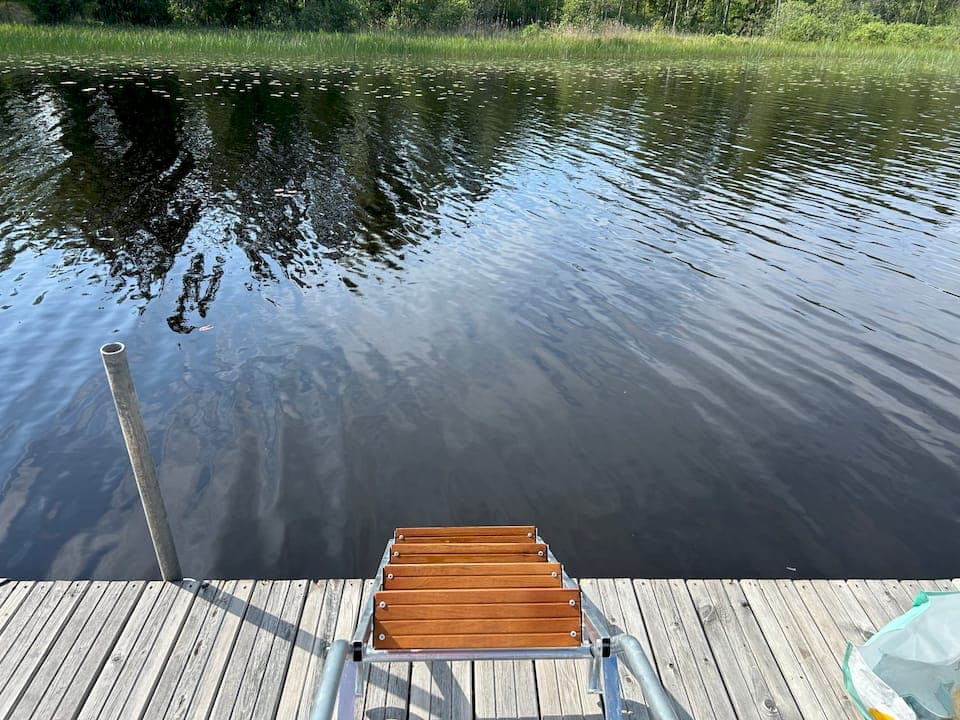
A regenerative holiday, or regenererande semester, is intentional, nature-based recovery that restores energy and reduces work-related stress — not simply time away from the office. Research synthesised by MåBra and expert commentary from Futurion both point to the same conclusion: the quality of your environment and your ability to psychologically detach from work matter far more than the number of days you take. For a ready example of accommodation designed around exactly these principles, Villa Sakis is worth your attention — more on that below.
Table of Contents
What makes a holiday genuinely regenerative?
Ordinary time off and a truly restorative break are not the same thing. The distinguishing factor is psychological detachment from work — the ability to mentally step away, not just physically relocate. Environment plays a central role in enabling that shift. Quiet surroundings, direct access to nature, and a sense of privacy all reduce the low-level alertness that keeps the nervous system in a work-ready state.
The ingredients that support genuine recovery include:
-
Privacy and quiet — no shared walls, no background noise from other guests
-
Direct nature access — forest, meadow, or water within easy walking distance
-
Low-demand activities — gentle movement, not a packed itinerary
-
High-quality sleep conditions — dark, cool, and calm sleeping spaces
-
Unstructured time — deliberately empty hours, not just gaps between plans
A Futurion Novus survey found that family time, sleep, and full disconnection from work rank as the top priorities for holiday time — ahead of activities or destinations. Over-scheduling, meanwhile, is one of the most common reasons a holiday fails to restore. SVT’s reporting on holiday stress notes that high expectations and rigid plans can generate as much pressure as the working week itself.
Three practices that make any stay regenerative
Recovery does not happen automatically when you arrive somewhere beautiful. The biggest obstacle, according to SVT health educators, is operating on autopilot — carrying work performance pressure into leisure without pausing to check in on what you actually need.
Three foundational practices prevent that carryover.
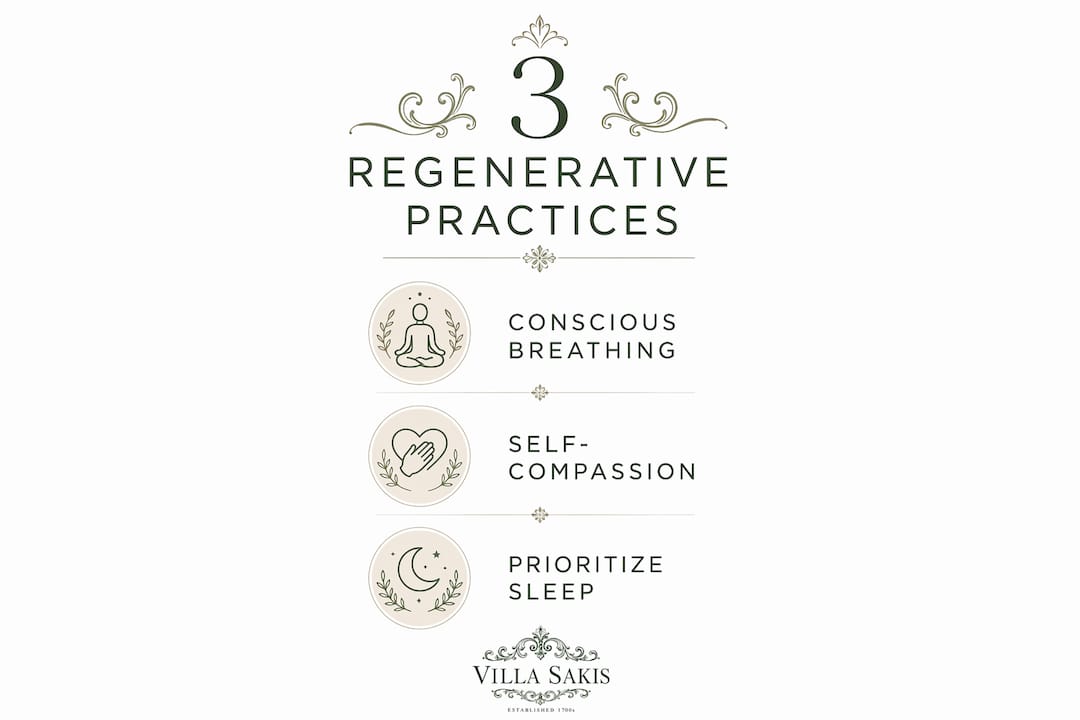
Conscious breathing is the simplest and most immediate tool. A short practice on arrival or before sleep signals to the nervous system that the demand state has changed. Try this:
Self-compassion means releasing the pressure of a planned agenda. Holidays carry their own performance anxiety — the sense that you must relax correctly, see enough, feel enough. Letting that expectation go is itself a restorative act. A simple prompt: What do I actually need today? Ask it each morning without obligation to answer in any particular way.

Prioritising sleep is the third practice, and arguably the most powerful. Research on recovery consistently identifies sleep quality as a primary driver of post-holiday wellbeing. Practical steps: avoid screens for an hour before bed, keep the room cool and dark, and resist the urge to set an alarm unless genuinely necessary.
Pro Tip: Pair a short mindfulness practice with your first morning outdoors — even five minutes of conscious breathing in open air sets a quieter tone for the whole day.
How to choose a rental that actually supports regeneration
Not every holiday rental enables recovery. When searching listings, look for these features:
-
Whole-house privacy — no shared entrances, gardens, or facilities with strangers
-
Direct outdoor access — step outside into nature, not a car park
-
Good beds and blackout options — quality mattresses and the ability to darken the room fully
-
Self-catering kitchen — eating on your own schedule removes a surprising source of low-level pressure
-
Sauna or cold-water option — both support active recovery and lower cortisol when used gently
-
A clear Wi-Fi policy — either reliable connectivity you can consciously choose to ignore, or the option to switch it off entirely
The features that matter most for psychological detachment are privacy and nature access. A beautiful view through a window is not the same as the ability to walk into a forest within minutes of waking. For sleep, the combination of darkness, quiet, and a cool room is more effective than any supplement.
Pro Tip: Before booking, ask the host directly: “Is the property fully private, and is there somewhere I can walk in nature from the door?” A host who answers confidently and specifically is a good sign. One who redirects you to a nearby village is not.
For a detailed look at what whole-house wellness stays typically cost, the wellness retreat cost guide is a useful reference before you commit.
A low-intensity 3-day sample itinerary
| Time | Day 1 | Day 2 | Day 3 |
|---|---|---|---|
| Morning | Arrival routine, breathing practice, short nature walk | Slow breakfast, short forest walk or light mobility | Sleep in, gentle stretch, coffee outdoors |
| Midday | Unpack slowly, prepare a simple meal, rest | Unstructured time: reading, journalling, or nothing | Short walk, sauna session, cold rinse |
| Afternoon | Sauna or lake swim, nap if needed | Low-intensity cycling or lakeside sit | Creative activity or rest indoors |
| Evening | Simple self-catered dinner, no screens before bed | Breathing practice, early bed | Reflection, early sleep |
On days with poor weather or limited mobility, swap outdoor walks for indoor alternatives: a sauna session, reading by a window, gentle stretching, or a creative activity. The principle stays the same — low demand, no performance, unstructured time.
How long to stay, and what it costs for UK travellers
Recovery peak: Vissa studier antyder att känslan av återhämtning kan nå en högsta nivå efter ungefär en vecka, även om detta varierar mycket mellan individer och inte är ett fastställt råd.
A minimum of one week gives you enough time to genuinely land. Shorter breaks can still be restorative, but the first two or three days are often spent unwinding rather than recovering. Research summarised by Dagens PS suggests that a shorter stay can actually sustain its benefits slightly longer than a very long one, because the contrast with daily life is less extreme on return.
For UK travellers booking in Sweden, the main cost factors are:
-
Season — late June to August commands the highest prices; May, September, and early October are quieter and often significantly cheaper
-
Midweek vs weekend — a Sunday-to-Friday booking often costs less than a Friday-to-Sunday one
-
Whole-house booking — paying for the entire property gives privacy and usually better value per person for groups
-
Travel costs — flights from UK airports to Stockholm or Örebro, plus car hire, typically represent the largest single expense
-
Extras — cleaning fees, firewood, and any add-ons are worth confirming before booking
Booking two or three shorter breaks across the year, rather than one long summer trip, tends to produce more sustained wellbeing. The Futurion survey found almost one third of respondents prefer spreading their leave across the year rather than concentrating it in summer.
A brief arrival routine to switch off quickly
The first thirty minutes after you arrive shape the rest of the stay. A deliberate landing routine prevents the autopilot carryover that SVT psychologists describe as the main reason holidays fail to restore.
On arrival, do these things in order:
-
Open windows and let outside air in — a sensory reset that signals a change of context
-
Change out of travel clothes into something loose and comfortable
-
Set your phone to silent or aeroplane mode; move work apps off your home screen
-
Step outside for ten minutes — no destination, no pace, just movement in the open air
-
Set one quiet intention for the stay: rest, sleep, presence — one word is enough
Each step is small. Together, they create a mental boundary between the journey and the stay. Grounding in nature — touching grass, sitting on a log, feeling the temperature of the air — amplifies this effect quickly.
Why regular, manageable recovery beats one long holiday
A single long summer break is a deeply ingrained habit, particularly in the UK and Scandinavia. The evidence, however, points in a different direction. Recovery effects from a holiday fade quickly after returning to work — often within the first week. Spreading recovery across the year produces more sustained wellbeing than banking it all in August.
Simple practices to carry the benefits home:
-
A 20-minute nature walk, two or three times a week, sustains the cortisol-lowering effect of nature-based movement
-
A weekly mini digital detox — one afternoon without notifications — preserves the psychological detachment practised on holiday
-
A short breathing practice before sleep, three or four nights a week, maintains sleep quality
-
A quarterly short break of four to seven days, rather than one annual fortnight, keeps recovery from becoming a once-a-year emergency
Track whether the effects are lasting by noticing two simple markers: how quickly you fall asleep, and how often work thoughts intrude during leisure time. Gradual improvement in both is a reliable signal that recovery is accumulating rather than depleting.
Villa Sakis: a regenerative stay in the Swedish countryside
Villa Sakis is an 18th-century Swedish log farmhouse in Bergslagen, available as a whole-house rental for families, couples, and small groups. It matches the accommodation checklist closely: complete privacy, direct access to pine forest and meadow, a private sauna, lake access, and a self-catering kitchen. The timber rooms are quiet, cool, and dark enough for genuine sleep. There is no shared garden, no neighbouring guests, and no obligation to be anywhere at any particular time.
The property has been cared for across generations, and that continuity shows in the quality of the space. Guests consistently praise the warmth and tranquillity of their stays. The Villa Sakis journal includes specialist content on topics such as sauna for athletes, reflecting a genuine commitment to recovery-focused travel rather than generic hospitality.
For UK travellers seeking a restorative break that goes beyond a standard holiday rental, Villa Sakis offers something quieter and more considered. View the house and check availability to see whether it fits your plans.
Key takeaways
A regenerative holiday depends on psychological detachment, a restorative environment, and deliberate low-intensity practices — not simply the number of days away.
| Point | Details |
|---|---|
| Detachment drives recovery | Psychological separation from work matters more than holiday length for lasting restoration. |
| Three core practices | Conscious breathing, self-compassion, and prioritising sleep are the foundations of any regenerative stay. |
| Eight-day recovery peak | Some studies identify day eight as when restoration feelings peak, though individual variation is significant. |
| Spread leave across the year | Regular shorter breaks sustain wellbeing more effectively than a single long summer holiday. |
| Villa Sakis fits the checklist | Private whole-house rental with sauna, forest access, and lake — designed for genuine recovery in the Swedish countryside. |
A host’s perspective on designing for rest
There is a particular kind of tiredness that a standard holiday does not touch. You return from a busy week abroad, or a weekend of sightseeing, and the fatigue is still there — perhaps deeper than before. What Villa Sakis offers is something different: a place where the design itself does the work of slowing you down. Thick timber walls hold the quiet. The sauna sits a short walk from the house, close enough to use on a whim. The forest begins at the edge of the meadow. None of this is accidental.
The choices made here — whole-house privacy, no shared amenities, a self-catering kitchen, rooms that are genuinely dark at night — reflect a considered view of what recovery actually requires. It is not luxury in the conventional sense. It is the removal of friction, the presence of nature, and the absence of demand.
If you have specific recovery needs, whether you are returning from burnout, preparing for a physical challenge, or simply in need of sustained quiet, please get in touch directly. The house can be arranged to support different kinds of stays, and that conversation is always worth having.
Useful sources for further reading
-
MåBra: Rätt sorts vila gör att du återhämtar dig i sommar — A meta-analysis and commentary on what genuinely drives post-holiday wellbeing; the primary evidence base for psychological detachment and active recovery.
-
Futurion: Framtidens semester, Novus survey 2025 — Survey data on shifting holiday preferences, including the case for spreading leave across the year rather than concentrating it in summer.
-
SVT Nyheter: Semestern kan leda till stress — Psychologist and health educator interviews on the autopilot trap, over-scheduling, and the value of arrival routines.
-
Moverot: Vad är aktiv återhämtning? — Practical guidance on low-intensity movement as active recovery, with evidence on cortisol reduction in nature settings.
-
Dagens PS: Hur lång är den perfekta semestern? — Research summary on optimal holiday length, the eight-day recovery peak, and the case for regular shorter breaks.