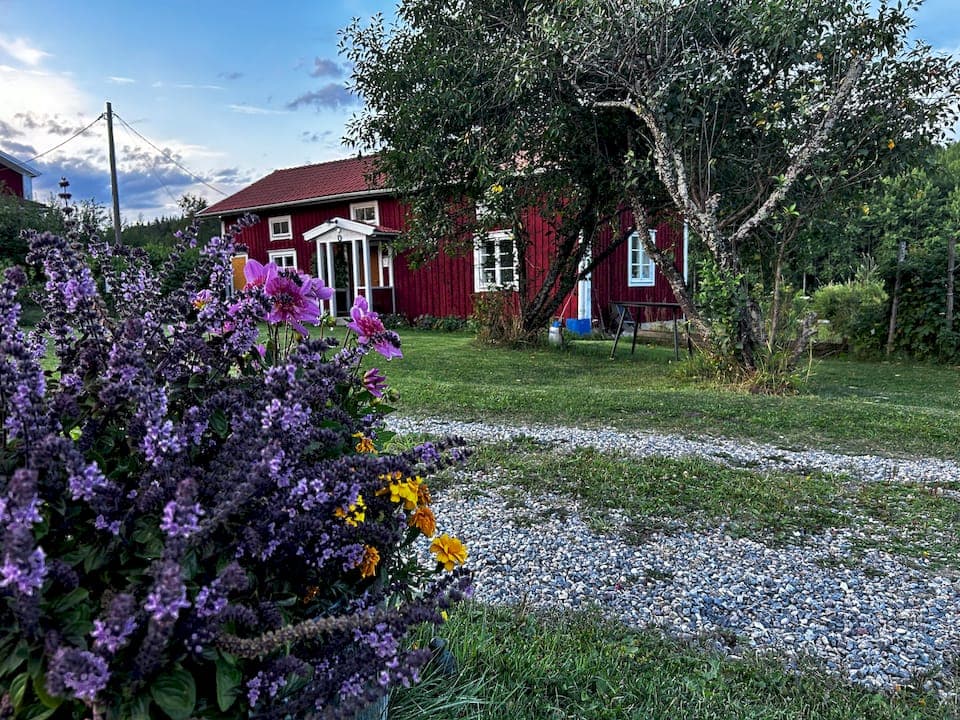
Grounding in nature is the practice of making direct skin contact with the earth or natural water to support relaxation and nervous-system recovery. It is straightforward to practise on a private nature stay, and for travellers seeking a slower, more restorative kind of trip, it may be one of the simplest rituals to build into a short break. Villa Sakis, a historic 18th-century Swedish log farmhouse set among pine forests, meadows, and a private lake, is well suited to this kind of intentional stay.
-
Who benefits most: those recovering from burnout, high-stress work periods, or overstimulation from city life
-
Quickest way to try it on arrival: remove your shoes and walk slowly across the meadow or sit on the grass for three minutes before unpacking
-
Medical-safety caveat: grounding complements but does not replace evidence-based care; consult your GP or a clinician if you have a chronic condition before making it a central part of your wellness routine
Table of Contents
-
What is grounding in nature, and what does the research say?
-
What to wear for grounding in different natural environments
What is grounding in nature, and what does the research say?
Earthing, as it is also known, involves making direct skin contact with the earth or natural water, creating an electrical connection thought to transfer electrons to the body. The biological hypothesis centres on this electron transfer producing an antioxidant effect that may reduce inflammation and support recovery. A 2020 integrative medicine review found multiple small studies associating earthing with reduced inflammation, pain, and stress, as well as improved sleep and blood flow, though the evidence base remains limited and larger trials are still needed.
Earthing is distinct from the psychological grounding techniques used in therapy, which focus on sensory anchoring during anxiety or dissociation. The Cleveland Clinic notes that while some small studies show rapid subjective improvements, grounding should complement rather than replace conventional medical care.
A note on evidence: the research is genuinely intriguing, but honest guidance means acknowledging its limits. Treat grounding as a restorative ritual, not a medical intervention.
Practical ways to ground yourself on a nature stay
The most accessible practices require nothing more than bare skin and a patch of earth. Integrative practitioners recommend forest bathing, slow mindful walking, and pairing breath with steps as particularly effective ways to combine movement with grounding.
-
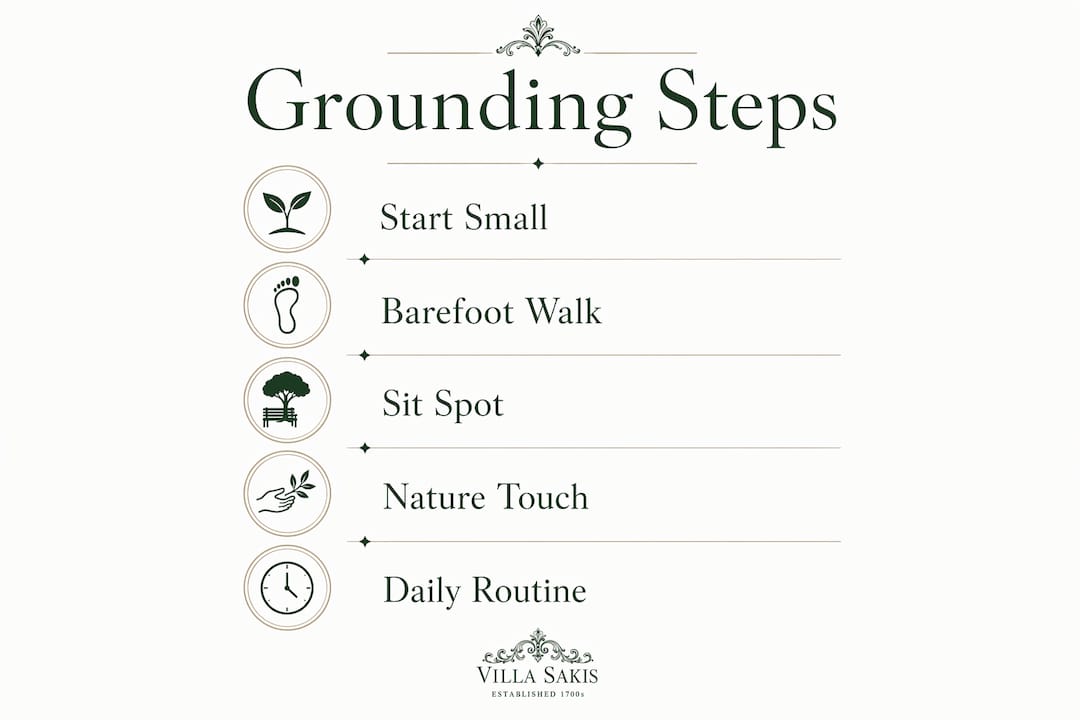
Barefoot stroll: remove shoes on a safe, grassy surface; walk slowly for three minutes, noticing each footfall
-
Sit-spot: find one quiet place outdoors and return to it each morning; simply sit and observe without an agenda
-
Shoreline wading: stand ankle-deep in a lake or stream for five to ten minutes; cold water immersion adds a secondary calming effect
-
Hands in soil: tend a small patch of garden or simply press palms flat against bare earth for a few minutes
-
Breathwalking: match one slow breath to every two or three steps through a forest path
Starting small matters more than duration. Many beginners find a few minutes manageable; build gradually toward longer sessions as the practice becomes familiar.
| Practice | Duration | Best terrain |
|---|---|---|
| Barefoot stroll | 3 minutes | Grass, meadow |
| Sit-spot | 3 minutes | Forest edge, lakeside |
| Shoreline wading | 5 to 10 minutes | Sandy or pebbly shore |
| Breathwalk | — | Forest path, open meadow |
| Hands in soil | 3 minutes | Garden bed, bare earth |
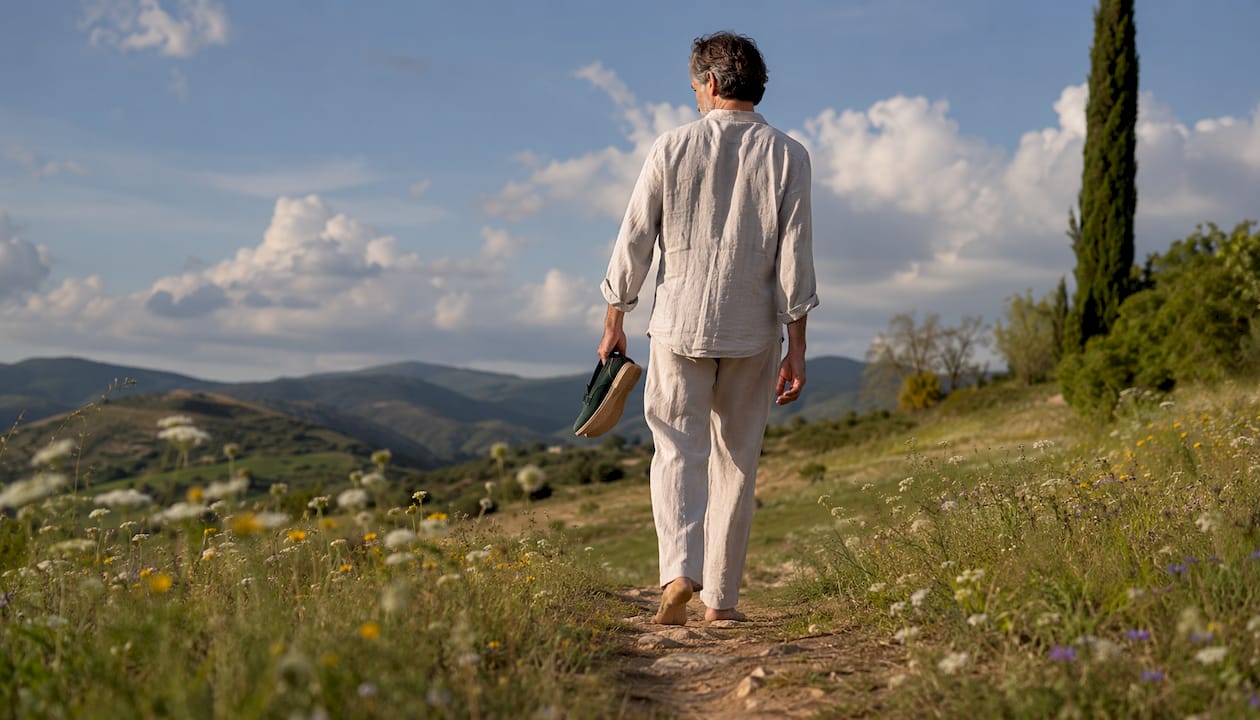
Pro Tip: Place your phone in aeroplane mode before each session and practise at the same time each day. Consistent timing trains the nervous system to anticipate recovery, amplifying the calming effect over the course of a stay.
How to choose a vacation rental that supports grounding
Not every countryside listing genuinely supports intentional nature practice. Privacy is the first filter: a property surrounded by other guests or overlooked by a road makes quiet barefoot rituals feel self-conscious rather than restorative.
Features to prioritise:
-
Private meadow or forest access with safe, grass-covered ground
-
Proximity to natural water (lake, stream, or river) for wading
-
Outdoor seating away from roads and noise
-
Self-catering kitchen for herbal teas and slow mornings
-
Private sauna for post-grounding warmth and recovery
Questions worth asking the host before booking:
-
Can guests access the grounds barefoot safely, and are there any rocky or hazardous areas?
-
What is the nearest medical facility, and how far is it?
-
Is the water safe for wading or swimming?
-
What is the tick and midge season, and what precautions do you recommend?
Self-catering matters more than it might seem. A kettle, a quiet kitchen, and storage for wet kit allow you to build morning rituals without depending on external schedules. For those planning a restorative short break, these small logistical details shape whether the stay feels genuinely restful or merely scenic.
Safety and health considerations for UK travellers
Grounding outdoors is low-risk for most people, but a few practical precautions make a meaningful difference.
-
Tick checks: after any barefoot walk in long grass or woodland, check skin thoroughly; the UK’s countryside carries a risk of Lyme disease from tick bites
-
Foot care: avoid bare feet on unknown rocky ground, broken glass, or heavily used public paths; stick to private, inspected surfaces
-
Wound care: clean minor cuts or grazes promptly with clean water and an antiseptic; carry a basic first-aid kit
-
Water safety: wade only in water the host confirms is safe; avoid fast-moving streams or water with visible algal bloom
-
Grounding products: mats, sheets, and patches offer an indoor option but must be used according to manufacturer instructions and avoided during electrical storms or where wiring is faulty; those with implanted devices or on blood-thinning medication should consult a clinician before use
Grounding is a complementary wellness practice. It does not replace evidence-based medical treatment. If you have a chronic condition, speak with your NHS GP or a qualified clinician before making earthing a regular part of your health routine.
A sample 3-day grounding retreat itinerary
This schedule suits a private farmhouse stay with forest, meadow, and lake access. Adjust timings to suit the season and your own pace.
| Time | — | — | Day 3 |
|---|---|---|---|
| Morning | Barefoot meadow walk (3 min) | Sit-spot at forest edge (few minutes) | Breathwalk through forest (few minutes) |
| Mid-morning | Unpack, settle, herbal tea | Shoreline wading (5 to 10 minutes) | Hands in soil or garden (few minutes) |
| Afternoon | Rest, read outdoors | Slow forest walk | Lakeside sit-spot |
| Evening | Private sauna session | Outdoor dinner, device-free | Sauna, then early rest |
Optional activities (short bullets):
-
Slow foraging walk with a field guide
-
Sketching or journalling at your sit-spot
-
Cold-water lake swim (if conditions allow)
-
Stargazing from the meadow after dark
Packing checklist for a grounding-focused stay:
-
Light, flexible shoes for uneven ground
-
Swimwear and a quick-dry towel
-
Insect repellent and a tick-removal tool
-
Small first-aid kit
-
Notebook or sketchbook
-
Thermos for morning tea
Why Villa Sakis suits a grounding-focused stay
Villa Sakis offers the specific combination of features the grounding checklist calls for: private meadows, a surrounding pine forest, direct lake access, and a property that has been cared for across generations since the 1700s. The historic log farmhouse is booked as a whole house, meaning you have the grounds entirely to yourself.
Features that directly support grounding practice:
-
Open meadows with safe, grass-covered ground for barefoot walking
-
Pine forest paths for breathwalking and forest bathing
-
Private lake access for shoreline wading and cold-water swimming
-
A private sauna for post-session warmth and recovery
-
A self-catering kitchen for slow, device-free mornings
Deep nature immersion in private settings such as forests, meadows, and lake shorelines supports nervous-system recovery even when going barefoot is not always practical. Villa Sakis provides all three. Check availability and dates to plan your stay.
What to wear for grounding in different natural environments
Clothing choices shape how easily you can move between grounding practices across a day.
On grass and meadow, bare feet are the point. Keep a pair of light, slip-on shoes nearby for moving between surfaces, but choose ones you can remove in seconds. On forest paths, thin-soled trail shoes or minimalist footwear preserve some ground sensation while protecting against roots and stones. For shoreline wading, water shoes with a thin rubber sole allow you to feel the lakebed without risk from sharp rocks. Avoid thick-soled hiking boots for any grounding session; they interrupt the skin-to-earth connection entirely.
For clothing, loose natural fabrics (linen, cotton, wool) dry quickly and feel comfortable against skin when sitting directly on the ground. Avoid synthetic waterproof layers for sit-spot sessions; they create a barrier between you and the earth. A light merino base layer works well in cooler Swedish mornings, warm enough to sit still but not so heavy that you overheat on a slow walk.
Respecting local ecosystems while you practise
Grounding in nature asks something of the land as well as of you. A few habits protect the places that make the practice possible.
Stay on established paths when moving through forest; repeated off-trail walking compacts soil and damages root systems. Sit on bare earth or rock rather than on moss or lichen, which can take years to recover from pressure. If you wade in a lake or stream, enter and exit at a single point rather than disturbing a wide stretch of bank. Leave no trace: take any packaging, food scraps, or used insect-repellent wipes back to the house.
Independent travellers who move through multiple natural settings in a single trip carry a particular responsibility here. The quieter and more private the location, the more fragile its ecosystem tends to be. Treat the meadow, forest, and lakeside as borrowed, not owned, and the practice gains a dimension that goes beyond personal wellness.
Key takeaways
Grounding in nature is a low-cost, low-barrier practice that supports relaxation and nervous-system recovery when treated as a consistent, intentional ritual on a private nature stay.
| Point | Details |
|---|---|
| What grounding is | Direct skin contact with earth or natural water, thought to transfer electrons and support recovery. |
| How to start safely | Begin with three minutes barefoot on grass; build gradually toward longer sessions as the practice feels comfortable. |
| Safety first | Check for ticks after every outdoor session; consult your GP if you have a chronic condition before starting. |
| Choosing the right property | Prioritise private meadow or forest access, natural water nearby, and a self-catering kitchen for slow mornings. |
| Villa Sakis | A whole-house Swedish farmhouse with meadows, pine forest, lake access, and a private sauna suited to grounding stays. |
Why the small rituals matter most
There is a tendency to approach a nature holiday as passive recovery: arrive, rest, leave. What the evidence from the Cleveland Clinic and practitioners like those at Moving Mountains suggests is that the nervous system responds far more strongly to intentional stillness than to incidental outdoor time. Sitting in the same spot each morning, phone off, breath slow, for even five minutes, produces a qualitatively different experience from simply being near trees. The sit-spot practice, in particular, asks nothing of you except presence. No performance, no distance covered, no achievement. Just the gradual, almost imperceptible shift from alertness to ease. That shift is what a grounding-focused stay is really for.
Plan your stay at Villa Sakis
Few private rentals offer the specific combination of meadow, forest, and lake that grounding practice genuinely calls for. Villa Sakis does, in a farmhouse that has stood since the 1700s and still carries the quiet of the Swedish countryside in every timber room.
-
Private grounds: meadows and pine forest for barefoot walking and breathwalking, entirely yours for the duration of your stay
-
Lake and sauna: direct lake access for shoreline wading and cold-water swimming, with a private sauna for recovery
-
Self-catering and space: a fully equipped kitchen and honest, unhurried rooms for slow mornings and device-free evenings
Check availability at Villa Sakis and reserve your dates for a restorative stay in the Swedish countryside.
Useful sources
-
Cleveland Clinic: What Is Earthing and Is It Beneficial? — covers the definition of earthing, the proposed biological mechanisms, and the medical-safety caveat that grounding should complement rather than replace conventional care.
-
WebMD: Grounding Techniques and Benefits — summarises practical grounding methods and the recommendation to consult a clinician for chronic conditions.
-
ScienceDirect: Integrative and Lifestyle Medicine Review on Earthing — the 2020 review of small studies associating earthing with reduced inflammation, pain, and stress, with notes on the limited evidence base.
-
Healthline: What Is Grounding and Can It Improve Your Health? — practical overview of barefoot walking, water immersion, and conductive grounding products.
-
Right as Rain / UW Medicine: 4 Ways to Ground Yourself by Feeling the Earth — integrative-practitioner guidance on forest bathing, breathwalking, and slow mindful movement.
-
The Nature Wheel: Sit-Spot Practice — guidance on starting with three minutes of stillness and building gradually; source for the beginner-duration recommendation.
-
Moving Mountains: How to Build Your Own Personal Nature Ritual — practical framework for consistent timing, digital detox, and training the nervous system through repeated ritual.
-
CNN Health: Grounding and Nature Immersion — feature on how private forest, meadow, and lake settings support nervous-system recovery even when direct skin contact is not always possible.