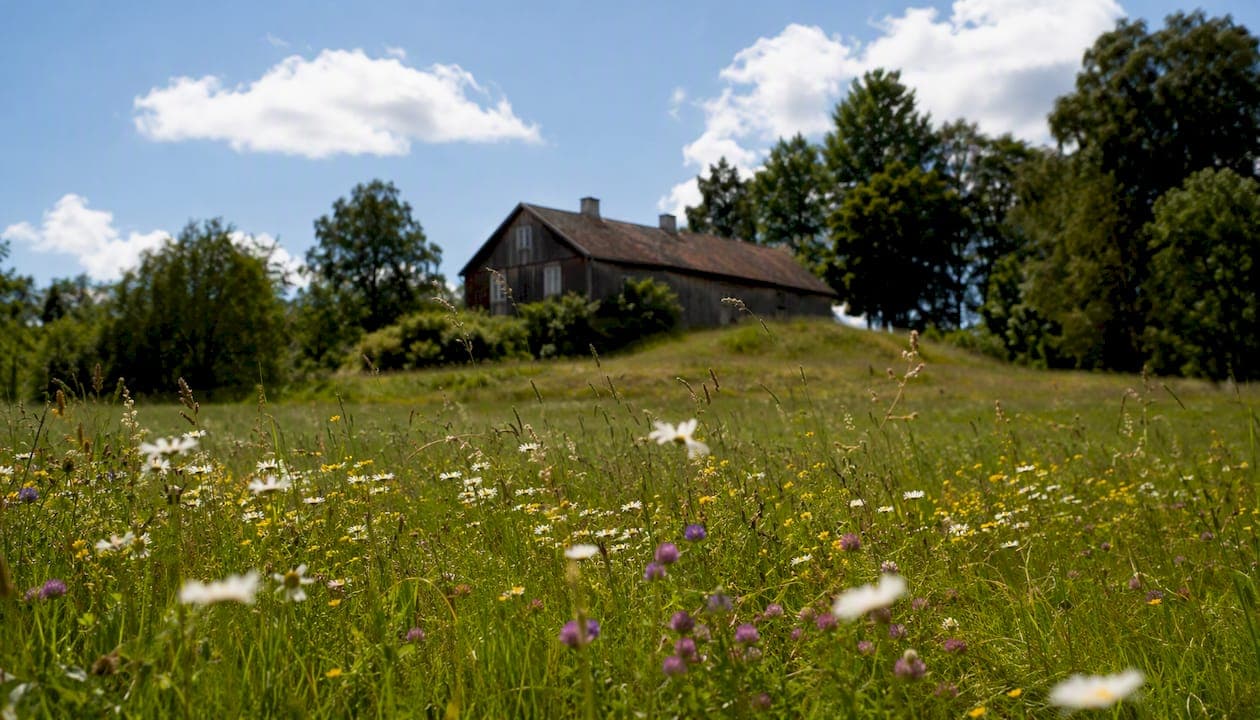
A stay of a few days typically provides enough time to settle into the slower rhythm, explore local lakes, visit markets, and leave feeling refreshed rather than rushed. For a longer immersion, a full week allows the kind of quiet that most people have forgotten exists.
A simple plan for your stay:
- Arrive by early afternoon so you can unpack, take a first walk through the meadow or forest, and eat a relaxed dinner at the house.
- Morning: a gentle walk, a swim in the lake, or a slow breakfast on the terrace with coffee and bread.
- Afternoon: one local activity, such as a visit to a gårdsbutik (farm shop), a loppis (flea market), or a nearby village café for fika.
- Evening: a private sauna session, a simple self-catered meal, or a community event if one is running nearby.
- One community day: visit a local market, a village hall event, or a farm open day during your stay.
Villa Sakis, a historic 18th-century log farmhouse in Bergslagen, matches this plan precisely: whole-house booking, private sauna, lake access, and direct access to forest and meadows. A weekend works for a first taste; three to five days is the recommended stay for genuine rest; a full week suits families or those seeking a deeper retreat.
Key takeaways
A three-to-five-day stay in a whole-house countryside property, with private sauna and lake access, delivers the most restorative Swedish summer experience for families and small groups.
| Point | Details |
|---|---|
| Ideal stay length | Three to five nights gives enough time to settle, explore, and genuinely rest. |
| Best booking timing | Book two to three months ahead for July; late June and August offer quieter, better-value alternatives. |
| Essential packing | Waterproof footwear and insect repellent are non-negotiable; carry a power bank and offline maps for forest walks. |
| Allemansrätten | You may walk, swim, and pick berries freely; stay clear of private dwellings and always leave no trace. |
| Villa Sakis | A whole-house 18th-century log farmhouse in Bergslagen with private sauna, lake access, and direct forest access. |
Table of Contents
- What does a summer stay on the Swedish countryside actually look like?
- What can you do during a summer stay in the countryside?
- How do you choose the right countryside accommodation?
- What should you pack and how do you get there?
- How does Allemansrätten work, and why does it matter?
- Safety in rural areas: what you need to know
- How do you connect with local culture and community events?
- What should you eat during a countryside stay?
- A host's perspective on why summer on the land matters
- Book your stay at Villa Sakis
- Sources
What does a summer stay on the Swedish countryside actually look like?
The itineraries below are designed to be realistic and adaptable, not aspirational. Each duration delivers something different, and the right choice depends on how much decompression you genuinely need.
| Duration | Focus | Arrival/Departure | Core daily rhythm |
|---|---|---|---|
| Weekend | First taste, gentle reset | Friday afternoon / Sunday afternoon | One swim, one walk, one fika stop, sauna evening |
| Mid-break | Rest and local exploration | Saturday or Sunday / Thursday | Mix of lake days, farm visits, loppis, one village event |
| Full week | Deep retreat, slow travel | Saturday / Saturday | Rest days, longer walks, local food, community connection |
Families tend to benefit most from the mid-break or full week, which allows children to settle and discover the rhythms of the place rather than rushing between activities. Couples often find the weekend sufficient for a reset, though a five-night stay opens up more unhurried exploration. Solo travellers frequently report that the full week, with its natural solitude and space for reflection, is the most restorative option of all.
A practical timing note: July is peak season across rural Sweden, and prices reflect that. Arriving in late June or booking into August often means quieter roads, more availability, and a slightly lower nightly rate. For a restorative countryside holiday, shoulder weeks in late June or mid-August offer the best balance of warmth and calm.
What can you do during a summer stay in the countryside?
The most satisfying activities on a Swedish country holiday tend to be the simplest ones. They require almost no planning and deliver something that a city break rarely can: genuine quiet.
Swimming and water. Sweden's lakes are clean, accessible, and often completely uncrowded by mid-morning. A short walk from most rural properties leads to a bathing jetty or a sandy shore. Families with children find lake swimming endlessly entertaining; couples tend to arrive early for the stillness before the day warms up.
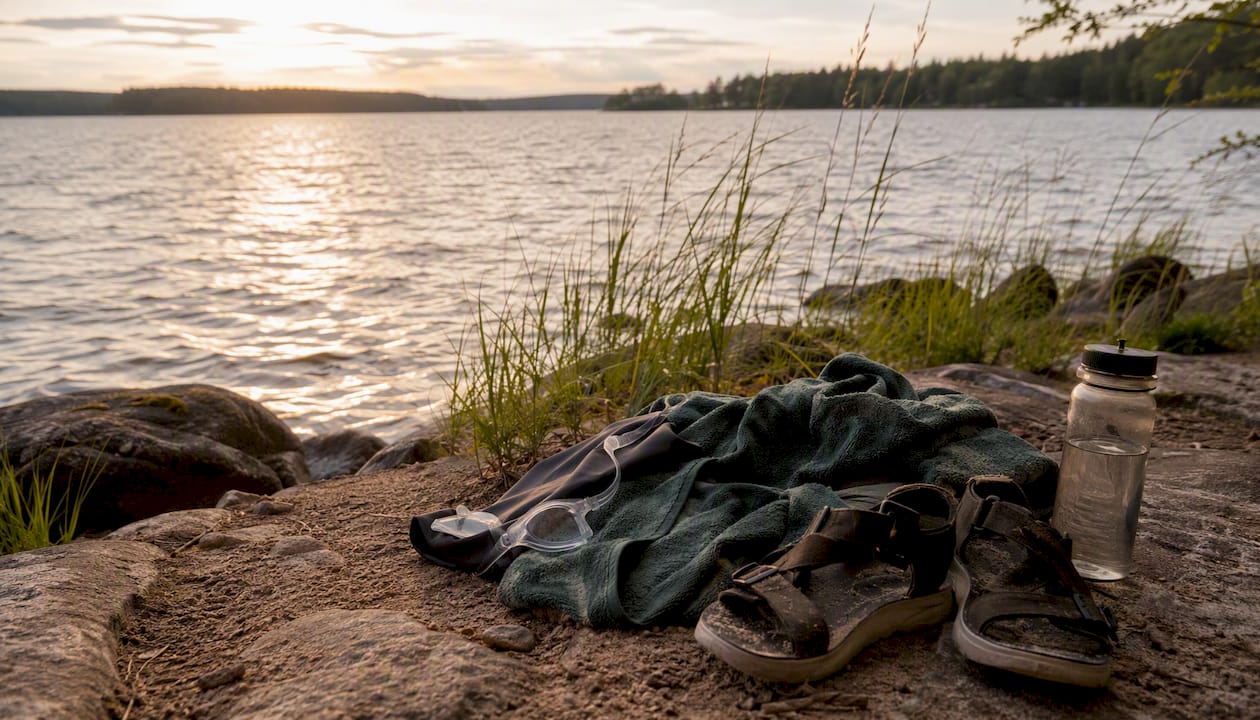
Walking and viewpoints. Gentle forest trails and open meadow paths suit all fitness levels. You do not need a map for most of them. The light in Swedish summer, particularly in the long evenings, makes even a short walk feel like something worth remembering.
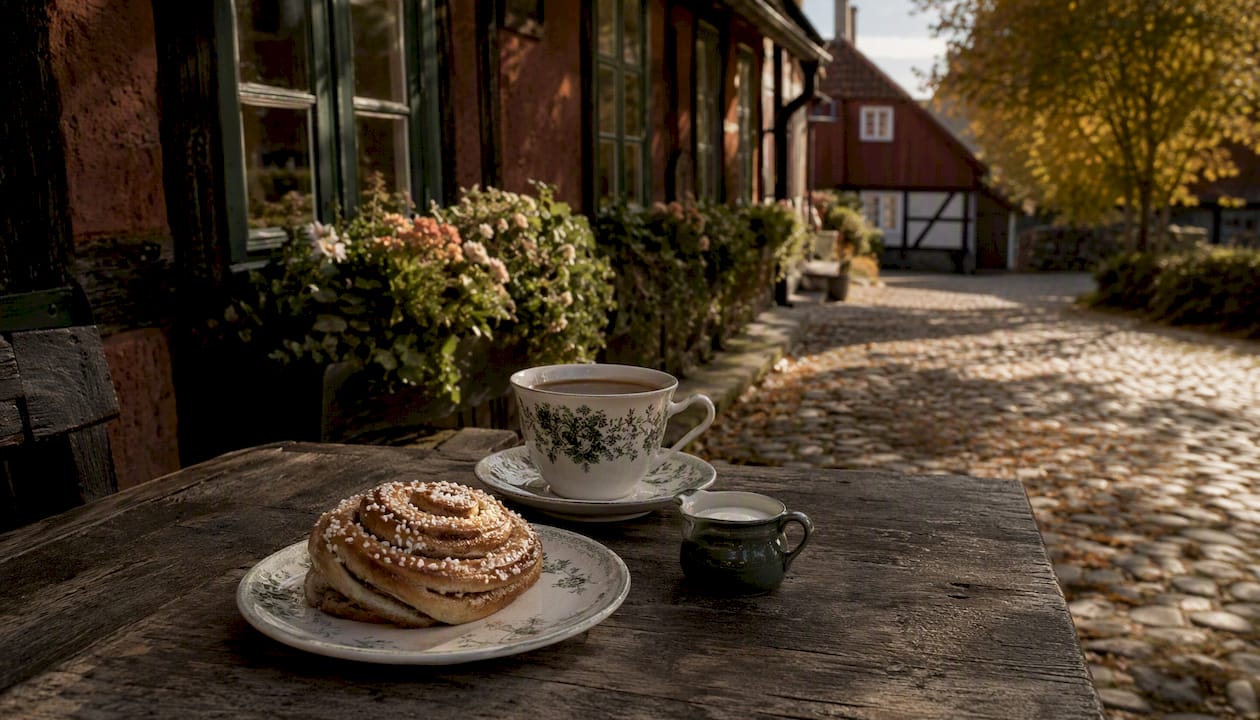
Fika and local cafés. A mid-morning or mid-afternoon stop at a village café is one of the most reliable pleasures of a Swedish countryside stay. Order coffee and a cinnamon bun, sit outside if you can, and let the hour pass without agenda. Many of these cafés are seasonal and run by local volunteers, so your visit directly supports them.
Loppis and gårdsbutik. Roadside flea markets and farm shops appear throughout the summer months. Buying local honey, jam, or vegetables from a gårdsbutik is a small act that has a real effect on the local economy. Farm-stay hosts across Sweden commonly offer direct sales from their own produce, and the experience of choosing something grown a few metres away is genuinely different from a supermarket.
Farm visits. Some properties offer the chance to feed animals or watch daily farm routines. These are particularly well suited to families with young children, who tend to find them more memorable than any organised attraction.
Pro Tip: Check local fire restrictions before lighting any outdoor fire, even in a designated area. In dry summers, Swedish authorities issue fire bans across entire regions. Water safety matters too: always supervise children near lakes, and carry insect repellent from May through August. Many local amenities, including bathing jetties and café terraces, operate only during summer and may close without notice on quieter days.
How do you choose the right countryside accommodation?
The difference between a good countryside stay and a great one often comes down to a handful of practical details that are easy to overlook when booking quickly.
Before you confirm, check for:
- Privacy: Is the property a whole-house rental, or do you share facilities with other guests? Shared spaces can undermine the quiet you came for.
- Self-catering kitchen: A well-equipped kitchen lets you shop locally and eat at your own pace, which is central to the slow-travel rhythm.
- Sauna access: A private sauna is one of the defining features of a Swedish countryside stay. Check whether it is wood-fired or electric, and whether it is shared or exclusive to your booking.
- Lake or forest access: Direct access, rather than a short drive, makes a meaningful difference to how often you actually use it.
- Parking: Rural properties often require a car; confirm there is space and that the access road is suitable.
- Cancellation terms: Book with a clear cancellation policy, particularly for high-season weeks when demand is high and alternatives are limited.
- Accessibility: If anyone in your group has mobility needs, ask specifically about steps, uneven ground, and bathroom configuration before booking.
Villa Sakis meets all of these criteria. The property is a whole-house rental, meaning your group has the entire 18th-century log farmhouse to yourselves. It includes a private sauna, direct lake access, a self-catering kitchen, and immediate access to surrounding forest and meadows. The house and its grounds are designed around the kind of stay described in the itineraries above.
For high-season weeks in July, booking two to three months in advance is advisable. Longer stays typically attract a lower effective nightly rate, and a week-long booking in late June or August often represents the best value. Visita, Sweden's hospitality industry organisation, provides useful guidance on what guests can reasonably expect from licensed accommodation providers in terms of standards and booking practice.
What should you pack and how do you get there?
Getting the practical details right means you spend your time resting rather than problem-solving.
| Item | Why it matters |
|---|---|
| Sturdy waterproof footwear | Meadow and forest paths stay wet even in summer; expect damp ground on morning walks |
| Insect repellent | Mosquitoes are active from June through August, particularly near water and at dusk |
| Swim kit and a quick-dry towel | Lake swimming is a daily pleasure; a dedicated towel keeps things simple |
| Picnic gear (a light bag and reusable cups) | Roadside stops and meadow lunches are far more enjoyable with the right kit |
| Charged power bank | Rural signal can be intermittent; a power bank keeps navigation and communication reliable |
| Printed map or downloaded offline route | Do not rely solely on mobile data for forest walks; download routes before you leave |
| Any prescription medications | Rural pharmacies have limited hours; bring a full supply for your stay |
Getting there. A car is the most practical option for a Swedish countryside stay. It gives you the freedom to visit loppis, farm shops, and village events without timetable constraints. Rail connections reach many regional towns, but the last mile to a rural property usually requires a taxi or a pre-arranged transfer. If you are travelling without a car, confirm with your host in advance whether a taxi from the nearest station is straightforward.
Remote work connectivity. Broadband availability varies considerably across rural Sweden, even in areas that appear well connected on coverage maps. If you plan to work during your stay, ask your host directly about the connection speed and reliability. A mobile hotspot as a backup is worth carrying. Scheduling focused work in the morning, when signal tends to be more stable, and leaving afternoons free for outdoor activity is a practical rhythm that many guests find works well.
How does Allemansrätten work, and why does it matter?
Sweden's right to roam, known as Allemansrätten, gives everyone the right to walk, cycle, and rest in nature, including on privately owned land, as long as they do not disturb or damage. In practice, this means you can walk through forests, pick wild berries and mushrooms, and swim in lakes without needing permission. What you cannot do is camp close to a private dwelling, light fires without permission, or drive off-road.
A few host-sourced tips for respectful visitation:
- Support local cafés and shops rather than bringing everything from a city supermarket. The seasonal income from summer visitors helps keep these places open year-round.
- Buy directly from gårdsbutik when you pass one. The transaction is small; the effect on a small farm's annual income is not.
- Follow local opening hours and do not assume that a café or bathing area will be open outside its posted times.
- Ask before photographing people, private buildings, or working farm areas. It is a simple courtesy that matters in small communities.
Local reporting makes clear that summer tourism and volunteer activity provide vital seasonal income that helps keep village halls, bathing jetties and local shops functioning year-round. The summer visitor is not just a guest; they are part of what makes rural life financially viable across the rest of the year.
Safety in rural areas: what you need to know
Rural Sweden is safe, but the distances involved and the limited infrastructure require a little more preparation than a city break.
Emergency contacts. The national emergency number in Sweden is 112, which covers police, ambulance, and fire services. For non-urgent medical advice, call 1177, the national healthcare advice line, which operates around the clock and has English-speaking staff.
Fire safety. In dry summers, regional fire bans are common and legally binding. Check the Swedish Civil Contingencies Agency (MSB) website or ask your host before any outdoor fire. Barbecues on private property may still be permitted when a general ban is in place, but confirm this before lighting anything.
Water safety. Swedish lakes are generally clean and safe for swimming, but currents and cold patches can catch people off guard. Supervise children at all times near open water. If you are not a confident swimmer, stay within your depth and close to the shore.
Navigation. Mobile signal in forested areas can drop without warning. Download offline maps before heading out on longer walks, and let someone know your planned route and expected return time.
How do you connect with local culture and community events?
The most memorable moments of a Swedish countryside stay often happen by accident: a village market you stumbled across, a midsommar celebration you were invited to join, a conversation with a farm host that turned into an hour-long tour.
Around 34% of Sweden's population lives in countryside or sparsely populated regions, and rural communities have a strong tradition of seasonal events that are genuinely open to visitors. Village halls (bygdegårdar) host dances, markets, and craft fairs throughout the summer. Local churches often hold outdoor concerts in July. Farm open days, where you can meet animals and buy produce, are common in agricultural areas.
The most practical way to find these events is to ask your host. They will know what is happening locally and can often point you towards things that do not appear on any tourist website. Picking up a local noticeboard flyer or a regional newspaper on arrival is another reliable method.
Attending a community event, even briefly, is one of the most direct ways to support the places you are visiting. Many small amenity services during summer are run by local volunteers, and guests who buy locally or attend events directly support those services and the year-round upkeep of places like village halls and bathing jetties.
What should you eat during a countryside stay?
Swedish rural food is seasonal, honest, and often surprisingly good. The best of it does not come from a restaurant menu.
Smörgåsbord staples. A self-catered breakfast of crispbread, strong cheese, cold cuts, and pickled herring sets the tone for the day. These are available in most rural supermarkets and taste noticeably better eaten slowly at a farmhouse table.
Wild berries. Blueberries, lingonberries, and cloudberries grow freely in Swedish forests and are in season from July through August. Picking them on a morning walk and eating them with yoghurt or cream is one of those simple pleasures that stays with you.
Gårdsbutik produce. Farm shops sell local honey, jams, smoked meats, and vegetables that reflect the specific character of the land around them. Buying a jar of something from a farm you passed on a walk is a better souvenir than most things sold in a gift shop.
Fika. A proper Swedish fika, with strong coffee and a freshly baked cinnamon bun or cardamom cake, is not optional. It is a cultural institution and a genuine pause in the day. Village cafés that serve it well are worth seeking out and worth returning to.
Local fish. Freshwater fish, particularly perch and pike, are common in Swedish lakes and appear on menus in rural restaurants and at summer markets. If your accommodation includes fishing access, it is worth trying.
A host's perspective on why summer on the land matters
There is something that happens to guests after the second or third day at Villa Sakis that is difficult to describe but easy to recognise. The pace changes. Conversations slow down. People start noticing things they would have walked past at home: the light on the water in the early morning, the sound of the forest at dusk, the particular quiet of a place that has been lived in for three hundred years.
We value summer guests not simply because the season sustains the property, but because the exchange is genuine. Guests bring curiosity and care; the land and the house give back something that is harder to find elsewhere. If you have particular requests, a specific rhythm in mind, or questions about the area before you arrive, please get in touch directly. Tailoring the stay to what you actually need is something we take seriously.
Book your stay at Villa Sakis
Villa Sakis offers whole-house rental of a historic Swedish log farmhouse in Bergslagen, with private sauna, lake access, a self-catering kitchen, and direct access to forest and meadows. The property sleeps families and groups in authentic timber rooms that have been cared for across generations. Pricing varies by season and length of stay; July commands the highest rates, while late June and August offer the same experience at a quieter pace.
Booking is available directly through Villa Sakis or via Airbnb. For high-season weeks, booking two to three months ahead is strongly advisable. Longer stays tend to reduce the effective nightly rate, and a week-long booking in shoulder season often represents the best value for groups.
To check availability, review the house in detail, or make a direct enquiry, visit Villasakis.
Sources
The links below cover local access rights, farm-stay options, rural context, and booking guidance. They are worth consulting before you finalise your plans.
- Krönika: Landsbygden är bra att ha – på sommaren | Land
- Bo på landet: Ekonomiska fördelar och utmaningar
- Allt om att bo, leva och vara på landsbygden - Jordbruksverket
- Visita