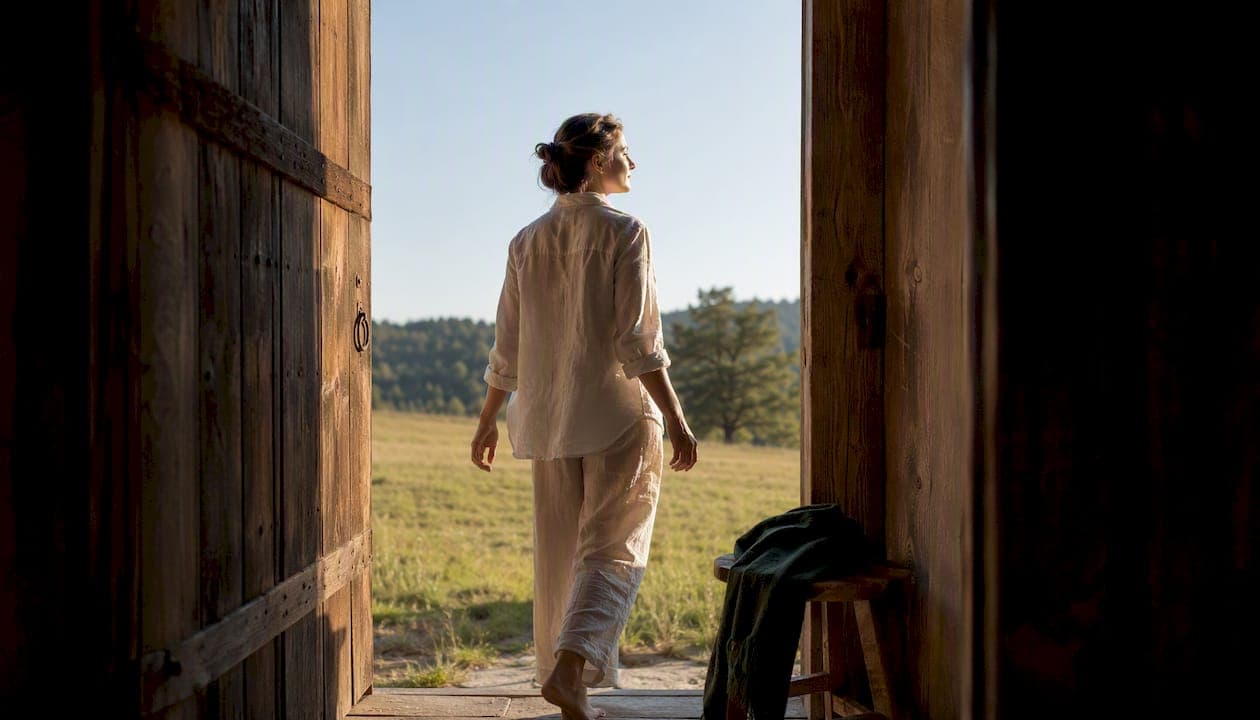
Morning light is one of the simplest, most reliable ways to improve how you sleep. Getting natural light within an hour or two of waking helps reset your circadian clock, and when practised daily, tends to shift your sleep earlier and improve how rested you feel. Two measures researchers use to track this are melatonin suppression and the Pittsburgh Sleep Quality Index (PSQI). The sections below walk through the mechanism, the evidence, and how to build the habit.
TL;DR:
- Exposure to natural morning light before 10:00 significantly shifts sleep timing earlier and improves sleep quality, especially when combined with movement.
- Aiming for 10 to 30 minutes outdoors daily on clear days or up to 60 minutes when overcast optimizes circadian benefits without the need for special equipment.
- Using light therapy devices around 10,000 lux is an effective indoor alternative when natural daylight is unavailable, but natural light remains the preferable option.
- People with eye conditions, photosensitizing medications, or bipolar disorder should seek professional advice before increasing light exposure to avoid risks.
- Consistency in timing and outdoor activity during morning light exposure is crucial for establishing and maintaining better sleep and circadian alignment.
Table of Contents
- How morning light and sleep are connected in the body
- What the research actually shows about morning light
- How to build a morning light routine that works
- Light therapy devices and indoor alternatives
- Risks, side effects and when to seek advice
- Villa Sakis perspective: morning light in a nature-immersion routine
- Sources
- FAQ
How morning light and sleep are connected in the body
Light reaches your brain through more than your eyes' image-forming cells. Specialised retinal cells called ipRGCs (intrinsically photosensitive retinal ganglion cells) detect brightness and send that signal straight to the suprachiasmatic nucleus (SCN), the master clock sitting in your hypothalamus. The SCN treats light as its primary zeitgeber, the external cue that tells your internal clock what time it thinks it is.
When bright light hits your eyes soon after waking, it suppresses lingering melatonin production and nudges your body clock earlier, a process researchers call phase advance. It also helps set the timing of your cortisol rise, which should peak in the morning to support alertness, then taper through the day. Get this sequence wrong, and both hormones drift out of step with the clock on your wall.
Intensity and spectrum matter enormously here. Outdoor daylight, even under cloud cover, typically measures in the tens of thousands of lux. A dim living room rarely exceeds a few hundred. A review of light's effects on circadian rhythms, sleep and mood found that daytime exposure to high intensity natural light correlates with earlier sleep timing and more slow-wave sleep, while evening or artificial light does the opposite, delaying the clock and making it harder to fall asleep.
Three things follow from this:
- Timing beats duration. Light works best in the first couple of hours after waking, before your clock has settled into its default rhythm for the day.
- Intensity beats convenience. A grey morning outdoors still delivers far more usable light than a bright looking indoor room.
- Regularity beats intensity. A consistent daily dose does more for your sleep architecture than one brilliant but occasional session.
What the research actually shows about morning light
The clearest evidence comes from a cross-sectional study of 1,762 adults, published in BMC Public Health. Increased morning sun exposure before 10:00 was associated with earlier sleep midpoint timing and a measurable improvement in PSQI score, the standard sleep quality questionnaire researchers use. That's not a marginal effect for something as simple as standing outside with your coffee.
Wearable and dosimetry studies support the same pattern from another angle. Research on real-world melanopic light exposure and sleep architecture found that people with higher and more stable daytime light exposure woke earlier and spent more time in deep, early-night slow-wave sleep. Stability of the pattern mattered as much as the peak brightness on any single day.
| Finding | Measure | Result |
|---|---|---|
| Morning sun before 10:00 | Sleep midpoint | earlier sleep midpoint per session |
| Morning sun before 10:00 | PSQI score | Small but consistent improvement |
| Higher daytime melanopic exposure | Deep sleep | More early-night slow-wave activity |
| Weak morning light (lab setting) | Cortisol and sleep time | Delayed deep sleep, shorter total sleep |
Worth being honest about the limits here. The BMC Public Health study is observational, meaning it shows a strong association rather than absolute proof of cause and effect, and self-reported light exposure is never as precise as a wearable sensor. Even so, the direction of the effect lines up across lab experiments, field studies, and wearable data, which is a fairly rare consensus in sleep science.
How to build a morning light routine that works
You don't need special equipment for most of this. You need daylight, a rough schedule, and a few days of patience.
- Get outside within an hour or two of waking. Before 10:00 is the window where light has the strongest effect on your circadian clock.
- Aim for 10 to 30 minutes on clear days, longer on overcast ones. Swedish public health guidance suggests around 30 minutes outdoors in clear weather and up to 60 minutes when the sky is grey, since indoor electric light is biologically far weaker than daylight.
- Do it daily. Give the habit 7 to 14 days before judging whether it's working. Circadian shifts happen gradually, not overnight.
- Choose activities that keep your eyes exposed to ambient light rather than staring at the sun directly: a walk, breakfast on a terrace, or simply facing a bright window with the curtains open.
- Skip sunglasses and heavily tinted windows during this window. Both filter out the wavelengths your ipRGCs respond to most.
- In winter or on shift patterns, use a dawn simulator or timed light box to mimic the effect when natural sunrise isn't available at a useful hour.
Pro Tip: Pair the light with movement, even gentle movement. A short walk does more for your circadian entrainment than standing still by a window, because the combination of light and light physical activity reinforces the wake signal your body clock is looking for.
Light therapy devices and indoor alternatives
Natural daylight isn't always available, particularly at high latitudes in winter or for anyone working night shifts. That's where light boxes and dawn simulators earn their place. They're commonly used for seasonal affective disorder and for resetting a delayed sleep phase, and they work on the same ipRGC pathway as sunlight.
A few practical points if you're considering one:
- Position the device to shine into your visual field, not directly into your eyes, typically at a slight angle during breakfast or morning routine.
- Most clinical guidance points to devices around 10,000 lux for 20 to 30 minutes, though the useful comparison metric for daylight equivalence is melanopic EDI, with values above roughly 250 considered meaningful for entrainment.
- For anything beyond general sleep timing, such as a diagnosed circadian rhythm disorder, talk to a clinician about the right device and duration for you.
- Indoors, simple changes help too: keep your workspace near a window, and increase general room brightness during the day rather than relying on dim, ambient lighting.
Devices are a genuine substitute when daylight isn't accessible, but daylight remains the broader-spectrum, higher-intensity option, and it costs nothing.
Risks, side effects and when to seek advice
Bright light exposure is low-risk for most people, but it isn't risk-free. Mild eye strain, headache, or a feeling of jitteriness or agitation are the most commonly reported side effects, particularly with light box use rather than natural sunlight.
A few groups need extra caution:
- People with bipolar disorder should consult a clinician before starting bright-light therapy, since it can trigger manic episodes in susceptible individuals.
- Anyone on photosensitising medication, including certain antibiotics and acne treatments, should check for interactions before increasing light exposure.
- People with existing eye disease, such as macular degeneration or retinopathy, should get a doctor's input before using a light box.
- Stop and seek professional advice if you notice marked mood swings, or if insomnia persists despite weeks of consistent morning light exposure.
Villa Sakis perspective: morning light in a nature-immersion routine
There's something clarifying about waking in an old timber farmhouse and stepping straight into daylight rather than into a corridor of blinds and screens. A simple morning routine that works well for many includes waking, a slow walk through a meadow or along a treeline, breakfast taken outside where the light is doing its work, and sauna use later in the day when the body is ready to wind down rather than wake up.
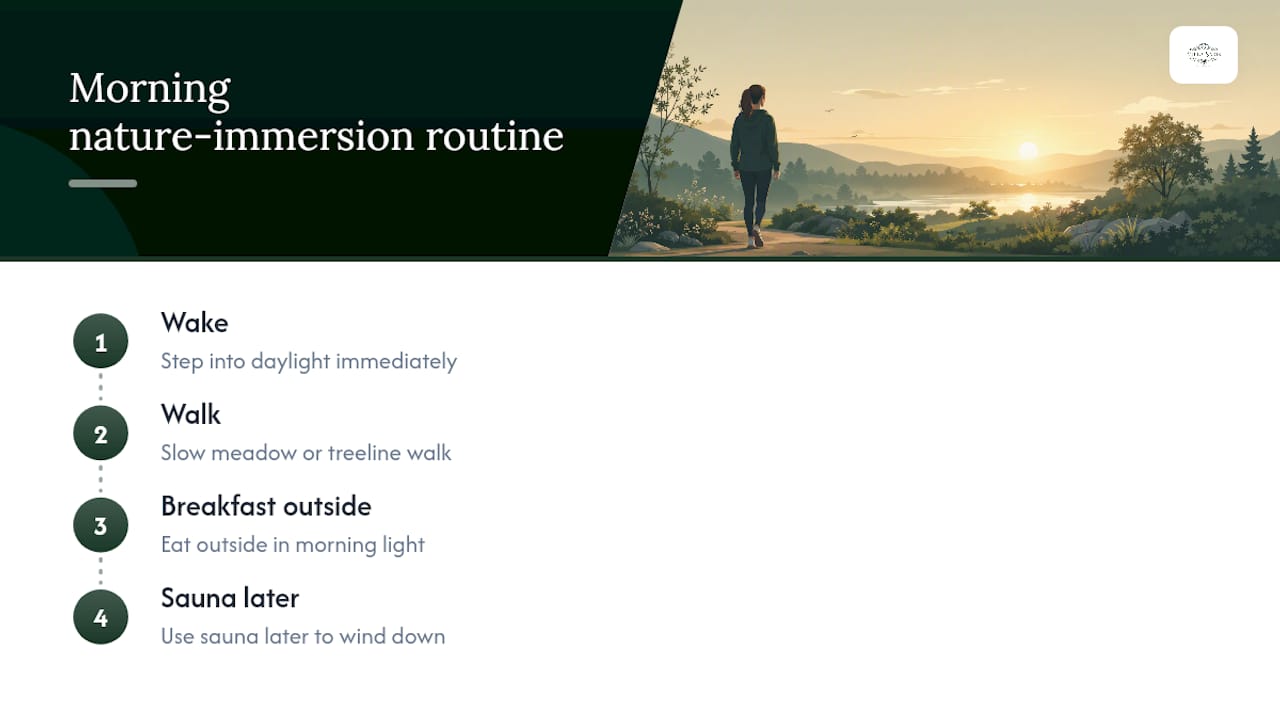
This isn't a technique so much as a rhythm, and it's one our nature immersion retreat guidance leans on directly.
Pro Tip: Walking while you take in morning light does more for circadian entrainment than standing still, since gentle movement reinforces the wake signal your body clock is reading.
— Christian
Sources
The BMC Public Health study provides the core sleep-midpoint and PSQI data. The circadian rhythm review covers mechanisms and risk. Nature Communications supplies wearable-based sleep architecture findings, and Folkhälsomyndigheten offers public-health exposure guidance.
If you'd like to build a routine like this into a longer stay, Villa Sakis's countryside vacation guide sets out what to expect, and the house itself is worth a look if a few unhurried mornings sound like exactly what you need. Guests planning a longer reset, particularly after a stretch of burnout, often find a multi-day stay gives the habit time to take hold. Other retreats built around outdoor mornings, like this mountain wellness programme, follow a similar logic.
- Review: Effects of light on circadian rhythms, sleep and mood
- Real-world melanopic light exposure and sleep architecture (Nature Communications / 2026)
- Ljus och hälsa — Folkhälsomyndigheten (Swedish public health agency report)
FAQ
Is it good to sleep with the light on?
No. Light exposure during sleep, even dim light, can suppress melatonin and fragment sleep architecture. Keep bedrooms dark and save bright light exposure for the first hour or two after waking.
What are the side effects of light therapy?
The most common are eye strain, headache and mild agitation, particularly with light boxes rather than natural sunlight. People with bipolar disorder or existing eye disease should consult a clinician first, since bright light can trigger mood episodes in susceptible individuals.
What kind of light is good for sleep?
Bright, natural daylight in the morning is the most effective for setting your circadian clock; dim, warm light in the evening supports sleep onset. Morning sun exposure before 10:00 is linked to an earlier sleep midpoint and better PSQI scores.
Is a light therapy lamp worth using?
It's genuinely useful if you can't get outdoor daylight, particularly in winter or with shift work, and clinical guidance points to devices around 10,000 lux used for 20 to 30 minutes each morning. Natural daylight still offers a broader spectrum and higher intensity, so treat a lamp as a substitute rather than a first choice.