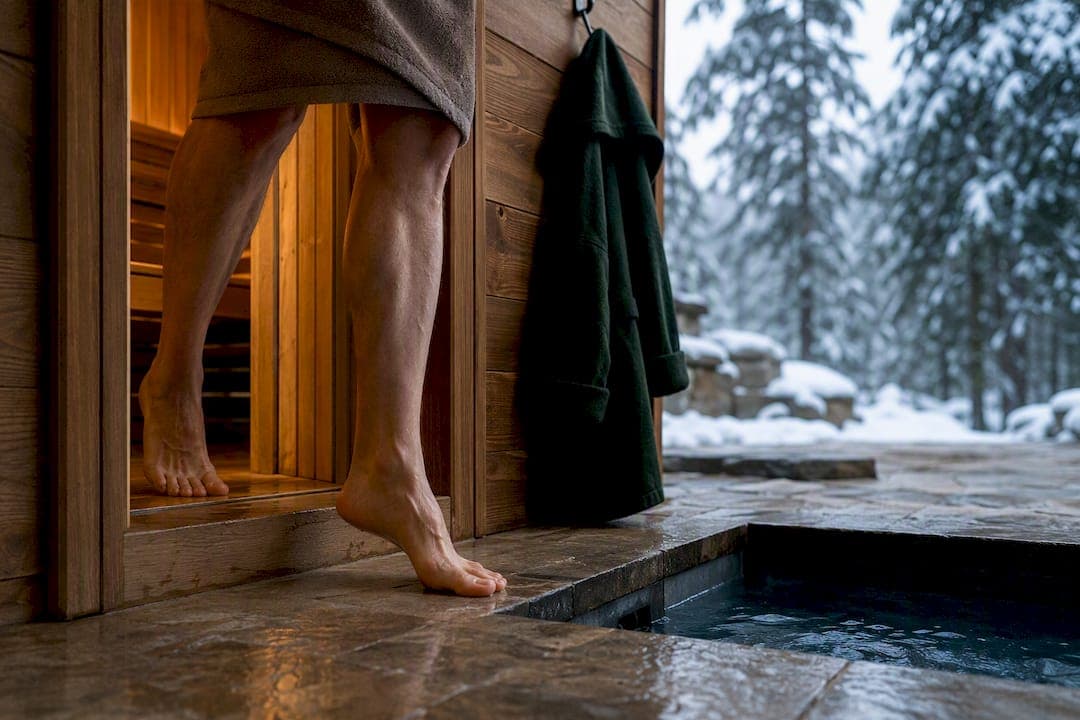
The tried and tested sequence is simple: sauna first, cold water second. Spend 15 to 20 minutes at 80 to 90°C, then move into cold water at 10 to 15°C for 30 to 60 seconds, and repeat for one or two cycles. Finish cold if you want alertness, or warm if you want to wind down for sleep. Anyone with cardiovascular concerns should speak to a doctor before starting.
TL;DR:
- Cold water immersion causes an immediate surge in alertness and mood by increasing catecholamines, which can enhance morning energy but may blunt muscle gains if done after heavy lifting.
- Regular sauna sessions are strongly linked to reduced mortality risk and improved cardiovascular health, whereas cold plunges provide moderate benefits for soreness and vascular responsiveness.
- Cold shock responses can be dangerous for individuals with heart or lung conditions, requiring medical clearance and gradual exposure to prevent adverse effects like afterdrop or hypothermia.
- Beginners should start with short cold immersions of 30 to 60 seconds and build tolerance over weeks, prioritizing slow breathing and careful re-warming afterward.
- Frequency and timing matter: two to four weekly sessions suit recovery and sleep, with cold exposure ideally scheduled several hours away from resistance training to avoid interfering with muscle growth.
Table of Contents
- Bastu och kallbad rutiner: what the sequence actually does for your body
- Safety and contraindications you need to know first
- How do you structure a beginner sauna and cold plunge session?
- When should you schedule sauna and cold sessions each week?
- Two weekly plans you can copy and adapt
- What kit and setup make sessions safer
- Where these routines come from
- Why the ritual matters as much as the protocol
- A private setting for practising sauna and cold-bath rituals
- Sources
- FAQ
Bastu och kallbad rutiner: what the sequence actually does for your body
Heat and cold work through opposite mechanisms, and that contrast is the entire point of the ritual. The sauna dilates blood vessels and raises your core temperature, while the cold plunge slams them shut again. Over weeks of repetition, this push and pull trains your vascular system to respond faster and more efficiently to stress, which is a large part of why the practice has such a devoted following across Sweden and Finland.
The immediate effects are the ones you notice first. Cold-water immersion triggers a sharp rise in catecholamines like norepinephrine and dopamine, which explains the jolt of alertness and improved mood many people feel within minutes of stepping out of the water. That same surge is why cold exposure works well in the morning and less well right after heavy lifting, since it can blunt the muscle-building response if timed poorly.
The longer-term picture is more measured than the wellness industry often suggests. Contrast or cold-water immersion modestly reduces perceived soreness after exercise, but the supporting trials are inconsistent in design, so treat it as a helpful nudge rather than a guaranteed fix. Sauna use on its own carries the stronger evidence base: frequent sessions are linked to lower cardiovascular and all-cause mortality in observational cohorts, though that link says more about heat exposure than about the cold plunge that often follows it.
What the routine reliably delivers:
- A fast lift in alertness and mood from the cold shock response
- Reduced perceived muscle soreness after training, in modest amounts
- Better sleep when a session ends warm rather than cold
- Improved vascular responsiveness with consistent, repeated practice
The core insight: the ritual of alternating heat and cold is genuinely good for stress resilience and recovery, but it isn't yet proven as a standalone longevity intervention. Regular sauna bathing carries the strongest long-term health signal of the two.
Safety and contraindications you need to know first
Cold water does something dramatic to your body the moment it touches your skin. Heart rate and blood pressure spike almost instantly. This is called cold shock, and for most healthy adults it passes within a minute. For people with underlying heart or lung conditions, that spike can be genuinely dangerous.
Certain groups should get medical clearance before trying contrast therapy at all: anyone with diagnosed cardiac disease, uncontrolled hypertension, a history of fainting or syncope, and pregnant women. If you're managing a chronic respiratory condition, the same caution applies, since cold immersion stresses breathing control as much as it stresses the heart. If you're introducing children to sauna, the supervision rules are stricter still, and it's worth reading a dedicated guide on sauna with children before you bring the family along.
Watch for afterdrop, too. This is the delayed drop in core body temperature that happens after you leave cold water, as blood returns to your skin and carries cold with it. Left unmanaged it can tip into mild hypothermia, particularly outdoors in winter. The warning signs include uncontrollable shivering, confusion, or slurred speech.
Follow these steps every session:
- Check the water temperature with a thermometer rather than guessing.
- Never dip alone in open water. Have a buddy or supervisor present.
- Skip alcohol before or after, since it masks cold-shock symptoms.
- Re-warm gradually with dry layers and warm (not hot) drinks.
- Hydrate well before and after both the heat and cold phases.
Pro Tip: If you ever feel your breathing become ragged or panicked in the cold, get out immediately. Gasping is your body's warning sign, not something to push through.
How do you structure a beginner sauna and cold plunge session?
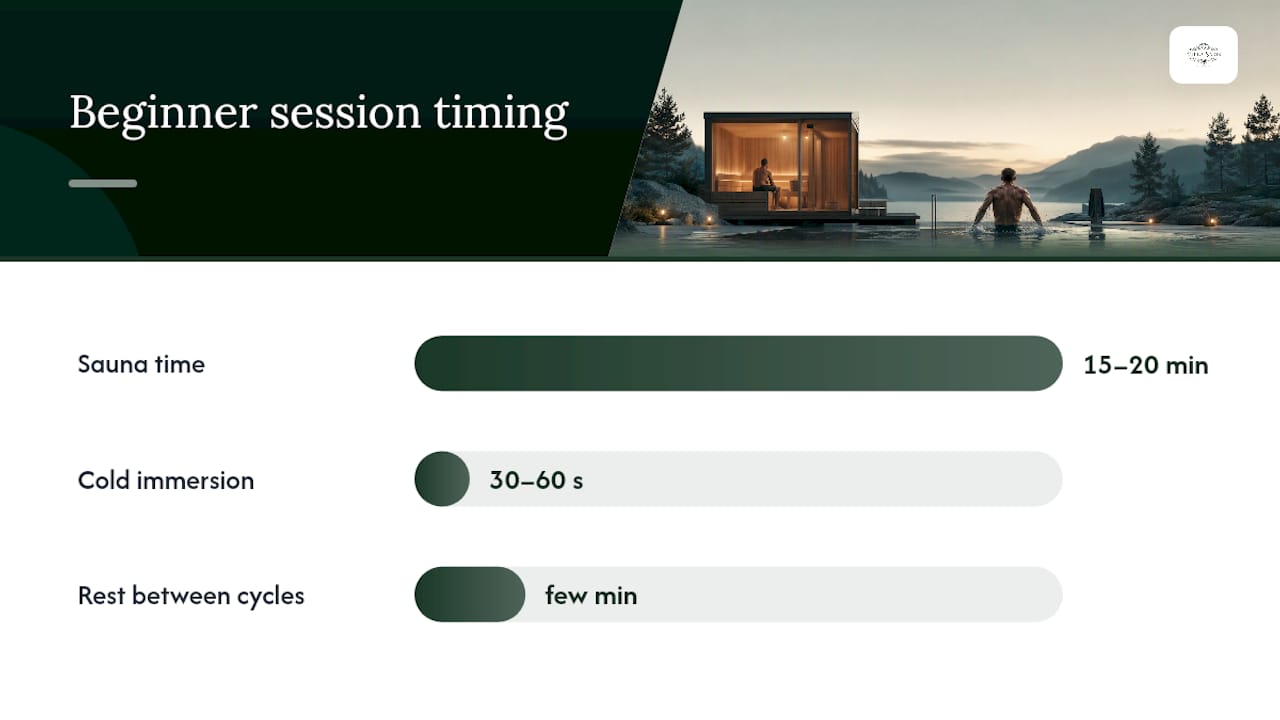
A good session script removes the guesswork, and progression should always be gradual rather than heroic.
Beginner routine:
- Sauna at 80 to 90°C for 15 to 20 minutes.
- Cold immersion at 10 to 15°C for 30 to 60 seconds.
- Repeat for one to two total cycles.
- Finish warm for relaxation, or cold for alertness.
Contrast protocols generally recommend starting at the shorter end of these ranges, particularly for the cold phase, and extending duration only once your body has adapted over several sessions.
Intermediate and advanced adjustments look different once you've built a base of tolerance:
- Extend cold immersion to one to three minutes, but only after weeks of consistent shorter exposure.
- Add a third cycle cautiously, watching for excessive fatigue rather than chasing a number.
- Keep sauna time steady rather than pushing heat exposure ever higher.
Breathing control matters more than most people expect on the first cold entry. Step in slowly rather than jumping. Take slow nasal breaths, and count them if it helps distract your mind from the shock. Avoid gasping, since rapid shallow breathing in cold water is what tips cold shock towards panic. Practical guides suggest building tolerance over two to six weeks rather than forcing progress in a single weekend.
Between cycles, give yourself a few minutes to let your heart rate settle before returning to heat. Afterwards, re-warm with a warm shower or dry robe rather than jumping straight into another hot phase, since your body needs a genuine reset between rounds. If you're new to sauna culture generally, it's worth reading up on sauna etiquette so shared facilities feel comfortable rather than intimidating.
When should you schedule sauna and cold sessions each week?
Frequency depends entirely on what you're chasing. For general recovery and mood, two to four contrast sessions a week is a sensible target. If cardiovascular benefit is your priority, the strongest observational link appears at four to seven sauna sessions weekly, independent of whether cold immersion follows.
Timing within the day matters as much as weekly count:
- Morning sessions suit people chasing alertness. End on cold for the sharpest catecholamine lift.
- Evening sessions suit sleep. Sauna raises core temperature and the subsequent drop helps trigger sleep when timed one to two hours before bed, so finish warm rather than cold.
- Around strength training, avoid cold immersion immediately afterwards if hypertrophy is your goal, since the same catecholamine surge that lifts your mood can blunt the muscle-building response when timed too close to lifting. Save cold exposure for endurance days, or space it several hours from a strength session, a distinction covered in more depth in this guide to sauna use for athletes.
Build up gradually over two to six weeks rather than diving into a demanding schedule from day one. Your tolerance for both heat and cold develops with repetition, not with a single ambitious session.
Two weekly plans you can copy and adapt
The two schedules below split by goal: one built around training recovery, the other around general wellness and sleep.
| Day | Recovery-focused plan | Wellness-focused plan |
|---|---|---|
| Monday | Rest, sauna only | Evening sauna, finish warm |
| Tuesday | Cardio + short morning cold plunge | Rest |
| Wednesday | Contrast session after endurance training | Evening sauna, finish warm |
| Thursday | Rest, sauna only | Short morning cold plunge |
| Friday | Cardio + short morning cold plunge | Rest |
| Saturday | Contrast session after endurance training | Evening sauna, finish warm |
| Sunday | Full rest | Short morning cold plunge |
Notice that both plans leave at least one full rest day, and neither stacks cold immersion directly after a strength session. Swap days around freely to fit your week, but keep the underlying pattern: build tolerance gradually, and don't chase every possible session in the first fortnight.
What kit and setup make sessions safer
A few small items remove most of the friction from a contrast routine. Keep a water thermometer and a timer on hand so you're never guessing at temperature or duration, along with a robe, non-slip shoes, a warm hat, an insulated water bottle, and spare dry towels for the re-warming phase.
Where you plunge matters too. Lake or seawater gives the most authentic experience but temperatures vary by season and weather, cold-water immersion in mountain settings demands extra caution around ice and current. A plunge tub gives consistent, controllable temperatures. A cold shower is the most accessible option if neither is available.
- Never plunge headfirst; ease in feet first to control your breathing.
- Use a buddy system for any open-water dip.
- Skip alcohol entirely around sauna and cold sessions.
- Check ice thickness and weather conditions before winter dips.
Pro Tip: Pack for the cold phase as carefully as you pack for the heat. A guide like this winter bathing packing list covers the small items people forget, like a second dry towel.
Where these routines come from
The step-by-step scripts in this guide draw on practical experience guiding guests through sauna and cold-water routines, alongside published evidence on contrast therapy and cold shock. Several companion guides expand on specific pieces of the puzzle:
- A winter bathing packing list for what to actually bring
- A family sauna safety guide for supervising children
- Notes on sauna contraindications worth checking before you travel
A private sauna and direct lake access give guests a controlled, unhurried setting to practise the routines described here rather than rushing through a public facility on a schedule.
Why the ritual matters as much as the protocol
What keeps people returning to sauna and cold bathing isn't the physiology, it's the rhythm. A short, repeatable routine slots naturally into a weekend away or a weekly habit at home, and that repetition is what actually produces results over months rather than days.
For families or groups of guests, the same principle holds with softer edges: shorter cold exposure, closer supervision, and no pressure to match anyone else's pace. Progress slowly, and let safety guide every step rather than ambition.
— Christian
A private setting for practising sauna and cold-bath rituals
If you'd rather learn this routine somewhere unhurried than squeeze it into a gym locker room, Villa Sakis offers a private sauna and direct lake access set within an 18th-century Swedish farmhouse. There's no queue for the sauna and no shared cold plunge, just your own pace and the forest around you.

This is an optional setting, not a clinical recommendation. It suits families, couples, and small groups who want to try the sequence described above somewhere private and unrushed rather than rushed between other guests. The house itself sleeps groups comfortably, with a self-catering kitchen and meadows and pine forest at the door. Before you arrive, it's worth reading the planning guide to a Swedish countryside stay so you know what to pack and what to expect from the lake in different seasons. Check dates and book your stay directly on the Villa Sakis site.
Sources
- Are saunas and cold plunges good for your health? — BBC Future
- Contrast therapy: what alternating sauna heat and cold plunges does for your body — HighTech Health
- Benefits of cold plunge and sauna: The complete guide to contrast therapy — InHouseWellness
- Sauna vs kallbad: återhämtning och fördelar — SuperAge (Swedish)
This article is general information, not a substitute for advice from a qualified doctor. Consult a qualified healthcare professional about your own circumstances before acting on anything here.
FAQ
How long should you stay in a cold bath?
Beginners should aim for 30 to 60 seconds, extending towards one to three minutes only after several weeks of gradual adaptation.
Should you shower after a sauna session?
Yes, a lukewarm or cool shower after sauna helps close pores and regulate your temperature before you dress or head into cold water, and it's standard etiquette in shared facilities.
What are the downsides of cold baths?
The main risks are cold shock, which raises heart rate and blood pressure sharply, and afterdrop, where core temperature keeps falling after you exit the water. Both are manageable with gradual exposure, supervision, and proper re-warming.
How long should you sit in a sauna?
Most protocols recommend 10 to 30 minutes per sauna period, with beginners starting around 15 to 20 minutes at 80 to 90°C before progressing further.
Can cold plunges affect strength training gains?
Cold immersion performed immediately after resistance training can blunt the muscle-building response, so it's better scheduled on endurance days or several hours away from a strength session.