
Regular sauna use delivers a measurable range of health benefits, from cardiovascular support and stress relief to faster muscle recovery and stronger immune function. The evidence comes from decades of Finnish population studies, randomized controlled trials, and systematic reviews, making it one of the more thoroughly examined wellness practices available. Here is what the research shows, and what it still cannot fully explain.
Key sauna benefits at a glance:
- Reduced systolic blood pressure in general populations
- Lower long-term risk of cardiovascular disease and hypertension
- Improved mood, reduced anxiety, and better sleep quality
- Faster muscle recovery through heat shock protein activation
- Improved lung function and reduced incidence of common colds
- Lower risk of dementia and neurocognitive disease with frequent use
- Skin health improvements including better hydration and barrier function
- Enhanced immune response and reduced respiratory disease risk
How sauna use supports cardiovascular health
The cardiovascular case for regular sauna use is among the strongest in the research. Population-based studies consistently link frequent sauna bathing to reduced risk of cardiovascular disease, hypertension, and stroke, with proposed mechanisms including improved endothelial function, reduced arterial stiffness, and lower systemic blood pressure.
The physiological response during a session is striking. Heat causes blood vessels to dilate, heart rate to rise, and cardiac output to increase, producing a circulatory effect that resembles moderate exercise. Over time, this repeated stimulus appears to condition the vascular system in ways that benefit long-term heart health.
Randomized controlled trials, however, tell a more nuanced story. The best-supported effect is on blood pressure: systolic pressure drops by about 4 points in general populations and 2.5 points in individuals at higher cardiac risk. Trials otherwise find mixed results for heart health markers.
How sauna use eases stress and supports mental health
Heat has a quieting effect on the nervous system that goes well beyond simple relaxation. During a sauna session, the body's sympathetic stress response gradually gives way to a parasympathetic state, lowering cortisol and creating the kind of physiological calm that is otherwise difficult to achieve without sustained meditation or exercise. Research confirms that sauna bathing improves mood and is associated with lower risks of dementia and psychosis in long-term studies.
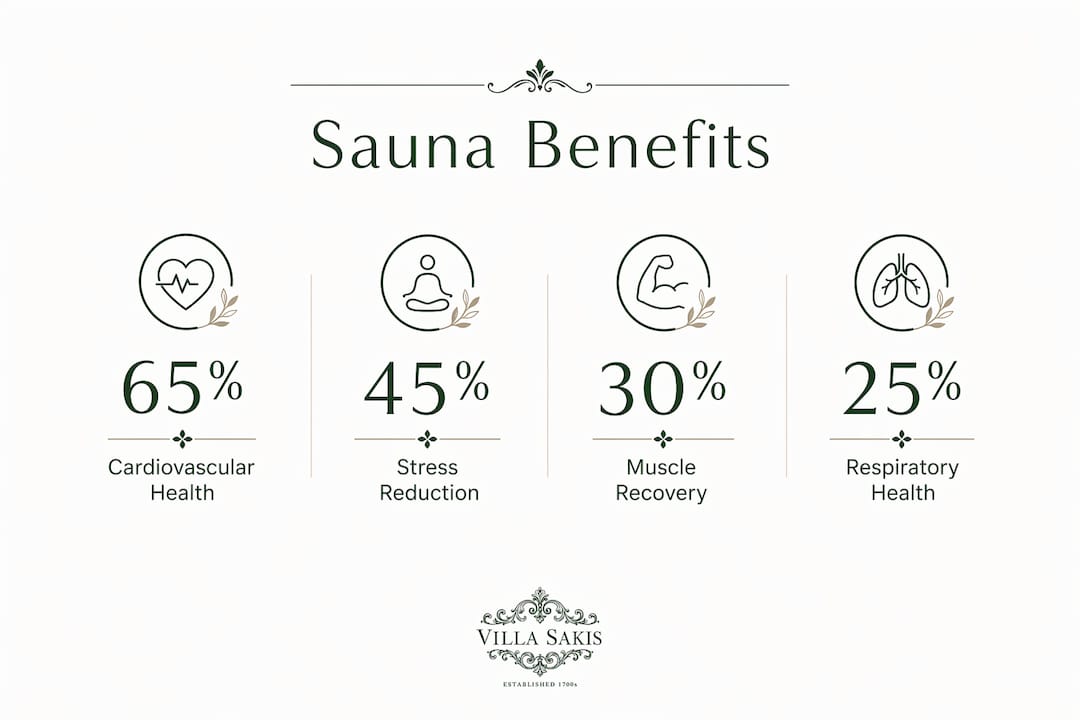
Sleep is another quiet beneficiary. The drop in core body temperature after leaving a hot sauna signals the brain to prepare for sleep, deepening the transition into restorative rest. For people carrying high stress loads, whether from work or personal circumstances, this thermal reset can make a meaningful difference to sleep quality over time.
Pro Tip: Step into the sauna in the early evening rather than late at night. The post-session temperature drop aligns with the body's natural sleep onset window, making it easier to fall asleep within an hour or two.
Key mental wellness benefits associated with regular sauna use:
- Reduced anxiety and improved emotional regulation
- Better sleep quality through post-session core temperature drop
- Lower long-term risk of dementia and Alzheimer's disease
- Reduced risk of psychosis in men who sauna four to seven times per week
- Improved headache management, including chronic tension-type headaches
What sauna does for muscle recovery and physical performance
Heat exposure after exercise triggers a cascade of physiological responses that directly support muscle repair. Heat shock proteins are activated during sauna sessions, helping to refold damaged proteins and reduce inflammation in stressed muscle tissue. Growth hormone release also increases, supporting the repair process, though research is clear that this does not translate into additional muscle mass gains.

One of the more practical findings for athletes involves plasma volume. Heat-induced plasma volume expansion improves the body's oxygen delivery capacity, which over time can enhance endurance and cardiovascular fitness. This makes post-workout sauna use particularly appealing for runners, cyclists, and anyone training for aerobic performance.
The choice between sauna types matters here. Traditional Finnish saunas operate at 80–100°C and produce intense cardiovascular responses, while infrared saunas run cooler at roughly 40–60°C and penetrate tissue more deeply with radiated heat. Research from Frontiers in Sports and Active Living found that regular post-exercise infrared sauna use improved jump performance and power output in female athletes over six weeks, without impairing muscle hypertrophy. Cold immersion after strength training, by contrast, may inhibit muscle growth signaling, whereas sauna use does not carry that risk.
A practical recovery protocol:
- Finish your workout and allow 10–15 minutes for heart rate to return toward baseline before entering the sauna.
- Choose your sauna type based on tolerance: traditional Finnish for intense heat adaptation, infrared for a gentler, longer session.
- Limit session length to 15–20 minutes for traditional saunas; infrared sessions can extend to 30–40 minutes comfortably.
- Hydrate immediately after to replace fluids lost through sweating.
- Cool down gradually rather than stepping directly into cold air or cold water, which can stress the cardiovascular system.
- Repeat consistently for cumulative benefit; occasional sessions produce less adaptation than a regular weekly rhythm.
Broader wellness effects: respiratory health, immunity, and skin
The health effects of regular sauna use extend well beyond the heart and muscles. Sauna bathing improves lung function30275-1/fulltext), including vital capacity, ventilation, and forced expiratory volume, and has shown benefit for people with asthma, chronic bronchitis, and obstructive pulmonary disease. A trial by Ernst and colleagues found that sauna use halved the incidence of common colds in the sauna group during the final three months of the study period.
Immune function follows a similar pattern. Heat exposure appears to stimulate immune activity in ways that reduce susceptibility to viral infections, likely through its anti-inflammatory and antioxidant effects on circulating immune cells. Skin health also responds: regular Finnish sauna use has been linked to improved epidermal barrier function, better stratum corneum hydration, and faster recovery of skin pH after disruption.
| Wellness area | Observed effect | Evidence level |
|---|---|---|
| Respiratory function | Improved lung capacity; reduced asthma and COPD risk | Observational and interventional studies |
| Common cold incidence | Reduced frequency with regular use | Randomized trial (Ernst et al.) |
| Immune function | Enhanced response; lower viral infection rates | Observational data |
| Skin health | Better hydration, barrier stability, psoriasis management | Small clinical studies |
| Musculoskeletal pain | Reduced pain in arthritis, fibromyalgia, and headache | Randomized and observational studies |
| Quality of life | Better physical function, vitality, and social functioning | Cross-sectional cohort analysis |
Safe sauna use: guidelines, risks, and who should be cautious
Most healthy adults can use a sauna safely, but the details of how you use it matter considerably. Sessions of 15–20 minutes at appropriate temperatures raise core body temperature to therapeutic levels without excessive cardiovascular strain. The optimal frequency for health benefits, based on current evidence, sits at 3–7 sessions per week.
Sauna types differ meaningfully in their temperature ranges and recommended durations:
- Traditional Finnish sauna (80–90°C): 15–20 minutes per session; high cardiovascular demand
- Infrared sauna (49–60°C): allows longer sessions of 30–40 minutes with reduced overheating risk
- Steam room (43–49°C): limit to 10–15 minutes due to high humidity reducing sweat evaporation
Certain groups need to approach sauna use carefully. People with low blood pressure, valve disease such as aortic stenosis, or heart failure should consult a physician before starting. Overheating, dehydration, and cardiovascular overload are the primary risks, and they are avoidable with sensible practice.
Practical safety guidelines:
- Start with five-minute sessions if you are new to sauna use, then extend gradually
- Leave immediately if you feel lightheaded, dizzy, or excessively hot
- Avoid alcohol before or during a session
- Cool down gradually after exiting; do not step directly into cold outdoor air
- Drink water afterward to replace fluids lost through sweating
- Wait 10–15 minutes after exercise before entering, allowing heart rate to settle
What experts and systematic reviews say about the evidence
The science on sauna use is genuinely promising, but researchers are careful about overstating what it proves. A systematic review published in Clinical Effects of Regular Dry Sauna Bathing analyzed 40 clinical studies involving 3,855 participants and found that most reported beneficial health effects, yet noted that the majority of studies were small and that optimal frequency and duration remain uncertain. Only 13 of those 40 studies were randomized controlled trials.
The gap between observational and interventional findings is the central tension in this field. Long-term Finnish cohort studies, some following participants for over 20 years, show striking associations between frequent sauna use and reduced mortality, dementia risk, and cardiovascular disease. Shorter randomized trials, typically lasting weeks to months, often find more modest effects. Both types of evidence have their limits.
What the evidence does support clearly is that sauna use functions best as a complement to an active lifestyle, not a substitute for it. The synergy between sauna and exercise appears to amplify the benefits of both, with each reinforcing the cardiovascular, circulatory, and immune adaptations the other produces. Personal tolerance should guide frequency and duration, since individual responses to heat vary considerably.
There is something quietly fitting about the fact that one of the most studied wellness practices in the world is also one of the oldest. At Villa Sakis, a historic 18th-century Swedish log farmhouse set among pine forests and open meadows, the private sauna is not an amenity bolted onto a modern retreat. It is part of the original rhythm of the house, a place where the restorative logic of heat, stillness, and unhurried time has been understood for generations. If you are drawn to the kind of slow, deliberate wellness that the research increasingly supports, the Swedish countryside offers a setting where that practice feels entirely at home.

Key Takeaways
Regular sauna use offers clinically supported benefits for cardiovascular health, stress relief, muscle recovery, and respiratory function, with the strongest evidence coming from long-term observational studies and systematic reviews.
| Point | Details |
|---|---|
| Blood pressure reduction | Systolic pressure drops by about 4 points in general populations and by 2.5 points in high-risk groups. |
| Session length by type | Finnish saunas: moderate duration; infrared saunas: generally longer sessions; steam rooms: shorter sessions advised. |
| Mental health link | Long-term frequent use is associated with lower risk of dementia and psychosis. |
| Recovery protocol | Wait 10–15 minutes after exercise before entering; hydrate and cool down gradually after. |
| Sauna as complement | Benefits are strongest when sauna use is paired with regular physical activity, not used as a replacement. |