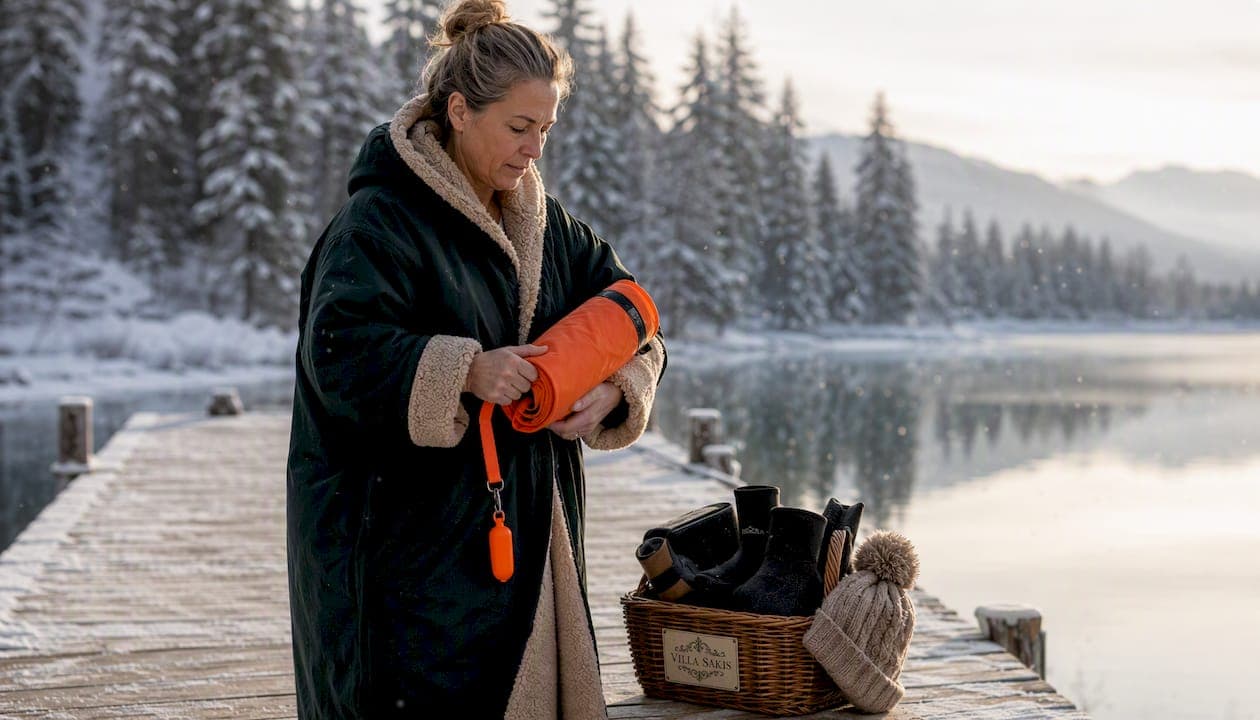
Your winter bathing kit, in short: a thermal changing robe, a large towel plus a compact microfibre towel, neoprene footwear, a warm hat, a tow float, a waterproof phone case or dry bag, a thermos with a hot drink, and spare dry layers. That is your complete cold water swimming gear, and everything else below builds on it.
- Thermal changing robe (windproof, fleece-lined)
- Large terry towel and compact microfibre towel
- Neoprene booties (3–5 mm)
- Warm hat
- Tow float / swim buoy
- Waterproof phone case or dry bag
- Thermos with hot liquid
- Spare dry base and mid layers
TL;DR: Pack these eight items before you leave the farmhouse, and your winter dip will be safer, warmer, and far more comfortable.
Pro Tip: The tow float is the single item you should not leave behind. It keeps you visible on open water, provides buoyancy if you cramp, and doubles as a dry bag for your keys and phone. Villa Sakis guests heading to the lake should treat it as non-negotiable.
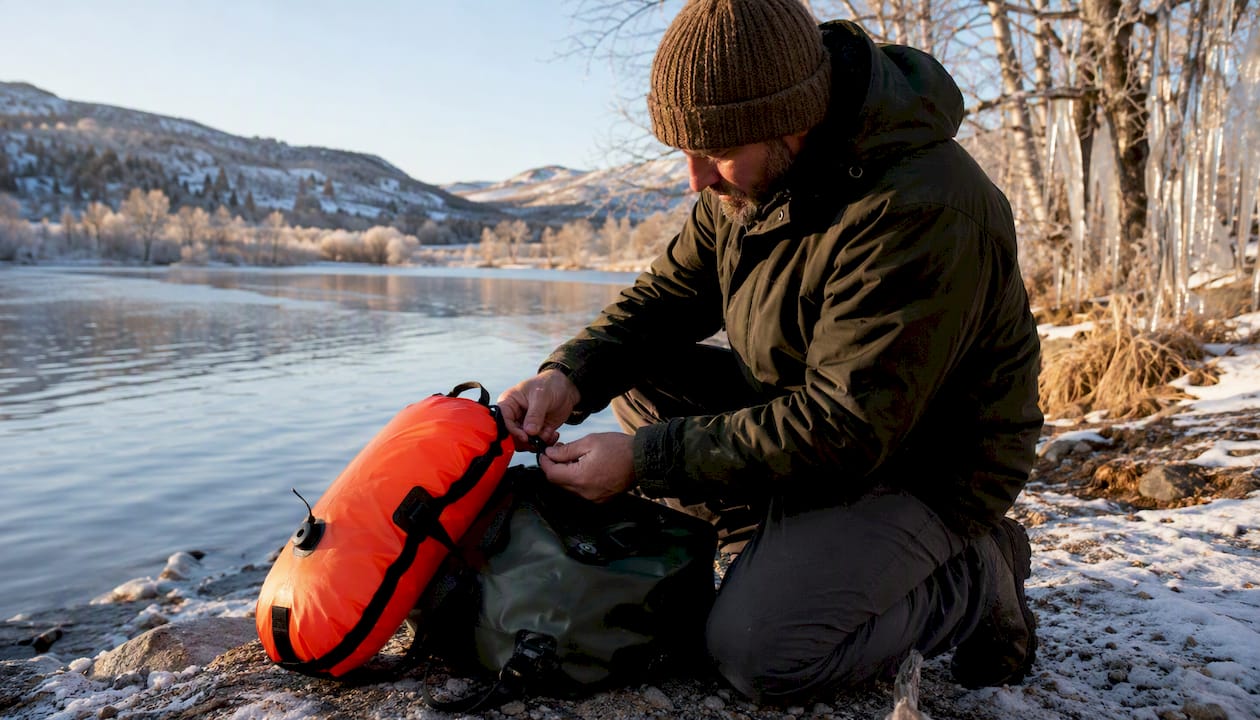
Table of Contents
- Your complete winter bathing pack list
- Why the tow float is non-negotiable
- How to change and recover quickly after your dip
- Pre-trip checks for farmhouse guests
- Your printable winter bathing checklist
- Key takeaways
- A note from the host on winter bathing at Villa Sakis
- A private winter wellness stay at Villa Sakis
- Useful sources
Your complete winter bathing pack list
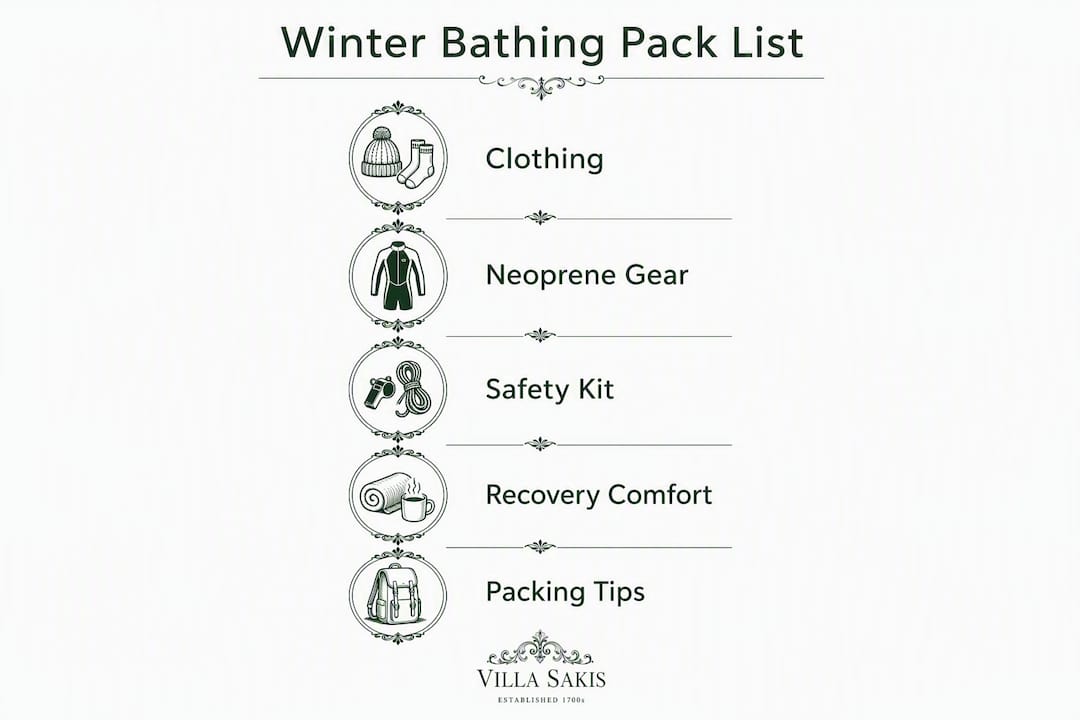
A well-chosen pack list covers four categories: clothing, neoprene insulation, safety kit, and recovery comfort. Here is each item with a brief note on what to choose.
Clothing
Thermal changing robe. A windproof, fleece-lined robe is the single most versatile piece of kit. Look for a large hood, deep pockets, and a full-length zip. Brands such as Dryrobe and Orca make well-regarded options available across UK outdoor retailers.
Towels. Carry two: a large, thick terry towel for warmth and drying in the changing area, and a compact microfibre towel for the walk to the water. Both serve distinct purposes when you are walking from a farmhouse to a lake shore.
Spare dry layers. A thermal base layer and a fleece mid layer, packed in a dry bag. Loose-fitting is better than tight; you will be pulling them on with cold, clumsy fingers.
Warm hat. A wool or fleece hat you can pull on the moment you exit the water. An unprotected head loses heat quickly, so this is not optional.
Thermal socks and slip-on insulated shoes. Lay these out in the order you will put them on. Fumbling with laces after a dip is miserable and slows rewarming.
Neoprene insulation
Neoprene booties. For brief dips in typical winter water, 3–5 mm booties are the standard choice. Size up slightly to allow for a thin liner sock. For sub-5°C water or longer exposure, 5–7 mm is worth considering.
Neoprene gloves. Choose gloves with glued and blind-stitched or taped seams rather than stitched seams, which let water flush through and reduce insulation significantly.
Neoprene cap or hood. A silicone swim cap beneath a neoprene hood (the double-cap method) is particularly effective for head insulation. A neoprene hood alone is a good starting point for most guests.
Safety kit
Tow float. Covered in detail in the next section. Carry it every time.
Waterproof phone case or dry bag. Attach it to your tow float or keep it on the bank with your land companion. Your phone is your emergency line.
Whistle. Small, light, and potentially life-saving. Clip it to your robe or tow float.
Basic first-aid kit. A compact kit with foil blanket, plasters, and a space blanket. Leave a duplicate in the farmhouse.
Recovery comfort
Thermos with hot liquid. Tea, broth, or warm squash. Sip it immediately after dressing. Avoid alcohol, which accelerates heat loss.
Insulated sitting mat or folding stool. Standing on cold ground slows rewarming. A foam mat costs almost nothing and makes a real difference.
Hand warmers. Air-activated warmers tucked into gloves or pockets during the post-dip routine. Budget options from outdoor retailers work well.
Small snacks. A handful of nuts or a cereal bar helps restore energy after cold exposure.
Pro Tip: Many beginners pack summer swimwear and assume it is enough. Dedicated thermal layers are a safety choice, not a luxury — cold water conducts heat roughly 25 times faster than air, so fashion swimwear offers almost no protection.
Why the tow float is non-negotiable
A tow float is considered essential for open-water winter swimming for three reasons: it makes you visible to boats and your land companion, it provides static buoyancy if you cramp and cannot swim, and it keeps a dry compartment for your phone and keys. For guests walking from a farmhouse to a private lake, it also signals your position if you drift or need help.
Water conducts heat much faster than air. That single fact explains why cold-water swimming carries risks that cold-air activities do not, and why dedicated insulation is a safety item rather than a comfort upgrade. Hypothermia can develop faster than most beginners expect, particularly in water below 10°C.
Afterdrop is a related risk: core temperature continues to fall after you leave the water, as cold blood from your extremities returns to your core. A windproof, fleece-lined robe and immediate shelter reduce afterdrop severity more than cutting your immersion time does.
Core safety rules
- Never swim alone. A land-based companion with a charged phone is the minimum.
- Set a conservative time limit before you enter. For a first dip, seconds to a few minutes is the experienced swimmer's recommendation.
- Know the signs of hypothermia: uncontrolled shivering, confusion, slurred speech, loss of coordination. Exit immediately and seek warmth.
- Cramp in cold water is common. Float on your tow float, signal your companion, and move calmly to the bank.
- Agree an emergency plan before you enter: who calls for help, where the nearest road is, and what the postcode is for emergency services.
How to change and recover quickly after your dip
Rapid windproof cover-up and drying are the priorities the moment you exit. The sequence below is drawn from veteran winter swimmers and is worth rehearsing before your first dip.
- Exit the water calmly and step onto your insulated mat immediately.
- Secure your tow float and hand it to your companion or clip it to your bag.
- Towel dry your head and torso first, then legs.
- Pull on your thermal robe before anything else. Hood up.
- Sit or stand on the mat and put on your hat.
- Dry socks and slip-on shoes next. Do not attempt laces.
- Sip from your thermos. Warm liquid from the inside, insulation from the outside.
- Move to a sheltered spot or, at Villa Sakis, directly to the private sauna for a sauna and cold-water recovery session.
- Add your base and mid layers once you are inside and your hands have recovered some dexterity.
Lay your clothing out in this exact order before you enter the water. Because finger dexterity drops rapidly after a cold dip, simple fastenings and large openings are far safer than zips and buttons you cannot manage.
Pro Tip: Avoid vigorous exercise immediately after exiting. Gentle movement and insulating layers are more effective at managing afterdrop than jumping around to warm up, which can accelerate cold blood returning to the core.
Pre-trip checks for farmhouse guests
A few quiet preparations before you leave the house make the difference between a restorative dip and an avoidable incident.
- Access and approach. Confirm with your host that the lake or shore is accessible and check the approach surface: rocks, steps, or a muddy path each require different footwear.
- Local conditions. Check the water temperature forecast and the weather for wind chill. Local winter-bathing groups and organised spots are a good source of area-specific safety knowledge.
- Health. Guests with cardiovascular conditions should consult a clinician before attempting a winter dip, and disclose any medication that affects cold tolerance.
- Logistics. Leave a simple written plan with the host: where you are going, who is with you, and when you expect to return. Charge your phone fully before you leave.
Your printable winter bathing checklist
Pack this list the evening before. Tick each item, then leave a copy with your host.
- Thermal changing robe
- Large terry towel
- Compact microfibre towel
- Neoprene booties (size up one)
- Neoprene gloves
- Neoprene cap or hood
- Tow float / swim buoy
- Waterproof phone case or dry bag
- Thermos with hot drink
- Warm hat
- Thermal base layer and fleece mid layer
- Thermal socks and slip-on shoes
- Whistle
- Hand warmers
- Insulated sitting mat
- Basic first-aid kit with foil blanket
Packing notes. Size neoprene booties up by half a size to allow for a liner sock. If space is limited, prioritise the robe, tow float, thermos, and hat above everything else. Pack wet items in a labelled dry bag so they stay separate from dry kit on the return.
Pro Tip: Label your wet bag clearly before you leave. After a cold dip, small decisions become harder. A bag marked "WET" means you will not accidentally pack a soaked robe next to your dry layers.
Key takeaways
A safe winter dip requires a tow float, a windproof changing robe, and a conservative time limit — everything else supports those three anchors.
| Point | Details |
|---|---|
| Tow float first | Treat the tow float as non-negotiable: visibility, buoyancy, and dry storage in one item. |
| Robe and afterdrop | A windproof, fleece-lined robe reduces afterdrop risk more than shortening immersion time. |
| Conservative timing | For a first dip, seconds to a few minutes is the experienced swimmer's recommendation. |
| Lay kit out in order | Finger dexterity drops fast; arrange clothing before you enter so changing is simple. |
| Villa Sakis | Guests have access to a private sauna for immediate post-dip recovery, reducing afterdrop risk on site. |
A note from the host on winter bathing at Villa Sakis
Hosting guests through the colder months has shaped how we think about winter bathing here. The lake at Villa Sakis is private, the approach is short, and the sauna is ready when you return. That combination means guests can focus on the experience rather than logistics.
What we have noticed, though, is that preparation still matters enormously, even with the best facilities on hand. Guests who arrive with a proper robe, a tow float, and a thermos have a qualitatively different experience from those who improvise. The cold is the same for everyone; the recovery is not.
For guests who want to go deeper into the cold water therapy benefits behind winter bathing, or who are curious about pairing a dip with sauna for a more deliberate wellness routine, the Villa Sakis blog covers both in detail. Read those before you arrive, pack the list above, and let the house and the landscape do the rest.
Contact us before your stay with any questions about site access, water conditions, or what the house provides. We would rather answer ten questions in advance than one urgent one at the water's edge.
A private winter wellness stay at Villa Sakis
Villa Sakis offers something most winter-bathing guides cannot account for: a private historic farmhouse where the sauna, the lake, and the changing space are yours alone. No shared facilities, no strangers, no queuing for warmth after a dip.

The private sauna sits a short walk from the lake, ready to warm you from the inside out the moment you return. Secure storage for wet kit, a self-catering kitchen for hot food and drinks, and a sheltered approach to the water mean the practical side of a winter dip is already handled. What you bring is the kit from the checklist above; what the house provides is the setting and the recovery space.
Check availability and plan your stay at Villa Sakis, or read more about the house and its facilities before you book.
Useful sources
The guidance in this article draws on the following resources. Each is worth reading for deeper technical detail or community knowledge.
- Guide till kallbad (Outdoor Wilda) — a practical Swedish-language introduction to cold bathing, covering kit and preparation.
- Essential ice-swimming gear guide (Geardle) — detailed gear advice including neoprene seam types, afterdrop physiology, and tow float rationale.
- What to wear for winter swimming in icy water (Morsowania) — neoprene thickness guidance and towel choices for cold-water swimmers.
- Vinterbad och kallbad: utrustning, tips och råd (Petra Manström) — veteran swimmer advice on changing tactics, timing, and kit priorities.
- Vinterbad — komplett guide (Söderkajak) — community knowledge on organised winter-bathing spots and area-specific safety.
- Cold water therapy benefits (Villa Sakis blog) — Villa Sakis's own guide to the wellness rationale behind cold-water exposure.
- Sauna for athletes: recovery in the Swedish countryside (Villa Sakis blog) — how to combine sauna and cold exposure for recovery at the farmhouse.