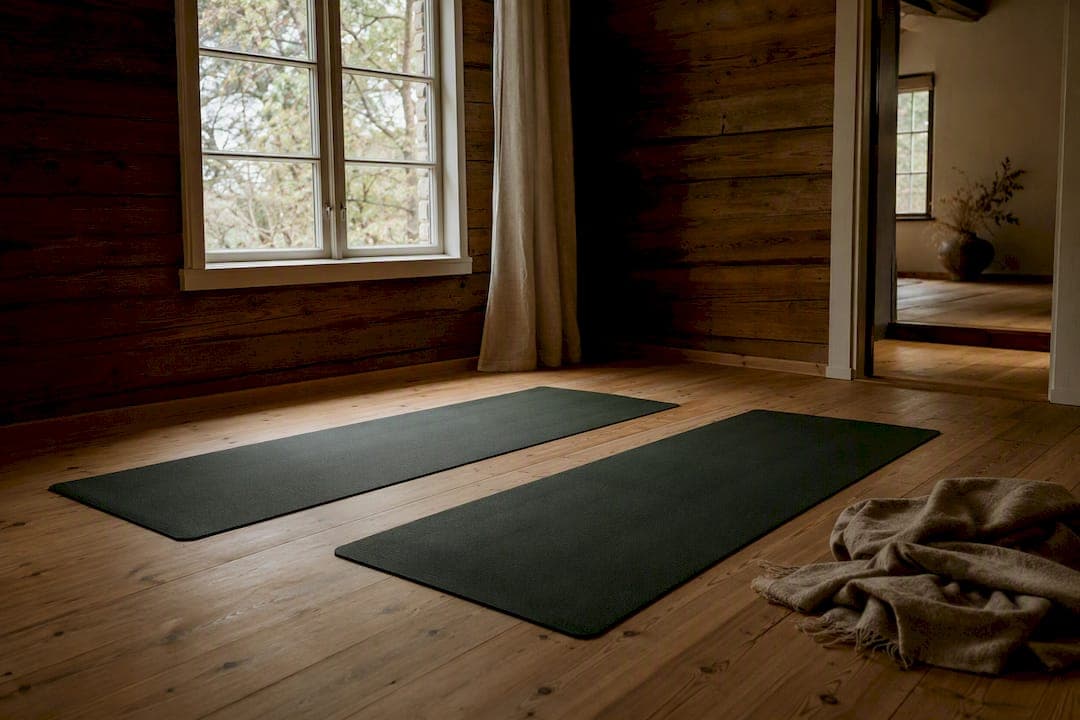
A private log-house makes a fine yoga retreat when it offers a genuine 20 m² practice area, resilient flooring, honest daylight and a quiet distance from neighbours. That is the whole test. Most listings that call themselves "wellness retreats" fall short on one of these four points, so it pays to ask before you book rather than discover the gap on arrival.
Three questions to send a host today:
- What is the floor finish in the largest room, pine, cork or sealed timber?
- Are there fixed quiet hours, and can furniture be moved for the stay?
- Is there a room of roughly 12×14 ft that could be cleared for practice?
Villa Sakis, an eighteenth-century Swedish log farmhouse set among meadows and pine forest, happens to match this brief closely, with timber rooms built for exactly this kind of slow, self-led week.
Key Takeaways
A private log-house works as a yoga retreat when it delivers roughly 20 m² of clear floor, grippy timber or cork flooring, controllable daylight and genuine acoustic privacy.
| Point | Details |
|---|---|
| Minimum practice space | Aim for about 20 m² (12×14 ft) so movement and partner work aren't cramped. |
| Floor finish decides comfort | Choose warm pine, cork or grippy sealed timber; avoid loose rugs and slick varnish. |
| Light control matters twice | East-facing windows suit morning flow; blackout curtains support evening nidra. |
| Book with specific questions | Ask about floor type, quiet hours and furniture permissions before paying a deposit. |
| Budget with a contingency | Add lodging, food, teacher fee, props and travel, plus a 10% buffer. |
| Villa Sakis fits the brief | Its private timber rooms, sauna and forest access match the checklist for a self-led retreat. |
Table of Contents
- What to look for in a timber house built for yoga i timmerhus
- How do you book a private yoga retreat in a log house?
- Setting up a timber room for practice on arrival
- What to pack for a self-led yoga retreat
- How many people should join, and what does it cost?
- What the checklist gets wrong
- Why Villa Sakis suits a private yoga retreat
- Frequently asked questions
- Sources
What to look for in a timber house built for yoga i timmerhus
Space is the first filter. A practice area needs roughly 20 square metres, or about 12 by 14 feet, enough room for sun salutations without knocking a lamp, and enough width for two people to move through partner stretches side by side. When you're studying floor plans or photographs, hold a tape measure to the screen mentally: a room that looks spacious in a wide-angle shot is often smaller in practice.
Floors matter more than most guests expect. Warm pine, cork, or a sealed timber with some grip underfoot all work well. Thick loose rugs bunch under a mat and slippery varnished boards without texture are a genuine fall risk during flowing sequences.
Light shapes the whole rhythm of a retreat. An east-facing window fills a morning practice with natural warmth, while heavier curtains or shutters matter just as much for evening yoga nidra, where darkness helps the nervous system properly downshift. Architectural studies of dedicated timber yoga spaces consistently treat this light control as a design priority, not an afterthought.
Consider these five points before shortlisting a property:
- Confirm the practice room's approximate dimensions in metres, not just "spacious" in the description.
- Ask about neighbouring properties, road noise and whether quiet hours are enforced.
- Check the kitchen can handle group meals if you're catering for a retreat.
- Count bathrooms against guest numbers, one per four to five people is comfortable.
- Confirm sauna access and reliable Wi-Fi if you plan to stream a class or work remotely either side of practice.
Pro Tip: Ask for a short video of someone unrolling a mat on the actual floor. It tells you more about grip and light than five photographs combined.
How do you book a private yoga retreat in a log house?
Booking a timber house for practice is different from booking a standard holiday cottage, because the questions that matter are architectural, not aesthetic.
Send these before committing:
- What is the floor finish in the room you'd use for practice, and is it slip resistant?
- Can furniture be temporarily moved, and is there dry storage for props?
- What are the quiet hours, and do they suit an early morning or late evening session?
- Is there natural light control (curtains, shutters) for restorative or nidra work?
Study the floor plan for ceiling height too, low beams in older log houses can catch an overhead stretch. Whole-house rentals with clear amenity listings tend to answer these questions upfront, which is itself a useful filter.
For length of stay, three to five days is the sweet spot for a restorative retreat, long enough to settle into a rhythm, short enough to fit around work. Before paying a deposit, confirm:
- Cancellation terms and whether travel insurance covers the balance.
- Damage deposit amount and how it's returned.
- Whether an external teacher needs separate permission from the host to run sessions on-site.
Setting up a timber room for practice on arrival
The first hour at a log house is worth spending on the room, not the fridge. Clear the practice space of side tables and loose rugs, then mark its edges mentally so everyone knows where the mats go each morning.
- Position lamps or open curtains to catch east light for morning flow; close them fully for evening nidra.
- Hang a simple "quiet hours, please" note on the door if the house has shared corridors or nearby neighbours.
- Check exposed beams and any step-down thresholds common in older log buildings, these are the two hazards worth a second look.
- Lay a non-slip underlay beneath mats on any polished timber section.
- Open a window during practice for airflow. Timber rooms hold humidity more than plasterboard ones, and damp mats don't dry overnight.
Pro Tip: Keep a small basket by the door for phones and shoes. It sounds trivial, but a tidy threshold does more for the room's calm than any diffuser.
Restore the room to its normal layout each evening. A restorative approach to a slower holiday depends partly on the house not feeling permanently rearranged, guests notice when a home stops feeling like one.
What to pack for a self-led yoga retreat
Pack your own kit and confirm the rest with your host in advance.
Per person: a travel mat, two blocks, one strap, a bolster or thick folded blanket, a small towel and a reusable water bottle.
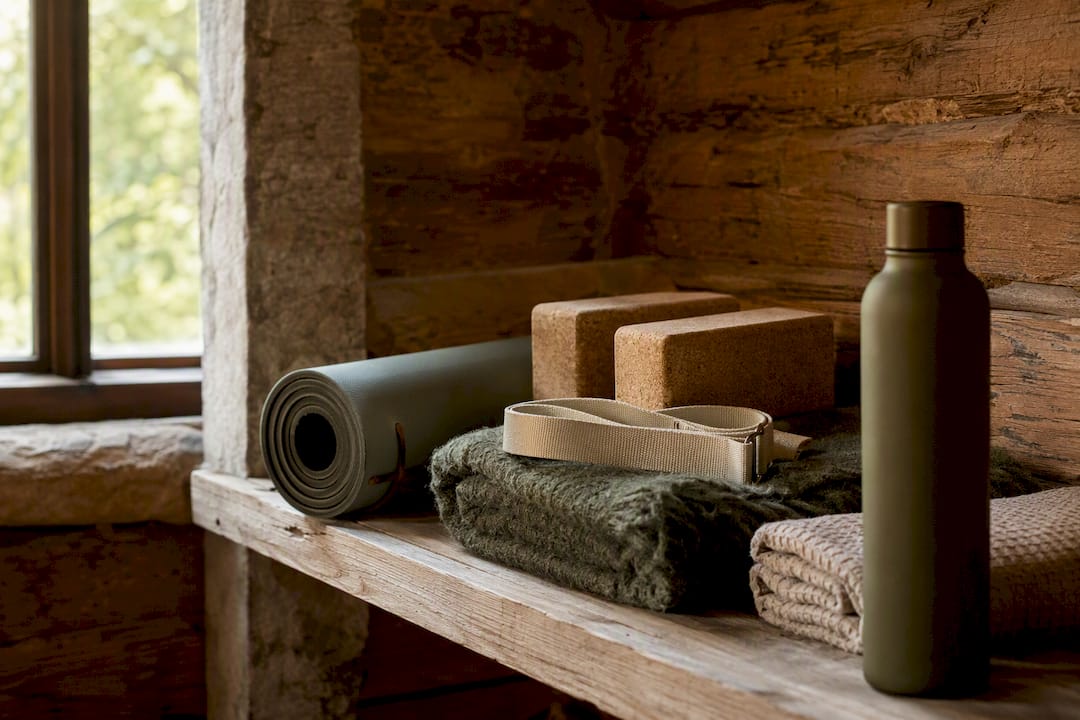
Confirm with the host or venue: spare mats for guests who forgot theirs, extra bolsters, a kettle for tea, a basic first aid kit, and dry storage so props don't pick up damp from timber walls overnight. Listings that name specific props, mats already unrolled, bolsters counted, tend to deliver a smoother stay than vague "wellness amenities" descriptions.
Cork blocks pack lighter than foam for travel, and a small battery speaker is worth bringing since not every timber house has built-in audio. Label your props before storing them between sessions, damp timber surfaces can mark fabric left in a heap.
How many people should join, and what does it cost?
Group size shapes everything else. Four to six guests suits deeper, quieter practice with full use of the space; six to ten works for a social retreat but starts to strain a single bathroom or a modest kitchen.
Budget across five lines: lodging, food, a teacher's fee if you're hiring one, props, and travel, then add a 10% contingency on top for the inevitable extra grocery run or unplanned taxi.
- Self-catering cuts the food line significantly compared with a catered retreat.
- Sharing transport from the nearest station or airport spreads a fixed cost across the group.
- Confirm cancellation policy and whether the booking platform offers its own insurance, separate from your personal travel cover.
A private whole-house booking usually works out cheaper per person than a studio-run retreat once you're past four guests, since the lodging cost is fixed regardless of group size.
What the checklist gets wrong
Most guides to "yoga retreats" describe the feeling they're after, candles, quiet, a vague sense of wellness, without ever specifying what makes a room actually work for practice. That's backwards. A beautiful timber interior with a slippery floor and no morning light is a worse retreat space than a plain room that gets both right.
The conventional advice oversells group size and undersells flooring. Most articles focus on how many friends to invite; few mention that a thick rug under a downward dog is a bigger problem than an odd number at dinner. Floor finish and daylight control decide whether a week feels restorative or merely photogenic.
If you take one thing from this guide, prioritise the physical checklist over the marketing copy. Ask about the floor before you ask about the view. A log house with honest pine boards and an east-facing window will outperform a glossier listing that never mentions either, every time.
Why Villa Sakis suits a private yoga retreat
Villa Sakis meets the checklist most timber retreats only gesture towards. The farmhouse's rooms are built from honest, unpainted timber with the daylight and quiet that self-led practice actually needs, and its setting among meadows and pine forest gives you a private stretch of nature rather than a shared garden. Guests can self-cater in a full kitchen, unwind in the private sauna afterwards, and step directly onto forest paths for an outdoor session between indoor ones, which is where a nature-focused retreat tends to earn its name.
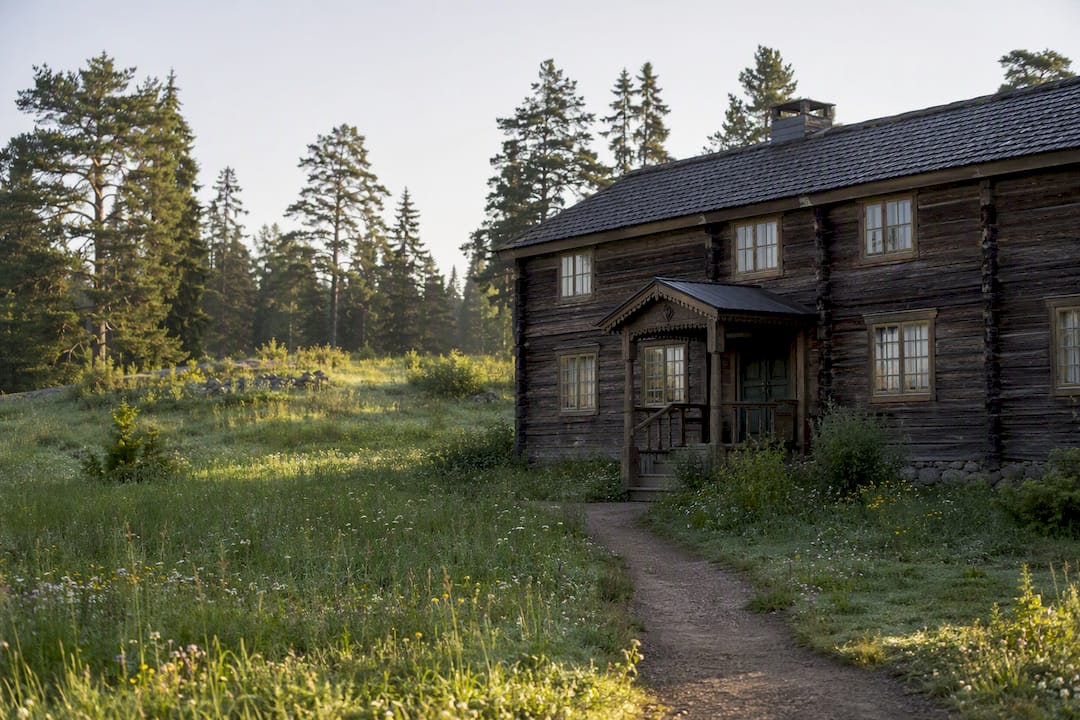
The practical advantages matter as much as the setting. Because the whole house is private, quiet hours are yours to set, not shared with strangers down the hall, and the property's own guidance for arriving guests covers exactly the kind of on-site expectations this article has walked through.
When you enquire, ask specifically about practice area availability, permission to move furniture for the stay, and quiet-hours expectations for early or late sessions. Do confirm the house is self-catered and check room dimensions against your group size before booking. Start that conversation on the Villa Sakis booking page.
Frequently asked questions
Is a log house actually suitable for yoga, or is that just marketing language? It depends entirely on the room, not the building material. A log house with a cleared 20 m² space, decent flooring and morning light works well; one with cramped rooms and no light control doesn't, regardless of how rustic it looks in photographs.
What floor type is safest for a yoga practice room? Warm pine, cork, or a sealed timber finish with some texture for grip all work well. Avoid thick, loose rugs that shift under a mat and glossy varnished boards with no traction.
How many people should join a self-led retreat in a private house? Four to six guests allows deeper, quieter practice with full use of the space. Six to ten works for a more social week but puts more pressure on bathrooms and kitchen space.
How long should a yoga-focused stay be? Three to five days is widely recommended, long enough to settle into a rhythm without overloading logistics or budget.
What should I pack myself versus ask the host to provide? Bring your own mat, blocks, strap, bolster and towel. Ask the host to confirm spare mats, extra bolsters, a kettle, first aid basics and dry prop storage.
What's the single most important question to ask before booking? Ask for the floor finish and a short video of the practice room. It reveals more about suitability than any written description ever will.
Sources
- Yogi’s Cabin — Built Works
- This 38‑square‑metre cabin in East Sussex is wrapped in charred timber and built entirely around yoga — Yanko Design
- Airbnb & Yoga: How to craft a personal retreat
- The Yoga Retreat vacation rental example — Temple Holidays