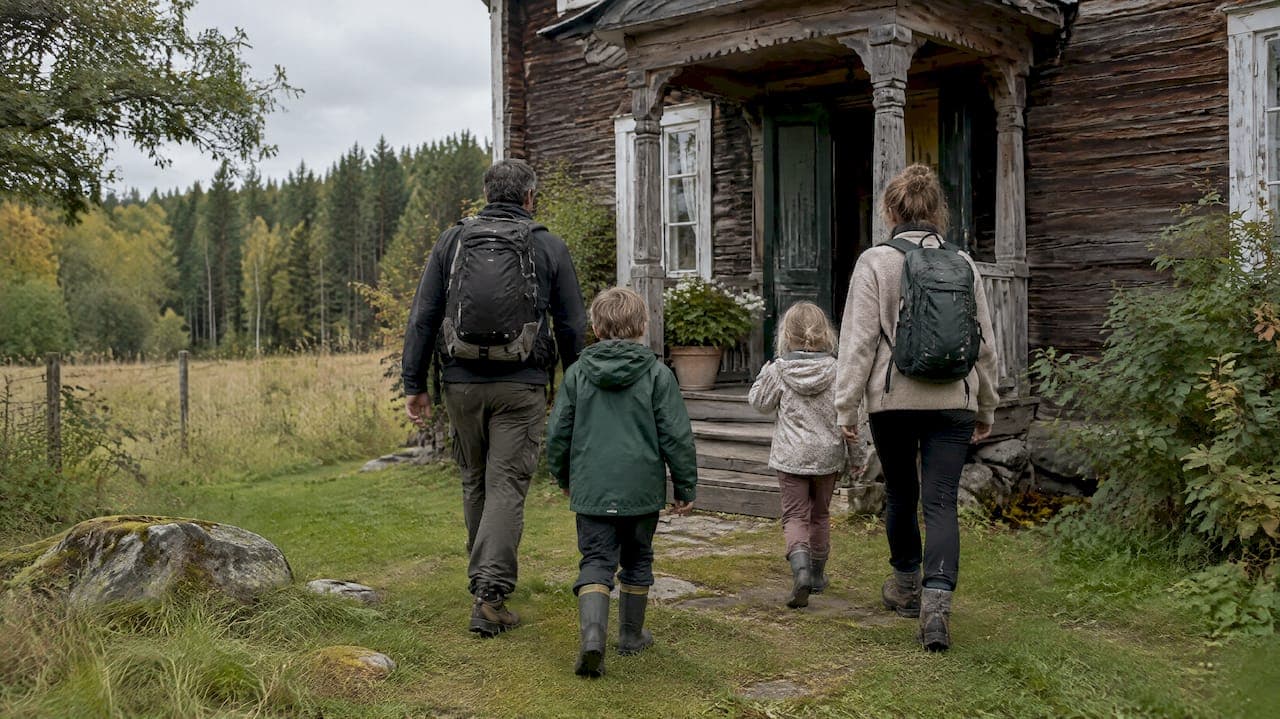
For a stress-free familjesemester i naturen, we recommend choosing a comfortable base close to accessible trails and planning play-first days rather than ambitious routes. Start with two decisions: pick your season, then choose one nearby protected area or visitor centre as your anchor. Simple, low-effort activities close to home base tend to matter more than covering distance.
TL;DR:
- Choose accessible trails near your accommodation that include features like visitor centres, marked loops, and facilities suitable for children and strollers.
- Engage children with simple, low-gear activities such as scavenger hunts, building natural crafts, or water play, emphasizing discovery and agency over distance.
- Select a comfortable, centrally located farmstay or cabin that provides a self-catering kitchen and outdoor space, reducing packing and travel stress for relaxed days.
- Follow fire safety guidelines by checking local bans, extinguishing embers completely, and planning routes by playtime rather than distance to keep children safe and engaged.
- Focus on slowing down and enjoying modest access to nature rather than ambitious itineraries to create meaningful family memories and repeated visits.
Table of Contents
- 1. Family nature activities that reliably delight children
- 2. Family-friendly destinations and accessible trails to consider
- 3. Choosing accommodation: the base camp approach for relaxed family days out
- 4. Planning and safety: right of access, fire rules and what to pack
- 5. Activity ideas by age and energy level
- 6. A host's perspective: Villa Sakis and practical family tips
- 7. Why simple beats ambitious on a family nature trip
- How Villa Sakis can work as your family base camp
- FAQ
- Sources
1. Family nature activities that reliably delight children
Children rarely need elaborate plans to enjoy the outdoors. A short, play-led walk with frequent stops often beats a long, purposeful hike, and the best family activities share a common thread: minimal gear, maximum curiosity.
- Turn a walk into a scavenger hunt for leaves, stones, or animal tracks.
- Build something small together: a stick raft, a bark boat, a pile of stones.
- Cook a simple meal over an open fire, letting children help with safe tasks.
- Let water do the entertaining: a shallow stream or lake edge holds attention for hours.
These activities work because they give children agency and a sense of discovery rather than a destination to reach. Pacing matters as much as the activity itself: short stages with playful pauses keep energy and mood steady, a point STF's guidance on hiking with children makes clear.
Pro Tip: Carry a small magnifying glass or a simple bird guide and turn any ordinary path into a slow trail of discoveries.

2. Family-friendly destinations and accessible trails to consider
Not every nature destination suits small legs and shorter attention spans. The most forgiving choices pair genuine wilderness with some infrastructure: marked loops, a visitor centre, clean facilities, and a car park close to the start of the walk.
Fulufjället is a strong example. The national park offers marked trails suited to families, including the Lavskrikeleden loop, which is adapted for strollers and wheelchairs and begins near the Naturum visitor centre. That kind of accessible design lets families experience genuine wild landscape without the logistics of remote backcountry travel.
Beyond mountain parks, a few destination types suit different family moods:
- Coast and archipelago: tide pools, rock scrambling, and easy swimming for warmer months.
- Lakes: calm water for paddling, fishing, and picnics, good from late spring through early autumn.
- Low mountains and national parks: marked loops and visitor centres, best for longer summer days.
- Woodland reserves: shaded, sheltered walks that work even in light rain or shoulder seasons.
Match the destination to the season and to how much walking your children can realistically enjoy before patience runs out.
3. Choosing accommodation: the base camp approach for relaxed family days out
A base camp approach means picking one comfortable place to stay and radiating out for day trips, rather than moving location every night. For families, this cuts packing to a minimum and keeps bedtime routines intact, which matters more than any single excursion.
Each accommodation type carries trade-offs:
- Cabins (stugor): private and quiet, often with a kitchen, but can be basic on facilities.
- Campsites: flexible and sociable, though weather-dependent and light on privacy.
- Glamping: comfort with less setup effort, usually at a higher price than a simple cabin.
- Private farmhouses: full kitchens, laundry, and direct access to surrounding land, ideal when several generations travel together.
When comparing options, check for a private kitchen, nearby shops for top-up supplies, and safe outdoor space where children can roam without supervision at every step. A working farmhouse stay such as Villa Sakis illustrates the pattern well: a self-catering kitchen, direct access to forest and meadow, and no need to drive anywhere before the first walk of the day.
4. Planning and safety: right of access, fire rules and what to pack
Swedish nature carries a long-standing freedom with it: the right to walk, camp, and gather in most natural land, known as Allemansrätten. That right comes with responsibilities, and our guide to right to roam for farmhouse guests sets out the practical side for anyone staying rurally with children. The right itself rests on consideration and care: avoid damaging plants or disturbing wildlife, keep well clear of private gardens and houses, and respect any posted restrictions in nature reserves, as Allemansrätten guidance explains.
Before planning:
- Check for a local fire ban (eldningsförbud) with the county administrative board or municipality before lighting anything.
- Use an existing fire pit or a small camping stove rather than building a new one.
- Extinguish every ember fully and check the ground is cool before leaving, following official fire safety guidance.
- Pack layered clothing, a basic first aid kit, snacks, and a map even on short walks.
- Plan routes by playtime rather than distance: a one-kilometre loop with three stops often satisfies more than a flat four-kilometre march.
Family outdoor skills, structured: Svenska Turistföreningen runs Fjällintro familj sessions at several mountain stations, introducing basic safety and outdoor skills at an advertised family price of around 295 SEK, a useful option for building confidence before a longer trip.
5. Activity ideas by age and energy level
A single stream or wind shelter can quietly host an entire family's worth of entertainment, each child finding their own version of the same spot.
- Toddlers and preschoolers: splashing in shallow water, collecting pebbles, short walks ending at a known landmark.
- Primary-school children: building a dam, following animal tracks, simple orienteering with a basic compass.
- Pre-teens and teens: fire-lighting practice, map reading over a longer loop, basic foraging knowledge under supervision.
Take a wind shelter by a lake as the worked example: toddlers dig in the sand nearby, primary-aged children fish from the shore, and teenagers take turns building and tending the fire for dinner. Everyone is within sight of the same point, at their own pace.
6. A host's perspective: Villa Sakis and practical family tips
Hosting families at a working farmhouse has shaped a few habits worth copying. On arrival, we settle children first: a short walk to the meadow edge or the sauna building gives them a sense of the place before anyone unpacks a single bag. Our guide to self-catering dinners sets out simple meals that come together quickly after a day outdoors, which matters more than any ambitious menu when everyone is tired and hungry.
A few habits worth copying for any farmhouse stay can benefit from structured family-friendly guided nature activities like those found on Aussie Loop's nature and wildlife tours.
- Choose one easy ritual each evening: a story by the fire, a short walk, nothing more.
- Keep the first full day unplanned beyond exploring the immediate grounds.
- Pack a simple picnic for the meadow rather than driving somewhere new on day one.
- Let mealtimes be plain and repeatable rather than a daily production.
Further reading on what to expect from a countryside stay sits in our overview of a Swedish countryside vacation.
7. Why simple beats ambitious on a family nature trip
The most common mistake in planning a nature-focused family holiday is treating it like an itinerary to complete rather than a rhythm to settle into. Parents often over-plan distance and under-plan pauses, assuming a longer trail or a more remote destination will produce a better memory. It rarely does. Children remember the dam they built, not the kilometre count.

Conventional travel advice leans hard on bucket lists: the national park you must see, the trail you must walk. We think the sharper question is simpler: where can your family slow down enough to notice anything at all? A single stream, visited twice, often beats two different lakes seen once each.
Prioritise a comfortable, familiar base over a packed schedule. Let one good patch of nature, however modest, become the place your children ask to return to.
— Christian
How Villa Sakis can work as your family base camp
A stay with us gives a family exactly the kind of base camp this article describes: a private farmhouse with its own kitchen, a sauna, and direct access to forest, meadow, and lake, all without needing to drive anywhere before the first walk of the day.
It suits families who want one comfortable anchor for a week rather than a string of bookings, and groups spanning generations who need enough space and quiet to actually rest between outings.
- Check current availability and the amenities listed on The House booking page.
- Review the full property details on the House overview before you book.
- Browse more planning notes on our Journal for ideas to shape your stay.
FAQ
What fun games can children play in nature?
Simple, low-equipment games work best: scavenger hunts for leaves or stones, building a dam or a stick raft, and tracking animal footprints. STF's guidance on hiking with children recommends turning small natural features into games rather than planning structured activities.
What are good destinations for families travelling with children?
Destinations that combine wild landscape with some accessible infrastructure work well, such as marked loops and visitor centres. Fulufjället is a strong example, with trails including the Lavskrikeleden loop adapted for strollers and wheelchairs.
What can families do in the forest with children?
Forest outings suit dam-building, fire-lighting under supervision, and simple foraging knowledge for older children, alongside quieter activities like animal-track spotting for younger ones. Our forest hiking safety guide covers the practical checklist to carry on any walk with children.
What can you do in nature with young children?
Short walks ending at a clear landmark, splashing in shallow water, and collecting pebbles or leaves suit toddlers and preschoolers particularly well. Keeping distances short and pauses frequent matters more than the specific activity chosen.
Can we book Villa Sakis as a base for day trips?
Yes, the farmhouse works as a private base with a self-catering kitchen and direct access to forest, meadow, and lake, suited to day trips in any direction. Current availability and amenities are listed on The House booking page.
Sources
- Allemansrätten – Right of public access (Hejsverige)
- Fulufjället — Swedish Tourist Association
- Eldning och allemansrätt — Naturvårdsverket
- Vandring med barn — Svenska Turistföreningen