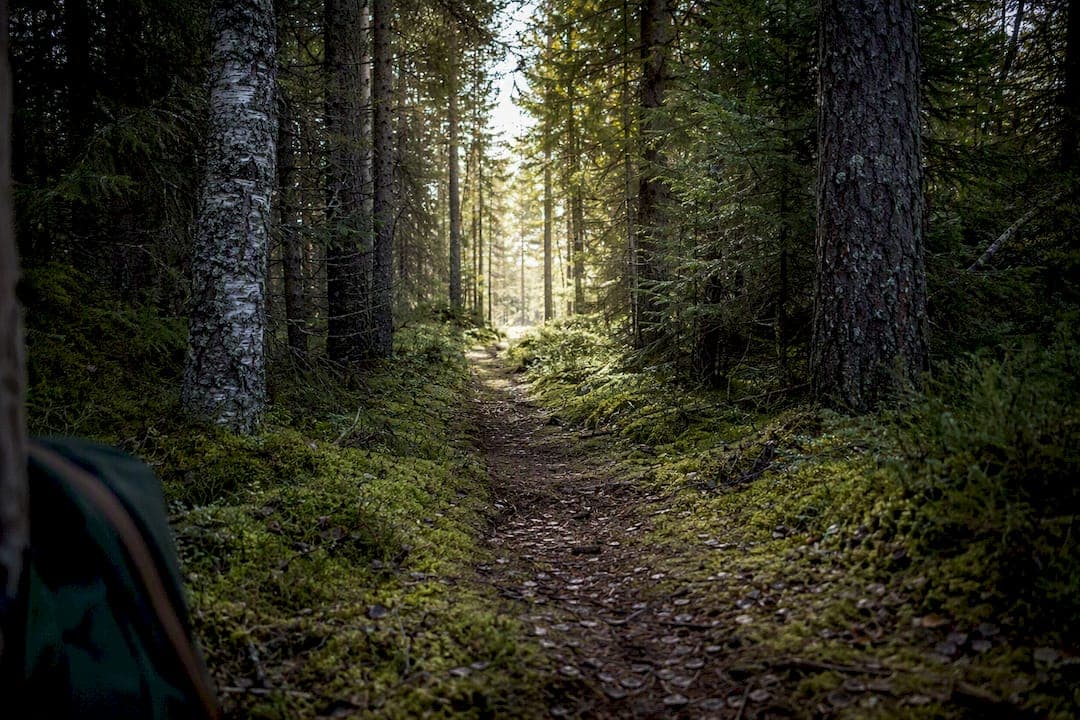
The single most protective habit for any forest walk is not a piece of gear but a plan: know your route, tell someone where you're going and when you'll return, check the forecast with SMHI, and carry a compact kit before you leave the car. Polisen echoes this in its own guidance, and it is the same principle Villa Sakis passes to every guest before a woodland walk from the farmhouse.
TL;DR:
- Most search-and-rescue cases involve short, routine trips like mushroom picking, where proper route sharing and planning could prevent many incidents.
- Carrying a lightweight 10-item kit, including navigation tools, thermal layers, waterproof gear, and signaling devices, significantly increases safety on forest walks.
- Planning routes with recent trail reports, marking checkpoints, and sharing detailed trip info helps reduce the risk of getting lost or delayed.
- Avoid wearing cotton, dress in three-layer moisture-wicking, insulating, and waterproof fabrics, and check weather forecasts before setting out.
- Conserve your phone's battery by switching to airplane mode unless making an emergency call, and know that emergency calls can sometimes connect without a SIM in Sweden.
Table of Contents
- Skogsvandring säkerhet: the essential 10‑item kit for woodland walks
- Plan your route before you plan your outfit
- What to wear: layering and knowing when to turn back
- First aid and what to do if something goes wrong
- Ticks, foraging and wildlife: the forest's quieter hazards
- Your final checklist before leaving the trailhead
- Small habits that make forest walks safer
- Why small preparation beats big equipment
- Authoritative pages to check before a forest hike
- Sources
- FAQ
Skogsvandring säkerhet: the essential 10‑item kit for woodland walks
A day in the forest rarely goes wrong because of one dramatic event. It usually goes wrong through a small chain of oversights: a fading trail, a soaked jacket, a phone at 4%. The "10 essentials" framework, long used by hiking organisations such as the Washington Trails Association, still holds up for a modest forest excursion, just in a smaller, lighter form.
For a half-day walk, this means:
- Navigation: a paper map and compass, even if you also carry GPS
- Light: a headlamp, not just a phone torch that drains the battery
- Insulation: one extra warm layer beyond what feels necessary
- Rain shell: lightweight and genuinely waterproof, not just showerproof
- Food and water: enough for the planned time, plus a margin
- First aid: a micro kit covering blisters, cuts and a compression bandage
- Fire or shelter: a small firestarter and a foil survival blanket
- A knife or multi tool
- Signalling: a whistle and a reflector strip
- Power: a compact battery pack for your phone
A satellite messenger or personal locator beacon earns its weight only where mobile coverage is genuinely patchy, which is more common in remote forest tracts than most visitors expect. For a well-marked trail near a village or farmhouse, a fully charged phone and the kit above usually cover it.
Plan your route before you plan your outfit
Route planning is where most search-and-rescue callouts are actually prevented, long before anyone laces up a boot. Vandra recommends checking recent trail reports and official route pages, since conditions such as fallen trees or flooded paths change faster than most maps update.
Before setting off, write down and share:
- Your exact start and end points, including the trailhead name
- Your expected departure and return times
- A description of your vehicle, and its colour and registration if you're comfortable sharing it
- The name of someone who knows to raise the alarm if you're late
- Your planned route or a photo of the map you're following
Treat map and compass as your baseline, with GPS as the backup, not the reverse. Mark distinct checkpoints as you walk, and build the "look back" habit: turning to view the trail behind you every so often, so it looks familiar on the return leg. Skogen that many people get lost while foraging precisely because they spend the whole walk looking down.
What to wear: layering and knowing when to turn back
Cotton is the fabric to avoid entirely. It holds moisture against the skin and stops insulating the moment it's damp, which is precisely the wrong quality for a Swedish forest where weather can turn inside an hour.
A simple three-layer system solves most of it:
- A quick-dry base layer to move sweat away from skin
- A fleece or wool mid layer for warmth
- A genuinely waterproof, breathable shell on top
Check SMHI before leaving home, then check it again at the trailhead, since forest microclimates can differ from the nearest town's forecast. Hypothermia can set in at temperatures as mild as +5°C when you're wet and exposed to wind, with early signs including intense shivering, clumsiness and confusion, according to Vandra.nu's guide. Turn back, or postpone entirely, if wind picks up sharply, rain sets in with hours of walking still ahead, or daylight is closing faster than your remaining distance allows. Shoulder seasons deserve extra caution: the ground looks summery, but a sudden squall or an early dusk in autumn catches out even locals. Winter forest walking calls for insulated boots, a headlamp with spare batteries, and a route that avoids untracked snow where postholing can exhaust you fast. For a fuller breakdown of fabrics and layering by season, Villa Sakis's own clothing guide for forest and lake goes deeper.
First aid and what to do if something goes wrong
Most forest incidents are minor if treated promptly: a sprained ankle immobilised with a bandage, a cut cleaned and pressed to stop bleeding, or a chilled hiker wrapped in a dry layer and the foil blanket from your kit before shock sets in.
Call 112 the moment an injury is beyond basic first aid, or if you're genuinely lost with fading daylight. When you call:
- State your approximate location using landmarks, trail markers or GPS coordinates if you have them
- Describe the injury or situation clearly and calmly
- Stay on the line as long as the operator needs you
One detail worth knowing: emergency calls in Sweden can often connect even without an active SIM card or signal from your own network, so don't assume a dead account means no help is possible. If you're lost, six short blasts on a whistle is the internationally recognised distress signal. Wear or wave something bright, use your torch after dark, and generally stay where you are unless your location is actively unsafe, since a stationary target is far easier for search teams to find than a moving one.
Conserve your phone battery aggressively: switch to airplane mode when you don't need signal, and only power it fully on for the emergency call itself. Polisen's own guidance makes the same point, since a phone constantly hunting for signal can drain to nothing within an hour in patchy coverage areas.
Ticks, foraging and wildlife: the forest's quieter hazards
Ticks are the most common health risk on a Swedish forest walk, and the precautions are simple. Wear long trousers tucked into socks, use a repellent, and check your whole body once you're home. Remove any tick promptly with fine-tipped tweezers, pulling straight out without twisting, and see a doctor if redness spreads or you develop flu-like symptoms in the following weeks.
Foraging carries its own rules:
- Only pick species you can identify with total confidence
- Tell someone where you plan to forage, separately from your main route plan
- Stay close to marked trails if you're at all unsure of the terrain
Villa Sakis's guide to safe mushroom species for beginners is worth reading before your first foraging trip. As for wildlife, make noise as you walk so animals hear you coming, keep well back from anything you do encounter, and if surprised by an elk or a boar, back away slowly rather than running.
Your final checklist before leaving the trailhead
Standing at the trailhead is the last moment to catch a mistake before it becomes a problem three hours into the forest.
- Charge your phone fully and pack the battery bank
- Set a firm return time and share it with your contact
- Check the SMHI forecast one last time, including sunset
- Pack at least one visible outer layer, even in summer
- Confirm you have enough water and food for the planned time plus a margin
- Agree a personal turnaround time, regardless of how far you've reached
Note where you've parked, your car's colour, and its registration if you're leaving that detail with your contact, since these small facts noticeably speed up a search if one becomes necessary. If the forecast, your energy, or the remaining daylight all point the wrong way, the correct decision is simply not to go, or to shorten the loop. There is no prize for pushing on.
Small habits that make forest walks safer
Practising navigation before you need it changes everything under pressure. Taking a bearing at home, in the calm of your kitchen table, means you can still do it competently on a fading trail with your hands cold and light dropping. The same goes for the "look back" habit and for a quick tick check the moment you're back indoors, both of which take seconds and prevent the two most common small failures of a forest walk.
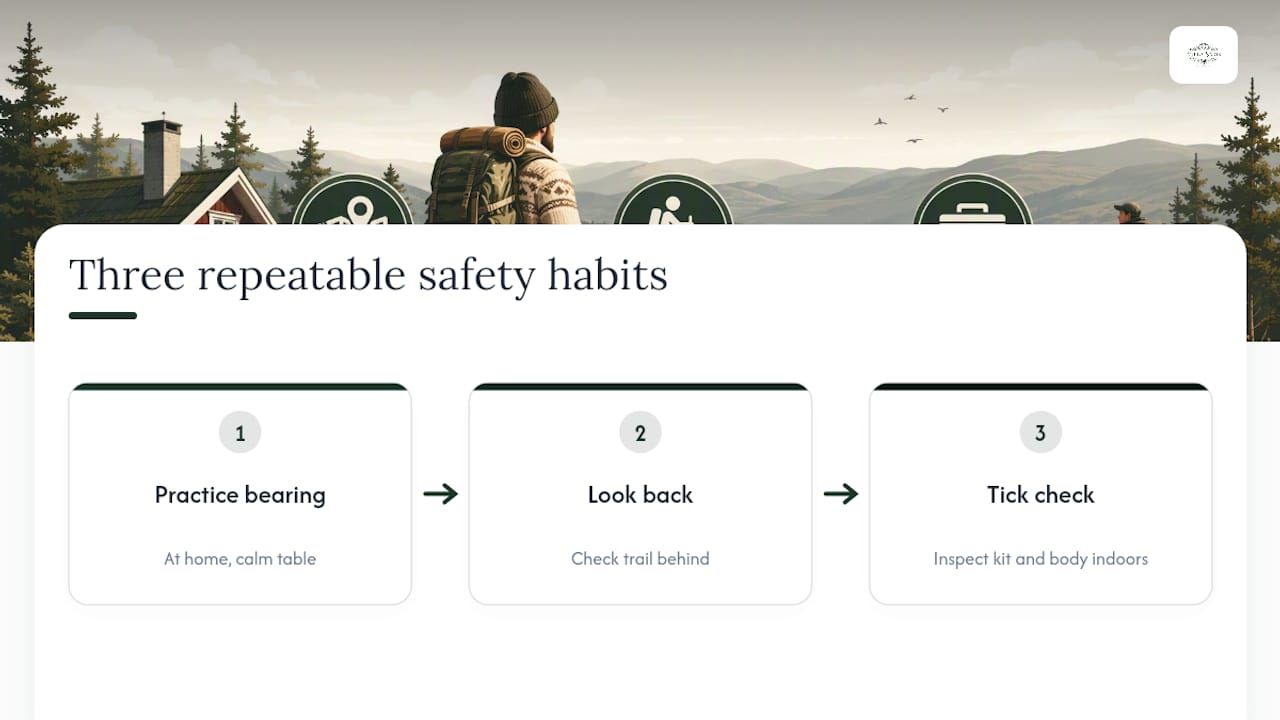
Guests heading out on a woodland walk from farmhouses like Villa Sakis benefit from a short briefing and a printed checklist covering the route, the weather, and what to carry, because the best safety habits are the ones repeated until they're automatic.
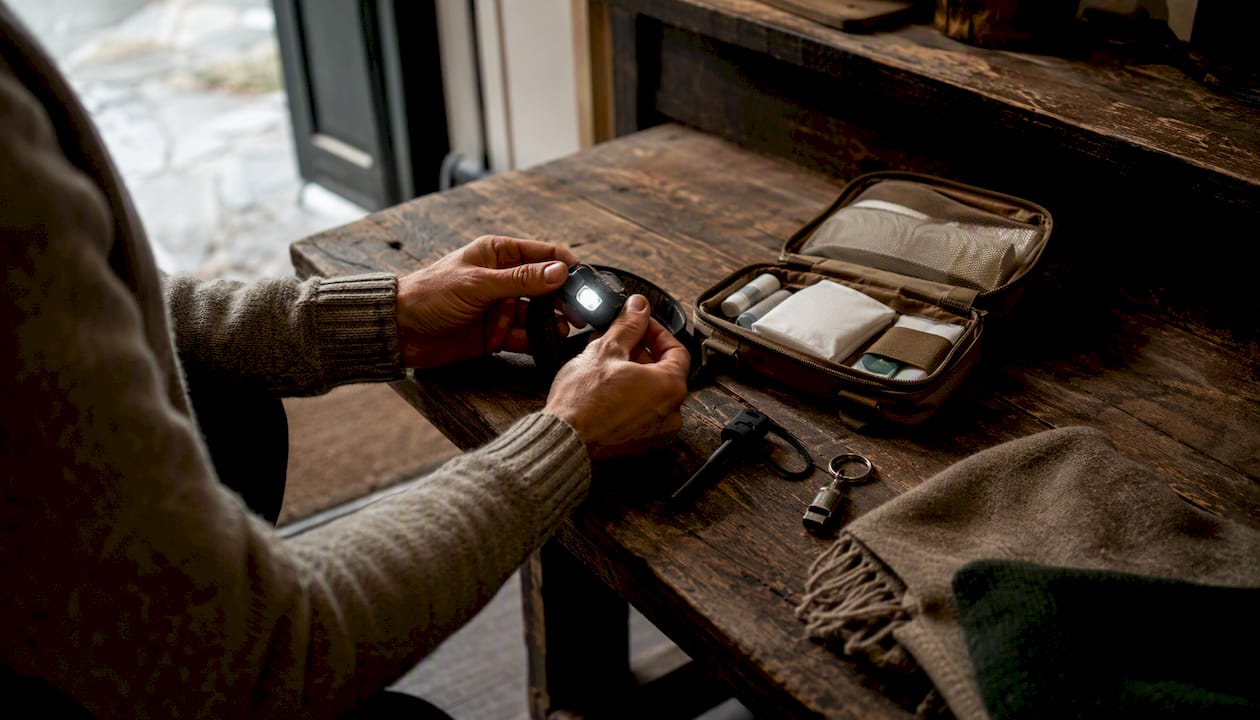
Pro Tip: Run a five-minute kit drill at home before your first walk of the season: light your firestarter once, test your headlamp and whistle, and repack your first-aid kit so you know exactly where everything sits when you actually need it in the dark.
Why small preparation beats big equipment
The forest doesn't punish poor gear nearly as often as it punishes poor planning. A hiker with a basic kit and a shared route plan is safer than one carrying an expensive pack but no one expecting them home by a certain hour.
The anecdote that sticks with me is the survival instructor's observation that most search-and-rescue cases involve short, ordinary outings, not ambitious expeditions. Someone nipped out for an hour of mushroom picking, didn't tell anyone, and the light failed before they found the path again. That single sentence, shared with a contact, would have changed the whole outcome.
Before your next walk, write the checklist, hand it to someone, and go.
— Christian
Authoritative pages to check before a forest hike
- Polisen: official safety and emergency contact guidance
- SMHI: weather forecasts by region
- Vandra: trail conditions and route planning
- Skogen: practical forest visit tips
A quiet farmhouse stay makes an easy base for practising these habits on shorter, well-marked walks before a longer trip. The farmhouse sits amid meadows and pine forest with direct access to trails right from the door, and The House can be booked as a private base for a family or group wanting to build up hiking confidence gradually. For a broader sense of what a stay involves, the grounds and surrounding terrain page is worth a look before you arrive.
Sources
FAQ
How do you manage toileting on a mountain or forest hike?
Move well away from trails and water sources, dig a small hole if the ground allows, and pack out any toilet paper in a sealed bag rather than burying it, since paper takes years to break down in cold soil.
How far can you realistically walk in a day?
It depends heavily on terrain and fitness, but forest walking distances vary widely with breaks. Vandra.nu's guidance to add a 30 to 50% time margin to whatever a map suggests is the safer way to plan than fixing a distance target.
What should you think about before a forest hike?
Route planning, an SMHI weather check, a shared trip plan with someone at home, and a compact 10-essentials kit cover the core of it, alongside honest awareness of your own fitness and experience level.
Which is the toughest hiking trail in Norway?
This sits outside forest walking in Sweden and Norway's mountain trails vary enormously by season and route, so it's best checked directly with Norwegian trail authorities rather than answered generally here.