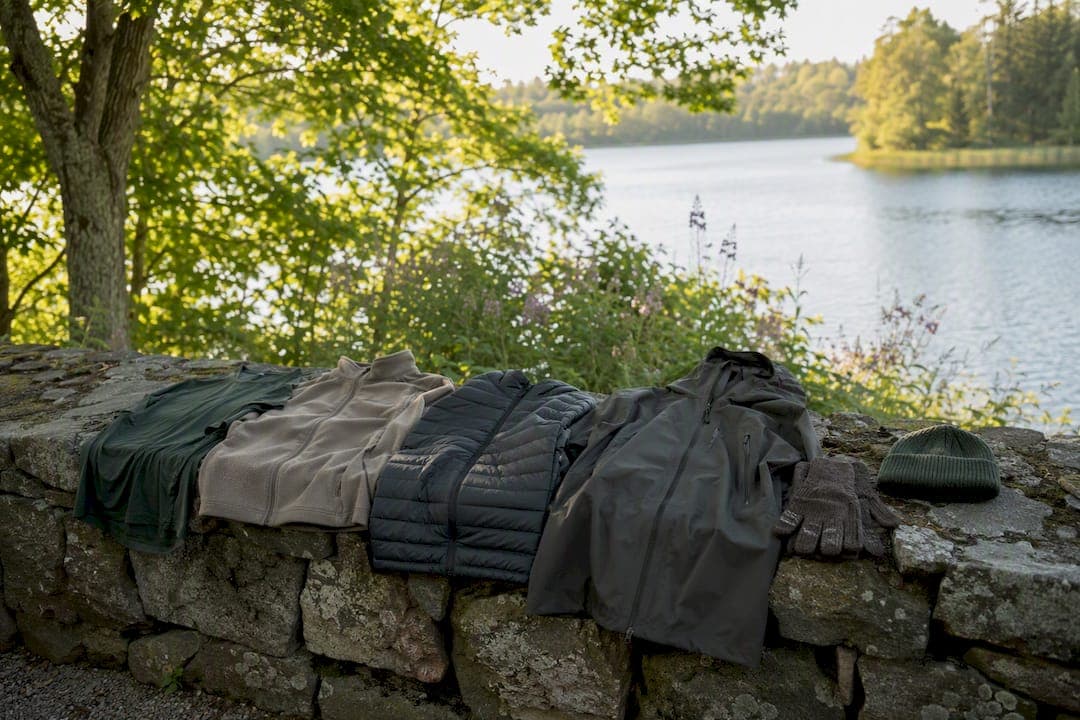
For a day in forest or by a lake, the working rule is the three-layer system: a moisture-wicking base, an insulating mid-layer, and a waterproof, windproof shell. This is the same layering principle recommended by the Swedish Tourist Association, and it holds whether you're walking quiet forest paths at dawn or lingering at a lakeshore at dusk. Three items earn a permanent place in your bag:
- A waterproof shell that also blocks wind
- A moisture-wicking base layer, never cotton
- A compressible insulation layer for when you stop moving
Cotton holds moisture against skin and stops insulating once damp, which is precisely the wrong quality for changeable Nordic weather.
Key Takeaways
The three-layer system, merino or synthetic base fabrics, and a dry compressible puffy jacket together form the core of safe, comfortable dressing for forest and lake days.
| Point | Details |
|---|---|
| Follow the three-layer rule | Combine a moisture-wicking base, insulating mid-layer and waterproof shell, and never substitute cotton. |
| Carry emergency insulation | A dry, compressible puffy jacket prevents rapid chill the moment you stop moving. |
| Match footwear to terrain | Choose waterproof boots for mud and heavy packs, trail runners for dry, established paths. |
| Pack a dry-change system | Keep a spare base layer, socks and towel in a dry bag near the top of your pack. |
| Consider Villa Sakis as your base | Its lake access and forest surroundings let you apply this layering system on real trails, then dry off in a timber room rather than a tent. |
Table of Contents
- Head-to-toe packing checklist for a forest and lake outing
- How to layer for forest walking and lakeside stops
- Choosing footwear and socks for wet shores and mixed trails
- Dressing for time in or beside the water
- What to wear at ~10°C, in variable weather, and on warm days
- Common mistakes to avoid when dressing for the outdoors
- Packing your bag so spares stay dry
- How Villa Sakis guests approach forest and lake dressing
- Caring for outdoor clothing between and during trips
- Special considerations for wind protection
- Safety considerations for clothing in forest and lake environments
- A personal note on packing light and staying warm
- Staying near the trails this guide describes
- Sources
Head-to-toe packing checklist for a forest and lake outing
Before you leave the door, run through this list. It covers the essentials for a single day out and doubles as a starting point for longer stays.
- Hat or buff for sun and wind
- Moisture-wicking base layer, top and bottom
- Insulating mid-layer (fleece or light synthetic)
- Waterproof, breathable shell
- Spare socks, at minimum one pair
- Footwear suited to the terrain you'll cover
- A dry bag for spare clothing
- Small first-aid kit and snacks
- Compressible puffy jacket for pauses
- A basic repair kit (safety pins, tape, a spare buckle)
Pack in this order of priority: layers first, waterproofing second, spares last. That way, if space runs short, you never sacrifice the piece that keeps you dry.
How to layer for forest walking and lakeside stops
Your base layer does the heaviest lifting of the three. Merino wool suits multi-day trips and lower-intensity walking because it resists odour and stays warm even damp, according to guidance from the Swedish Tourist Association. Synthetic base layers dry faster and suit high-output efforts, like a brisk climb through pine forest. Either works. Cotton does not, in either case.
The mid-layer is your thermostat. A fleece or thin synthetic jacket handles most conditions; a vest gives you core warmth while leaving arms free to vent during exertion; a light down jacket packs smaller but performs poorly once wet.
For the outer layer, match the shell to the forecast:
- Heavy or sustained rain calls for a hardshell with a genuinely waterproof membrane.
- Mixed, showery days suit a softshell or lightweight rain jacket that breathes better but resists less water.
- Dry, windy days need only a windproof layer, not a full shell.
Buying guides for outdoor clothing suggest looking for a water column rating around 10,000mm or higher for regular use, balanced against breathability so you're not swapping rain for sweat.
Layer management matters as much as the layers themselves. Vent zips and remove a layer the moment you start to overheat while moving; add insulation the instant you stop, before the chill sets in, not after you've noticed it.
Pro Tip: Zip vents open before a climb, not after you're sweating. Once a base layer is wet through, it takes far longer to dry than it did to soak.
Choosing footwear and socks for wet shores and mixed trails
Waterproof boots earn their weight on muddy paths, long days with a loaded pack, or any route crossing boggy ground. Trail runners suit well-drained, established paths where speed and a lighter foot matter more than total dryness.
- Waterproof boots for mud, distance and heavy loads
- Trail runners for dry, fast, well-maintained trails
- Merino or synthetic socks, never cotton
- Socks tall enough to prevent rubbing and insect bites at the ankle
- At least one spare pair, kept dry until needed
After a wet day, remove insoles and loosen laces fully so boots dry from the inside. Stuff damp shoes with newspaper overnight rather than leaving them sealed in a bag.
Dressing for time in or beside the water
Water temperature dictates clothing choice more than air temperature does, a point paddling specialists at Stockholmkajak make consistently. Cold-season paddling calls for a drysuit or neoprene layers; summer paddling allows quick-drying synthetic layers with sun protection built in.
- Neoprene footwear or pogies for cold water contact
- A dry top or paddling jacket over standard shells when on the water
- A dry bag packed with a spare base layer, socks and a small towel
- Sun protection (hat, SPF, sunglasses) and insect repellent for still lake air, where midges gather
Changing into dry layers the moment you're off the water prevents the slow chill that catches paddlers out on otherwise mild days.
What to wear at ~10°C, in variable weather, and on warm days
- Around 10°C, active: merino or synthetic base, thin fleece mid, breathable shell, trail shoes. Add a hat if there's wind.
- 5 to 15°C, stopping at the lakeshore: all of the above, plus a compressible puffy, warm hat and light gloves the moment you sit still.
- Warm summer days: light, sun-covering base layer, breathable trousers or shorts, shell packed away but present, hat and repellent for evening stillness.
Adjust up or down from these templates based on wind, cloud cover and how hard you're working, not just the number on a forecast.
Common mistakes to avoid when dressing for the outdoors
The two most repeated errors: packing cotton "because it's comfortable," and over-layering at the start of a walk only to sweat through everything within twenty minutes.
- Test your full layering system on a short local walk before a longer trip
- Never rely on a single all-weather outfit; build a small, adaptable set instead
- Rotate a spare base layer on multi-day trips to manage odour and dampness
- Air damp layers at every rest stop rather than repacking them wet
Pro Tip: Always carry a dry, compressible puffy jacket for stops, even on a mild day. Practitioners treat this as non-negotiable because a body that's warm while moving cools rapidly once still, and a light insulated layer prevents that drop before it starts.
Packing your bag so spares stay dry
Pack targets for hut-to-hut style trips often sit around 10 to 14kg, according to Svenska Turistforeningen's packlist guidance, and clothing organisation matters as much as total weight.
- Use separate dry bags for wet and dry items, never mix them
- Keep frequently needed spares near the top of the pack
- Speed-dry socks by wringing, then airing flat rather than balling them up
- Rehearse a quick-change routine so a wet base layer comes off before the chill sets in
How Villa Sakis guests approach forest and lake dressing
Staying at a timber farmhouse changes the maths slightly. You're not carrying overnight insulation for a tent, so packs run lighter, and a shore swim becomes a quick dash back to a warm room rather than an exercise in managing dampness until morning.
Villa Sakis sits amid pine forest and open meadow with direct lake access, so guests move between trail and shoreline within minutes rather than hours. That proximity rewards exactly the layering habits this guide describes.
For the practicalities of walking and camping on Swedish land beyond the farmhouse boundary, our guide to right to roam covers where you can wander and change freely.
Caring for outdoor clothing between and during trips
Technical fabrics lose performance faster than people expect, and the usual culprit is fabric softener. It coats fibres and kills the wicking action in merino and synthetic base layers alike, so avoid it entirely on technical pieces.
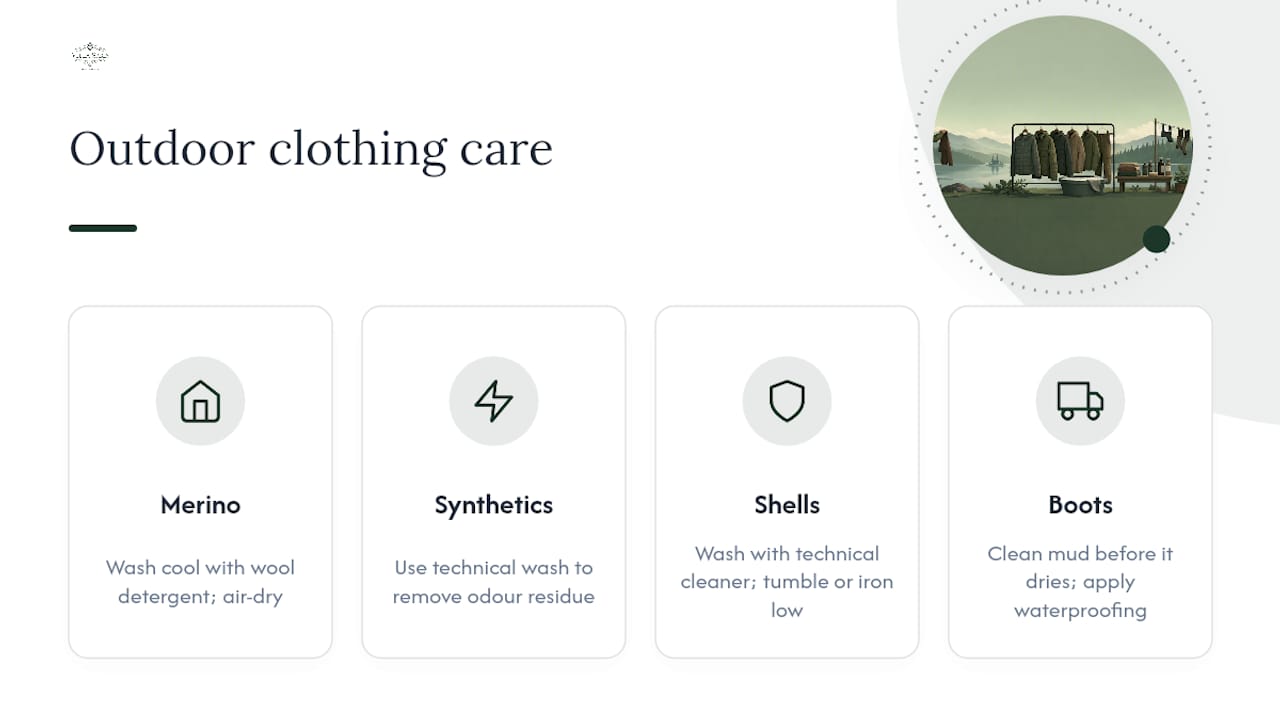
Wash merino on a cool, gentle cycle with a wool-specific detergent, and let it air dry rather than tumble drying, which can felt the fibres over time. Synthetic base layers benefit from an occasional treatment with a technical wash designed to strip built-up odour-causing residue that ordinary detergent leaves behind.
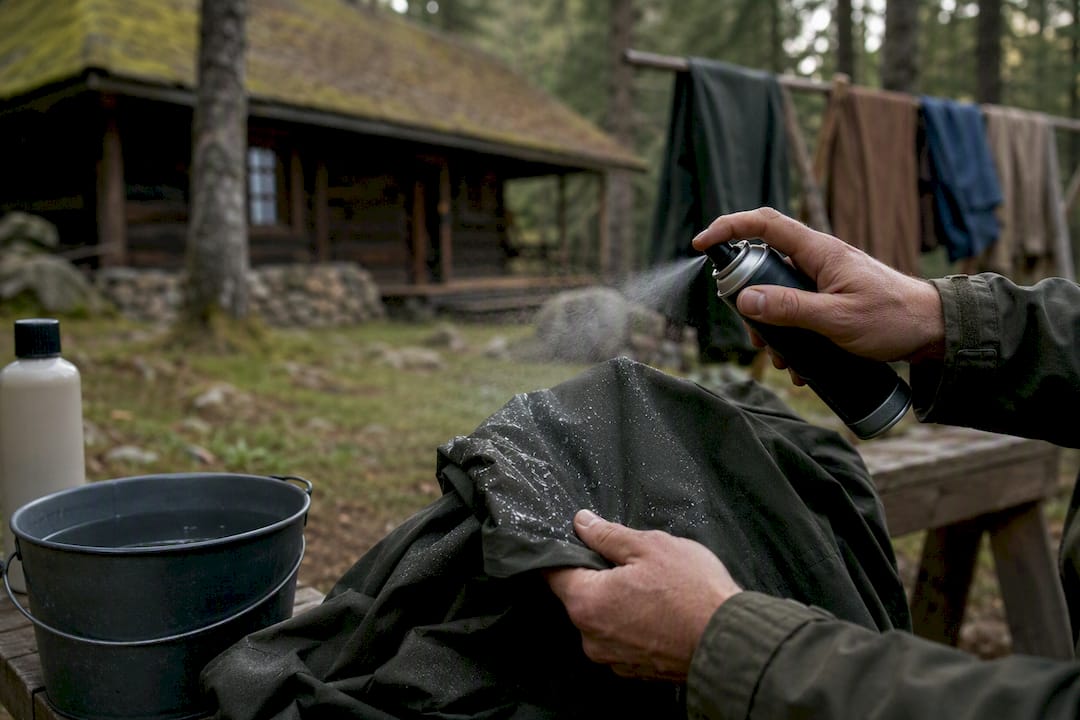
Waterproof shells need reproofing once water stops beading and starts soaking into the fabric surface. A gentle wash with a technical cleaner, followed by tumble drying on low heat or a careful iron on a low setting, reactivates the durable water repellent coating. Skipping this step is the single biggest reason expensive shells "stop working" within a couple of seasons.
Boots deserve attention too. Clean off mud before it dries hard and cracks leather or coated fabric, then treat with an appropriate waterproofing product suited to the material, whether that's leather conditioner or a synthetic sealant. Store everything dry and loosely packed rather than compressed at the bottom of a cupboard, since permanent creasing weakens waterproof membranes over years of use.
A little maintenance between trips extends the working life of every layer you own, which matters more than any single purchase decision.
Special considerations for wind protection
Wind strips heat from the body far faster than still air at the same temperature, and forest edges and open lakeshores are precisely where wind exposure spikes. A dense pine stand can cut wind speed dramatically within a few dozen metres, while the open water's edge offers no such shelter at all.
This is why a windproof outer layer matters even on days that feel mild by the thermometer. A shell that blocks wind but isn't fully waterproof still earns its place in the pack for dry, breezy days, since it prevents the convective heat loss that makes still, damp skin feel far colder than it should.
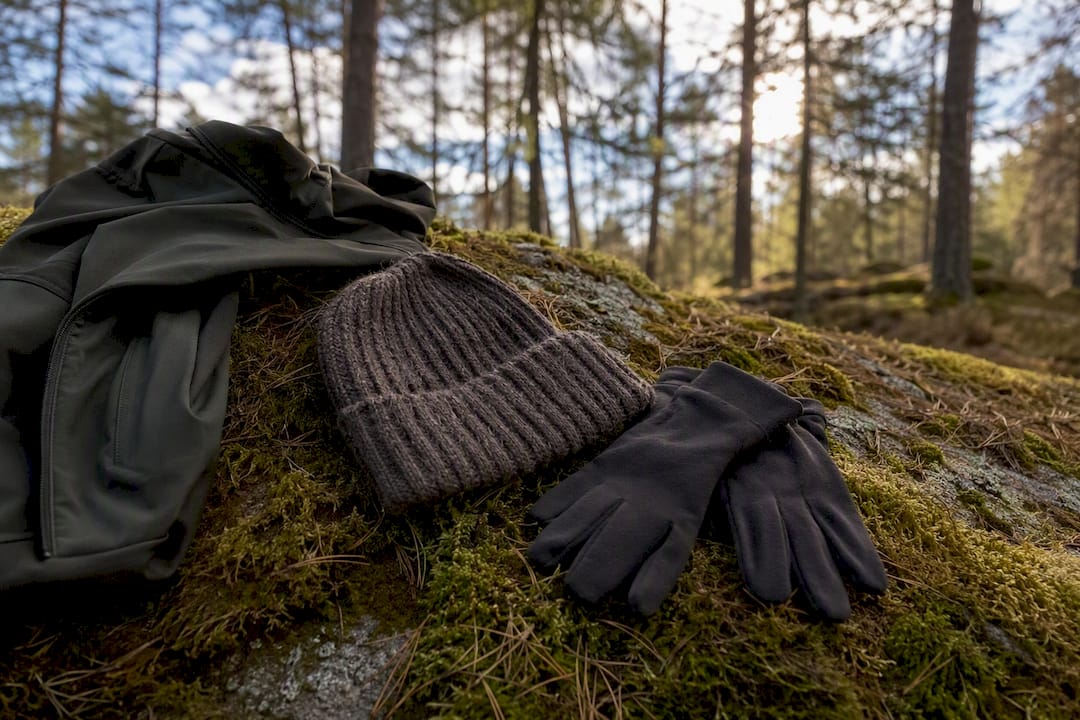
Hands and ears lose heat disproportionately fast in wind, so a light pair of gloves and a hat or buff belong in every layering system, not just cold-weather ones. Wind-driven spray off open water compounds the effect further, chilling exposed skin even when air temperature alone wouldn't justify heavy insulation.
Pay particular attention to gaps in your layering system: an open jacket collar, a gap between glove and cuff, or a low-cut sock all let wind find a way in. Adjustable hems, high collars and overlapping layers close these gaps and matter more on an exposed lakeshore than they do under forest canopy.
If wind picks up suddenly, and it often does near open water, add a layer before you feel cold rather than after. Waiting means you're already working to recover lost heat rather than simply preventing the loss.
Safety considerations for clothing in forest and lake environments
Clothing choices carry real safety weight beyond comfort. Hypothermia risk rises fastest in wet, windy conditions, even at temperatures that don't sound extreme, which is why the compressible puffy and dry spare base layer both belong in the non-negotiable category rather than the nice-to-have one.
Visibility matters too, particularly if any part of your route touches shared trails, roads, or areas used by other outdoor groups. A bright hat or jacket, even one packed as a spare rather than worn constantly, gives you an option if visibility conditions worsen or you need to signal your location.
Near water specifically, footwear choice affects safety directly: smooth-soled trail shoes on wet rock invite a slip that dry-land walking never would. Neoprene shoes with a textured sole reduce that risk considerably on slippery lakeside stones.
Layer bulk under a personal flotation device matters if paddling is part of your day. Overly thick insulation under a life jacket can restrict movement exactly when mobility matters most, so thinner, effective insulating layers under a properly fitted PFD beat a single bulky jacket every time.
Finally, treat any fully wet clothing as a hazard rather than an inconvenience. A soaked base layer in wind, even mild wind, accelerates heat loss fast enough to matter within twenty or thirty minutes. The quick-change habit described earlier in this guide isn't a comfort measure; it's the safety measure that habit happens to double as.
A personal note on packing light and staying warm
One lakeside rest, saved from misery by a puffy jacket pulled from the bottom of a bag, taught me more about layering than any packing list ever did. Adapt this checklist to your own pace and heat profile; nobody's exertion runs identical to anyone else's.
Staying near the trails this guide describes
If you'd rather spend your energy on the walk than on logistics, Villa Sakis offers direct access to the terrain this guide covers, without a tent, a stove, or a drying rack in sight. The farmhouse sits within its own pine forest and meadow, with lake access close enough that a quick-change into dry clothes means walking back to a warm timber room rather than huddling under a tarp. Self-catering means you eat on your own schedule after a long day outdoors, and the grounds surrounding the house give you trailheads and shoreline within easy reach. If forest-and-lake days like the ones described here appeal to you, check availability at Villa Sakis and see what a stay here could look like for your next outing.
Sources
- Layer on layer principle — Swedish Tourist Association
- Packlist for hut-to-hut hiking — Svenska Turistforeningen
- Paddlingskläder — Stockholmkajak