Covering up and checking yourself afterwards are the two most reliable things you can do. Tuck long trousers into your socks, wear a long-sleeved top, apply a DEET- or picaridin-based repellent to any exposed skin, and do a thorough body check within a couple of hours of coming indoors. If you visit tick-dense areas regularly, TBE vaccination adds a further layer of protection that clothing alone cannot provide. SVA, Folkhälsomyndigheten, and 1177 all point to the same core package: cover, repel, check, remove promptly.
The quick checklist before you head out:
- Wear long sleeves and long trousers; tuck trouser legs into socks or boots
- Apply a DEET or picaridin spray to exposed skin and garment edges
- Consider permethrin-treated clothing or pre-treated outdoor garments for longer trips
- Carry a fine-tipped tick remover in your daypack
- Plan a full-body check for when you return indoors
Worth knowing: SVA reports that a small minority of ticks carry TBE virus on average about one in a thousand, while a larger share can carry Borrelia bacteria in tick-dense areas. The relative risks are very different, and so are the responses: borrelia is treated with antibiotics, TBE is vaccine-preventable but has no equivalent treatment.
Key takeaways
Effective protection from ticks in Swedish forests combines physical barriers, repellents, prompt removal, and TBE vaccination in risk areas, with no single measure sufficient on its own.
| Point | Details |
|---|---|
| Cover and repel | Tuck trousers into socks, apply DEET or picaridin to exposed skin, and consider permethrin-treated clothing for longer trips. |
| Check promptly after every visit | A full-body check within two hours of returning indoors catches ticks before they have been attached long enough to transmit infection. |
| Remove correctly | Use a fine-tipped remover, pull straight out without twisting, and never use oil or heat. |
| Vaccinate if you visit risk areas | FSME-IMMUN and Encepur protect against TBE (not borrelia); check Folkhälsomyndigheten's regional maps and start the schedule before your trip. |
| Know the warning signs | An expanding red rash, fever, or neurological symptoms after a bite warrant contacting 1177 or a healthcare provider promptly. |
Table of Contents
- Where and when do you find ticks in Swedish forests?
- A simple before, during, and after checklist for every forest visit
- Which repellents and treated clothing actually work?
- Should you get vaccinated against TBE?
- How to remove a tick correctly, step by step
- When should you contact healthcare after a tick bite?
- Checking children and pets after time outdoors
- Practical tick safety for Villa Sakis guests and forest-edge stays
- Sources
Where and when do you find ticks in Swedish forests?
Ticks thrive wherever their host animals roam. Ixodes ricinus, the species responsible for most human bites in Sweden, is widespread across southern and central Sweden and is found in leaf litter, forest edges, high grass, undergrowth, and shaded damp zones. Crucially, as SVA notes, ticks are not confined to deep forest: parks, gardens, and coastal scrubland all harbour them wherever deer, small mammals, or birds pass through.
Seasonally, ticks become active when temperatures rise above roughly 5°C, which in Sweden typically means March through November. Mild winters have extended this window in recent years, and SVT reporting on TBE trends in Örebro highlights that TBE incidence has risen in several regions, making it worth checking local public-health maps before a trip rather than assuming last year's risk picture still applies.
Local variation matters more than people expect. A meadow path that was low-risk in a dry summer can become a hotspot after a wet spring brings deer closer to the forest edge. Before visiting an unfamiliar area, check Folkhälsomyndigheten's regional TBE maps and look for any notices posted at trailheads.
A simple before, during, and after checklist for every forest visit
Building a short routine around each visit is more reliable than trying to remember individual tips in the moment.
Before you go
- Pack a small tick kit: a fine-tipped tick remover or tweezers, a small antiseptic wipe, and a zip-lock bag to seal any removed ticks.
- Dress in long trousers and a long-sleeved top; light colours make ticks easier to spot.
- Tuck trouser legs firmly into socks or gaiters.
- Apply a DEET or picaridin repellent to exposed skin and along garment edges (cuffs, collar, sock tops).
- If you plan extended time in the forest, treat your outer clothing with permethrin spray the evening before, or choose factory-treated garments.
During your walk
- Stick to marked paths where possible and avoid brushing through long grass or undergrowth.
- Keep dogs on the path and check them periodically, especially around the ears and between the toes.
- Reapply repellent if you have been out for several hours or have been sweating heavily.
After you return
- Do a full-body check within two hours: pay particular attention to the hairline, behind the ears, armpits, groin, and behind the knees.
- Shower if you can; this helps dislodge any tick that has not yet attached.
- If you find a tick, remove it promptly, note the date and location, and monitor the bite site for the next few weeks.
Pro Tip: Make the evening body check a family habit rather than an occasional afterthought. A quick two-minute scan before bed, done consistently after every outdoor visit, catches far more ticks than a thorough check done only when someone remembers.
Which repellents and treated clothing actually work?
The options divide into two categories: what you put on your skin and what you put on your clothing.
Skin repellents: DEET and picaridin
DEET remains the most studied tick repellent available. Picaridin (also called icaridin) offers comparable protection with a lighter feel on the skin and is generally well tolerated by people who find DEET irritating. Both are available at Swedish pharmacies in spray, roll-on, and lotion forms, as Apoteket and Kronans Apotek stock a range of products suited to different ages and skin sensitivities.
Pregnant people and parents of young children should read the product label carefully and, where uncertain, ask a pharmacist for guidance on the most appropriate formulation.
Permethrin-treated clothing
Permethrin works differently: it is applied to fabric, not skin, and kills or repels ticks on contact. Field and military studies summarised by Krypfritt report reductions in tick bites in the order of 80–95% when permethrin treatment is applied correctly. A single treatment can last through many wash cycles when laundered gently. Never apply permethrin directly to skin; it is a clothing treatment only.
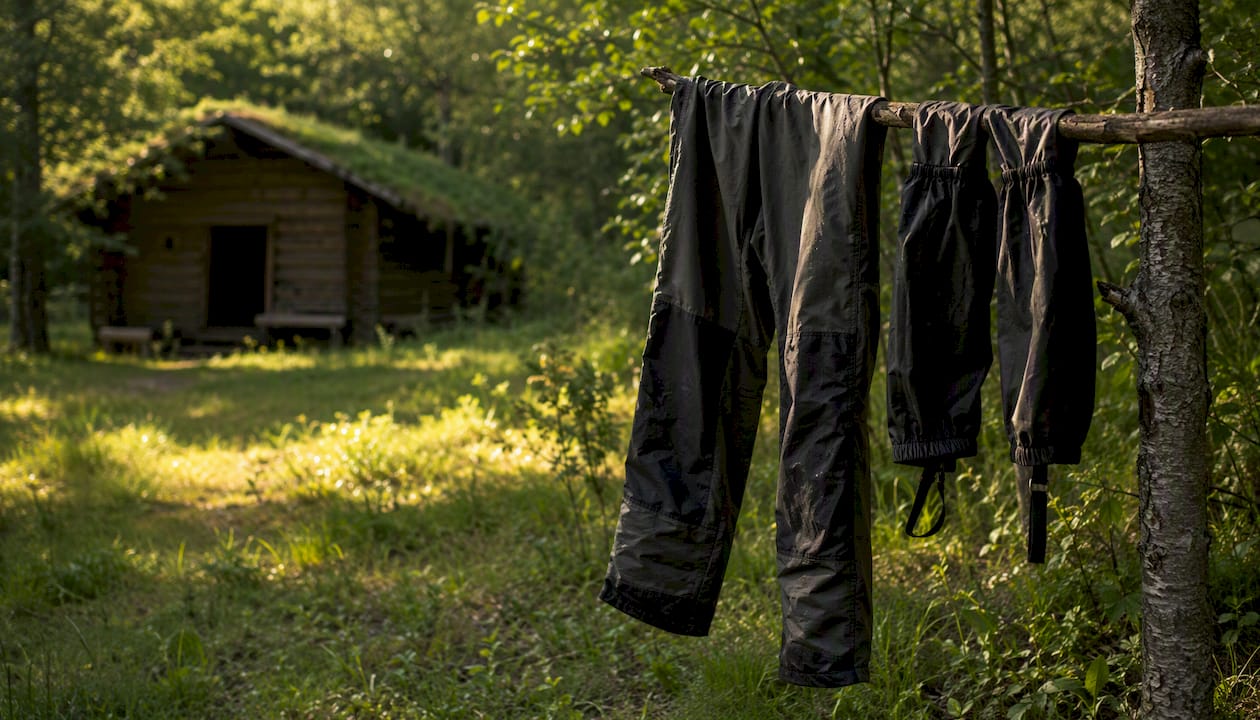
Factory-treated garments (trousers, shirts, gaiters) are available from outdoor retailers and offer a convenient alternative to home treatment. Treating your boots and socks is particularly worthwhile, as ticks typically climb upward from ground level.
Pro Tip: Treat one dedicated set of outdoor clothing at the start of the season and keep it separate from your everyday wardrobe. This removes the need to remember to spray each time and gives you consistent protection throughout the tick season.
A note on natural repellents
PMD (para-menthane-3,8-diol), derived from lemon eucalyptus, has some evidence behind it and may serve as a complement for people who prefer plant-based options. It is not recommended as a primary defence in high-risk areas, and it should not be used on children under three.
| Repellent type | Applied to | Typical protection duration | Key safety note |
|---|---|---|---|
| DEET (high concentration) | Skin | 4–6 hours | Follow age guidance on label; avoid eyes and mouth |
| Picaridin | Skin | 4–8 hours | Generally well tolerated; check label for children |
| Permethrin | Clothing only | many washes | Never apply to skin; highly effective on fabric |
| PMD | Skin | 2–4 hours | Not for children under three; complement, not primary |
Should you get vaccinated against TBE?
TBE (tick-borne encephalitis) vaccine is available in Sweden under two brand names: FSME-IMMUN and Encepur. Both are licensed and recommended for people who spend time in risk areas, as Folkhälsomyndigheten sets out in its vaccination guidance.
One point that often gets overlooked: the vaccine protects only against TBE, not against borrelia. Vaccination is therefore one part of a broader protection package, not a reason to relax clothing and repellent habits.
The standard schedule for most adults is three doses: the second given one to three months after the first, and the third five to twelve months after the second. People aged 50 and over, or those who are immunocompromised, follow a slightly extended schedule. Boosters are recommended every three to five years for those who remain in risk areas.
- Check Folkhälsomyndigheten's regional TBE maps to confirm whether your destination falls within a recommended vaccination zone.
- Start the schedule well before any extended stay in a risk area; full protection requires at least two doses.
- Arrange vaccination through your local health centre (vårdcentral) or a travel health clinic.
- Mention your vaccination status whenever you contact healthcare after a tick bite.
Regional risk is not uniform. SVT's coverage of rising TBE cases in Örebro is a reminder that local incidence can shift year on year, and that checking current maps is more reliable than relying on general impressions of where TBE "tends to be."
How to remove a tick correctly, step by step
Remove it promptly and pull straight out. That is the whole method. Everything else is detail.
- Use a fine-tipped tick remover or tweezers. Grip the tick as close to the skin surface as possible.
- Pull upward with steady, even pressure. Do not jerk or twist.
- Avoid squeezing the tick's body; crushing it can increase the risk of its contents entering the wound.
- Once removed, clean the bite site with soap and water or an antiseptic wipe.
- Note the date, the location on your body, and where you were when you think the bite occurred.
- Dispose of the tick in a sealed bag or flush it away; do not crush it with your fingers.
What not to do: Do not apply oil, petroleum jelly, nail varnish, or heat to the tick before removal. 1177 advises that smothering techniques are not recommended because they may cause the tick to regurgitate, potentially increasing transmission risk. Quick mechanical removal is consistently what clinical guidance recommends.
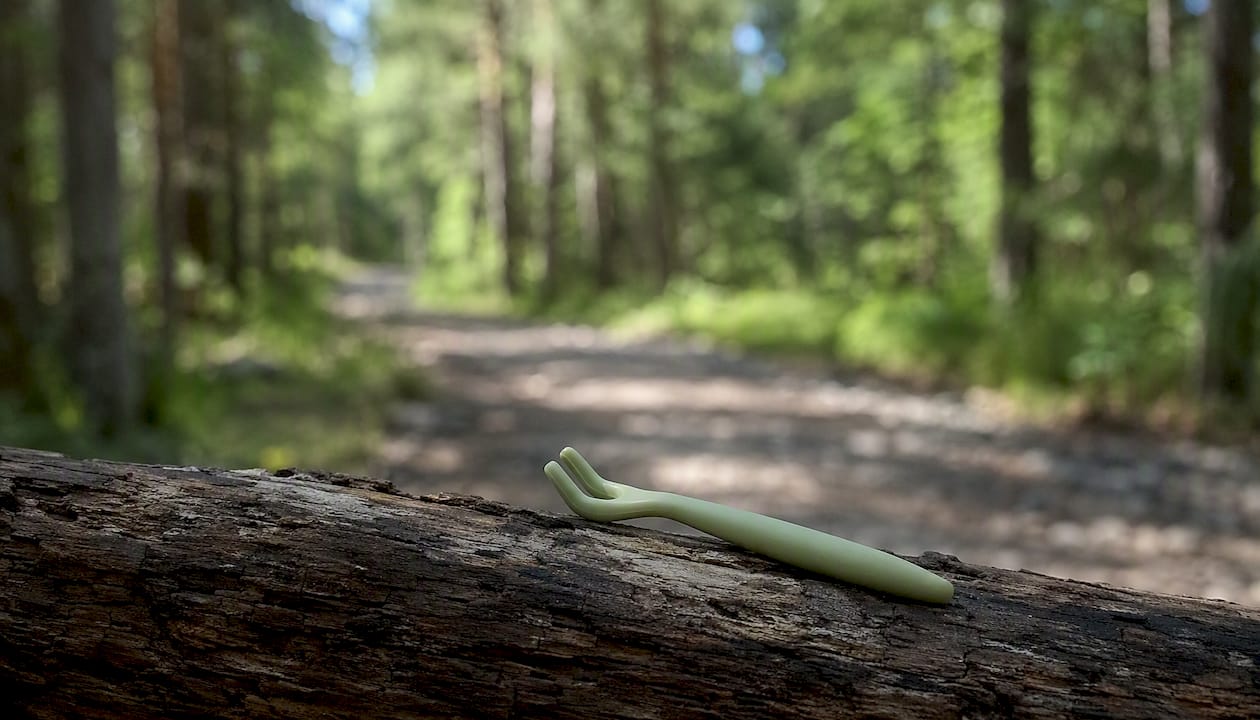
Pro Tip: Keep a tick remover clipped to your daypack zip. The seconds saved by not having to search for a tool genuinely matter, since 1177 confirms that the risk of infection increases the longer a tick remains attached.
When should you contact healthcare after a tick bite?
Most tick bites resolve without any treatment. The signs that warrant contacting 1177 or a healthcare provider are specific and worth knowing clearly.
Contact healthcare if you notice:
- An expanding red rash around the bite site (erythema migrans), which may appear anywhere from a few days to several weeks after the bite and does not always look like a classic bullseye
- Fever, severe headache, or neck stiffness in the days or weeks following a bite
- Facial palsy, joint swelling, or neurological symptoms
- Prolonged fatigue that you cannot explain otherwise
Erythema migrans is the hallmark sign of borrelia infection. Folkhälsomyndigheten confirms that borrelia is the most common tick-borne disease in Sweden and that early antibiotic treatment is effective when started promptly. TBE, by contrast, is not treatable with antibiotics; symptoms typically appear within one to two weeks of the bite and can escalate quickly, so any combination of fever, headache, and neurological signs after a known bite in a TBE area deserves urgent medical attention.
When you call 1177, mention the date and location of the bite and your vaccination status. This information helps the nurse triage your call accurately.
Checking children and pets after time outdoors
Children need a more thorough check than adults, partly because ticks are harder to spot in hair and partly because children are less likely to notice a bite themselves. After any outdoor visit, check the scalp, behind the ears, the neck, the groin, and behind the knees. Kronans Apotek's guidance recommends making this part of the evening bath or bedtime routine so it becomes unremarkable rather than alarming.
For pets, the same principle applies:
- Check dogs and cats after every walk, paying attention to the face, ears, between the toes, and under the collar.
- Ask your vet about tick prevention products suited to your pet's size, age, and health status; several effective options are available in Sweden for both dogs and cats.
- Avoid letting pets into bedrooms or onto furniture until they have been checked; a tick that drops off a dog indoors can still find a human host.
- If you find a tick on your pet, remove it using the same technique as for humans and consult your vet if the animal shows any signs of illness in the following weeks.
Practical tick safety for Villa Sakis guests and forest-edge stays
Staying in a property surrounded by meadows and pine forest, as guests at Villa Sakis do, means tick awareness is simply part of settling in well. A few small habits make the difference between a relaxed stay and an anxious one.
On arrival: Change out of travel clothing before moving through the house. Store outdoor boots and jackets in the entrance area rather than bringing them into sleeping spaces. Check the welcome folder for local path information; some routes through the grounds stay on open, mown grass, which carries lower risk than pushing through the forest undergrowth.
During your stay: The grounds at Villa Sakis include a mown buffer between the garden and the forest edge, which reduces the tick population immediately around the house. Stick to the marked paths when walking into the forest, and keep children and dogs on the path where possible. A tick kit is left in each bathroom; use it.
On departure: Do a final clothing check before packing, and launder any outdoor clothing on a warm cycle. If you found a tick during your stay, note the date and location and monitor the site for the next few weeks after returning home.
Hosts who want to go further can include a brief tick-safety note in pre-arrival communications and link to local TBE-risk information. The Villa Sakis journal and the guide to staying in the Swedish countryside both offer practical context for guests planning their first rural stay in Sweden.

Villa Sakis is a historic 18th-century log farmhouse in Bergslagen, available for private whole-house stays for families, groups, and wellness travellers. The property sits at the edge of pine forest and open meadow, with a private sauna, lake access, and direct access to the kind of quiet Swedish countryside that makes a stay genuinely restorative. Book your stay at Villa Sakis and arrive prepared to enjoy it fully.
A note from Christian
There is a version of tick awareness that tips into anxiety, and that is not what the Swedish forest deserves. The precautions described here take perhaps ten minutes to build into a visit: a spray, a tuck, a check. They are not burdensome. What they do is let you walk through a pine forest in June, or sit in a meadow at dusk, without the background worry that tends to follow people who feel underprepared.
The Swedish countryside rewards those who come to it thoughtfully. Knowing the risks clearly, and knowing what to do about them, is what makes it possible to be genuinely present rather than merely cautious.
Sources
- Fakta om fästingar i Sverige - SVA
- Vaccination mot TBE — Folkhälsomyndigheten
- Fästingbett - 1177
- Fästingar — Krypfritt
This article is general information, not a substitute for advice from a qualified doctor. Consult a qualified healthcare professional about your own circumstances before acting on anything here.