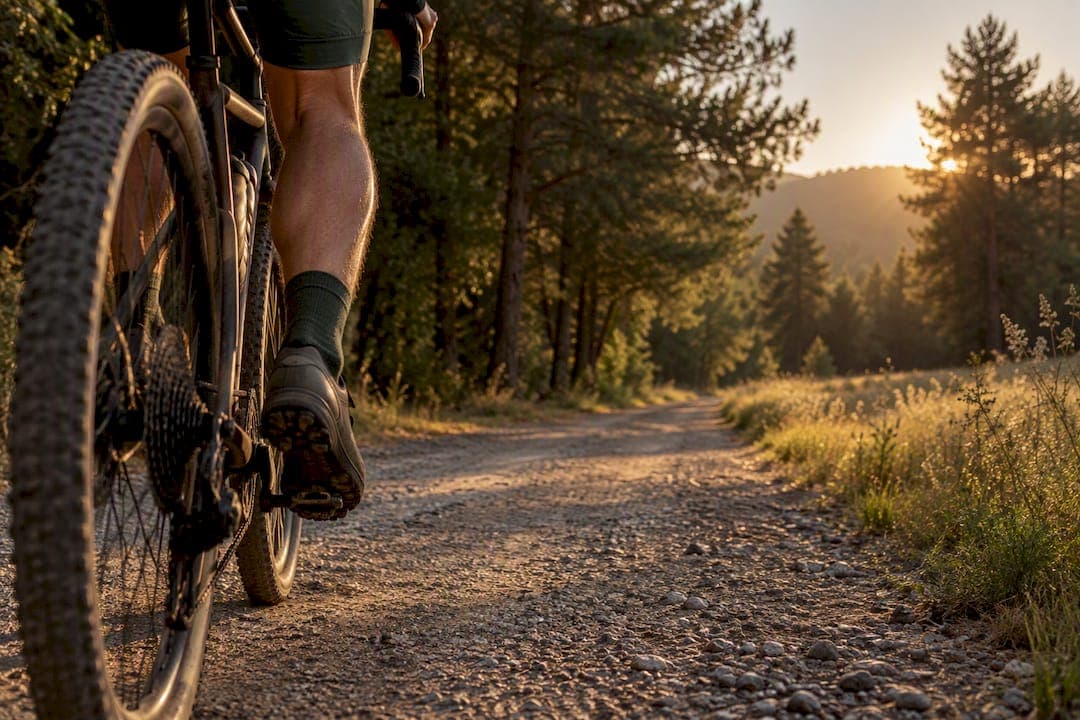
If you want to try gravel cycling during a countryside stay, start small: a short mixed-surface loop of 15 to 40 kilometres, tyres set to a comfortable 30 to 40 psi for 35 to 42 mm widths, and a compact repair kit tucked into a saddlebag. Download offline maps before you leave, and tell someone at your lodging where you are headed and when you expect to be back.
TL;DR:
- Use a tyre pressure of 30 to 40 psi on 35 to 42 mm tyres for better comfort and control, dropping a few psi improves grip on loose gravel.
- Keep beginner rides short, aiming for 15 to 40 kilometres on routes that return to your accommodation or nearby transit stops to avoid transport issues.
- Prioritize routes with a gentle mix of gravel, forestry track, and short paved sections, and choose loops with services like cafés or petrol stations every 10 to 20 kilometres.
- Download offline maps and inform someone at your lodging of your route to mitigate navigation and safety risks in areas with poor mobile coverage.
- Confirm practical details with your host, such as bike storage and nearby repair shops, to ensure a smooth first gravel cycling experience.
Table of Contents
- Easy routes to try from your countryside stay
- Planning a beginner day ride during a short holiday
- Bike, tyres and a rental setup for beginners
- Safety, navigation and packing checklist for a beginner gravel outing
- Simple riding technique and on-ride habits that make gravel easier
- Three short holiday-friendly rides to inspire planning
- A host's view on supporting beginner riders
- Booking Villa Sakis as a base for your first gravel ride
- Sources
- FAQ
Easy routes to try from your countryside stay
The right first loop is short, forgiving, and never far from help. Beginners tend to do best on shorter routes with a gentle mix of firm gravel, forestry track, and short paved sections rather than one continuous rough surface.
Look for loops that return to your accommodation rather than pushing outward in a straight line. That circular structure means you can turn back early without arranging a lift or waiting for a bus, and it takes the pressure off a route that suddenly feels too long. Loops that start and finish at your lodging also simplify the whole day, since there is no transport puzzle to solve before or after riding.
A few practical ways to find one:
- Ask your host which local loops other guests have ridden and enjoyed.
- Favour routes with a village, café, or petrol station every 10 to 20 kilometres, so water and food are never far off.
- Check the grounds and surrounding area around your stay for the nearest quiet lanes and gravel access points.
Mobile coverage thins out quickly once you leave a village, so treat any route note about signal strength as more than a footnote. It shapes how much water, food, and paper backup you carry.
Planning a beginner day ride during a short holiday
A short holiday rewards a simple plan more than an ambitious one. Gravel asks more of your legs than road cycling does, even at the same distance, because loose surfaces soak up power that would otherwise carry you forward.
- Set a daily distance you can hold a conversation through. A relaxed beginner day tends to sit well below what feels achievable on tarmac, and it is worth scaling back your target on gravel rather than matching a road-riding habit.
- Build in one rest day for every four days of riding. This rhythm keeps legs fresh across a week-long stay and turns the holiday into a series of good days rather than one exhausting push.
- Choose routes that begin and end at your lodging, or near a train or bus stop. If you plan to combine cycling with public transport, check the operator's bike carriage policy in advance, since rules on folding versus standard bikes vary.
- Book your stay early during peak season and confirm the practical details with your host beforehand. Ask about bike storage space, whether a repair kit or pump is available, and where the nearest bike shop sits, so nothing is a surprise on arrival.
Bike, tyres and a rental setup for beginners
Tyre width and pressure matter more than the bike badge on the frame. A gravel bike with narrow, overinflated tyres will feel harsher and less confident than a mediocre bike with the right pressure. For 35 to 42 mm tyres, a starting range of roughly 30 to 40 psi gives a reasonable balance of comfort and control on your first ride, with room to soften further if the surface is loose or rutted.
Before setting off on a rented or borrowed bike, run through this short list:
- Squeeze the brakes and check they bite cleanly, without excessive lever travel.
- Shift through the gears to confirm nothing skips or hesitates.
- Check that both wheels are seated and secured properly in the frame or fork.
- Ask your host or rental provider for a pump, a spare tube, and basic tyre levers.
- Confirm where the nearest bike shop or mechanic is, in case something needs professional attention.
Tubeless setups are pleasant to ride but not something a first-timer needs to chase. A well-set-up tube and tyre combination is perfectly capable for a holiday ride.
Pro Tip: Ask to drop the tyre pressure by a few psi before you leave. Small reductions improve grip and comfort on loose gravel far more noticeably than most riders expect, and it costs nothing to try.
Safety, navigation and packing checklist for a beginner gravel outing
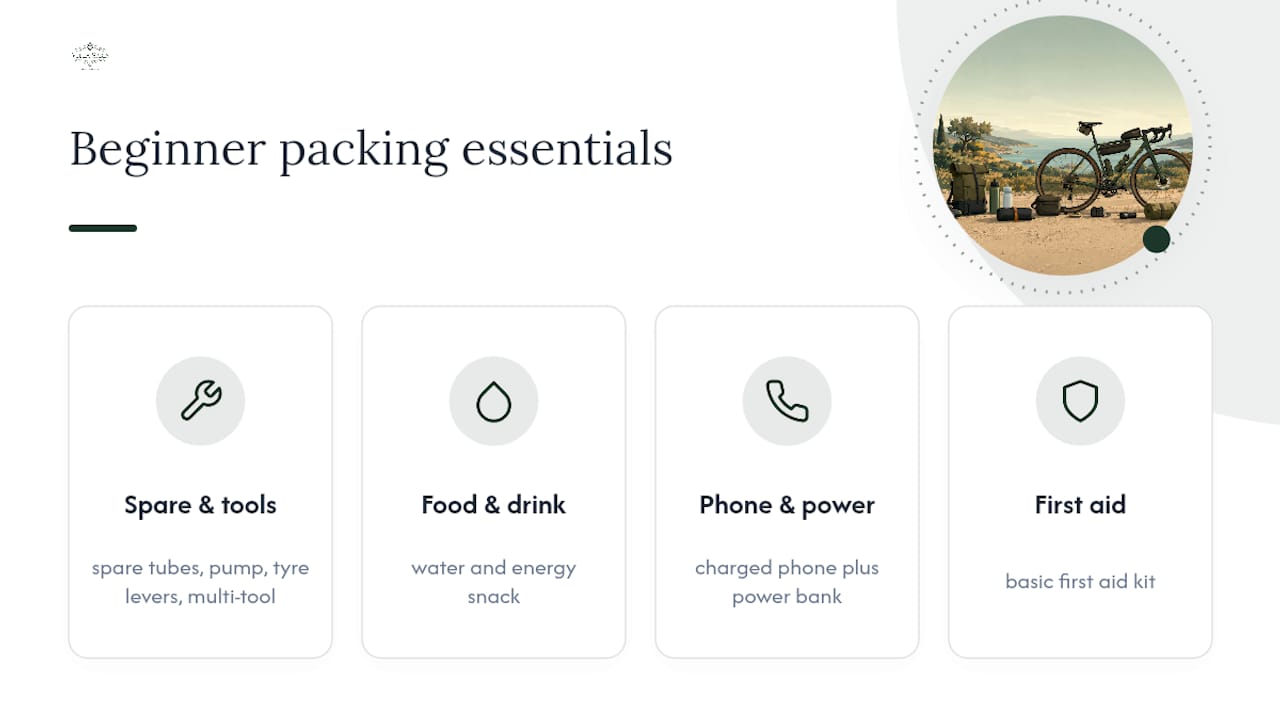
A short list of essentials removes most of the risk from an unfamiliar route. Pack a spare tube or two, a pump or CO2 canister, tyre levers, a small multi-tool, enough water for the distance, a snack, your phone with a charged power bank, and a basic first aid kit.
Navigation deserves the same care as the kit list. Mobile signal can drop out unpredictably in forest and rural stretches, so download offline maps before leaving, or carry a dedicated cycling GPS that does not depend on a network connection. Mark one or two shortcuts back to your lodging on the map, so an easy way home always exists if the weather turns or legs tire faster than planned.
Tell someone at your stay your intended route and roughly when you expect to be back. It costs nothing and matters enormously if anything goes wrong. Check recent weather before heading out, and skip freshly graded or heavily rain-soaked gravel for a first attempt. Freshly graded stone is loose and unpredictable underwheel, and it is not the surface to learn on.
Simple riding technique and on-ride habits that make gravel easier
Loose surfaces reward a relaxed body more than a strong one. Keep your elbows slightly bent, since locked, straight arms transmit every bump straight into your shoulders and tire you out far quicker than a soft, absorbing posture would.
A few habits carry most of the benefit:
- Brake earlier than you would on tarmac, and squeeze progressively rather than grabbing the lever.
- Finish your braking before a corner, not during it, since braking mid-turn is what causes most loose-surface slides.
- Let the bike lean beneath a fairly upright torso through bends, rather than leaning your whole body with it.
- Press down through the outside pedal in corners for extra traction.
- Stay seated on loose climbs and shift to an easier gear earlier than instinct suggests, since standing up on gravel often breaks traction at the rear wheel.
Pro Tip: If a section of trail looks loose or rutted ahead, relax your grip and let your hands rest lightly on the bars. Tension in your hands transfers straight to the front wheel, and a loose grip lets the bike find its own line.
Three short holiday-friendly rides to inspire planning
Coastal mixed-surface loop. Firm gravel tracks alternate with short stretches of quiet tarmac, and the terrain stays gentle enough for frequent photo stops. These routes suit riders who want scenery over mileage, with towns close enough for a mid-ride coffee.
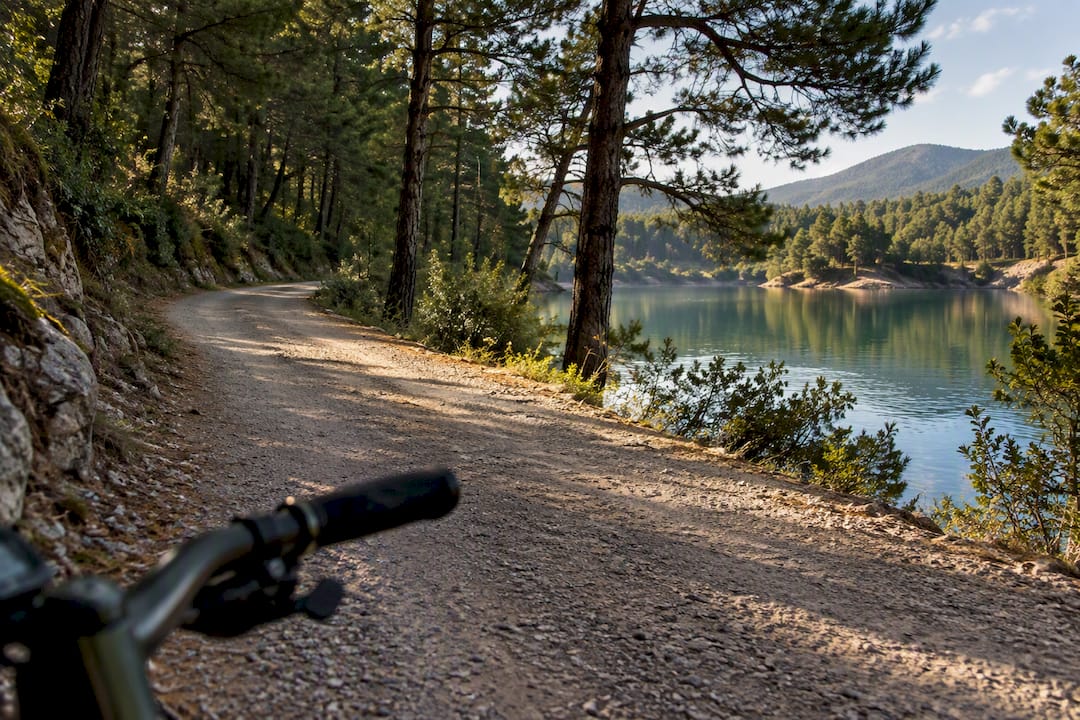
Forest-lakes loop. Compacted forestry roads wind between still water and pine, offering some of the calmest riding a beginner can find. Services thin out considerably here, so pack water, snacks, and offline maps before setting off, since regions like Dalsland's gravel network can run for long stretches without a shop in sight.
Lowland cultural loop. Short gravel links stitch together villages, farm shops, and cafés, making this the easiest style of ride to sustain across a full day. Frequent stops keep energy topped up and turn the ride into as much a cultural outing as a physical one.
A host's view on supporting beginner riders
A countryside lodge can be within reach of exactly this kind of quiet, mixed-surface riding, and part of hosting well is helping guests find routes that suit their confidence rather than a guidebook's ambition. Hosts can point visitors toward short loops that circle back to the accommodation, share knowledge about surface conditions after recent rain, and lend a pump or basic repair kit where one is needed.
Local knowledge solves the small worries that guidebooks skip over: which stretches lose mobile signal, where the nearest shop sits, and which loop suits a first attempt versus a second, more confident one. Riding here is meant to feel restorative rather than demanding, in keeping with the slower rhythm of nature immersion that draws most guests to the countryside in the first place.
— Christian
Booking Villa Sakis as a base for your first gravel ride
Villa Sakis works well as a base for exactly the kind of gentle, mixed-surface riding this guide describes: a peaceful 18th-century log farmhouse surrounded by meadow and forest, with the kind of local knowledge that makes a first gravel outing feel easy rather than daunting. Rather than arriving somewhere generic and hunting for routes online, you arrive somewhere your hosts already know which loops suit a beginner.

Before booking, it is worth confirming a few practical points directly with us: whether bike storage suits your setup, what a suggested route pack might include, and how far the nearest shop or repair point sits from the house. Guests planning an active stay more broadly might also find our checklist for countryside training retreats useful before arrival. If a guided option appeals more than self-planned loops, operators like ComFort Tours package rural rides with logistics handled for you.
Reserve your stay through the House booking page to check dates and start planning the details that matter most to a comfortable first ride.
Sources
For deeper route planning and safety guidance, BikeTips' beginner gravel guide covers surface-overlay tools in more detail, while Cykelmagasinet's Dalsland dispatch and Göteborgbikes' Bohuslän guide offer region-specific packing and navigation advice.
- Gravel cycling for beginners: complete guide
FAQ
What tyre pressure should a beginner use for gravel cycling?
For 35 to 42 mm tyres, a starting range of roughly 30 to 40 psi balances comfort and control well for a first ride. Dropping a few psi lower often improves grip on loose surfaces more noticeably than switching bikes.
How long should a beginner's first gravel ride be?
Aim for 15 to 40 kilometres on a mixed-surface loop that returns to your accommodation. This keeps the ride manageable and removes the need for transport planning if you decide to finish early.
Do I need a dedicated gravel bike to start?
No. A hybrid or well-set-up road bike with wider tyres can handle a gentle mixed-surface loop, and tyre width and pressure matter more to comfort than the bike's category. A rental or hire bike works fine as long as the brakes, gears, and wheels check out beforehand.
How do I navigate gravel routes with limited mobile signal?
Download offline maps before you leave, since mobile coverage can drop out unpredictably in forest and rural stretches. Marking one or two shortcuts back to your lodging on the map gives you a reliable way home if signal fails entirely.
Can Villa Sakis help me plan a beginner gravel route?
Villa Sakis can suggest short local loops, share basic repair items on request, and offer guidance on nearby services and mobile coverage. Current details on the stay and its facilities are available on the House page.