A training retreat on the land is a short, activity-led stay that pairs guided exercise with nature-based recovery and simple, wholesome meals. It suits anyone from casual movers to committed athletes who want a few days of focused training without sacrificing rest. If that sounds like your kind of break, the next step is simple: look at a sample schedule, then check what dates are open.
TL;DR:
- Choose a retreat with qualified instructors and clear scalability of session intensity to match your fitness and recovery needs.
- Verify accommodation options, meal arrangements, and whether recovery amenities like sauna access are included or need separate booking.
- Expect shorter programs to mix varied activities such as yoga, trail walks, strength work, and recovery, with optional extras like massages billed separately.
- Pack layered clothing, trail footwear, and portable training equipment, and plan to balance activity with rest and proper hydration.
- Opt for a private house booking if you want complete control over schedule, pace, and meals, especially if you have specific health considerations or training goals.
Table of Contents
- What countryside training retreats commonly include
- How do you choose the right training retreat?
- What does a sample weekend or week programme look like?
- What should you pack for a countryside training retreat?
- Why does training in nature actually work, and how do you avoid overdoing it?
- The Villa Sakis example: a private farmhouse retreat option
- Is a countryside training retreat suitable for your fitness level?
- What are typical cancellation and refund policies?
- Guided retreat or self-planned active holiday?
- Book Villa Sakis for your own countryside training retreat
- Sources
What countryside training retreats commonly include
A training retreat on the land tends to follow a familiar rhythm, even when the setting changes from pine forest to lakeside meadow. Sessions are grouped by intensity and mood, giving your body real variety across a short stay rather than repeating the same gym circuit.
Expect a blend of these formats:
- Morning mobility or yoga, often outdoors, to open the body before the day's main effort
- Guided trail running or brisk countryside walks, scaled to fitness level
- Functional strength or HIIT blocks using bodyweight and light equipment
- Afternoon hikes or unstructured nature time for lower-intensity movement
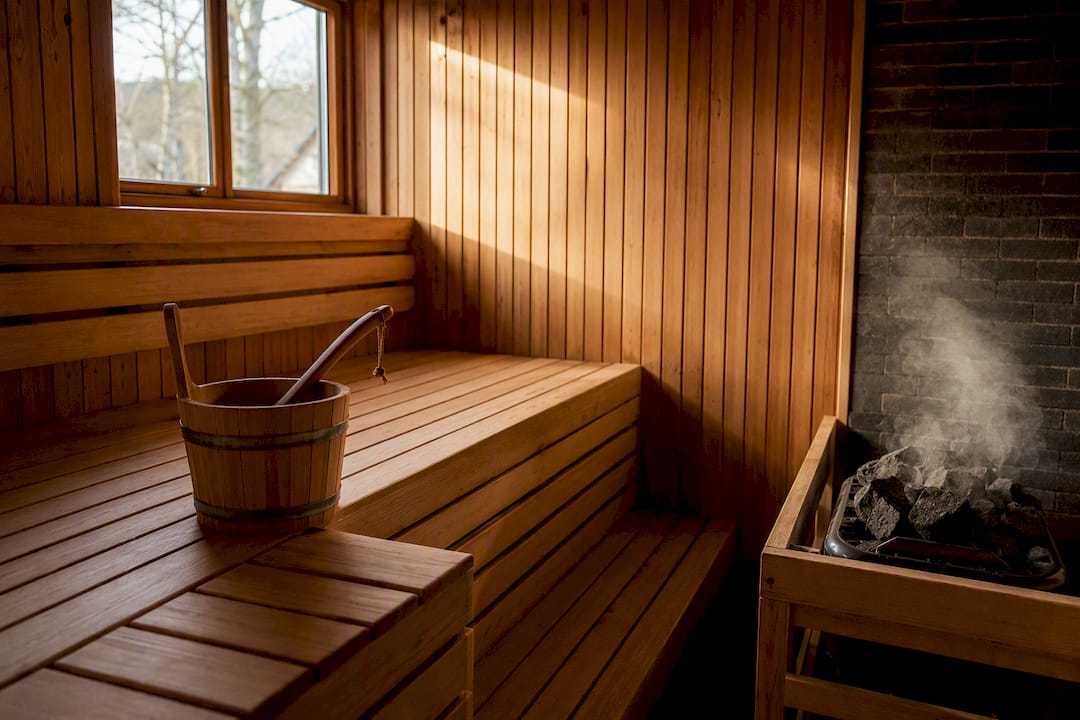
- Evening recovery: sauna, a cold-water dip in a lake, or simple stretching
Accommodation varies more than most people expect. Some retreats book you into a shared farmhouse with catered, health-focused meals; others offer a private whole-house arrangement where your group self-caters and sets its own pace. Both formats work, but they suit different travellers. A shared retreat gives you built-in structure and company. A private house gives you control over timing, food, and how social the week feels.
Recovery features separate a genuine countryside retreat from a gym holiday with a nicer view. Sauna access and cold-water immersion show up repeatedly in Swedish retreat programming, often paired with guided breathing or a short massage. Most stays run as a weekend, a 3 to 5 day block, or a private booking with flexible dates, with group sizes ranging from a handful of friends to organised cohorts of 10 to 15.
How do you choose the right training retreat?
Picking well comes down to matching the retreat's structure to your own fitness level and recovery needs, not just its scenery. A few criteria consistently separate a well-run stay from a disappointing one.
- Instructor credentials and session intensity. Ask what qualifications the trainer holds and how sessions are scaled for mixed abilities.
- Accommodation quality. Private rooms, shared dorms, or a whole-house booking all change the character of the stay considerably.
- Food and dietary handling. Confirm whether meals are catered or self-prepared, and how allergies or preferences are managed.
- Group size and pace. Smaller groups generally mean more individual attention and a more flexible schedule.
- Terrain and transport access. Check how far the property sits from the nearest station or airport, and whether transfers are included.
- Insurance and cancellation terms. Read the fine print before you commit to non-refundable dates.
Send these exact questions before booking: What is the maximum group size for guided sessions? Are instructor certifications available on request? What happens if I need to skip a session due to injury? Is transport from the nearest station included or arranged separately?
Pro Tip: Ask specifically whether "recovery amenities" mean a shared sauna slot booked in advance or genuinely open access. That single detail often decides whether a retreat feels restful or rushed.
Watch for hidden extras: massage treatments, private coaching, and even sauna wood are sometimes billed separately from the headline package price.
What does a sample weekend or week programme look like?
Seeing an actual schedule makes it far easier to judge whether a retreat's pace suits you, so here is how a typical structure plays out.
A compact weekend usually runs:
- Friday evening: Arrival, welcome walk, light dinner
- Saturday morning: Guided run or strength session, followed by breakfast
- Saturday afternoon: Nature hike or free time by the lake
- Saturday evening: Sauna and cold-water dip, communal dinner
- Sunday morning: Mobility flow or yoga, then departure after brunch
A longer 4 to 5 day stay follows a similar logic but adds progression. Case examples from Swedish retreat operators, including weekend programming at established training venues, show a pattern worth borrowing: day one introduces the group and assesses fitness gently, days two and three push training stimulus while protecting evening recovery, and the final day shifts towards reintegration, giving guests routines they can actually repeat once home.
Retreat programmes that pair strength and meditation sessions with restorative practices demonstrate this balance well, alternating HIIT or strength blocks with sauna time and guided breathing rather than stacking hard sessions back to back.
Common optional extras include a private massage, an extra cold-water dip session, or one-to-one coaching for anyone chasing a specific goal, such as a running target or a strength benchmark. Most operators list these separately from the base package, so it pays to ask what is bundled before you compare prices across two retreats.
What should you pack for a countryside training retreat?
Preparation is straightforward but easy to underestimate, particularly around Nordic weather, which can shift from bright sun to cold drizzle within a single afternoon.
Pack for mixed conditions and light self-sufficiency:
- Layered clothing including a waterproof shell and moisture-wicking base layers
- Trail-appropriate footwear with good grip for uneven ground
- A resistance band, skipping rope, and refillable water bottle, since small portable kit multiplies your training options without adding luggage weight
- Swimwear and a quick-dry towel for lake dips or sauna sessions
Send dietary notes and arrival times to your host well in advance. On site, resist the urge to overtrain simply because you have the time. Protecting sleep and easing into the first session's intensity matters more than proving your fitness on day one.
Why does training in nature actually work, and how do you avoid overdoing it?
Combining physical activity with time outdoors measurably improves psychological wellbeing and speeds stress recovery compared with the same exercise indoors, according to research on green exercise and health. The forest or lakeside setting is not just decoration. It appears to change how the body processes exertion and stress together.
The practical upside for retreat-goers: you do not need daily punishing sessions to preserve fitness. Two to three focused sessions a week are enough to maintain conditioning over a short stay, freeing the rest of your time for walking, sauna, and rest.
A simple on-site routine covers most needs: a 20-minute bodyweight circuit (squats, push-ups, lunges, plank) twice during the stay, one longer trail walk or run, and a daily 10-minute mobility flow focused on hips and shoulders. Even brief, short meditation sessions have been shown to lift mood and build resilience, making a five-minute breathing practice before bed a worthwhile addition to any programme.
Pro Tip: Treat the sauna as part of your training, not an afterthought. Alternating heat with a cold lake dip supports the same recovery goal as a proper cooldown stretch.
The Villa Sakis example: a private farmhouse retreat option
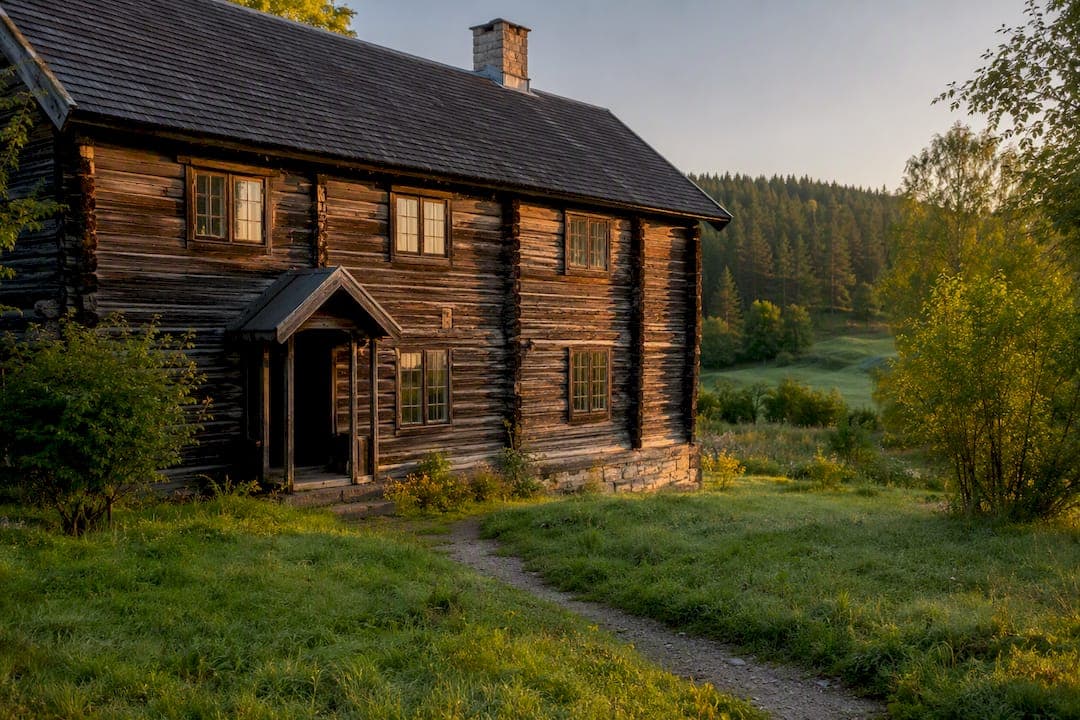
Villa Sakis is a private, whole-house booking rather than a shared programme, which suits groups who want a training retreat on their own terms. Set in an authentic 18th-century Swedish log farmhouse, the property gives guests:
- A private sauna and direct lake access for genuine hot-cold recovery
- Open forest and meadow terrain right outside the door, ideal for trail runs and guided hikes
- Full use of a self-catering kitchen, so meals and dietary needs stay entirely in your control
- Flexibility to run self-led sessions, or bring in a local instructor for a specific focus
Groups often structure their own version of the sample weekend above, using the house's layout and amenities to shape training around the space rather than a fixed itinerary. Details on what a typical stay looks like are covered in the Villa Sakis journal.
Is a countryside training retreat suitable for your fitness level?
Countryside training retreats generally work well across a wide range of abilities, because most activities scale by pace and duration rather than demanding a fixed intensity. A beginner can walk where an advanced guest runs, and a modified bodyweight circuit sits alongside a harder strength session without anyone standing out.
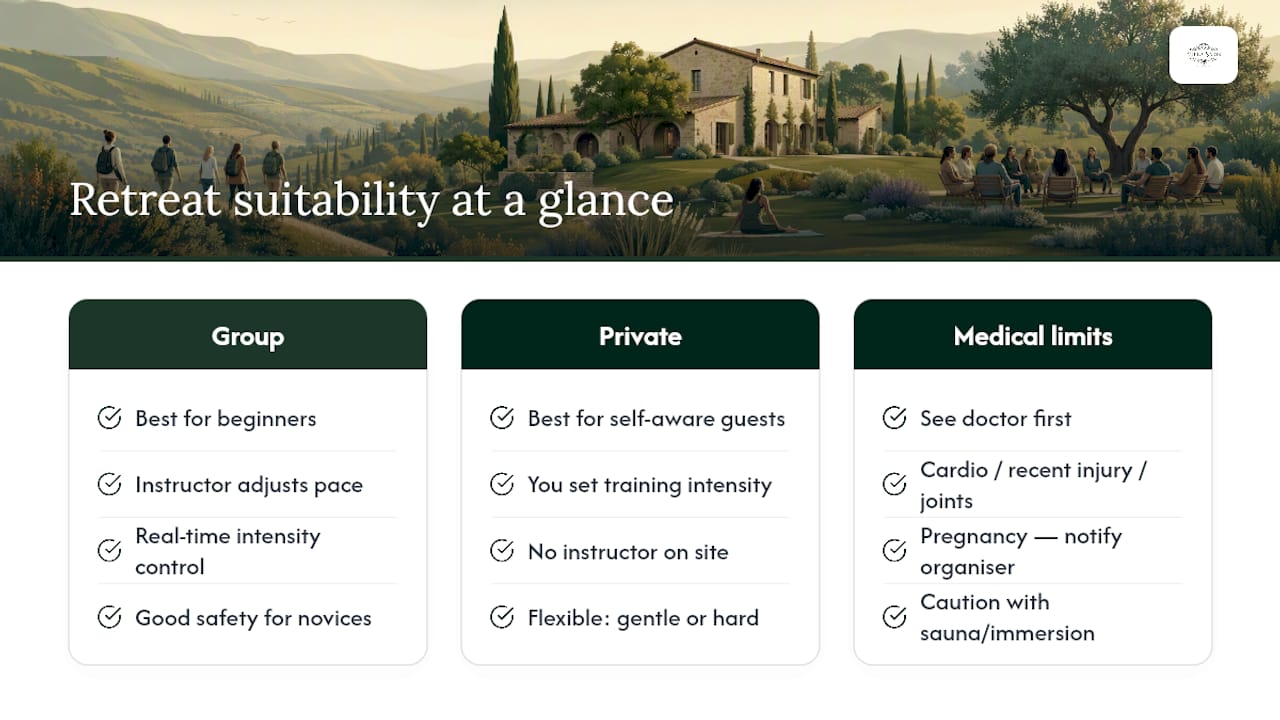
That flexibility has limits worth taking seriously. Anyone with a cardiovascular condition, a recent injury, or joint problems that flare with uneven terrain should speak to a doctor before booking, particularly if the retreat includes sauna use or cold-water immersion, both of which put real strain on the circulatory system. Pregnant guests, and anyone managing a chronic condition affecting balance or stamina, should raise this directly with the retreat organiser at enquiry stage, not on arrival.
Group retreats with instructor-led sessions are often the safer starting point for complete beginners, since a trainer can adjust pace in real time. A private house booking, by contrast, suits people who already know their own limits and prefer to set training intensity themselves, whether that means two gentle walks or a genuinely demanding week. Either way, honesty about your current fitness and any medical history, shared with your host before arrival, does more to protect your stay than any equipment on the packing list.
What are typical cancellation and refund policies?
Cancellation terms vary considerably between organised retreat programmes and private house bookings, so this is worth confirming in writing before you pay a deposit. Structured retreats with fixed dates and instructor bookings often carry stricter terms, since the operator has committed to staffing and catering regardless of numbers. Expect a tiered refund policy: a full or partial refund if you cancel well in advance, dropping to a smaller percentage or no refund inside a final window, commonly two to four weeks before arrival.
Private whole-house bookings, including direct rentals, tend to follow the property's own policy rather than a retreat operator's terms. These can range from flexible, fully refundable cancellation up to a set number of days before check-in, to a fixed deposit that becomes non-refundable once confirmed. Always check whether the deposit is separate from the balance, and whether travel disruption, illness, or weather counts as grounds for a partial refund.
Ask specifically about optional extras too. A pre-booked private massage or an add-on coaching session may carry its own separate cancellation window, distinct from the accommodation itself. Getting this in writing before you commit avoids an unpleasant surprise if plans change.
Guided retreat or self-planned active holiday?
Choose an organised, instructor-led retreat when you want structure and accountability. Choose a private house booking when you value flexibility and already know how to train yourself. Undecided? Start by checking Villa Sakis availability and see what a self-planned week could look like.
— Christian
Book Villa Sakis for your own countryside training retreat
Villa Sakis is the alternative to a shared retreat programme for anyone who wants full control over pace, privacy, and cost. Instead of fitting your group around someone else's timetable and per-person pricing, you book the whole 18th-century log farmhouse and shape the week around your own training goals, with a private sauna and direct lake access on hand whenever you want them.

Pairing training with proper food matters too, and travellers planning a self-catered stay often find it useful to think through meals as carefully as sessions, an approach covered well in this guide to combining lodging and good food. At Villa Sakis, the self-catering kitchen means your group decides exactly what fuels each day. Whether you are planning a fitness-focused weekend or a longer reset, the house page covers the practical layout, and checking current availability is the fastest way to see whether your dates are open.
Sources
- Scientific article on green exercise and health — PubMed
- Träna på semestern – så lite behöver du göra — Hälsa & Fitness (2026)
- A little meditation goes a long way — Greater Good Magazine
- Semesterträning – coachens bästa tips! — Runner's World (2025)