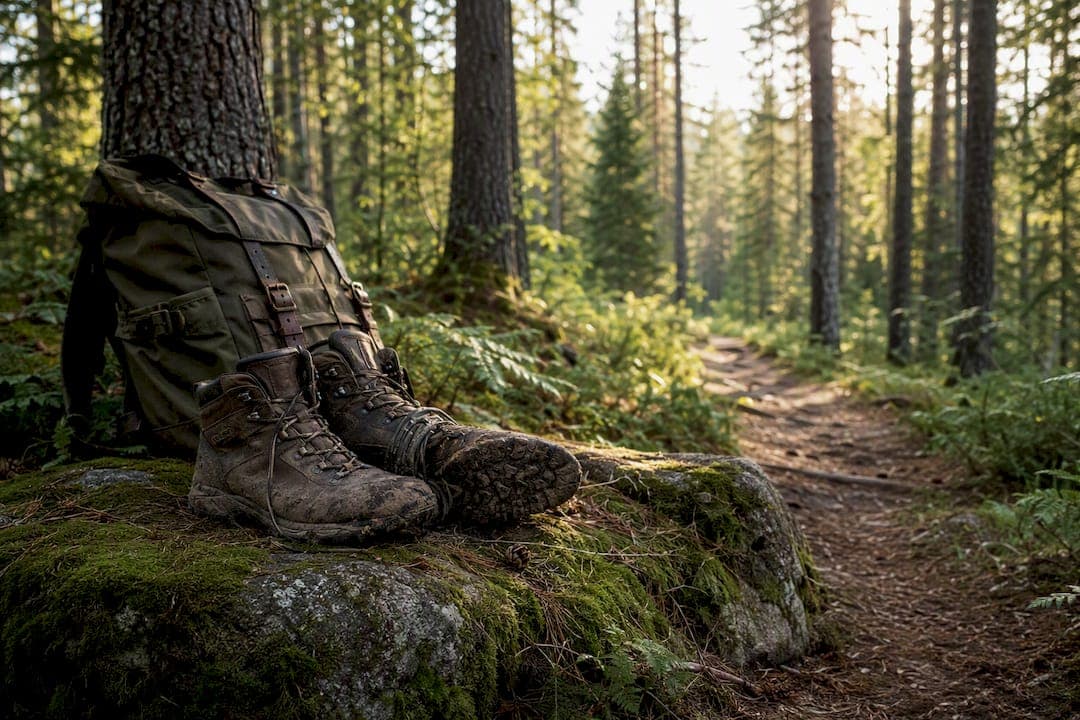
Start with a short, well-signposted trail, download an offline map, pack light layers and broken-in boots, and treat Allemansrätten as the quiet rule shaping everything else you do. Aim for 5 to 8 kilometres if this is your first proper walk into the trees, or up to 15 if you already have some hiking behind you. Beyond that, the forest asks very little of you except attention.
TL;DR:
- Most beginner hikes should stay within 5 to 8 kilometers, with longer distances requiring more confidence in navigation and terrain.
- Use offline maps, a compass, and share your route plans to mitigate GPS failures and reduce the risk of getting lost in dense or unfamiliar forests.
- Proper tick prevention, seasonal awareness, and responsible outdoor conduct are essential to safety and respecting the right to roam.
- Conditions in the forest vary greatly across seasons, making winter routes potentially longer or more dangerous without suitable gear and planning.
- Bringing only essential, tested gear, including comfortable footwear and layered clothing, improves enjoyment and safety during forest hikes.
Table of Contents
- Where to find forest trails and how to choose the right one
- How far can you reasonably walk in a day?
- What to pack for a day in the woods
- Staying safe: ticks, weather and getting lost
- Allemansrätten and how to leave no trace
- Taking children into the forest
- Apps, maps and simple navigation tools
- A simple progression for your first three hikes
- Emergency communication in remote forest areas
- Wildlife awareness and how to respond to encounters
- Seasonal considerations for forest hiking
- Villa Sakis' approach to forest walks and guest guidance
- A short forest-hiking break at Villa Sakis
- Sources
Where to find forest trails and how to choose the right one
The easiest starting point is Naturkartan, which lets you filter by trail type, distance and available facilities before you've even laced up your boots. It's the closest thing Sweden has to a single trusted map of its walking routes, complete with photographs and elevation profiles submitted by people who've actually walked them. Official 'signaturleder' lists are worth checking too, since these are the routes maintained and signed to a consistent standard rather than informal paths that may or may not still exist on the ground.
Once you've found a few candidates, narrow them down by asking three practical questions:
- Is the route circular or point-to-point, and does that suit how you're getting there?
- What's the estimated walking time and elevation gain, and does it match your fitness today rather than your fitness in an ideal world?
- Is there parking or public transport nearby, and are there toilets or shelters if the weather turns?
Seasonal closures do happen, particularly around nesting periods or after storm damage, so a quick check before you leave saves a wasted drive.
How far can you reasonably walk in a day?
Beginners should plan for 10 to 15 kilometres a day, with a genuinely sensible first outing sitting closer to 5 to 8 kilometres. Experienced hikers on easy terrain can comfortably manage longer distances, but that figure means little on a rooty, uneven forest path, where pace often drops to a slower speed once the ground gets technical.
A rough formula helps more than a fixed number:
- Take the route distance in kilometres, divide by your expected speed in km/h.
- Add 15 to 25% on top for rest stops, snack breaks and the inevitable pause to work out which fork in the path is actually the trail.
Photo stops count too. Nobody walks through a stand of old pine at a steady clip.
What to pack for a day in the woods
Forest hiking rewards restraint. A light pack with the right essentials beats a heavy one stuffed with things you'll never open, and Naturkompaniet's guidance backs this up: prioritise comfort and simple kit over specialist gear, especially on your first few outings.
- Footwear you've already broken in, not boots straight from the box.
- Layered clothing, since forest temperatures shift quickly under tree cover.
- A waterproof shell, even when the forecast looks kind.
- Water and snacks, more than you think you'll need.
- Your phone with an offline map downloaded in advance.
- A lightweight trowel, for reasons covered shortly.
- A basic first-aid kit and a small bag for your own rubbish.
Pro Tip: Test any new footwear on two or three short walks of 5 to 10 kilometres before committing to a longer route. Blisters that appear at kilometre three of a day hike are a very different problem to blisters at kilometre three of a weekend trip.
Staying safe: ticks, weather and getting lost
Ticks are the most common nuisance in Swedish forest terrain, particularly from late spring through early autumn. Tuck trousers into socks, use a repellent, and check your skin properly once you're home. Practical tick prevention advice covers removal technique in more detail, but the short version is: remove promptly with fine tweezers, and see a doctor if a rash spreads outward from the bite in the days that follow.
Navigation risk is easy to underestimate in dense forest, where GPS signal can be patchy and landmarks repeat themselves. Carry a spare battery pack, and learn the basics of taking a compass bearing so a dead phone isn't the end of your afternoon.
- Check the forecast and sunset time before you set off, not after.
- Tell someone your route and roughly when you expect to be back.
- Carry a basic first-aid kit even on short walks.
Pro Tip: If your phone dies, stop, orient yourself using a visible landmark, and retrace your steps to the last point you're certain of rather than pressing on and hoping.
Allemansrätten and how to leave no trace
Sweden's right to roam is a genuine freedom, but it comes with responsibilities that matter more than most first-time hikers realise. Stay clear of hemfridszoner (the private zone immediately around someone's home), avoid damaging crops or fences, and never leave litter behind, even biodegradable food scraps. Our guide to the right to roam covers the finer points, including how camping on private land is generally limited to a night or two before you need to move on.
Toilet etiquette follows a similar logic of quiet respect:
- Move at least 100 metres from any trail or water source.
- Dig a small cat-hole roughly two decimetres deep.
- Bury plain toilet paper in the hole; never bury wet wipes, which don't break down and should be sealed in a bag and carried out.
Nature reserves and national parks often carry stricter local rules on fires, camping and dogs, so a glance at posted notices before you settle in is worth the thirty seconds it takes.
Taking children into the forest
A first family route works best at 3 to 8 kilometres on easy, flat terrain, with frequent stops built in rather than treated as a failure of pace. Children measure a walk by the interesting things in it, not the distance covered, so a simple scavenger hunt or a pair of binoculars for spotting birds does more for morale than any amount of encouragement. Our family hiking guide has more activity ideas if you want to keep the walk feeling like an adventure rather than an errand.
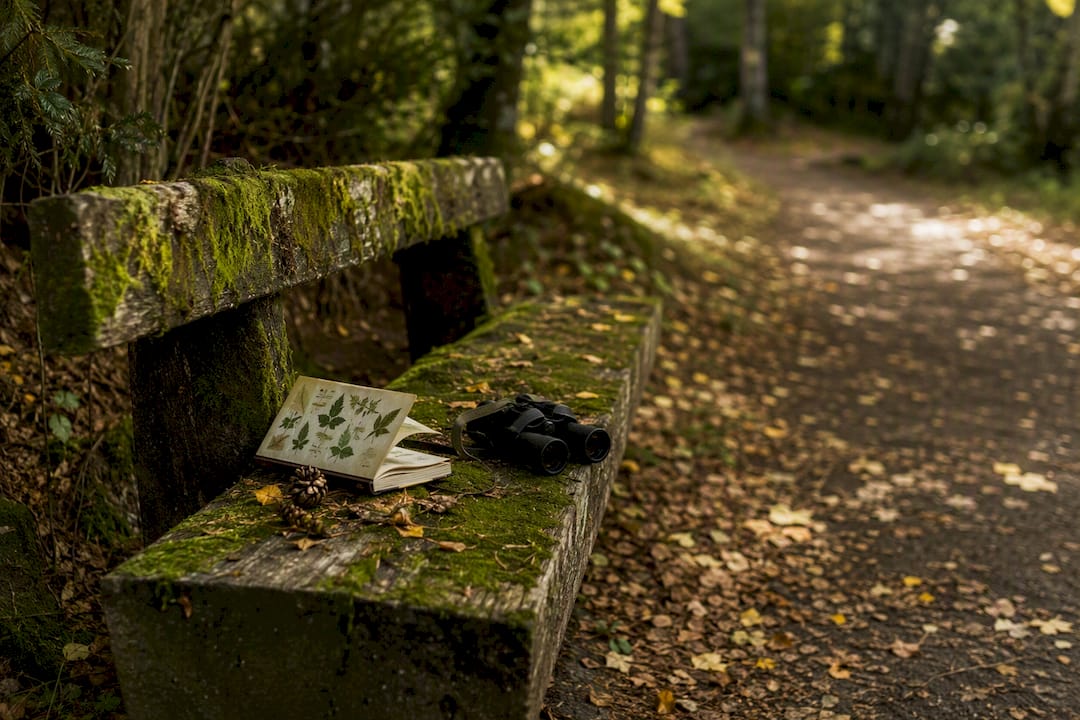
Pace to the slowest walker in the group, always. A small emergency kit is worth carrying even on gentle routes, and a child carrier earns its weight the moment small legs give out two kilometres from the car.
Apps, maps and simple navigation tools
Naturkartan remains the most useful single tool for forest hiking: filter by trail type, download the map for offline use before you leave signal range, and check user photos to get a sense of the terrain before you commit. It's built for exactly this kind of planning.
- Download your map at home, not from the car park.
- Carry a paper map and compass as backup in remote areas, and learn to orient the map against a visible landmark rather than relying on it blind.
- Share your planned route and expected return time with someone before you set off.
Technology fails quietly in forests more often than anywhere else. A backup habit costs nothing and solves most of the problems it causes.
A simple progression for your first three hikes
Building confidence matters more than building distance in the early stages, and treating your first outings as short, pleasant walks rather than tests of endurance makes it far more likely you'll want a fourth.
- Hike one: 5 to 8 kilometres on a nearby, well-marked trail. Focus purely on comfort, simple kit and enjoying the quiet.
- Hike two: Push to around 10 to 12 kilometres, or add gentle elevation. Practise navigation and deliberately build in rest stops.
- Hike three: Choose a circular signposted route, test a lighter pack than before, and think through what you'd do if someone twisted an ankle two hours from the car.
Each step should feel only slightly harder than the last. If it doesn't, you're ready to go further sooner than the plan suggests.
Emergency communication in remote forest areas
Mobile coverage in Swedish forest terrain is generally good near towns and main roads but can drop out entirely in denser stands, valleys or low ground, sometimes for stretches of several kilometres. Before you rely on your phone as your only safety net, check whether your route passes through known coverage gaps, which some trail apps note alongside the route description.
The emergency number 112 works across Sweden and connects to the SOS Alarm service, which can coordinate mountain rescue or ambulance response where needed. If you have no signal at all, the most useful thing you can do beforehand is tell someone your planned route and your expected return time, so a search has somewhere to start. A basic power bank extends your phone's usefulness through a long day, and some hikers carry a simple whistle, which carries further through trees than a shout and costs nothing to pack.
For longer or more remote routes, particularly in areas with patchy coverage, a personal locator beacon or satellite messenger is worth considering, though for the short, well-marked day trails most beginners start with, sensible planning and a clear check-in arrangement cover most of the risk. The forest rarely punishes a mistake quickly. It punishes an unplanned one slowly, which is precisely why a simple communication plan matters more than any single piece of kit.
Wildlife awareness and how to respond to encounters
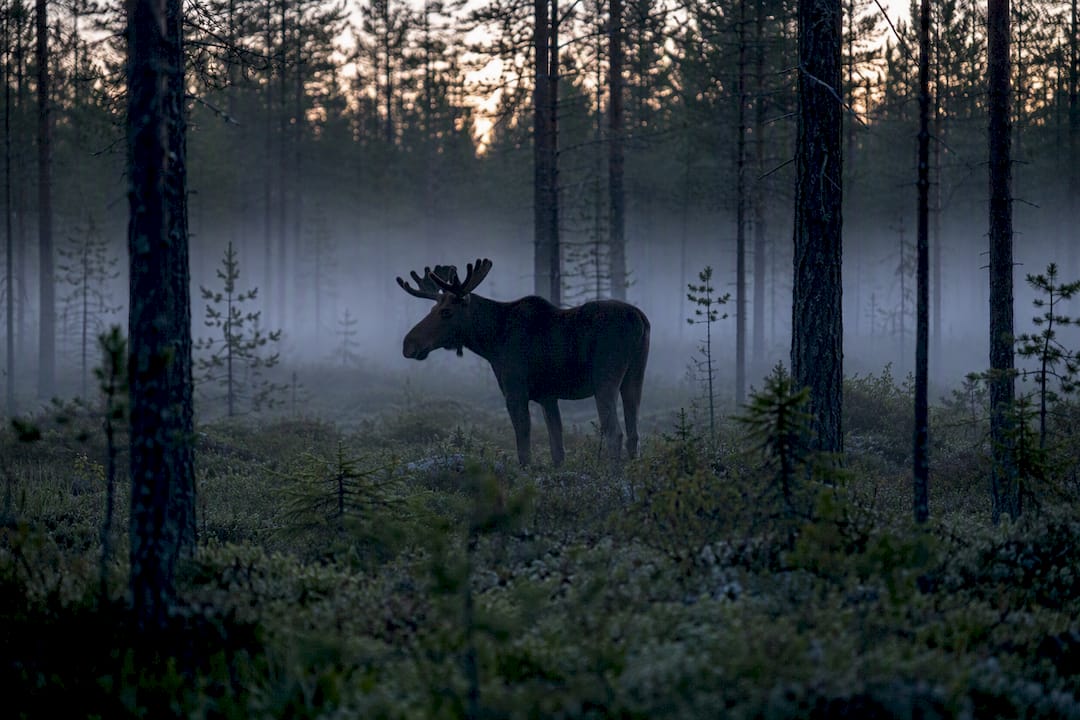
Swedish forests hold a genuinely varied cast of wildlife, most of which wants nothing to do with you. Moose are the animal you're most likely to actually see, particularly at dawn or dusk, and the sensible response is simple: give them space, don't approach for a photograph, and back away calmly if one seems agitated rather than curious.
Wild boar are more unpredictable, especially sows with young nearby. If you encounter one, retreat slowly rather than running, since sudden movement tends to provoke exactly the reaction you're hoping to avoid. Lynx and wolves exist in parts of the forest but are elusive by nature and encounters are rare enough that most seasoned hikers never see one directly, only signs of their passing.
Snakes are the more immediate practical concern in warmer months. The adder is the only venomous species and tends to bask on open, sunny paths rather than in dense undergrowth, so watching where you place your feet on rocky or open ground matters more than any specific avoidance technique. A bite is rarely fatal but always warrants a hospital visit.
The general rule across almost every encounter is the same: make your presence known early with normal conversation or footsteps, avoid surprising an animal at close range, and never position yourself between an adult animal and its young. Curiosity from a distance is fine. Curiosity from ten metres is a different conversation entirely.
Seasonal considerations for forest hiking
A forest changes character completely between seasons, and the same trail can feel like an entirely different walk depending on when you tackle it. Spring brings soft, often waterlogged ground and a noticeably higher tick presence as temperatures climb, which makes the earlier prevention advice worth taking seriously from around April onward.
Summer offers the longest daylight and the driest underfoot conditions, but also the busiest trails near populated areas and the peak tick season running well into August. Autumn is arguably the most forgiving season for a beginner: cooler temperatures, fewer insects, and forest floors carpeted in a way that makes navigation easier simply because visibility through the trees improves once leaf cover thins.
Winter is where the calculation changes most sharply. Daylight hours shrink dramatically, ice and snow can hide uneven ground beneath a deceptively smooth surface, and a route that took three hours in June might take five in January, or become entirely impassable without proper footwear. Checking sunset time isn't a formality in winter, it's the single detail that determines whether your walk is enjoyable or genuinely risky.
Whatever the season, dress for what the forest actually does rather than what the weather app promises from an open field ten kilometres away. Tree cover changes wind, temperature and moisture in ways that surface forecasts don't always capture.
Villa Sakis' approach to forest walks and guest guidance
We treat local guidance on the right to roam, tick protection and nearby restorative walks as part of the stay itself, not an afterthought. A night or two at the farmhouse pairs easily with short forest trails on the doorstep, and we keep practical checklists on hand for guests who'd rather walk than plan. For deeper reading, our journal covers family-hike suggestions and seasonal planning notes.
— Christian
A short forest-hiking break at Villa Sakis
If the walks above have you thinking about a proper break rather than just a weekend trail, Villa Sakis offers something most hiking trips don't: a private, whole farmhouse with the forest already at the door, so there's no route to hunt for and no logistics to solve before you've even arrived. Guests get direct access to lake and forest trails, a private sauna to ease into after a longer walk, and local route pointers drawn from genuine familiarity with the surrounding land.
Check the grounds and area page for a sense of what's on the doorstep, or head straight to Villa Sakis to check availability for your dates. If you're weighing up a longer countryside stay against a single day trip, our notes on planning a Swedish countryside vacation cover what to expect, and pairing a stay with good local food is worth exploring too, as this guide to combining lodging and gastronomy sets out well.
Sources
- Allemansrätten – a guide (Naturvårdsverket)
- Bruna kortet — Svenska Turistföreningen
- Naturkartan – Vandringsleder, cykelleder och friluftsliv
- Skogsvandring | Experttips, råd & guider (Naturkompaniet)