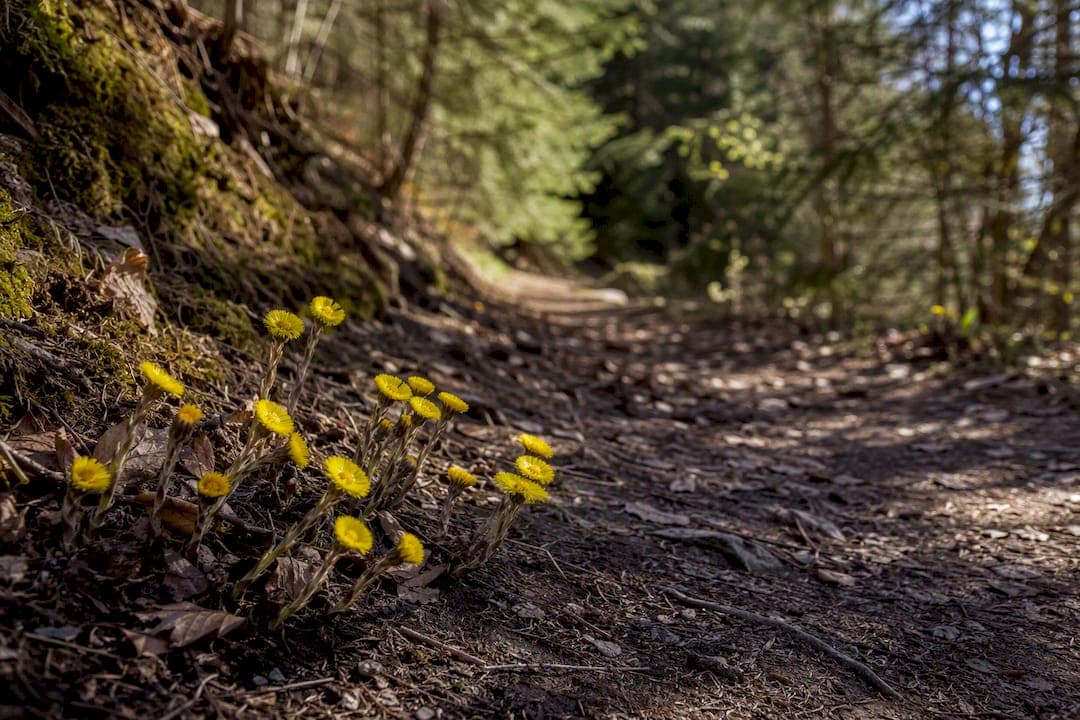
Vår i naturen means the season when dormant plants, birds and small creatures stir back into life, and the surest signs are early flowers, the return of birdsong, and the first frogspawn in ponds. Watch for:
- Tussilago (coltsfoot) opening on bare verges
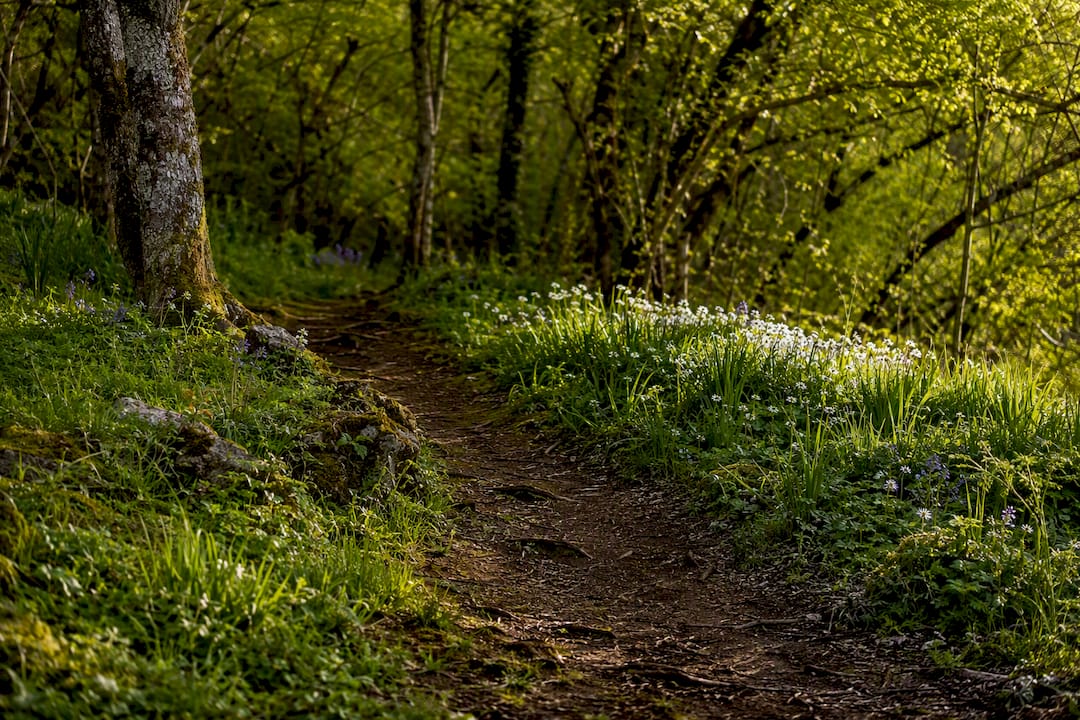
- Blåsippa and vitsippa carpeting woodland floors
- Willow catkins and swelling birch buds
- Dawn chorus building before sunrise
- Frogspawn clustering in shallow water
Try a short walk this week, or record what you see for Vårkollen.
Key Takeaways
Recognising spring in nature comes down to watching six tracked species, listening for the dawn chorus, and reporting what you see to Vårkollen around Valborg weekend.
| Point | Details |
|---|---|
| Two start dates exist | Astronomical spring begins near 20 March; meteorological spring covers March, April and May. |
| Check microhabitats first | South-facing banks, hedgerow bases and log piles show spring signs before open ground does. |
| Vitsippa has a clear threshold | Wood anemone counts as flowering only once ten individual blooms are fully open. |
| Report during Valborg weekend | Vårkollen collects public sightings of six species around 30 April to 1 May. |
| Timing keeps shifting | Long-term data shows spring signs now arrive 12 days earlier than 150 years ago, with effects on pollinators. |
Table of Contents
- When does spring actually start?
- What are the clearest spring signs in plants, birds and ponds?
- How can families enjoy a spring nature walk?
- How do you report sightings to Vårkollen?
- Why does the shift in spring timing actually matter?
- Quick field guide: spotting the six key spring signs
- Where to learn more and report your own sightings
- Sources
When does spring actually start?
Spring has two start dates, and both are useful. Astronomical spring begins at the equinox, around 20 March, when day and night fall roughly equal. Meteorological spring runs the calendar months of March, April and May, a simpler frame used by projects like the Woodland Trust to track seasonal change.
The season doesn't arrive everywhere at once. A rough progression looks like this:
- Late February to March: coltsfoot and hazel catkins open on sheltered, south-facing ground.
- March to April: dawn chorus intensifies, and frogspawn appears in still water.
- April to May: birch leaf-out spreads, and later woodland flowers follow the wood anemone.
Snow cover, altitude and which way a slope faces can shift these dates by weeks. Spring tends to arrive earlier on south-facing, low-lying ground and later as you move inland or uphill, so two gardens a few miles apart can look weeks apart in bloom.
What are the clearest spring signs in plants, birds and ponds?
Start small. The most dependable early signs of spring hide in miniature habitats, tucked under logs, along hedgerow bases and on sun-warmed banks, because small plants and animals react to temperature swings faster than large ones do.
Three flowers do most of the early work. Tussilago (coltsfoot) sends up bare yellow flower heads before its leaves appear, often on disturbed roadside verges. Blåsippa (hepatica) shows delicate blue-violet petals on hairy stems in beech and oak woodland. Vitsippa (wood anemone) follows with white, star-shaped flowers across the woodland floor; researchers only count it as "flowering" once at least ten individual flowers are fully open, a useful threshold if you're recording your own sightings.
Trees give quieter but equally reliable cues. Sälg (willow) and hägg (bird cherry) put out catkins and blossom respectively, while willow catkins provide vital early pollen for insects with nowhere else to feed yet. Björk (birch) leaf-out marks the point where spring visibly thickens the canopy.
Listen as much as you look. Resident birds start singing first, but returning migrants add new voices to the dawn chorus through April. Queen bumblebees emerge hungry and searching for early flowers, and frogspawn appears in shallow, sun-warmed pond edges, best viewed from the bank rather than the water.
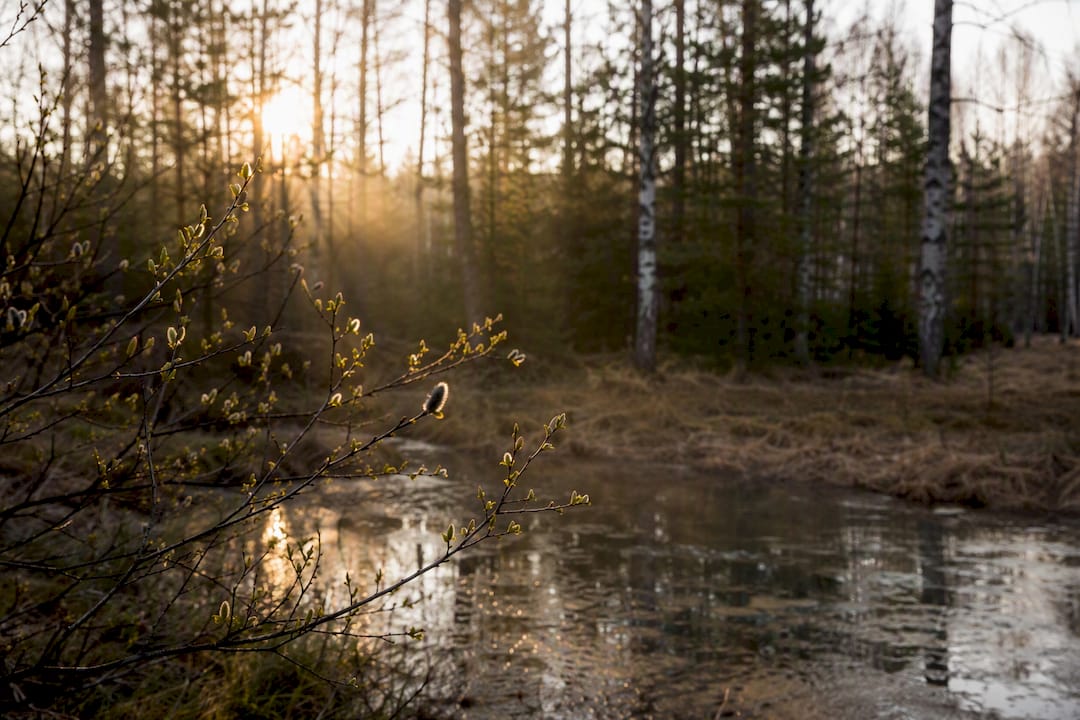
Pro Tip: On a cold, sunny morning, look for steam rising off tarmac or dark evergreen leaves. It signals the ground is already warming even while the air feels wintry.
How can families enjoy a spring nature walk?
A short, unhurried walk beats an ambitious hike for spotting spring signs with children. Keep the checklist simple:
- Choose a route with hedgerows, a woodland edge or a pond, ideally under an hour on foot.
- Bring a notebook or phone, warm layers, and something to sit on for pond watching.
- Walk slowly and check verges, log piles and south-facing banks rather than just the path ahead.
- Note the date and rough location of anything interesting.
Three easy activities need almost nothing extra. Stand still for two minutes at dawn or dusk and count how many different birdsongs you can pick out. Turn flower-spotting into a simple bingo card with tussilago, blåsippa, vitsippa and catkins as the squares. Or crouch at a pond edge for five minutes and watch for frogspawn and the ripples of newly active insects.
Pro Tip: Stay on marked paths near nesting birds and never handle frogspawn. Watching from a respectful distance protects the very signs of spring you've come to see.
For routes that combine easy access with genuine woodland and meadow, a guide to right to roam access explains what's open to explore and how to behave once you're there.
How do you report sightings to Vårkollen?
Anyone can take part in Vårkollen, and the project asks for reports specifically around Valborg weekend, 30 April to 1 May. Reporting takes minutes and adds directly to a dataset researchers have built for well over a century.
The process is straightforward:
- Pick one or more of the six tracked species: tussilago, blåsippa, vitsippa, sälg, hägg and björk (leaf-out).
- Check whether each has reached its recorded stage, such as vitsippa's ten-open-flower threshold, or note it as "not yet."
- Submit your observation with the date and location through the Vårkollen reporting form.
Long-term data from the project already shows spring signs arriving 12 days earlier on average than they did 150 years ago. Every extra observation, from a garden or a forest path, sharpens that picture for the scientists studying it.
Why does the shift in spring timing actually matter?
Phenology research, the study of when natural events happen each year, has documented that shifting seasons can create trophic mismatches: species that depend on each other's timing drift out of sync, with knock-on effects across food webs.
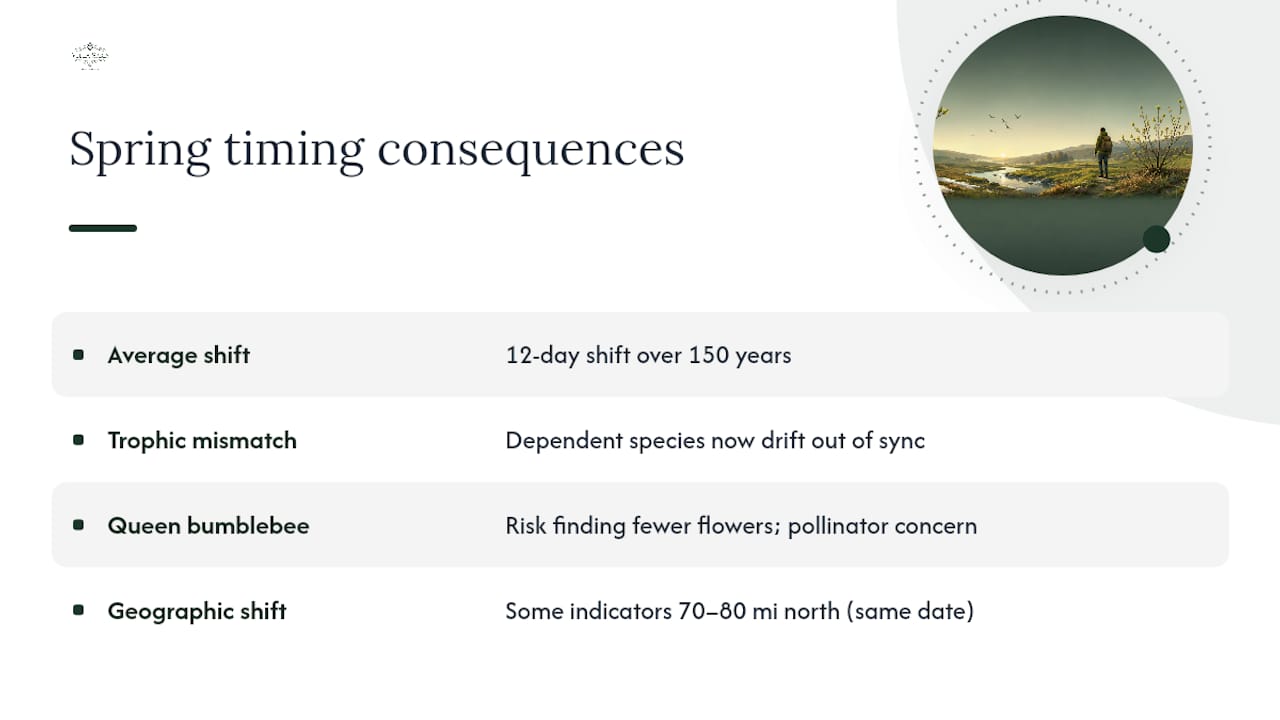
That 12 day shift over 150 years isn't just a number for scientists. It matters because queen bumblebees emerging on the old schedule risk finding fewer flowers open when they need pollen most, a mismatch that researchers behind Vårkollen have specifically flagged as a concern for pollinator survival.
The shift also isn't even across the landscape. Recent Vårkollen data show some spring indicators now appearing 70 to 80 mil further north at the same calendar date compared with historical records, a reminder that a garden in one region can be weeks ahead of woodland further inland or further north.
Quick field guide: spotting the six key spring signs
Carry these cues in your head, or on your phone, for the species Vårkollen tracks:
- Tussilago (coltsfoot): bare stems, yellow dandelion-like flower heads, no leaves yet, often on disturbed verges.
- Blåsippa (hepatica): blue-violet petals, hairy stems and leaves, found in beech or oak woodland.
- Vitsippa (wood anemone): white star-shaped flowers, carpets woodland floors, counted as flowering at ten open blooms.
- Sälg (willow): soft grey or yellow catkins on bare branches, an early food source for pollinators.
- Hägg (bird cherry): clusters of white blossom with a distinctive sweet scent, usually slightly later than willow.
- Björk (birch): small, pale green leaves unfurling from bud, marking the shift from bare canopy to full leaf.
When photographing a sighting, capture the whole plant or branch in context, not just a close petal shot, and note the aspect (south-facing bank, hedgerow, meadow edge). Always check whether you're on public access land or private ground before stepping off the path.
A personal note on going outside this spring
Walking with children through a wood as the first wood anemones open is one of the small joys that makes the whole season worth chasing. If you spot something worth recording, report it to Vårkollen and take the time to explore the habitats near you properly. A stay at Villa Sakis, surrounded by meadow and forest, offers exactly that kind of unhurried space to notice spring arriving.
Where to learn more and report your own sightings
- Vårkollen (Naturens kalender) — the main project for reporting your spring observations.
- Forskning & Framsteg on Vårkollen — background on the 150-year dataset and its findings.
- Svenska Botaniska Föreningen — analysis of geographic shifts in spring timing.
- Woodland Trust spring signs guide — a clear explainer on astronomical versus meteorological spring.
- Villa Sakis Grounds & Area — for exploring meadow and forest habitats close to the farmhouse.
Sources
- Vårkollen hoppas på stor uppslutning | Forskning & Framsteg
- Vårkollen (pdf) | Naturens kalender
- Vårvärmen lockar fram vårblommorna | Svenska Botaniska Föreningen
- First signs of spring in nature | Woodland Trust
- Spring’s signs: Tristan Gooley on where to spot nature’s first stirrings | The Times