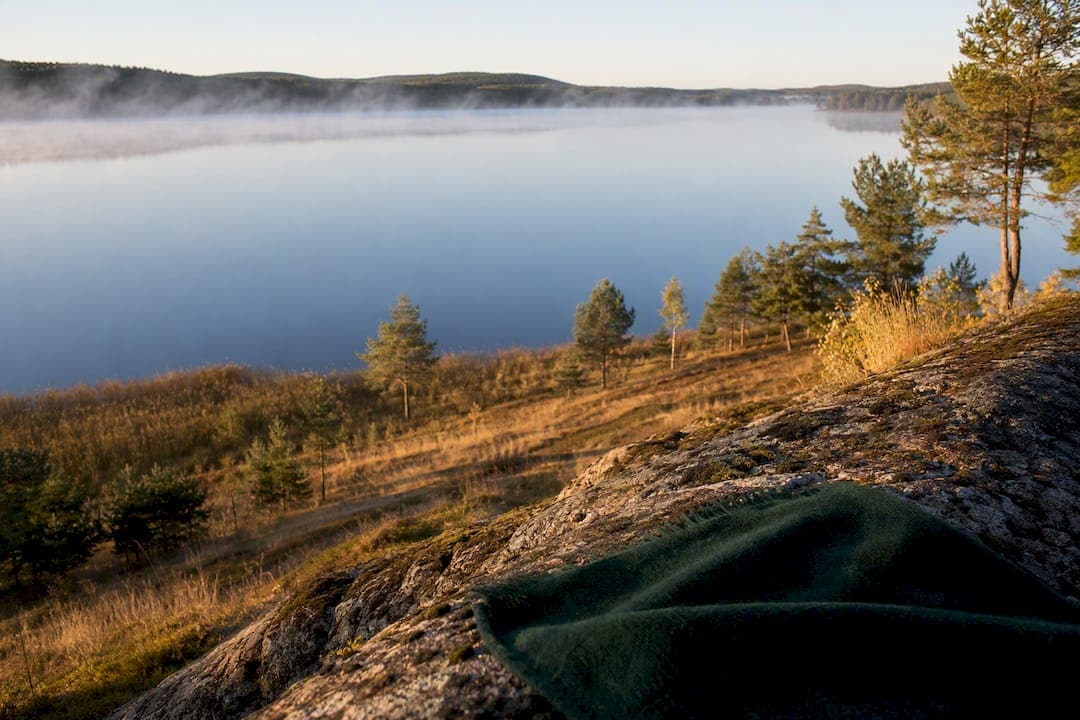
A sjönära semester means staying close enough to a lake to follow swimming, paddling, or simply watching the light change into the rhythm of an ordinary day. With over 100,000 lakes recorded across the country, Sweden gives that idea room to breathe. Villa Sakis, an eighteenth-century log farmhouse near open water, is one honest example of what that stay can look like. The sections ahead cover where to look, what to check before booking, and how to plan the practical side.
TL;DR:
- Most Swedish lakeside properties with direct access feature private jetties or easy shoreline entry, not just lake views or walkable access through others' land.
- Regional differences influence the experience: the north offers remote, wild lakes like Hornavan, while the south and central areas provide easier access with towns and cultural attractions.
- Visiting in summer allows for swimming and paddling, while shoulder seasons suit quieter, cost-effective trips, and winter opens options for ice skating and ice fishing.
- Essential booking considerations include verifying water access, safety equipment, Wi-Fi availability, and proximity to shops or medical services, asking hosts directly for clarity.
- Villa Sakis exemplifies a slow-paced lakeside stay with private water access and a sauna, ideal for families, couples, and wellness seekers prioritizing rest over entertainment.
Table of Contents
- Which lake regions in Sweden suit a sjönära semester?
- What does "lakeside" actually mean in a listing?
- When is the best time to visit for swimming, paddling or ice activities?
- How do you choose the right lakeside place before booking?
- What should you know about travel, timing and packing?
- What are the safety rules and etiquette around Swedish lakes?
- What food and dining fits a lakeside stay?
- What festivals and events happen near Swedish lakes?
- Building a restorative lakeside itinerary
- Villa Sakis: a lakeside farmhouse built for slower days
- Sources
- FAQ
Which lake regions in Sweden suit a sjönära semester?
Sweden's lake country stretches the length of the nation, and each region offers a distinct rhythm. Northern lakes reward patience and solitude; the lakes further south trade some wildness for easier access and warmer water. Visit Sweden's own guide to lake holidays points to a handful of destinations worth building a trip around, and it's a useful starting map before you narrow things down to a specific listing.
Lapland and the northern lakes. Hornavan, Sweden's deepest lake, sits inside a landscape that still feels unclaimed. Summers here are short and bright; winters bring the kind of stillness that makes ice fishing and cross-country skiing feel less like activities and more like a different way of measuring time. This is the region to choose if remoteness itself is the draw, not a drawback.
Jämtland and Storsjön. The lake beside Östersund is large enough to feel like an inland sea, with islands you can reach by boat and restaurants that serve the kind of unfussy, ingredient-led food that Jämtland does well. Winter turns the lake's edge into an informal park, with skating routes that shift year to year depending on the ice.
Dalarna and Lake Siljan. Siljan carries more cultural weight than most Swedish lakes. Fiddle traditions, red timber villages, and cycling routes that hug the shoreline give this region a lived-in character. It suits travellers who want lake life paired with a sense of local history rather than pure wilderness.
Vänern and its archipelago. As Sweden's largest lake, Vänern behaves more like a coastline than a pond, with genuine swells on windy days. The Vänern archipelago, including the nature reserve at Brommö, rewards anyone with a kayak and a few unhurried days to explore between islands.
Vättern and Mälaren. Both lakes sit close to established towns, which makes them the easier choice if you want lake access without sacrificing restaurants, museums, or a train station nearby. Vättern's clarity is well known among divers and swimmers alike, while Mälaren's waters run past Stockholm itself, with steamboat trips and even floating saunas moored along stretches of the shore.
Skåne and Småland's smaller lakes. Lake Immeln and the many modest lakes tucked into Småland's forest offer calmer water than the giants further north, which makes them a natural fit for families with young children or anyone drawn more to still-water fishing than open-water adventure.
Pick a region based on what you actually want from the week, not just the name that sounds most familiar:
- Want drama and genuine remoteness? Look north, toward Lapland or Jämtland.
- Want cultural texture alongside the water? Dalarna and Siljan deliver both.
- Want open water for paddling and sailing? Vänern's scale makes it hard to beat.
- Want easy access with towns nearby? Vättern and Mälaren strike that balance.
- Want calm, shallow water for children? The smaller lakes of Skåne and Småland tend to suit families best.
What does "lakeside" actually mean in a listing?
Two properties can both claim to be lakeside and offer entirely different experiences. The gap between them usually comes down to a handful of specific terms, and learning to read those terms saves you from arriving somewhere and discovering the water is a fifteen-minute walk through someone else's field.
A private jetty means exactly what it says: a dock reserved for your stay, usually with direct steps into the water. Direct shore access is close but slightly weaker; it typically means the property borders the water without a formal jetty, so check whether the shoreline is easy to walk on or thick with reeds. Lake view is the term to treat with the most scepticism. It confirms you can see the water, nothing more. Cottage listing sites such as Stugknuten carry hundreds of properties described this way, and the difference between "view" and "access" is rarely spelled out unless you ask directly.
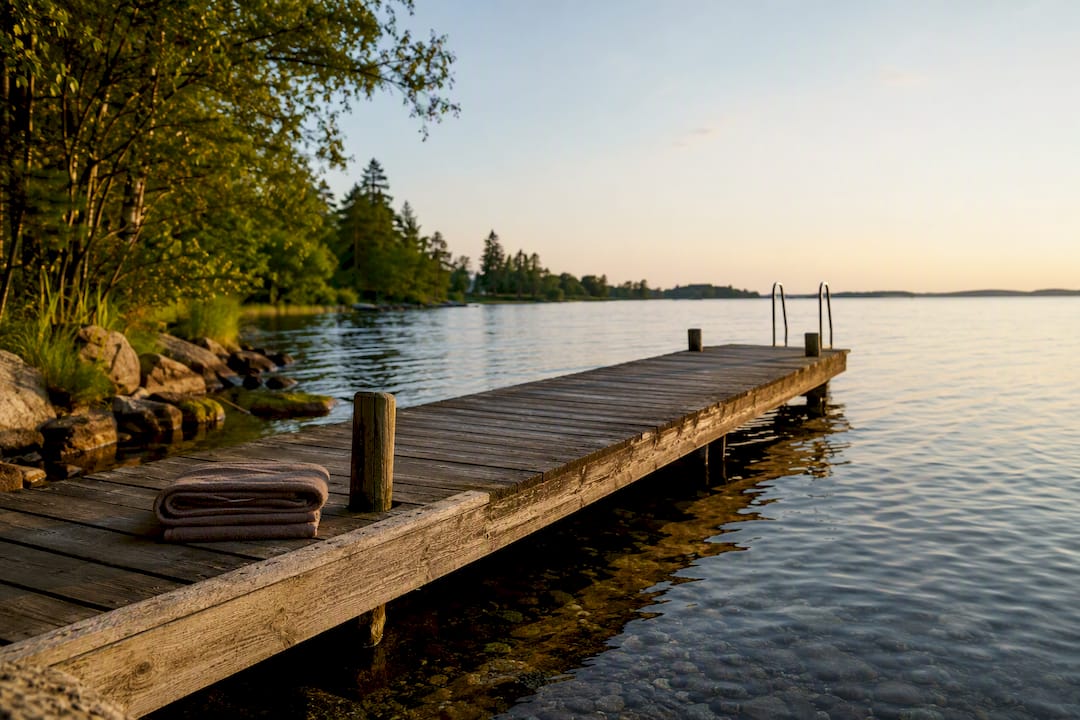
A private sauna and a working wood stove change a stay in a different way, adding the ritual that many Swedes associate with lake life as much as the swimming itself: heat, then cold water, then the quiet afterwards. Connectivity is worth checking too. The Swedish Tourist Association notes that mobile reception thins out considerably once you're away from towns, which matters if you're relying on a phone for navigation or emergencies rather than treating the trip as a genuine break from signal.
Villa Sakis, set among meadows and pine forest with a preserved eighteenth-century timber structure and its own sauna, illustrates what the fuller version of "lakeside" tends to include: a countryside stay built around slower days rather than a view glimpsed from a window.
Before booking anywhere, weigh these features against how your group actually plans to spend its days:
- A private jetty matters most if swimming and paddling are the point of the trip.
- A sauna adds real value for longer, colder stays rather than quick summer weekends.
- Self-catering kitchens suit families and groups who'd rather cook together than drive to a restaurant each night.
- Reliable Wi-Fi matters less at a lake than most listings assume, so decide honestly how disconnected you're willing to be.
Pro Tip: Message the host directly and ask, "Can I walk from the door into the water without crossing a road or another property?" A clear yes or no here tells you more than any adjective in the listing.
When is the best time to visit for swimming, paddling or ice activities?
Sweden's lakes run through three distinct moods across the year, and matching your activity to the season matters more here than in most destinations.
- Summer (June to August) is the obvious window for wild swimming, and for good reason: water temperatures in the shallower southern lakes can feel genuinely warm by late July. Paddleboarding, canoeing, and shoreline cycling all peak now, and it's the easiest season to combine an evening swim with a sauna session. Visit Sweden's own guidance leans heavily on this stretch of the year for good reason.
- Autumn and spring shift the emphasis from water to woodland. Berry and mushroom picking along lake-adjacent forest tracks is at its best in September, and migratory birds pass through many lake regions in both spring and autumn, drawing quiet crowds of birdwatchers to shorelines that are otherwise empty.
- Winter (December to March) turns the same water into a different kind of playground, provided you treat it with caution. Ice skating and ice fishing are genuinely popular pastimes on well-frozen lakes, and winter bathing, alternating a hot sauna with a plunge through cut ice, has a loyal following among Swedes. None of this is safe to attempt without checking ice thickness first, ideally with a local guide or instructor rather than guesswork; ice that looks solid near shore can be dangerously thin further out.
Shoulder seasons reward travellers who want the scenery without the summer crowds, while winter suits anyone drawn to the more elemental side of lake life. Whichever season you choose, book activities that match it rather than assuming a lake behaves the same way in February as it does in July.
How do you choose the right lakeside place before booking?
A short checklist, worked through before you commit to a booking, catches most of the problems that only become obvious once you've already arrived.
- Is water access direct from the property, or does it involve a walk across a road or a neighbouring plot?
- Is there a private jetty, and is the shoreline sandy or rocky underfoot?
- How steep is the slope into the water, particularly important with young children?
- Is there a private sauna, and is it wood fired or electric?
- Is parking included, and how far is the nearest shop, pharmacy, or medical clinic?
- Are pets welcome, if that matters to your group?
Ask the host these questions directly rather than relying on photographs alone:
- "Is the jetty private to this property, or shared with neighbours?"
- "How deep is the water at the swimming point, and does it deepen gradually or drop off?"
- "Is the shoreline sandy, rocky, or reedy?"
- "What's mobile reception like here, and is Wi-Fi available in the house?"
- "Is there a lifebuoy or other rescue equipment at the jetty?"
Watch for a few recurring red flags. A "lake view" listing that turns out to require a ten-minute walk to actual water is common enough that experienced bookers now treat the phrase itself with suspicion, favouring listings that state "private jetty" or "direct access" outright. A property with no lifebuoy or safety line near the water is worth questioning, especially for families. And a genuinely remote cabin can be wonderful, but only if you've confirmed in advance how far you'd need to travel for anything urgent.
Pro Tip: Save screenshots of the exact wording a host uses when confirming access and safety features. Listings occasionally change between browsing and booking, and having the original answer in writing avoids any confusion later.
What should you know about travel, timing and packing?
Getting to a Swedish lake is rarely complicated, but a little planning makes the journey itself part of the restorative pace rather than a stressful prelude to it.
Transport. SJ, Sweden's national rail operator, connects to many towns that act as gateways into lake country, including Östersund for Storsjön and Mora for Lake Siljan, and the train remains the most comfortable, lowest-effort way to cover long distances. FlixBus offers a cheaper alternative on many of the same intercity routes, useful if budget matters more than speed. For the more remote northern lakes, or for any cottage tucked well off a main road, a hire car becomes close to essential once you've arrived, even if you've travelled the long distance by train.
Timing and cost. High season, roughly late June through August, brings the warmest water and the busiest bookings, so reserve well ahead if you want a specific property. Shoulder season, May or September, trades a few degrees of water temperature for lower prices and quieter shorelines. A self-catering cottage or farmhouse generally costs less over a week than an equivalent hotel stay, particularly once you factor in cooking your own meals rather than eating out each night.
Packing. Bring layers regardless of season; lake weather shifts quickly, even in July. A pack list worth working from:
- Swimwear and a quick-dry towel
- A warm layer and a waterproof shell, even for summer trips
- Insect repellent, particularly for evenings near still water
- Sauna essentials if the property has one: a towel and, if you're particular about it, your own birch whisk
- A basic first aid kit, especially useful if the nearest pharmacy is some distance away
What are the safety rules and etiquette around Swedish lakes?
Sweden's right of public access, Allemansrätten, permits walking, swimming, and even overnight camping on most natural land, including much of the shoreline around the country's lakes, provided you keep a respectful distance from private homes and leave no trace behind. It's a genuinely unusual freedom by international standards, but it comes with the same responsibility everywhere: the land isn't yours, so treat it as you'd want a guest to treat your own garden.
Water safety deserves its own attention, separate from the legal right to access it. Check the swimming area yourself before children go in, since depth and underwater terrain can change year to year. Never assume ice is safe simply because it looks thick from the shore; conditions vary across a single lake, and thin patches near inlets or reed beds catch out even experienced skaters. Supervise children closely near any jetty, regardless of how calm the water looks.
With more than 100,000 lakes across the country, and most of that landscape open to the public under Allemansrätten, the sheer scale of choice is itself a reason to plan rather than wander. Practical etiquette follows a similar leave-no-trace logic:
- Pack out everything you bring in, including food waste.
- Check whether a fishing permit is required for the specific lake before casting a line.
- Keep noise down in the evenings, particularly near other cabins or campsites.
- Give private jetties and gardens a wide berth even where public access technically allows closer approach.
What food and dining fits a lakeside stay?
Lakeside dining in Sweden tends to lean into what the region and season actually produce, rather than chasing anything elaborate. Freshly caught pike, perch, and char turn up on menus near lakes such as Vänern and Siljan, often smoked or simply grilled with dill and boiled potatoes. Chanterelles gathered from nearby forest in late summer make their way into everything from omelettes to cream sauces, and wild blueberries and lingonberries appear at breakfast tables as often as they do in desserts.
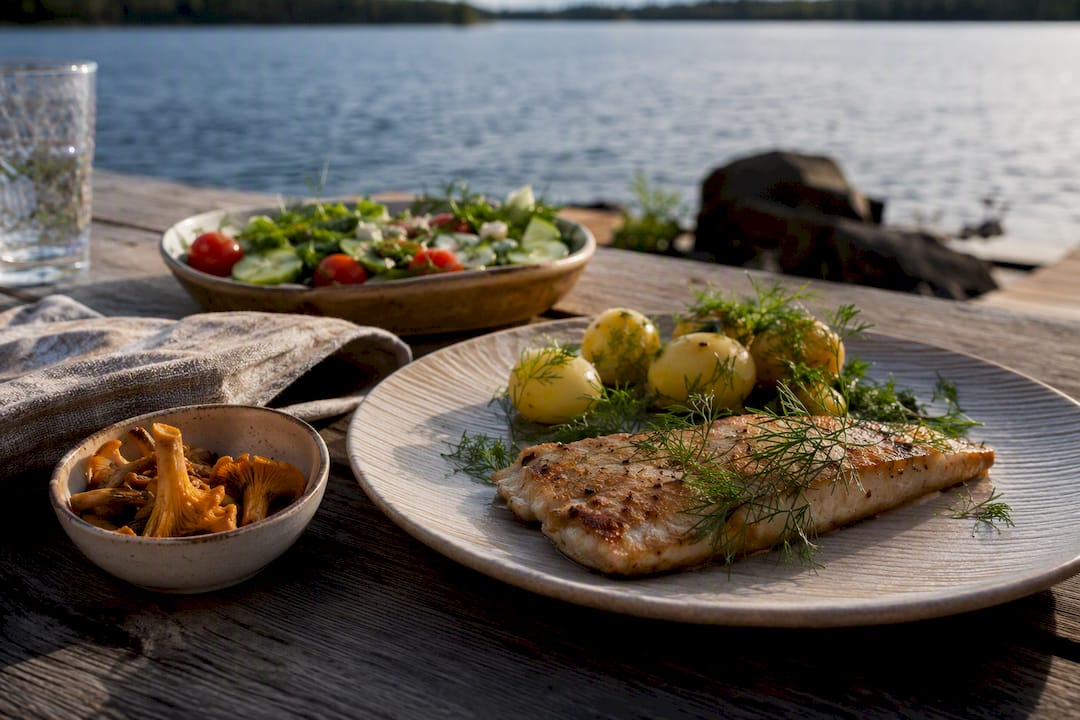
Many lakeside towns hold small markets through summer where you can buy smoked fish straight from the producer, alongside cheese and rye bread from local farms. Self-catering guests, which describes most lakeside cottage stays, tend to build meals around whatever the local shop or market has that day rather than planning menus in advance, an approach that suits the slower pace of the trip itself. A grill by the water, fish over open coals, bread, and little else, remains one of the more reliably satisfying ways to end a day of swimming or paddling.
Restaurants near larger lakes such as Storsjön and Vättern range from simple lakeside cafés to more considered dining rooms that lean on the same local, seasonal produce. Neither approach requires much planning beyond checking opening hours, which in smaller lake towns can be seasonal and worth confirming ahead.
What festivals and events happen near Swedish lakes?
Summer brings a scattering of local festivals to lake towns across the country, many tied to midsummer celebrations in late June, when maypoles go up on village greens near the water and communities gather for dancing, food, and long evenings that barely darken this far north. Dalarna, with its strong folk traditions around Lake Siljan, hosts some of the more visible midsummer gatherings, alongside fiddle music events that draw on the region's long-standing musical heritage.
Smaller lake towns often run their own summer markets and harvest festivals into early autumn, timed around berry picking and the start of the mushroom season. Ice-based events appear on the winter calendar in colder regions: informal skating gatherings on frozen lakes in Jämtland, and occasional winter markets near towns like Östersund that lean into the season rather than waiting it out indoors.
None of these events tend to require advance tickets in the way a city festival might, but timing your visit around one adds a layer of local life to what might otherwise be a quieter, nature-focused week. Checking a regional tourism calendar before you travel is worth the ten minutes it takes.
Building a restorative lakeside itinerary
The mistake most people make when planning a lake trip is treating it like a checklist of activities rather than a chance to slow down with ski-in/ski-out amenities. A restorative itinerary usually has fewer moving parts than expected: a swim in the morning, a long unhurried lunch, a walk or paddle in the afternoon, sauna in the evening. Leave more blank space in the schedule than feels natural at first.
Villa Sakis works as a useful model for this kind of pacing, precisely because the property doesn't try to entertain guests with amenities beyond the sauna, the water, and the forest around it. A private sauna holiday built around that kind of simplicity tends to leave people more rested than a trip packed with day trips, and a summer stay in the Swedish countryside built around the same principle shows how little a good lakeside week actually requires.
— Christian
Villa Sakis: a lakeside farmhouse built for slower days
Villa Sakis is the alternative to a hotel or generic cottage rental for a sjönära semester in Sweden: an entire eighteenth-century log farmhouse, not a room or a shared plot, set among meadows and pine forest with its own lake access, private sauna, and self-catering kitchen.
That combination suits families wanting space to spread out, couples after a genuinely private break, and wellness-minded groups drawn to the slower rhythm the checklist above keeps pointing toward: direct access to water, a working sauna, and a setting quiet enough that rest happens without much effort. The farmhouse's preserved timber rooms and generations of care give it a character that a standard rental rarely offers, closer to staying inside a piece of countryside history than booking an anonymous holiday let. Further guides on planning a stay, including notes on romantic weekends and countryside living, sit on the Villa Sakis journal for anyone still shaping their itinerary.
If the checklist above matches what you're after, private jetty access, a real sauna, and a setting built for stillness rather than spectacle, check availability for The House and start planning your dates.
Sources
Plan around Visit Sweden's lake guide, SJ's rail routes, Statistics Sweden's lake data, and safety notes such as jetty swimming guidance before booking.
FAQ
What counts as a truly sjönära holiday in Sweden?
A genuinely sjönära stay offers direct, unobstructed access from the property to the water, ideally with a private jetty, rather than a lake merely visible from a window.
What are some of the finest lakeside spots in Sweden?
Visit Sweden highlights Vänern, Vättern, Mälaren, Siljan, and northern lakes such as Hornavan as varied examples, each suited to a different pace and type of activity.
What's a good short trip near a Swedish lake for families?
Smaller lakes in Skåne and Småland, such as Immeln, offer calmer, shallower water that suits young children better than the larger northern lakes.
Are Swedish lakes safe to swim in without a guide?
Most are, provided you check depth and underwater terrain yourself before swimming and never assume ice is safe in winter without a local check first.
Does this kind of lakeside stay offer direct lake access and a private sauna?
Yes. Villa Sakis combines lake access, a private sauna, and a self-catering kitchen within its historic farmhouse setting, with pricing available directly on the booking page.