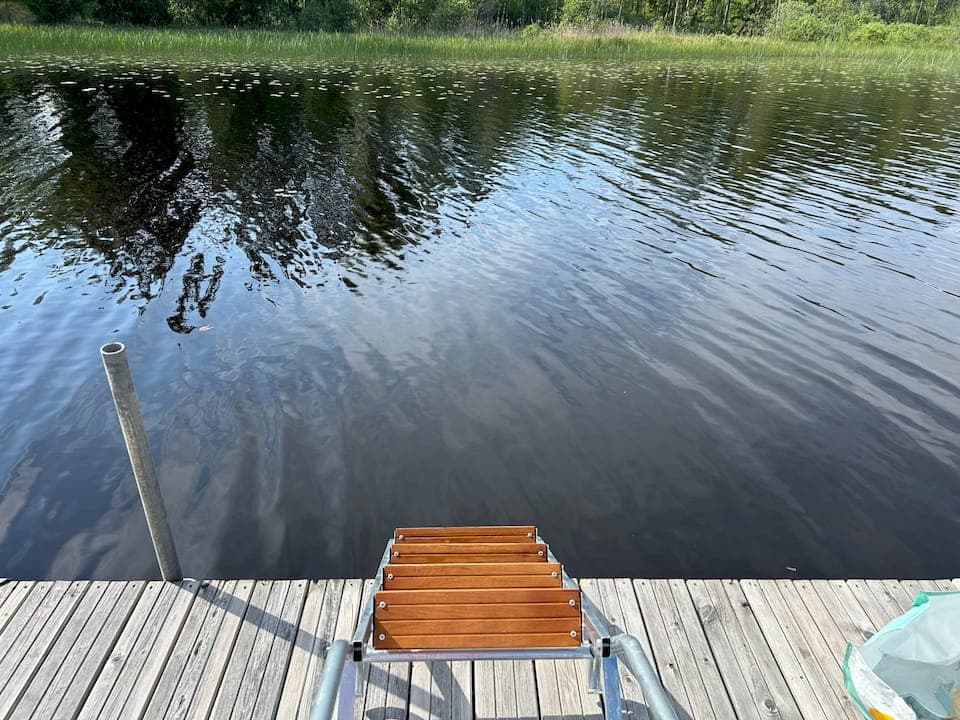
Yes, you may generally bathe from a pier in Sweden, including a private one, provided the pier sits outside the owner’s hemfridszon and your presence causes no disturbance or damage. This is allemansrätten at its most practical: a right of access balanced against a homeowner’s need for undisturbed peace around their own dwelling. The right to roam does not vanish the moment you step onto timber decking, but it does come with obligations that are easy to overlook when the water looks inviting and the sun is out.
Before you jump in, a few things are worth settling first:
-
Work out whether the pier is a designated public doppbrygga or a private dock. Public ones remove almost all ambiguity.
-
Stay alert and ready to move. If an owner appears and needs the pier, allemansrätten expects you to leave promptly.
-
Never jump into water you have not checked. Depth near piers varies wildly, and submerged pilings or rocks are common.
The legal basis for all of this comes from Naturvårdsverket’s guidance on allemansrätten at water, supported by practical summaries from SVT and the municipal listings that Stockholm publishes for its own bathing spots. Together they form the backbone of what follows: where you stand legally, which docks are built for public use, and how to jump or swim without ending up as a cautionary tale.
Table of Contents
-
What the law and allemansrätten say about bathing from piers
-
Stockholm examples: public doppbryggor and kajbad you can use
-
Municipal signage and what ‘only inside’ notices really mean
-
Safety rules and research for jumping, diving and pier swimming
-
A practical alternative: private waterfront access at Villa Sakis
-
Quick summary: the essentials to remember when swimming from a pier
What the law and allemansrätten say about bathing from piers
There is no fixed distance that defines a hemfridszon. That surprises most people, who expect a tidy figure, perhaps 20 metres, printed somewhere in law. Instead, Swedish courts and guidance treat it as a judgment call, weighing how close you are to a dwelling and how much your presence would intrude on the privacy the resident is entitled to expect. A pier attached directly to a veranda, metres from a kitchen window, sits inside that zone. A dock at the end of a long garden path, well separated from the house, generally does not.
Sweden’s right to roam extends onto water in a similar spirit to how it applies on land: you may pass through, and in this case bathe, so long as you do not damage property, block access, or disturb the people who live there. Naturvårdsverket’s own guidance on applying allemansrätten near water frames this as a duty of care rather than a rigid rulebook. You are a guest in the landscape, not a trespasser, but guests behave accordingly.
A handful of practical points follow from this:
-
If a pier is clearly within the hemfridszon (attached to or immediately beside an occupied house), treat it as off limits.
-
If it sits further out, away from windows and daily household activity, allemansrätten generally covers your use of it.
-
A “private” sign does not automatically override the law. It matters only when backed by genuine proximity to a dwelling or a specific local regulation.
-
The obligation to leave on request is not optional. If the owner arrives and wants the pier back, you go, without argument.
Community discussions on sites such as Anslagstavlan reflect this constantly: plenty of piers marked private are, in fact, fair game under the law, and some municipalities have taken down unlawful signage after residents challenged it. That does not mean every “no bathing” notice is toothless, only that the pier’s actual distance from a dwelling, not the sign itself, decides the matter.
Pro Tip: If you are unsure whether a pier falls inside someone’s hemfridszon, look at how it is used day to day. A pier with a barbecue, sun loungers, and a direct staircase from the house is almost certainly within the zone. A bare, weathered dock jutting out from a treeline usually is not.
The hemfridszon concept scales with the property itself: it can be a matter of a few metres on a densely built shoreline, or considerably more around an isolated summer house where privacy expectations run higher.
Stockholm examples: public doppbryggor and kajbad you can use
When the legal status of a private dock feels uncertain, the simplest fix is to use one of the city’s own bathing spots instead. Stockholm has invested steadily in public docks and framed bathing areas, and the municipal listings for bathing in the city cover a good spread across the centre.
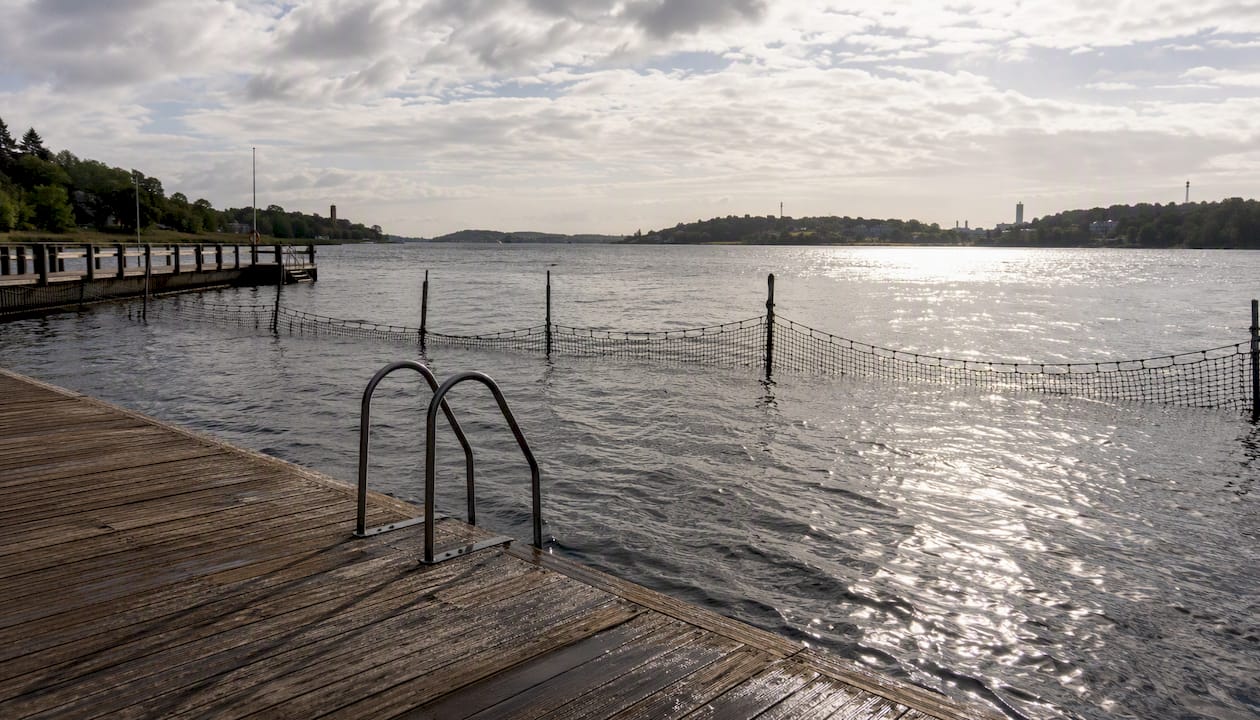
Söder Mälarstrands doppbrygga is one of the better known. It includes a netted section built specifically for swimmer safety, with the netted basket sitting at around 1.6 metres depth, which keeps swimmers away from boat traffic and stronger currents further out.
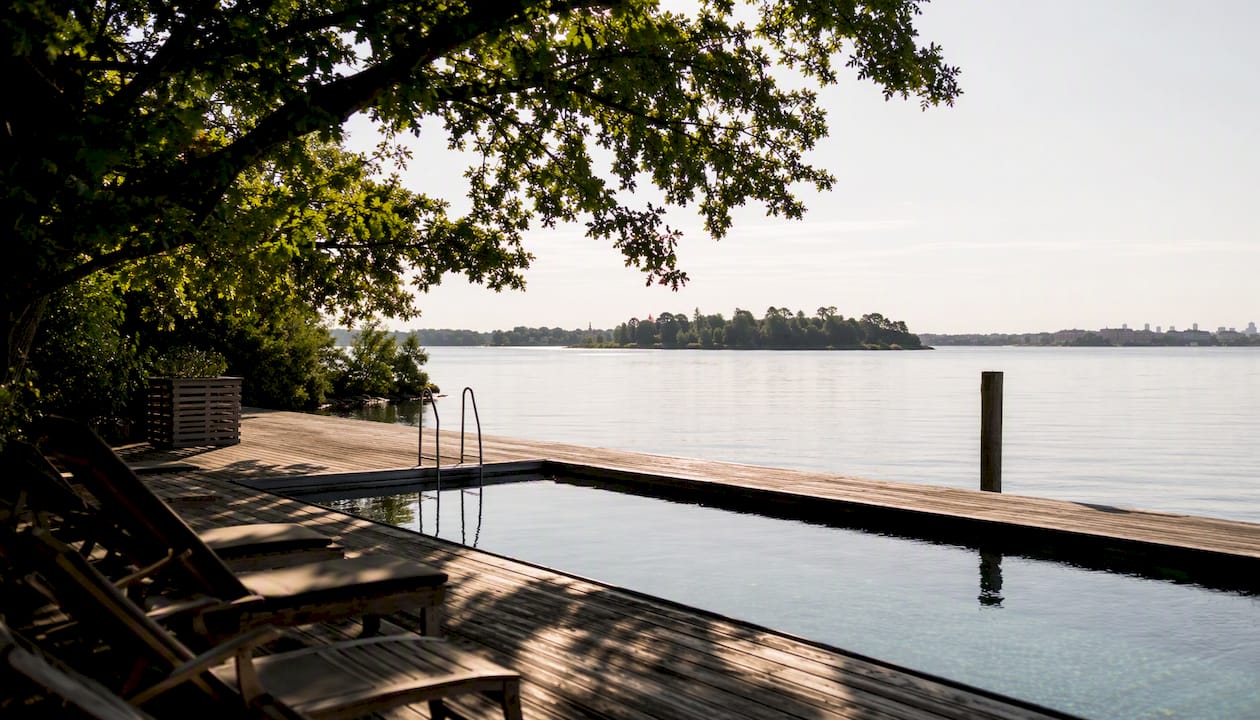
Norr Mälarstrands brygga med bassäng takes a different approach entirely. Rather than open water, it incorporates an actual pool built into the pier structure, with seating around it, making it a calmer, more controlled option for families or anyone who would rather not swim in open Mälaren water.
Marieviksbadet offers a more traditional kajbad setup, popular with locals through the warmer months, while Munkbrohamnens doppbrygga sits close to the Old Town and gives swimmers a central, easily reached spot right on the water.
Sjövikskajens bryggbad and Primusbadet round out the list, both functioning as dedicated bryggbad with the ladders and framed swimming areas typical of Stockholm’s newer dock builds. The city’s own bathing spot pages list current details for each, worth checking before you go since seasonal maintenance can affect access.
| Type | Facilities | Allowed activities / restrictions | Safety considerations |
|---|---|---|---|
| Public doppbrygga (e.g. Söder Mälarstrand, Munkbrohamnen) | Ladders, netted swimming basket, steps into water | Swim within the framed or netted area; posted signage often specifies this | Depth marked near basket edge; some boat traffic nearby |
| Pier with integrated pool (Norr Mälarstrand) | Built pool, seating, level access | General swimming and lounging; no diving typically permitted | Controlled depth; minimal current exposure |
| Kajbad (Marieviksbadet, Sjövikskajens bryggbad, Primusbadet) | Steps or ladder access, open framed bathing area | Swimming within marked zone; jumping usually discouraged near ladders | Variable depth; check for nearby vessel traffic |
| Private dock outside hemfridszon | Varies (may lack ladders or safety markers) | Bathing generally permitted under allemansrätten | No guaranteed depth data; assess manually before entering water |
For families or nervous swimmers, the pool at Norr Mälarstrand or the netted basket at Söder Mälarstrand remove most of the guesswork. Confident open-water swimmers tend to prefer the kajbad-style spots, which offer more room and a livelier social atmosphere through summer.
Municipal signage and what ‘only inside’ notices really mean
Public doppbryggor almost always carry some form of posted instruction, and the most common by far is a variant of “only swim inside the framed area.” This is not bureaucratic overcaution. It exists because confining swimmers to a marked zone concentrates lifesaving equipment and sightlines in one place, and keeps bathers well clear of boat lanes that run close to many central Stockholm docks.
Private signage is a different matter. A hand-painted “no bathing, private property” notice nailed to a post carries legal weight only if the pier genuinely sits within the owner’s hemfridszon, or if a specific municipal bylaw applies to that stretch of shoreline. Plenty do not meet either test, and enforcement varies from one municipality to the next. If you want certainty rather than a guess, Stockholm’s own planning and mapping services can confirm whether a dock is publicly designated or subject to local restriction.
Pro Tip: If you’re asked to leave a pier and you believe the request has no legal basis, don’t argue the point on the spot. Take a photo of the sign and note the location, then raise it with the municipality afterwards if you think it warrants a look. A calm exit costs you nothing; a confrontation on someone’s dock rarely ends well for anybody.
Safety rules and research for jumping, diving and pier swimming
Legal clarity means little if you misjudge the water beneath you. A practical safety review of jumping into water puts the recommended maximum height at roughly 15 metres for a feet-first landing and around 12 metres for a hands-first dive. Beyond those points, the risk of serious injury climbs sharply, and the figures apply to open water with confirmed depth, not the unknown bottom beneath a random Stockholm dock.
Most piers around the city sit far lower than either threshold, but that is precisely the trap. A one or two-metre jump from a low dock still demands the same checks, because the danger is rarely the height. It is what lies beneath the surface.
Run through this before anyone jumps:
-
Check the depth yourself. Wade or lower yourself in first; never trust a guess based on how the water looks from above.
-
Probe for hazards. Submerged rocks, old pilings, and shopping trolleys are not urban myths around city piers.
-
Watch for boat traffic. Central Stockholm waterways see steady vessel movement, and wake from a passing boat can shift you into a piling within seconds.
-
Plan your exit before you enter. A ladder or shallow ramp matters more than people think; treading water while searching for a way out wastes energy fast.
-
Skip alcohol before swimming. Cold-water shock reacts badly with impaired judgment and reduced coordination.
-
Respect cold-water shock generally, even in midsummer. Stockholm’s open water stays cooler than the air temperature suggests well into June.
If something does go wrong, speed matters more than composure. Call 112 immediately for any serious injury or a swimmer in difficulty. While waiting, get the person out of the water if you can do so without putting yourself at risk, keep them warm, and monitor breathing closely, since cold-water immersion can mask the severity of an injury for several minutes.
Practical etiquette when using someone else’s dock
Bathing legally does not mean bathing thoughtlessly. A pier is somebody’s daily view, sometimes their only outdoor space, and how you use it shapes whether allemansrätten keeps working the way it is meant to.
-
Leave the dock exactly as you found it, or better. Pack out anything you brought, including food wrappers and bottle caps that slip between boards.
-
Never move an owner’s boat or mooring lines, even to make more room for yourself.
-
Keep noise down near homes. Sound carries oddly well across still water.
-
Take off shoes with hard soles or cleats before walking on painted decking; they scratch and mark surfaces fast.
-
If asked to move, do it without delay. A prompt, good-natured exit is what keeps this arrangement working for everyone.
Worth packing: a small bag for your own rubbish, a towel that will not snag on rough timber, water shoes for uneven lake beds, and a torch if you are swimming as the light fades.
Pro Tip: If a dock already has people on it, don’t just walk down and start unpacking. A quick “mind if we swim from here for a bit?” takes five seconds and almost always gets a friendly nod. It also tells you immediately whether you have stumbled onto private ground you should avoid.
How to find safe piers and check water quality first
Finding a reliable spot takes a few minutes of homework, and it beats guessing every time.
-
Start with Stockholm’s own bathing spot listings, which cover doppbryggor and kajbad across the city with current details on each.
-
Cross-check the location against municipal planning maps if you want to confirm whether a specific dock carries public designation.
-
Look for recent water-quality advisories from the responsible local authority, particularly after heavy rainfall, when runoff can temporarily affect central waterways.
-
On arrival, clear the immediate landing area of loose debris, check depth by hand or foot before committing to a jump, and note boat traffic patterns for the next twenty minutes or so.
Beyond the official checks, a few habits make a real difference:
-
Avoid swimming right after storms; water clarity and quality both dip noticeably.
-
Watch for visible algae blooms, especially in late summer, and steer clear if the water looks unusually green or has a strong smell.
-
Time your swim around ferry and taxi boat schedules if you are anywhere near a central route.
Using a municipal doppbrygga rather than gambling on an unfamiliar private dock removes almost every point of uncertainty at once: depth is known, exits are built in, and nobody is going to ask you to leave halfway through your swim.
For readers planning a longer stay near water, Villa Sakis has written more broadly about what to expect from a Swedish countryside stay near lakes and forest, including how allemansrätten shapes daily life outside the city.
Why respect and safety matter more than convenience
The temptation with any right to roam is to treat it as a right without conditions. It is not, and treating it that way is how good arrangements get eroded for everyone else. Allemansrätten survives because most people use it with restraint, not because it is unbreakable law with teeth behind every clause.
Hosting guests near water for years has shaped a fairly simple view: the swimmers who have the best time are rarely the ones chasing the highest jump or the closest dock to somebody’s kitchen window. They are the ones who check the depth, ask before assuming, and leave without fuss when asked. That is not caution for its own sake. It is what makes the whole system of shared access work.
When a private pier’s status feels genuinely unclear, a municipal doppbrygga is almost always the better choice. It removes the guesswork entirely, and there is something quietly satisfying about swimming somewhere built for exactly that purpose, rather than borrowing a stranger’s peace and hoping you have read the situation correctly.
A practical alternative: private waterfront access at Villa Sakis
Public doppbryggor solve the access question well, but they come with shared crowds, posted restrictions, and no guarantee of privacy on a warm afternoon. If what you actually want is a dock to yourself, with no signage to interpret and no need to check anyone’s hemfridszon, that calls for a different arrangement altogether.

Villa Sakis offers whole-house rental in a historic 18th-century Swedish farmhouse, with private lake access included as part of the stay rather than something you negotiate on arrival. That suits families who want children swimming without watching for other boat traffic, wellness travellers pairing a morning swim with sauna recovery, and anyone who simply prefers a dock that is theirs for the length of their visit. The property’s grounds run straight down to the water, with forest and meadow on every other side.
If private, unhurried access to a lake sounds like the missing piece in your own plans, check current availability on the Villa Sakis booking page and see what the coming season has open.
Quick summary: the essentials to remember when swimming from a pier
Bathing from a pier is generally legal under allemansrätten when the dock sits outside the owner’s hemfridszon and your presence causes no disturbance or damage.
| Point | Details |
|---|---|
| Legal basis | Bathing is allowed outside the hemfridszon, but you must leave immediately if the owner needs the pier. |
| No fixed distance | Hemfridszon size depends on proximity to the dwelling, not a set number of metres. |
| Use municipal docks when unsure | Spots like Söder Mälarstrand and Munkbrohamnen remove legal ambiguity and add safety features such as ladders. |
| Check depth before jumping | Recommended jump limits are around 15 metres feet-first and 12 metres hands-first, but shallow city piers demand the same manual checks. |
| Call 112 in an emergency | Get the swimmer out of the water if safe to do so, and keep them warm while help arrives. |
| Villa Sakis as an alternative | For guaranteed private lake access without shared docks or signage to interpret, Villa Sakis includes lake access with every whole-house booking. |
For more detail on checking a specific pier before you swim, the earlier section on finding and verifying safe spots covers the municipal resources worth bookmarking.
Sources
Before bathing from any pier, particularly one whose status feels uncertain, it is worth checking the primary sources directly rather than relying on secondhand summaries:
If a private sign seems to contradict what these sources say, or you spot a notice that looks unlawful, your local municipal office is the right place to raise it rather than a dockside argument with a stranger.
Is it legal to swim from a private pier without asking the owner?
Generally yes, as long as the pier sits outside the owner’s hemfridszon and your presence does not disturb them or damage property. You should still leave promptly if the owner arrives and wants the pier back.
What does hemfridszon mean for bathing from a brygga?
It refers to the zone of privacy immediately around someone’s home, where allemansrätten does not apply. There is no fixed distance; it depends on how close the pier sits to the dwelling and how much your presence would intrude.
Which public doppbryggor in Stockholm are best for families?
Norr Mälarstrand’s pier with its built-in pool and Söder Mälarstrand’s netted swimming area both offer more controlled depth and easier supervision than open kajbad spots.
How high is it safe to jump into water from a pier?
Safety research puts the upper limit at around 15 metres for feet-first jumps and 12 metres for hands-first dives, though depth confirmation matters far more than height on typical low city piers.
What should I do if I get asked to leave a private dock?
Leave promptly and without argument. If you believe the request had no legal basis, photograph the signage and location afterwards and raise it with your local municipality if you wish to pursue it further.
Who do I call in a water emergency near a pier?
Call 112 immediately. Get the person out of the water if it is safe to do so, keep them warm, and monitor their breathing closely while help is on the way.
This article is general information, not a substitute for advice from a qualified lawyer. Consult a qualified legal professional about your own circumstances before acting on anything here.