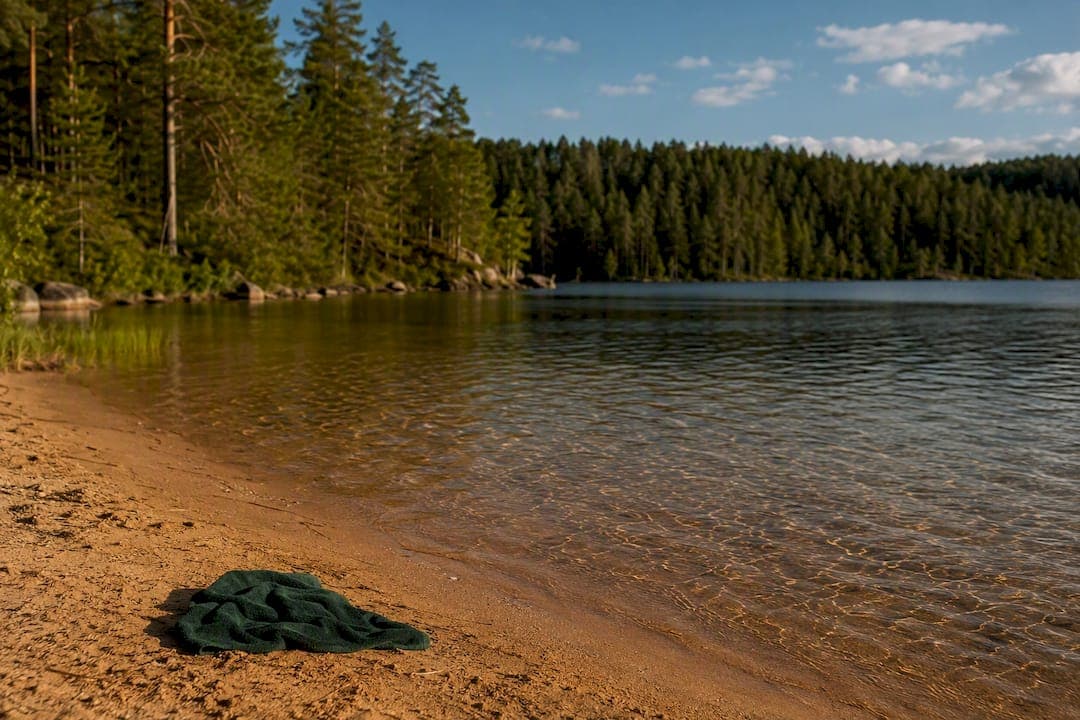
The single rule that matters most at any lake is this: stay within arm's reach of young children and non-swimmers, every time, without exception. Fit a proper lifejacket on anyone who cannot yet swim confidently, never leave a child alone near open water, even for a moment, and know that if a child goes quiet and still underwater, you call emergency services immediately rather than waiting to see what happens.
TL;DR:
- Supervision must be continuous and within arm's reach for children under six, as silent drowning can occur in seconds without any thrashing or shouting.
- Properly fitted, certified lifejackets by weight are essential, and foam toys like noodles or arm bands are unsafe and should not be relied upon for safety.
- Always check the shoreline for hazards like drop-offs, weeds, or slippery rocks, and ensure water clarity, safety signs, and absence of boat traffic before swimming.
- Call emergency services immediately if a child goes underwater or is unresponsive, and follow the rescue hierarchy: reach, throw, row, then swim only if trained.
- Establish and rehearse clear water safety rules aloud before swimming and assign a dedicated watcher to each group of children to prevent accidents.
Table of Contents
- What good supervision looks like: touch supervision, roles and avoiding distractions
- Do swimming lessons really make kids safer at lakes?
- How do you choose and fit a lifejacket correctly?
- What should you check before letting kids into a lake?
- What to do if a child gets into trouble in the water
- Building a simple safety routine for every lake day
- Villa Sakis host notes: preparing a private lakeside stay for families
- Why sun and hydration matter as much as the water itself
- What wildlife and plant hazards should you watch for at a lake?
- Where should children get in and out of the water?
- How do you set water safety rules kids will actually follow?
- An honest editorial take on lake safety advice
- Sources
What good supervision looks like: touch supervision, roles and avoiding distractions
Touch supervision means exactly what it says: an adult stays within arm's length of a toddler or non-swimmer, close enough to grab them without taking a step. Swedish paediatric guidance from Rikshandboken recommends this for children aged roughly zero to six, and it is stricter than most parents assume. Watching from a picnic blanket ten metres away does not count, however attentive you feel.
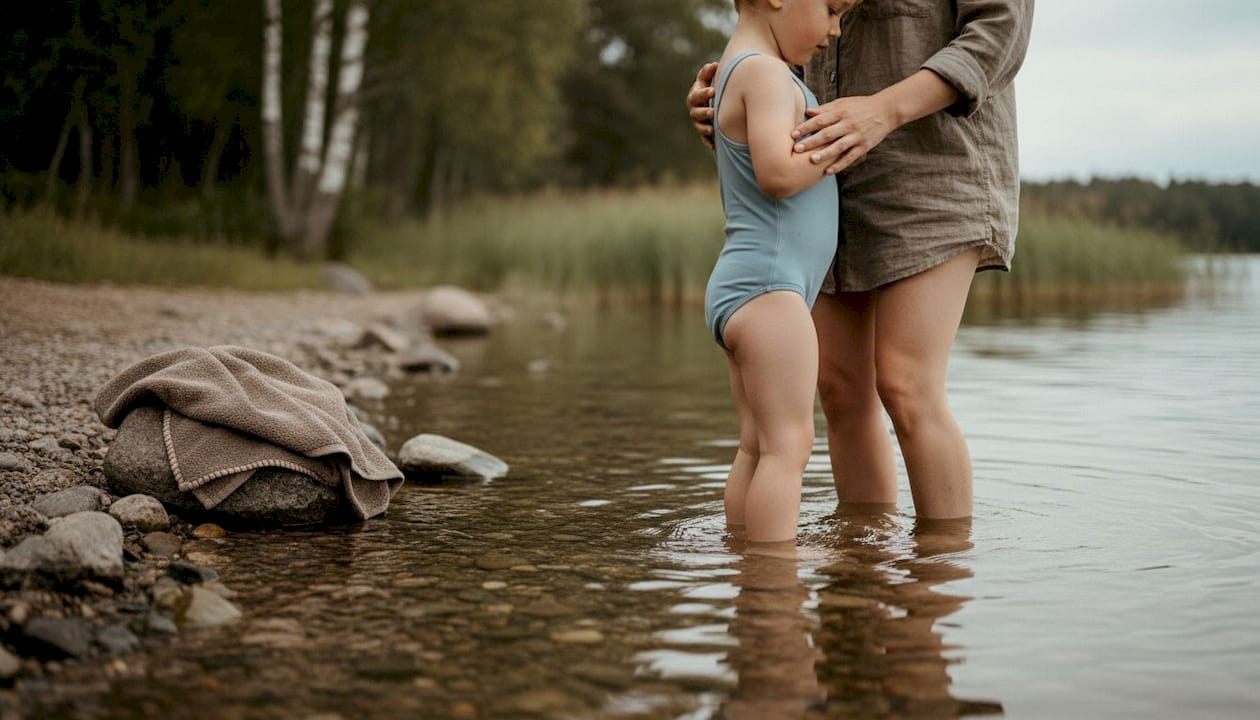
The reason this matters so much comes down to timing. Drowning in small children is often silent. There is no thrashing, no shouting, just a quiet slip beneath the surface that can happen in seconds, according to the American Academy of Pediatrics. By the time a distracted adult looks up, the window for a simple rescue has often closed.
Most supervision failures trace back to a handful of predictable culprits:
- Phones out, even "just checking the time"
- Deep conversation with other adults while children are in the water
- Alcohol, which slows reaction time and judgement
- Assuming someone else is watching when nobody has actually agreed to
The fix is procedural, not willpower. Assign one adult per one or two small children as the designated watcher, rotate that role every twenty or thirty minutes, and treat the job as seriously as driving. That adult puts their phone away and does not drink.
Pro Tip: Before anyone gets in the water, say the watcher's name out loud to the group. "Anna's watching the little ones now" removes any ambiguity about whose job it is.
Do swimming lessons really make kids safer at lakes?
Yes, but with an important caveat: lessons reduce risk, they do not remove the need for supervision. A child who can swim twenty-five metres in a pool can still panic, swallow water, or misjudge a drop-off in open water, where there are no lane ropes and no smooth tiled edges to grab.
Progress tends to follow a natural sequence rather than a fixed age:
- Water familiarisation and comfort with the face getting wet
- Basic floating and controlled breathing
- Independent strokes over short distances
- Confidence in open water with waves, weeds, and uneven footing
Municipal pools across Sweden run structured lessons for children, and many local authorities offer reduced-cost places for families who need them, so cost need not be a barrier. It is worth checking with your local simhall directly, as availability and subsidy schemes vary by kommun.
Adults are not exempt from this advice. If your own swimming is shaky, an adult beginner course is a genuinely good investment. A beginner's guide to snorkelling is also a gentle, low-pressure way for both children and hesitant adults to build comfort with putting their face in open water before attempting longer swims.
How do you choose and fit a lifejacket correctly?
A certified lifejacket, or flytväst, is built to keep an unconscious person face up and afloat. A foam noodle, inflatable ring, or pair of arm bands is a toy, and treating it as safety equipment is one of the most common and dangerous mistakes parents make, according to the CDC. Arm bands in particular can slip off in the water at exactly the wrong moment.
Getting the fit right takes three checks:
- Buckle the chest strap and the crotch strap so nothing rides up or loosens easily.
- Try the lift test: pull up gently on the shoulders. If the jacket rides above the child's ears or chin, it is too big.
- Confirm the sizing is by weight, not age. A jacket sized for a five year old on the box may not fit a small or large five year old.
Insist on a lifejacket on boats, piers, and jetties, and for weaker swimmers in wind or waves, without exception. Store jackets somewhere dry between visits and check the stitching, buckles, and foam each season, since UV exposure and saltwater degrade materials faster than most people expect. Rental jackets are widely available at Swedish bathing spots and marinas if you are travelling light.
What should you check before letting kids into a lake?
A good site check takes two minutes and can save a ruined afternoon, or worse. Walk the shoreline first and look for sudden drop-offs, slippery rocks, submerged branches, and dense weed beds that can tangle a swimmer's legs.
Before anyone swims, run through this:
- Is the water clear, or cloudy and discoloured? Cloudy water after heavy rain can signal contamination or harmful algal blooms
- Are there posted warnings, closed signs, or absent lifeguards where you'd expect one?
- Is there boat traffic near the swimming area?
- Does the temperature feel genuinely warm, or is this an early-season swim where cold shock is a real risk?
Wade in yourself first and probe the bottom with your feet before children follow. Firm sand, gradual slope, and visible clarity are good signs. Strong current, a smell of sewage, algae scum on the surface, or a closed-beach sign are all reasons to leave and find somewhere else, no matter how disappointed the children are.
What to do if a child gets into trouble in the water
Call 112 immediately if a child is missing, submerged, or unresponsive, and tell the operator your exact location, the child's age, and how long they may have been underwater. Every second of that call matters, so send someone else to make it while you act.
If you are not a trained lifeguard, do not swim into deep or moving water to reach a struggling child. The CDC's rescue hierarchy is reach, throw, row, then go, in that order:
- Reach with a branch, pool noodle, or paddle if the child is close to the edge.
- Throw something that floats, a lifejacket, a cool box lid, anything buoyant, so they have something to hold.
- Row or wade only if you can keep one foot on solid ground or use a boat, and never let go of a fixed point yourself.
- Only swim out if you are trained and confident, and even then, approach from behind to avoid being pulled under.
In Sweden, several children die from drowning each year, a stark reminder that these minutes are not abstract. Basic HLR (hjärt-lungräddning) training changes outcomes: if a child is not breathing, begin chest compressions and rescue breaths immediately and do not stop until help arrives or the child recovers. Courses run regularly through Swedish civil-defence and Red Cross organisations, and refreshing the skill every couple of years keeps it sharp.
Even if a child seems fine after a scare, seek medical assessment. The 1177 Vårdguiden notes that respiratory complications from near-drowning can appear hours later, keep the child warm, monitor their breathing, and get them checked regardless of how quickly they seem to bounce back.
Building a simple safety routine for every lake day
Rules only work if they are said out loud before anyone touches the water, not improvised halfway through the afternoon. A two-minute family briefing does the job: name the watcher, agree on boundaries ("no further than the yellow buoy"), and set a hand signal for "come back now" that works over distance and noise.
A reliable pack list removes the last-minute scramble:
- Correctly fitted lifejackets for every non-swimmer
- A whistle for the designated watcher
- A basic first-aid kit and a thin blanket for warming a chilled child
- Spare dry clothes and water shoes for slippery banks
- Sun protection and enough drinking water for the whole visit
Rotate the watcher role every twenty minutes so nobody's attention flags, and keep the group small enough that one adult can genuinely track every child assigned to them, two toddlers is a sensible ceiling. Practising a simple mock rescue at home, walking through what each family member would do if someone went missing, turns theory into muscle memory before it is ever needed for real.
Villa Sakis host notes: preparing a private lakeside stay for families
The dock and shoreline receive a visual check before each family arrives, looking for loose boards, slippery patches, and anything the water has shifted since the last stay. Lifejackets in a range of sizes may be provided and kept in a marked, accessible spot, and guests are informed where to find them on arrival.
Ask your host, wherever you stay by water, three things: where the rescue kit lives, what the shoreline does after rain, and how far the nearest emergency access point is. A short safety briefing with children the moment you arrive, before the excitement of the first swim takes over, sets the tone for the whole stay. Our own guidance on bathing safely from a dock and checking a lake before swimming covers the finer detail of what to look for at a private Swedish waterfront.
Why sun and hydration matter as much as the water itself
A day at the lake is deceptively easy on the skin's early warning system. Water reflects and intensifies UV exposure, and a breeze off the lake can mask how much sun children are actually absorbing, so sunburn often shows up only after the damage is done.
Reapply sunscreen every two hours, and more often after swimming, since even "water-resistant" formulas wear thin. Rash guards or UV swim shirts protect shoulders and backs far more reliably than sunscreen alone on wriggling children who won't sit still for a second coat. A wide-brimmed hat and shade breaks every hour, even for children happily playing in the shallows, keep exposure manageable.
Hydration is easy to overlook because children rarely ask for water when they are having fun. Splashing about burns energy and raises body temperature, and thirst is a lagging indicator, by the time a child says they're thirsty, mild dehydration has often already set in. Bring more water than you think you need and offer it on a schedule, not just on request. Watch for flushed cheeks, tiredness, or irritability as early signs a break is overdue, and combine that break with shade and a proper drink rather than pressing on for one more swim.
What wildlife and plant hazards should you watch for at a lake?
Swedish lakes are generally gentle places, but a handful of natural hazards deserve a mention before children go wading through reeds or exploring the bank. Stinging nettles and certain berries near the shoreline can cause skin irritation or, if eaten, stomach upset, so a quick "look but don't taste" rule for younger children is worth setting early.
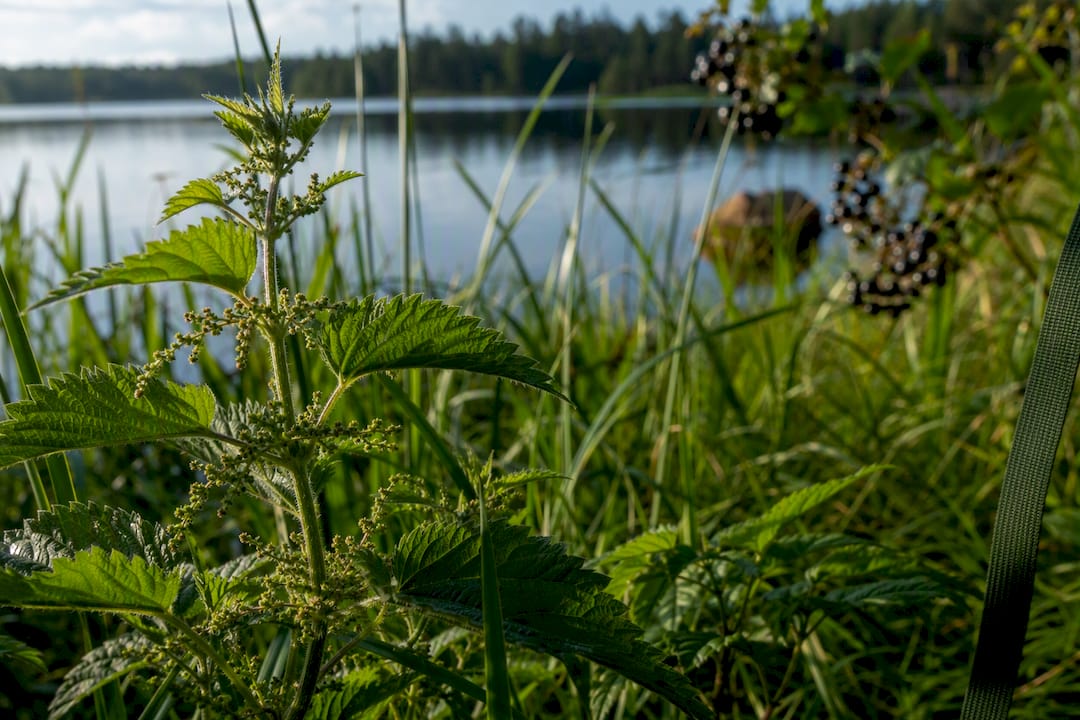
In the water itself, leeches occasionally turn up in warmer, weedy shallows, harmless but startling to a child encountering one for the first time. Wasps and horseflies are a far more common irritant around picnic areas in high summer, particularly near still water, and repellent or covered food helps more than most people expect.
Ticks are the wildlife risk worth taking most seriously. Long grass and forest edges around lakes are prime tick habitat in Sweden, and a thorough check of hairlines, behind ears, and skin folds after any time spent in vegetation catches most of them before they attach. Teaching children to recognise nettles, avoid unfamiliar mushrooms and berries, and tell an adult immediately if something bites or stings turns a vague worry into a manageable routine.
Where should children get in and out of the water?
Not every metre of shoreline is equal, and picking the entry point deliberately prevents most minor injuries before they happen. A gently sloping, sandy or firm-bottomed stretch lets a child wade in gradually and feel the depth change under their own feet, which is far safer than jumping from a bank or dock into water of unknown depth.
Avoid entry points near boat traffic, mooring ropes, or steep drop-offs where the bottom disappears within a step or two. Rocky or timber jetties can be a good entry point for confident swimmers, but only with a ladder or clear, non-slippery steps, and only for children who can already swim competently.
Mark the agreed entry and exit spot clearly to the group, verbally and, if useful, with a towel or bag left as a visual marker. Children should exit the same way they entered wherever possible, rather than scrambling up an unfamiliar bank, which is where slips and cuts on hidden rocks tend to happen. If the lake bed is unclear or weedy near the obvious entry point, wade in yourself first to check before any child follows.
How do you set water safety rules kids will actually follow?
Rules stated calmly before the swim starts land far better than rules shouted mid-crisis. Keep them to a handful that children can actually remember: stay where the watching adult can see and reach you, no swimming without an adult in the water or right at the edge, and come back immediately on the agreed signal, whether that's a whistle blast or a raised hand.
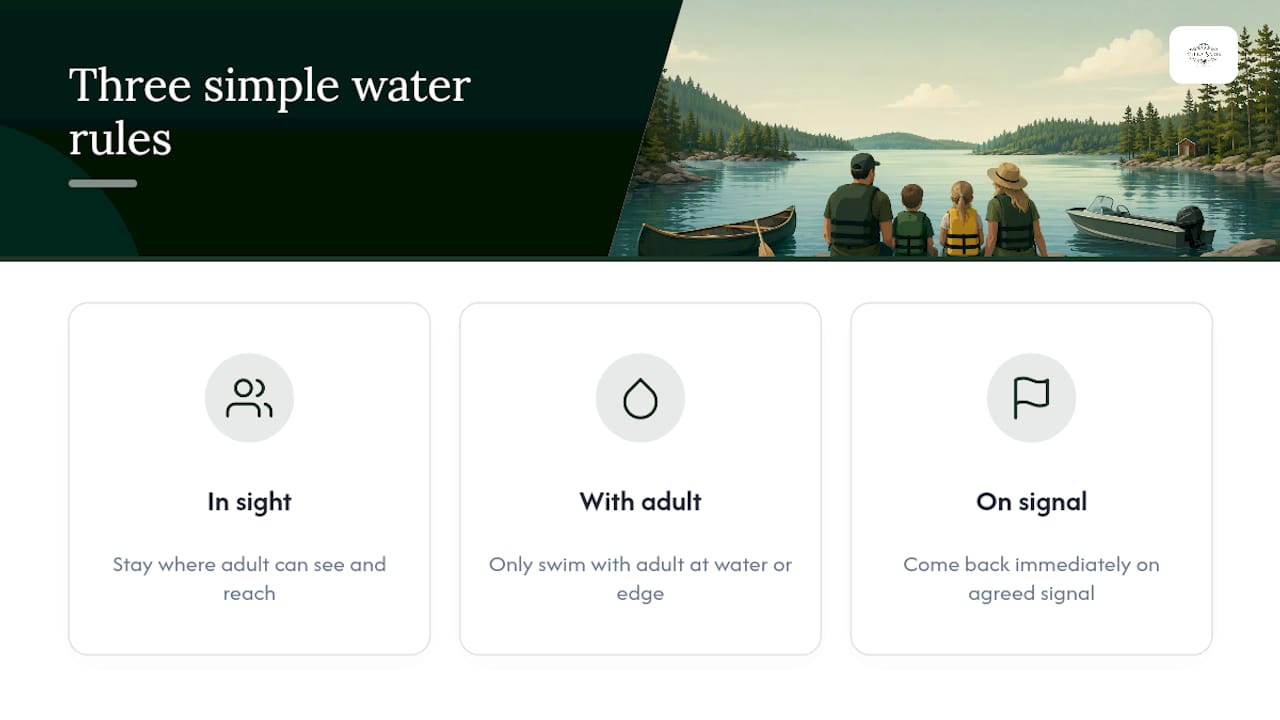
Make the rules concrete rather than abstract. "Stay near the yellow buoy" works better than "don't go too far out," because a child can measure the first and not the second. Explain briefly why a rule exists, not to frighten them, but because children who understand the reasoning tend to hold onto rules better than those simply told to obey.
Revisit the rules every time you visit a new site, since a familiar lake at home and an unfamiliar one on holiday carry different risks. A minute spent walking a child through "this is where we swim, this is where we don't" before the first splash costs nothing and prevents the wandering that leads to most unsupervised accidents.
An honest editorial take on lake safety advice
Most water safety content aimed at parents leans too heavily on fear and too lightly on procedure. Statistics about drowning rates make headlines, but they rarely tell a tired parent what to actually do at 3pm on a hot Tuesday with three children and one working adult brain. The research is fairly consistent on what matters: touch supervision for young children, a properly fitted lifejacket rather than a foam toy, and a designated watcher who isn't also managing a barbecue.
Where conventional advice falls short is in treating swimming lessons as a finish line. A child who can swim lengths in a heated pool is not automatically safe in a weedy Swedish lake with an uneven bottom and no lane markers. Confidence in the water and competence in open water are different skills, and conflating them is where a lot of near-misses begin.
If you take one thing from all this, make it the briefing. Two minutes of stating the rules out loud, every single time, does more than any single piece of equipment.
— Christian
Sources
For local, Swedish-specific guidance on supervision distances and first-aid training, 1177 Vårdguiden and Rikshandboken i barnhälsovård are the most reliable starting points. For international best practice on rescue technique and site-safety checks, the CDC's drowning prevention guidance is thorough and practical. For the evidence behind supervision recommendations, the American Academy of Pediatrics policy statement is the most detailed clinical source available.
- Prevention of Drowning: Policy Statement — American Academy of Pediatrics (AAP)
- Drowning prevention — CDC
- Vattensäkerhet för barn och vuxna — 1177 Vårdguiden
- Främja vattensäkerhet — Rikshandboken i barnhälsovård