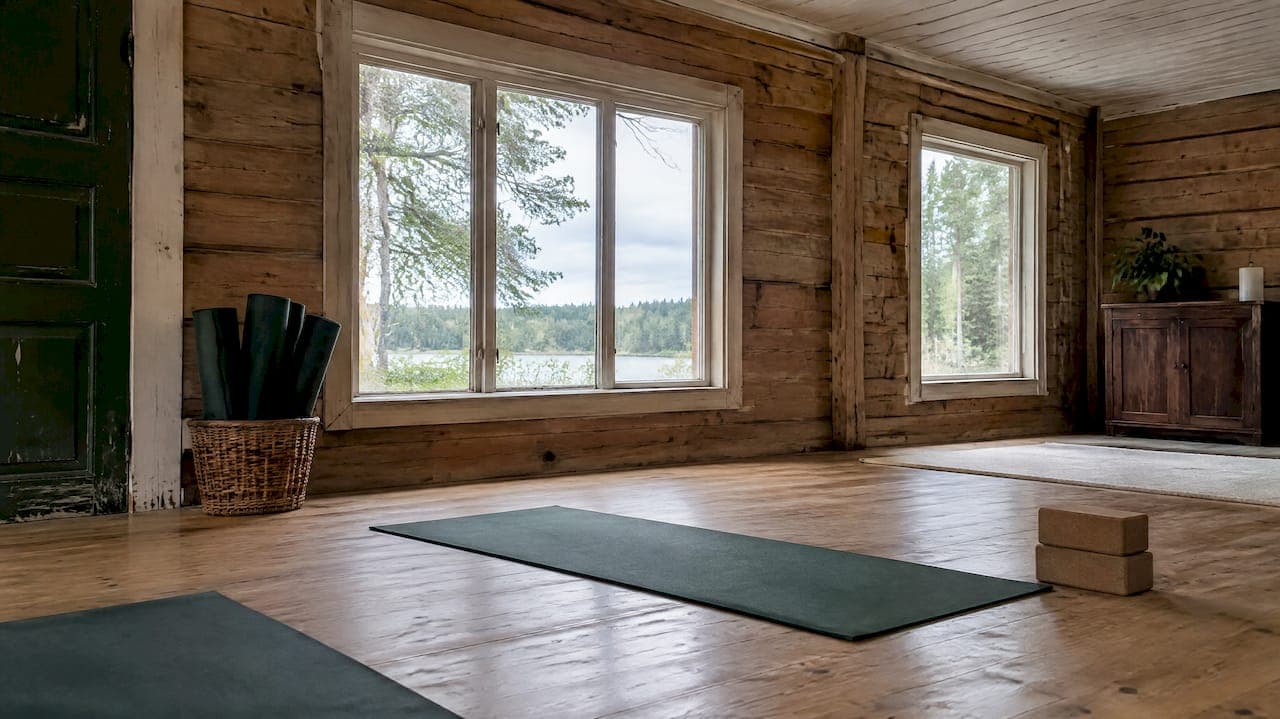
Yes. A whole-house rental gives you everything a self-guided wellness retreat needs: private space, flexible hours and no instructor's schedule to follow. Before you book, confirm three things: the house comfortably fits your group with room to spare, there is a dedicated space for movement or stillness, and the cancellation terms are written down clearly.
TL;DR:
- Confirm the rental property's flexibility for group size, outdoor space, and clear cancellation and damage policies before booking to avoid disputes.
- Design a retreat schedule with balanced structured activities and generous unstructured time to enhance wellbeing outcomes, avoiding over-scheduling.
- Check outdoor access rules, local fire regulations, and sauna preheating times to ensure safety and practicality during your stay.
- Choose a property with varied natural features, as environments with mix of open and sheltered areas support deeper psychological rest.
- Prepare physically and mentally before arrival by establishing a loose intention, reducing substances, and planning activities aligned with your recovery goals.
Table of Contents
- Quick planning checklist before you pay a deposit
- Designing the retreat schedule: structure and stillness in balance
- Booking terms, cancellation risk and what to check in the contract
- Nature access and rules to plan around
- Sauna and fire safety: scheduling, preheating and on-site checks
- Why nature venues support restoration
- How Villa Sakis matches the checklist
- Preparing yourself before the retreat begins
- Choosing activities that match your actual goals
- Planning meals that support the retreat rather than distract from it
- Safety considerations and a simple emergency plan
- Packing for a self-guided retreat
- Making the most of unstructured time
- A short reflection on doing this well
- Booking The House at Villa Sakis
- FAQ
- Sources
Quick planning checklist before you pay a deposit
A whole house can look perfect in photographs and still fall short for a group retreat. Walk through a short list of practical questions before you commit any money.
- Does the sleeping layout separate communal areas from quiet bedrooms, so early risers and late sleepers do not collide?
- Is there a studio, barn or open room with enough floor space for yoga, stretching or breathwork?
- What kind of sauna is included, and is the kitchen equipped for group self-catering rather than quick meals for two?
- Are parking, Wi-Fi and step-free access clearly described, and do they match what your group actually needs?
- What does the contract say about deposit amount, cancellation window, cleaning charges and damage liability?
Confirming these in writing, ideally by e-mail, saves disputes later and lets you plan the retreat itself rather than troubleshoot the venue once you arrive.
Designing the retreat schedule: structure and stillness in balance
The temptation with a group of friends or family is to fill every hour. Resist it. Research into nature-based interventions suggests that wellbeing outcomes improve when organised activities sit alongside generous unstructured time, allowing each person to choose solitude or company as they need it. A retreat that schedules every half-hour defeats its own purpose.
A simple structure for a three-day stay might look like this:
- Morning: one gentle group activity, such as a walk, stretch or shared breakfast, kept to under an hour.
- Midday: fully open, no plans, no suggestions, just the house and the land around it.
- Afternoon: an optional second activity, sauna session or quiet reading hour, attendance entirely voluntary.
- Evening: a shared meal, followed by free time rather than a planned programme.
Self-guided activities that suit this format include unled yoga flows, journalling, forest walks, cold water dips where available, and simply sitting outside with no device nearby.
Pro Tip: Agree a "no plans" block each day before you arrive, so nobody feels obliged to organise something just to fill the silence.
Booking terms, cancellation risk and what to check in the contract
Read the rental agreement before you pay a deposit, not after. Swedish consumer dispute rulings show that the Allmänna reklamationsnämnden has upheld strict non-refund policies when those terms were clearly stated in the contract, including a case where a cancellation made shortly before arrival did not entitle the guest to a refund. The lesson is straightforward: a clearly written policy tends to hold, however inconvenient it feels at the time.
Before paying, make sure you have in writing:
- The exact cancellation window and what portion of your payment is refundable within it.
- Who covers cleaning costs and how damage deposits are returned.
- Written clarification of any fee that seems vague, with the host's reply kept as a record.
One documented case from ARN shows a non-refund clause enforced for a late cancellation, a reminder that travel insurance can be a sensible fallback rather than an afterthought.
Nature access and rules to plan around
One advantage of a private farmhouse retreat is the land around it, but outdoor access comes with boundaries worth understanding first. Sweden's right of public access, Allemansrätten, lets you walk, roam and pause for rest in many natural places, though it excludes private gardens, cultivated land and the immediate area around a home, described officially as "freedom with responsibility."
Keep these points in mind when planning group outdoor time:
- You may walk and rest in most natural areas, but cultivated fields and private gardens are off limits.
- A night or two of simple camping for a small group is generally fine, but larger group tents or repeated gatherings may need the landowner's permission.
- Local nature reserves and municipal rules can be stricter than the general right of access, particularly around fires, so check before lighting one.
- Ask your host for routes they already know are suitable. Our own guide to the right to roam covers the practical checks worth making before you set off.
Sauna and fire safety: scheduling, preheating and on-site checks
A sauna session works best when it is planned rather than improvised. Wood-fired units commonly need around an hour to reach temperature, while electric saunas heat far faster, so build that difference into your evening timetable rather than discovering it when everyone is ready and the sauna is not.
On arrival, check the heater manual, confirm what fuel is provided, and keep towels, clothing and loose items well clear of the heater itself.
- Appoint one person as fire steward for the stay, responsible for checking local fire warnings before any outdoor fire is lit.
- Never leave a wood-fired heater unattended once lit, and never use the heater to dry clothing.
- Agree sauna slots the night before so preheating starts early enough for everyone to use it without a late-evening scramble.
Pro Tip: Write the sauna slot times on a shared whiteboard or group chat the evening before, so preheating never becomes a last-minute rush.
Why nature venues support restoration
The pull toward a farmhouse over a hotel is not just aesthetic. A randomised controlled trial and its long-term follow-up found that nature-based therapy programmes delivered sustained reductions in sick-leave and healthcare contacts, evidence that settings with real exposure to nature can support genuine recovery rather than a temporary mood lift.
Environments offering both open prospect and sheltered refuge, such as a forest edge beside an open meadow, tend to support deeper psychological rest than a single uniform landscape.
This points to a practical selection rule: choose a property with varied natural features rather than one flat stretch of garden. It is worth saying plainly that a few restorative days in a farmhouse are not a substitute for clinical treatment, but as a setting for stress recovery, the evidence for nature-rich environments is genuinely encouraging. Our piece on nature immersion goes further into why forest, meadow and water access each add something different.
How Villa Sakis matches the checklist
Everything above is easier to arrange when the property itself is built for it. We offer whole-house bookings at a historic log house set among meadows and pine forest with direct access to both. We keep a private sauna, a dedicated studio space suited to yoga or stretching, and a self-catering kitchen built for groups rather than couples, so the practical checklist above is already answered before you arrive.
Sleeping rooms sit apart from the main lounge and kitchen, which makes the zoning advice above simple to apply without any rearranging. For guests planning movement sessions, our notes on practising yoga in a timmerhus cover floor space and acoustics specific to a log-built room.
Preparing yourself before the retreat begins
A self-guided retreat asks more of you upfront than a programmed one, because nobody else is setting the pace. A little preparation in the weeks before travel makes the unstructured days far easier to enjoy rather than endure.
Mentally, it helps to set a loose intention rather than a rigid goal: rest, reconnect, or simply slow down, without a checklist of outcomes to measure against. Many people arrive at a quiet house and feel an odd restlessness for the first day, half expecting an itinerary to appear. That passes once the body adjusts to a slower rhythm, so it helps to know it is coming rather than mistake it for the retreat not working.
Physically, a few early nights before departure and a short reduction in caffeine or alcohol make the first day's calm easier to settle into. If your plans include forest walks or stretching sessions, a short period of gentle movement beforehand, even a week of daily short walks, means the body is not shocked by sudden activity after months of a desk routine.
Agree with your group beforehand how much phone use feels appropriate. A shared expectation, set before arrival, avoids one person's constant notifications undoing the calm everyone else is seeking.
Choosing activities that match your actual goals
Not every wellness activity suits every person, and a self-guided retreat lets you be honest about that rather than following a fixed class schedule. Start by naming what you actually need: physical recovery, mental quiet, reconnection with people, or simply uninterrupted sleep.
If physical recovery is the priority, gentle stretching, short walks and sauna sessions do more good than an ambitious fitness programme squeezed into a few days away. If mental quiet is the goal, journalling, reading or simply sitting outside without a task tends to matter more than any formal practice. Groups seeking reconnection often find that shared, low-effort activities, cooking together or an evening walk, build more warmth than a strictly scheduled group class would.
It is worth matching activity to energy level honestly. A retreat following a demanding period at work rarely benefits from an ambitious hiking plan; the body usually asks for rest before it asks for exertion. Let each person opt in or out of group activities without needing to explain why, since that freedom is much of the point of choosing a self-guided format over a programmed one.
Planning meals that support the retreat rather than distract from it
Food logistics can either support a restful few days or quietly dominate them. Self-catering means someone has to plan, shop and cook, so deciding this before arrival avoids the retreat's calm being undone by last-minute meal arguments.
A simple approach works best: plan meals that are easy to prepare in batches, so nobody spends hours at the stove while others wait. Soups, stews and sheet-pan meals suit a group kitchen well, and a shared breakfast of oats, fruit and good coffee sets a steady tone without much effort. Share the cooking rota across the group rather than letting one person carry it, since cooking fatigue undermines rest as surely as a packed schedule does.

Consider dietary needs before you shop rather than during the stay, and bring a rough plan for each day's main meal so grocery runs are efficient rather than repeated. Herbal teas, good bread and simple, whole ingredients tend to suit the slower pace of a retreat better than elaborate dishes that demand constant attention.
Safety considerations and a simple emergency plan
A private farmhouse, often some distance from town, calls for a touch more preparation than a city break. Before settling in, locate the nearest hospital or clinic and note the address somewhere the whole group can see it, along with the property's exact address for emergency services.
Check mobile signal strength on arrival, since rural areas can have patches of poor coverage, and identify where the signal is strongest in case it is needed quickly. If anyone in the group has a medical condition, make sure at least one other person knows the relevant details and where any medication is kept.
A basic first aid kit, a torch and a charged power bank are worth packing regardless of what the property provides. Agree a simple check-in habit, such as a daily message in the group chat confirming everyone is accounted for, particularly if people are taking solitary walks.
Packing for a self-guided retreat
What you bring shapes how smoothly the days unfold. Beyond clothing suited to the season, a few items make a real difference to a self-guided stay: a yoga mat or light stretching equipment if the house studio is unfurnished, swimwear for lake or sauna use, and layers for cooler mornings even in summer.

Sturdy, broken-in footwear matters more than fashion here, since much of the appeal lies in walking rather than sitting indoors. A notebook for journalling, a book that has waited too long on the shelf, and a refillable water bottle round out the basics. Leave the laptop behind if the retreat's purpose includes disconnecting, or at least agree with yourself when it stays closed.
Making the most of unstructured time
The open hours are often the hardest part of a self-guided retreat to get right, precisely because nobody is telling you what to do with them. The instinct to fill silence with a plan is strong, and resisting it is most of the skill.
Try starting unstructured blocks without a goal in mind: step outside, notice the weather, and let the next hour suggest itself rather than deciding in advance. A short walk with no destination, time spent simply watching the light change over a meadow, or an afternoon with a book and nothing else, all do more for a restless mind than another organised activity would. If stillness feels difficult at first, a short walk often eases into it faster than sitting still indoors does.
A short reflection on doing this well
The retreats that work best are rarely the most organised ones. They are the ones where the schedule is light enough to breathe, where the sauna is ready when people want it, and where the paperwork was sorted before anyone needed to think about it again. Get those basics right and the rest tends to follow.
— Christian
Booking The House at Villa Sakis
Once you know what a self-guided retreat needs, booking becomes a matter of matching dates and asking the right questions rather than guessing. We take whole-house bookings for The House, our 1700s log farmhouse set among pine forest and open meadow, with a private sauna, dedicated studio space and a kitchen built for groups rather than couples.
When you enquire, we suggest asking about:
- The exact cancellation window and what happens to your deposit if plans change.
- How the sauna works, including preheat time and any heater-specific instructions.
- Local walking routes we know respect the surrounding land and its access rules.
Check your dates, confirm the group size against the house's actual layout, and ask for a short written booking confirmation before you pay. For a fuller sense of what a countryside stay involves, our guide to planning a countryside stay covers the basics worth knowing before you arrive.
FAQ
What is a self-guided wellness retreat, exactly?
It means booking a private house so your group can run its own wellness days, yoga, sauna, walks and rest, without a hired instructor or fixed programme. The structure and pace are entirely up to the people staying there.
How long should a self-guided retreat last?
Three to four days gives enough time to settle into a slower rhythm without rushing the unstructured hours that research links to better outcomes. Shorter weekend stays work too, though the first day often goes toward simply winding down.
Can we cancel our booking if plans change?
That depends entirely on the terms you agreed when booking. Swedish dispute rulings have upheld strict cancellation policies when they were clearly stated in the contract, so always confirm the exact window and refund terms in writing before paying.
Are we allowed to camp or light fires on the land around the house?
Sweden's right of public access generally permits short stays and roaming in natural areas, but it excludes cultivated land, private gardens and the area close to a home. Always check local fire warnings and ask the host which routes and spots are suitable before lighting anything or pitching a larger group tent.
How does a wood-fired sauna differ from an electric one in planning terms?
A wood-fired sauna typically needs around an hour to reach a comfortable temperature, while electric units heat considerably faster. Plan sauna slots the evening before and assign someone to start the preheating in good time.
Sources
- Allmänna reklamationsnämnden (ARN)
- Medical nature‑based rehabilitation programme outcomes (MDPI, 2023)