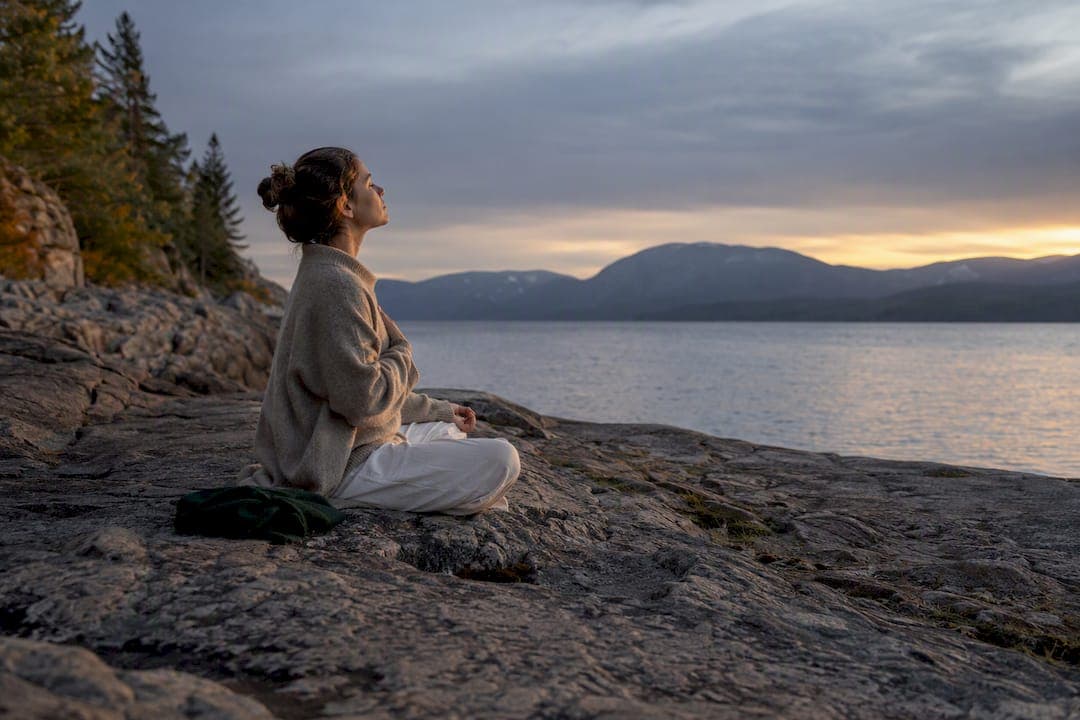
Öppet vatten andning means breathwork practised beside open water, such as a lake or shore, for relaxation and a deeper connection with nature. It has nothing to do with swimming technique. The simplest way to begin is a counted breath: in through the nose for four, hold for two, out through the nose for four, repeated several times. Stop if you feel dizzy or short of breath.
TL;DR:
- Most lakeside breathwork exercises involve slow, controlled patterns like four in, two hold, four out, which help reduce physical tension and stress.
- Practicing on firm, dry ground with a companion nearby and avoiding water submersion significantly lowers safety risks, especially near deeper water.
- Cold air and wind require extending the exhale and breathing through the nose to prevent chest tightening and maintain focus during outdoor sessions.
- Using visual or tactile anchors, such as the horizon or a stone, helps sustain attention when the mind wanders during water-based breathwork.
- A typical ten-minute session includes settling in, controlled breathing, and a short walk or body scan, adaptable to different time frames and personal comfort levels.
Table of Contents
- How to prepare and stay safe before breathing exercises by the water
- Three breathing exercises to try beside a lake or shore
- Using the shoreline itself to sharpen focus
- What to do if a breathing exercise goes wrong
- A ten-minute breathing session to follow lakeside
- What breathwork by open water actually does for the body
- Breath control that suits cold air and open water settings
- Staying focused when the mind wanders
- Getting comfortable with open water gradually
- Villa Sakis perspective: hosting breathwork safely during a stay
- A brief invitation: where to practise during a stay
- Sources
- FAQ
How to prepare and stay safe before breathing exercises by the water
A good lakeside breathing session starts with a few quiet checks before the breath itself. Look at where you're standing before you look inward.
- Check the ground: firm, dry footing rather than slippery stones or algae‑covered rock.
- Confirm stable access to shore or jetty, and note the current or any tide movement if you're near the sea.
- Notice whether anyone else is nearby, or whether a lifeguard is on duty, in case you need reassurance.
- Bring a lightweight mat or towel, a windproof layer, water, sun protection, and your phone in a dry pouch.
- If you're practising anywhere near deeper water, bring a companion rather than going alone.
Stay onshore for breathing practice unless you're deliberately taking part in supervised cold water exposure with someone experienced present. Children should be supervised throughout, and nobody should combine breath‑holding with being submerged. The MSB guidance on bathing site safety recommends visible rescue equipment and stepped, non‑slip exits at any bathing site, worth a glance before you settle in. If you're staying somewhere with lake access, check whether the property offers its own lake safety briefing for guests.
Pro Tip: Arrive ten minutes before you plan to breathe. Use that time to simply sit and let your eyes adjust to the water, the light, and the sounds around you. It settles the nervous system before the exercise even starts.
Three breathing exercises to try beside a lake or shore
Three exercises cover most of what a wellness traveller needs beside open water: a short counted breath, a box pattern, and a walking version. None require equipment, and each works whether you're on a jetty, a patch of grass, or a flat rock at the shoreline.
- Short counted breathing. Breathe in through the nose for a count of four, hold for two, then out through the nose for a count of four. Repeat several times, a pattern recommended by the NHS breathing exercises guide. If four feels like a stretch, try three in, two hold, five out instead. A longer exhale relative to the inhale tends to settle the breath faster, particularly for anyone new to the practice.
- Box (four‑side) breathing. In for three seconds, hold for three, out for three, hold for three, following the equal‑count pattern described by Mind UK. Trace an actual square with your eyes, the corner of a jetty, a rock, a distant tree, or picture one on the water's surface. Four‑second counts work well too, once the shorter version feels easy.
- Walk‑breathing (promenadandning). Match your breath to your steps as you walk slowly along the shore. Start with a comfortable rhythm, then extend the exhale by one extra step at a time as it feels natural. 1177's guidance includes this as one of several recovery breathing patterns worth practising regularly. Slow down on an uphill stretch and let the breath lead, not the legs.
In wind, breathe through pursed lips to control the pace. In cold air, keep breaths through the nose to warm the air before it reaches the lungs. If mobility is limited, all three exercises work perfectly well seated.
Pro Tip: Don't expect stillness on the first try. 1177 notes that these exercises can feel odd to begin with, and that's normal. The calm tends to arrive on the third or fourth repetition, not the first.
Using the shoreline itself to sharpen focus
The setting does half the work if you let it. Rather than closing your eyes and hoping for calm, use what's actually in front of you.
- Pick one visual anchor, the horizon line, a distant tree, or the corner of a jetty, and let your eyes rest there during box breathing.
- If the view is unhelpful (choppy water, low visibility), switch to a tactile anchor instead: a smooth pebble underfoot or the breeze against your skin.
- Early morning or late afternoon tend to offer the calmest water and the fewest people, and pair well with a short session after a sauna or an easy walk.
- If the spot is busy or windy, earplugs and a tactile focus work better than trying to out‑concentrate the noise.
- Staying at a property with others? Choose a quiet corner away from shared paths, so the practice stays undisturbed and easy to supervise.
What to do if a breathing exercise goes wrong
Most sessions pass without incident, but it helps to know the signs that mean stop. Light‑headedness, tingling in the fingers or lips, chest pain, or breathlessness that doesn't ease are all reasons to pause immediately and seek help if they persist.
If you notice fast, shallow breathing turning into panic, slow the pace deliberately rather than fighting it. Ground yourself by naming five things you can see and four things you can touch, or simply sit down and let the breath settle on its own. Both the WHO's stress guidance and Mind UK recommend gentle, paced breathing over forcing deep breaths when someone feels overwhelmed.
Anyone with asthma, COPD, heart disease, or who is pregnant should check with a clinician before trying new breathwork, and keep any rescue medication within reach during practice. At a public bathing site, move to stable, dry ground first, allow yourself to warm up, and call for assistance if you need it. The same MSB safety checks that apply to swimming apply here too.
A ten-minute breathing session to follow lakeside
This routine runs ten minutes from start to finish and needs nothing beyond a flat, dry spot to sit or stand.
- Minutes 0 to 1: Settle in. Check your footing, take a small stretch, and let your attention drop from your thoughts to your body.
- Minutes 1 to 4: Short counted breathing, four in, two hold, four out, for three full cycles. Rest between cycles if you need to.
- Minutes 4 to 7: Box breathing for three minutes, three seconds per side, using whatever visual anchor the shoreline offers.
- Minutes 7 to 10: A slow walk‑breathing stretch, or a brief body scan from feet to head if you'd rather stay seated, finishing with two or three gentle closing breaths.
Shorten the whole sequence to five minutes by dropping one cycle from each stage, or stretch it to twenty by adding a second walking loop. A seated variant works for every stage, useful if the ground is uneven or you'd simply rather not stand.
Pro Tip: End by naming one thing you noticed, a sound, a smell, the temperature of the air. It anchors the session in the moment rather than letting it dissolve the second you stand up.
What breathwork by open water actually does for the body
Slow, paced breathing lowers the breathing rate and tends to ease the physical tension that builds up with stress, largely through the calming effect of a longer exhale relative to the inhale. That's the whole mechanism behind exercises like the 4‑2‑4 count: nothing mystical, just a deliberate slowing of a pattern that speeds up under pressure.
The setting adds something the pattern alone doesn't. Open water offers a wide, unbroken view, cooler air, and none of the visual clutter of a room, all of which make it easier to stay with the breath rather than drift into distraction. That's the practical case for lakeside practice over an indoor equivalent, not that one produces different air, but that one removes fewer of the cues that help focus.
The risks sit mostly outside the breathing itself. Overbreathing, taking breaths too fast or too deep, can bring on light‑headedness or tingling in the hands, which is why gentler counts (three in, five out) suit anyone prone to those sensations. The setting carries its own separate risks: uneven footing, cold exposure if you're near or in the water, and the temptation to combine breath‑holding with submersion, which should never happen unsupervised. Kept onshore and paced gently, the exercises themselves carry very little physical risk for most people.
Breath control that suits cold air and open water settings
Cold air and open water change the calculus slightly compared with breathing indoors. Nose breathing does more work here than it might at home, warming and humidifying cold air before it reaches the lungs, which keeps the chest from tightening the way it can with fast mouth breathing in low temperatures.
Wind adds a second variable. A stiff breeze off the water makes it tempting to breathe shallow and fast, so lean on the counted patterns rather than freestyling. Box breathing's fixed rhythm is particularly useful here, since the structure gives you something to hold onto when the conditions are distracting.
If you're pairing breathwork with any cold water exposure, whether a dip or simply sitting close to cold water, extend the exhale further than you would on a mild day. A longer outbreath counters the sharp, gasping inhale that cold water tends to trigger, and settles the nervous system faster than trying to control the inhale alone. Villa Sakis guests exploring cold water therapy alongside breathwork often find the exhale is the part worth practising most, well before any water exposure begins.
Whatever the temperature, a seated or kneeling position reduces the risk of losing balance if a session leaves you briefly light‑headed. Sit if you're at all unsure, particularly on uneven shoreline ground.

Staying focused when the mind wanders
Attention drifts. That's not a failure of the exercise, it's simply what minds do, especially near water where there's plenty to look at and listen to. The fix isn't forcing focus, it's giving the mind somewhere specific to land.
A single sensory anchor works better than trying to notice everything at once. Choose one: the rhythm of small waves, the texture of a stone in your palm, the exact point where the horizon meets the sky. When a stray thought pulls attention away, which it will, simply return to that one anchor rather than the breath count itself. Counting alone can become mechanical; a sensory point of return tends to hold attention more gently.

Treat the session as a short gift of time rather than a task to tick off. That reframing matters more than it sounds. Breathwork approached as one more thing to get through tends to feel effortful, while the same exercise approached as a pause tends to settle the mind faster, if only because there's less internal pressure attached to it.
For visitors dealing with burnout or general overload, this kind of focused, sensory‑anchored practice pairs naturally with the broader routines covered in Villa Sakis's guide to mindfulness for burnout recovery, where breathwork sits alongside slower daily rhythms rather than as an isolated fix.
Getting comfortable with open water gradually
Nervousness near open water is common, and rushing past it rarely helps. A gradual approach works better than diving straight into a full session at the water's edge.
Start a few metres back from the shore on your first attempt, somewhere the water is visible but not underfoot. Once the short counted breath feels familiar there, move closer over subsequent sessions, first to the water's edge, then, if you choose, to a stable jetty or dock. Each stage should feel unremarkable before you move to the next; if a stage still feels uneasy, stay with it rather than pushing forward.
The same principle applies to weather and time of day. A calm, mild morning is a far gentler introduction than a blustery afternoon, and building confidence on quiet days first makes the noisier ones easier to handle later. Broader guidance on staying safe around open water activities echoes the same logic. Calm conditions and a measured approach reduce the natural anxiety that comes with unfamiliar surroundings.
Acclimatisation isn't only physical. It's also about becoming familiar with the specific stretch of shore you're using, its sounds, its footing, where the water gets deep, so the setting itself stops competing for attention and instead starts supporting the breath.
Villa Sakis perspective: hosting breathwork safely during a stay
A log house built in the 1700s carries a certain steadiness that suits this kind of practice. Some lakefront properties sit amid meadows and pine forest with direct lake access, making lakeside breathwork practical rather than theoretical for guests staying there.
Hosting it well is mostly a matter of timing and orientation, not equipment. A short safety brief on arrival, pointing out stable footing, any nearby ladders or jetties, and quiet stretches of shore away from foot traffic, does more for a guest's confidence than any amount of written instruction. Suggesting the calmest hour of the morning, before the rest of a group is up, tends to matter more than any particular breathing pattern chosen. It's a small thing to arrange, and it changes how comfortable a first attempt feels.
— Christian
A brief invitation: where to practise during a stay
Somewhere quiet, with solid ground underfoot and water close enough to see and hear, is most of what lakeside breathwork actually needs. Some accommodations offer private lake access, a sauna for winding down afterwards, and grounds quiet enough to allow a ten‑minute session by the water without disruption.

Guests often receive a safety briefing on arrival covering shoreline and access points, so a first attempt at box breathing or a slow walk‑breathing stretch does not have to start from guesswork. The whole property can be booked privately, suiting families, groups of friends, and wellness travellers alike, with nobody else's schedule to work around. View The House for details on the lakeside setting and facilities, or head to Villasakis to check dates and book a stay built around exactly this kind of quiet practice.
Sources
- NHS — Breathing exercises for stress
- Mind UK — Relaxation (2021)
- 1177 — Stress and recovery breathing exercises (PDF)
- WHO — Managing stress (practical tips)
- MSB — Guide to increased water safety at bathing sites
FAQ
What Is Öppet Vatten Andning?
It's breathwork practised beside open water, a lake or shore, aimed at relaxation and nature immersion rather than any swimming skill. The core exercise is a counted breath: four in, two hold, four out, repeated several times.
How Long Should a Lakeside Breathing Session Last?
Ten minutes is a comfortable standard length, covering a settling period, counted breathing, box breathing, and a closing walk or body scan. It shortens to five minutes or stretches to twenty depending on time and comfort.
Is It Safe to Practise Breathing Exercises Near Water Alone?
Practising onshore with firm footing and someone nearby, or at least within reach of others, is the safer approach, particularly near deeper water. The MSB's bathing site guidance recommends checking for visible rescue equipment and stable exits before settling in.
What Should I Do if I Feel Dizzy During the Exercise?
Stop immediately, sit down if you're not already seated, and let your breathing slow on its own rather than continuing the count. If dizziness, tingling, or breathlessness persists, seek medical advice.
Can I Do Breathwork by the Water If I Have Asthma or a Heart Condition?
Speak with a clinician before starting any new breathing practice if you have asthma, COPD, heart disease, or are pregnant, and keep any prescribed medication within reach during the session. Gentler counts, such as three in and five out, tend to suit anyone prone to light‑headedness.
Does Villa Sakis Offer a Place to Practise This?
Villa Sakis offers private lake access and quiet grounds suited to a short lakeside breathing session, along with a safety briefing for guests on arrival. Details on the property and its facilities are available on The House page.