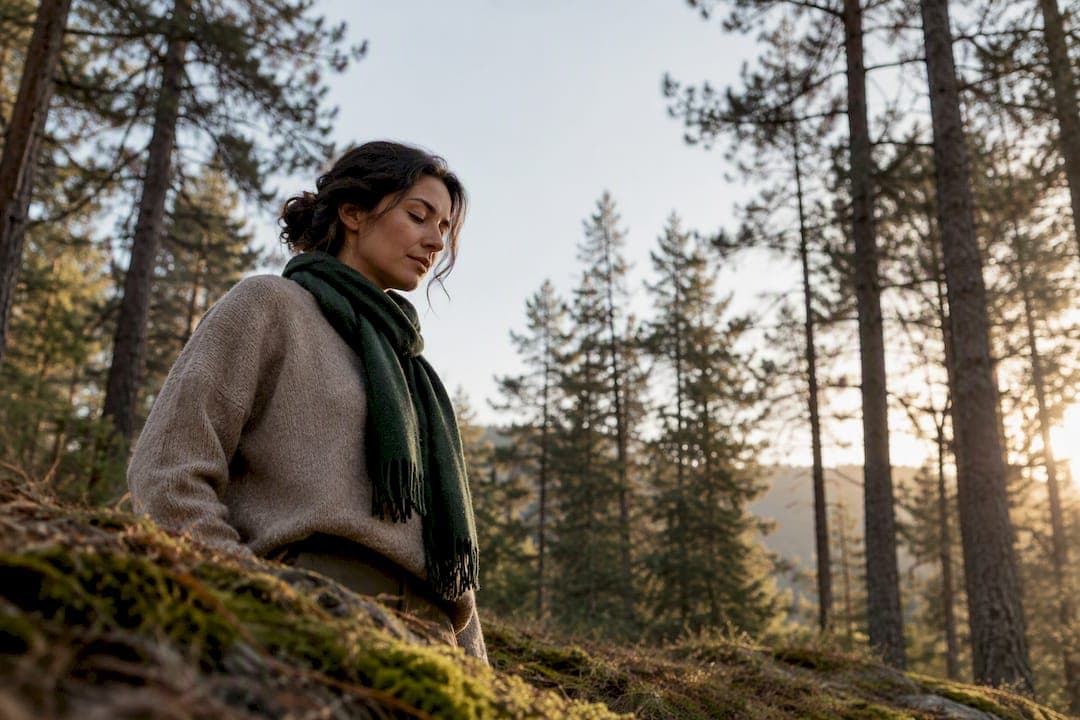
The easiest place to start with andningsövningar i skogen is a longer-exhale reset: breathe in normally through the nose, then let the exhale run a beat or two longer than the inhale. Within a few minutes, this signals safety to the nervous system and softens the mental chatter that follows you into the woods. Christian at Villa Sakis has watched guests settle into this rhythm on the property's own forest trails, and the pattern holds up against research linking longer exhales to nervous system downregulation and sensory-led relaxation in natural settings.
TL;DR:
- Longer exhalations of one or two beats beyond inhalations help signal safety to the nervous system and promote relaxation in forest breathwork.
- Keep breathing gentle and avoid over-breathing, as rapid or deep breaths can cause lightheadedness or discomfort, especially outdoors.
- A 10 to 15-minute guided routine involves sensory awareness, slow walking with scent-and-sip breaths, and stillness for structured breathing practice.
- Dress in layers, choose a comfortable posture, and bring a small pad or blanket to ensure comfort and consistency during sessions.
- People with health concerns such as pregnancy, cardiovascular issues, or panic disorders should stick to simple longer-exhale patterns and consult a healthcare professional before more structured exercises.
Table of Contents
- Practical breathing techniques for forest breathwork
- A 10 to 15 minute guided routine for the woods
- How to prepare: clothing, posture, and a minimal kit
- Precautions and when to modify or avoid these exercises
- Tips from Christian at Villa Sakis for a lasting practice
- Regulation, not performance
- A quiet forest setting to build the habit properly
- Sources
- FAQ
Practical breathing techniques for forest breathwork
Once the longer exhale feels familiar, a handful of other patterns give you options depending on your mood, your fitness, and how much time you have among the trees. These come from practitioner guidance on forest bathing and breathwork, adapted for people who want something they can actually remember once they are standing under pine branches with no notes in hand.
- The 3:5 or 4:6 reset: inhale for a few counts, exhale for a longer count. Keep it soft rather than forced. This is the same lengthening principle that public-health breathing guides recommend for stress reduction.
- Softened box breathing: a gentler version of the classic four-count box, dropping the breath holds that can feel strained outdoors. Inhale for four, exhale for four, with no pause between. It gives structure without the tension.
- Scent-and-sip micro-breaths: while walking, take a few short sips of air through the nose to catch the scent of pine resin or damp earth, then release slowly through slightly pursed lips. Techniques built around inhaling forest scent through the nose and exhaling through pursed lips are used in mind-body pain research, and they translate neatly to a woodland walk.
- Nasal breathing as default: nose breathing filters and warms the air, and it naturally slows your pace. Switch to gentle mouth breathing only if your nose feels blocked or you need a fuller exhale to release tension.
Be careful not to over-breathe. Big, fast inhales paired with dramatic exhales can trigger lightheadedness rather than calm, especially if you are standing. If counting starts to feel like a task rather than a comfort, drop the numbers entirely and use a softer cue instead: breathe in gently, breathe out like a long, easy sigh. Practitioners who work with breathwork in nature point out that qualitative cues reduce the risk of air hunger and keep the whole exercise sensory rather than mechanical.
Pro Tip: If you lose track of counts, match your exhale to the length of time it takes to notice one new sound. That single shift in attention often lengthens the breath more reliably than counting ever does.
A 10 to 15 minute guided routine for the woods
This sequence works as a full session or, trimmed down, as a three-minute reset between errands.
- Arrive and settle (0 to 2 minutes): stand or sit, soften your gaze, and do a quick sensory scan: what you can hear, smell, and feel on your skin. Facilitators recommend giving the nervous system a few minutes to notice its surroundings before any structured breathing begins.
- Walk phase (2 to 5 minutes): move slowly, using scent-and-sip micro-breaths as you go. Let your ears do some of the work too, tuning into birdsong or wind in the branches.
- Anchor phase (5 to 12 minutes): find a spot to stand or sit and settle into softened box breathing or the 4:6 pattern. Stay still enough that the breath becomes the main event.
- Close (12 to 15 minutes): take three or four slower, fuller breaths, then let your breathing return to normal before walking back out.
Short on time? A two to three minute version outdoors can begin the same physiological shift, so do not skip the practice just because you cannot spare a quarter of an hour.
How to prepare: clothing, posture, and a minimal kit
Comfort determines whether you will actually do this again, so a little preparation goes a long way.
- Dress in layers, even in mild weather. Moving from a brisk walk to standing still drops your body temperature fast.
- Bring a small sitting pad, folded blanket, or even a spare jacket to sit on if the ground is damp or cold.
- Choose a posture you can hold without strain, whether that is standing with a slight lean against a tree, sitting on a log, or resting fully seated on your pad.
- Time your session for whenever suits your day: shorter sessions work well on a lunch break, while a longer 15 minute routine suits early morning or late afternoon light.
- Pack lightly: water, your seating layer, and your phone switched to silent so nothing interrupts the quiet.
Precautions and when to modify or avoid these exercises
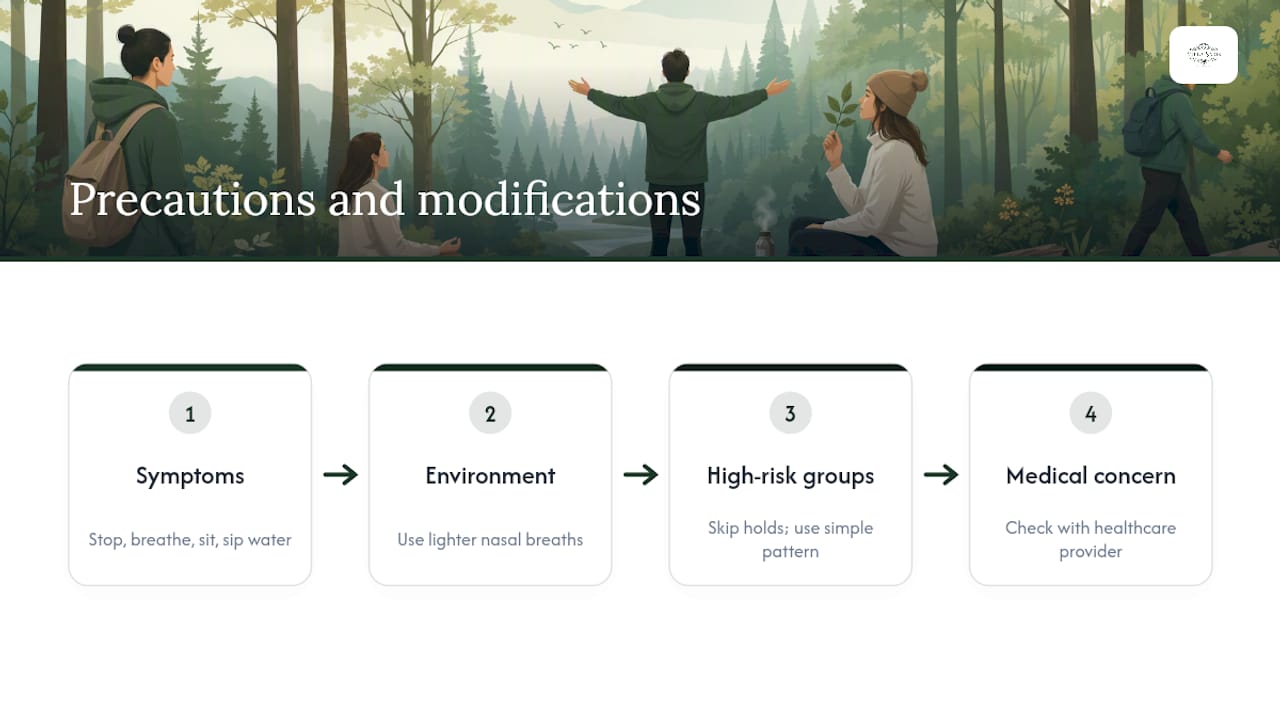
Breathing exercises in the forest are gentle by design, but a few groups should stay especially cautious. If you are pregnant, have a cardiovascular condition, high blood pressure, or a panic disorder, keep to the simplest longer-exhale pattern and skip breath holds entirely. Public-health guidance advises against extended breath retention for some clinical groups, and forest breathwork is no exception.
Watch for signs of over-breathing: light-headedness, tingling fingers, or a racing heart. If any of these appear, stop the counted pattern, breathe normally, sit down if you can, and take a few sips of water. Pollen, wildfire smoke, or sharp cold air also call for lighter nasal breathing rather than deep mouth breaths. If you have a specific medical concern, check with a healthcare provider before adopting any new breathing routine.
Tips from Christian at Villa Sakis for a lasting practice
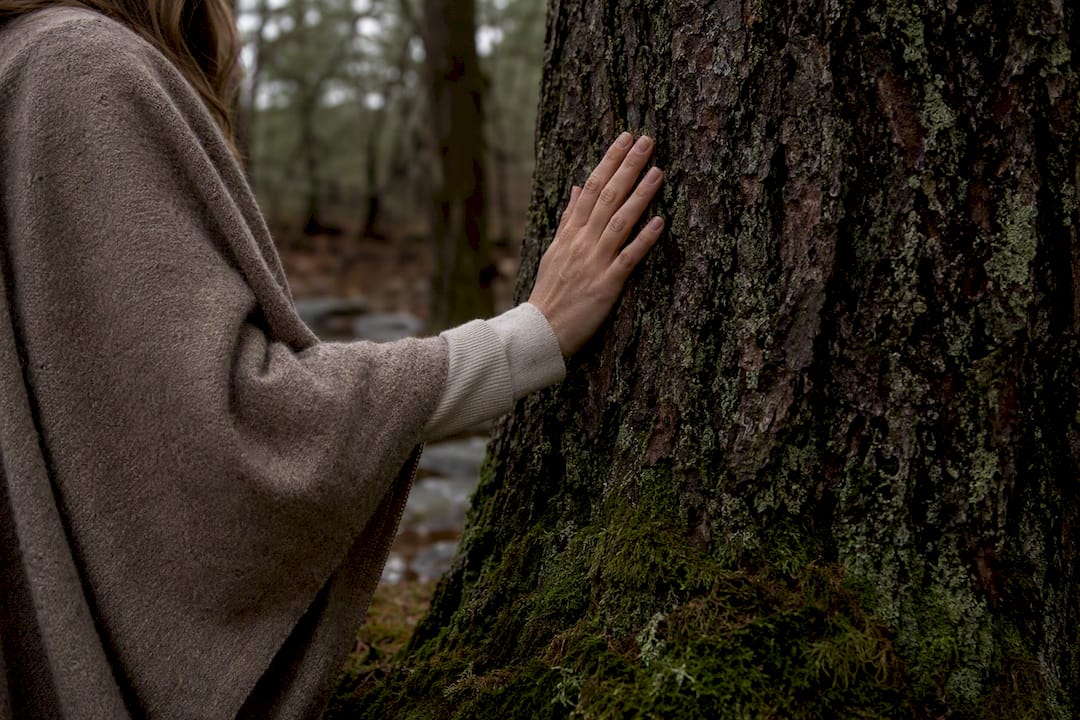
Christian's own habit, shared with guests staying at Villa Sakis, starts before a single structured breath is taken: pause at the treeline, notice the temperature of the air, the particular smell of the forest floor after rain, and let a minute pass before doing anything more deliberate. Leaning a palm against bark, or simply standing barefoot on moss when the ground allows it, gives the body something to hold onto while the breath slows, an approach explored further in grounding through touch and posture.
Seasons change the practice too. In colder months, shorter sessions with more layers work better than one long sit that leaves you chilled. For guests wanting to build this into something more sustained, the nature immersion retreat guide covers multi-day rhythms worth trying, similar to those offered by Dragonfly Retreat | Group stays in Andalucía.
Regulation, not performance
Forest breathwork works because the setting does half the job. Birdsong, filtered light, and the smell of resin give your nervous system safety cues that a gym or office simply cannot offer. This is part of why engaging multiple senses deepens relaxation outdoors. The goal is never a dramatic altered state. It is quiet rehearsal, teaching your body what calm feels like so it can find its way back there faster next time. A short session repeated often beats one heroic attempt you never repeat.
— Christian
A quiet forest setting to build the habit properly
Villa Sakis offers something the average city park cannot: a private 18th-century log house with direct access to pine forest and open meadow, where a breathing routine can run its full course without interruption. The House sits within reach of quiet trails, so a morning walk-and-breathe session or a longer evening sit both fit naturally into a stay here.
Guests staying at The House can expect:
- A private, self-catering log house set among meadows and forest, away from road noise and other visitors.
- Direct walking access to woodland trails suited to slow, breath-led movement.
- A private sauna and lake access for winding down after a longer session outdoors.
- Honest timber rooms with enough quiet space to close a session indoors if the weather turns.
If a single afternoon of forest breathwork leaves you wanting more than a passing visit, booking a stay at Villa Sakis gives you the run of the forest for as long as you need it.
Sources
- Mind-body interventions for chronic pain (PMC)
- Forest bathing breathwork that actually works | Treeming
- The difference between hiking and forest bathing | Stanford Lifestyle Medicine
- Avslappning genom andning | 1177
FAQ
What are some good breathing exercises to try in a forest?
The longer-exhale reset, softened box breathing, and scent-and-sip micro-breaths are three reliable options. All three signal downregulation to the nervous system without requiring any equipment or prior experience.
What breathing exercises can I do to improve my breathing generally?
Practising nasal breathing, gentle diaphragmatic breaths, and longer-exhale patterns regularly helps build better everyday breathing habits. The forest simply gives you a distraction-free setting to rehearse them, which makes the habit easier to keep up at home.
What full-body exercises pair well with forest breathwork?
Slow walking, gentle stretching against a tree trunk, standing balance holds, and seated stillness on a mat or log all pair naturally with breath-led sessions. None require speed or strain, which keeps the focus on breath rather than exertion.
What group activities or games can people do together in a forest?
Sensory scavenger hunts, quiet listening challenges, and paired grounding exercises (one person guiding, one following a breath pattern) all work well for groups. These lean on the same sensory anchoring that underpins solo forest breathwork, just shared.
Can I do forest breathing exercises if I have a health condition?
Simple longer-exhale patterns without breath holds are generally the safest starting point for most people. Anyone with a cardiovascular condition, panic disorder, or who is pregnant should check with a healthcare provider before trying more structured patterns like box breathing.