The best friendship trips lean on a handful of anchor activities, not a packed itinerary, one outdoor adventure, one cultural or culinary moment, and generous unstructured time in between. Pick 1–2 anchors, stay 2–3 nights per base, and let the rest of the day breathe. Everything else, from sauna evenings to budget splits, follows from that one rule.
TL;DR:
- Anchor activities should be limited to one or two per day, with stays of 2-3 nights per base to maximize shared downtime and reduce transit.
- Outdoor adventures like hiking, paddling, or cycling are most suitable for summer and should be booked at least a week in advance during peak season.
- Group sizes determine activity planning: small groups can book last-minute, while larger groups benefit from splitting into tracks and booking instructor-led sessions early.
- Assigning clear roles and early planning of dates, accommodation, and key activities reduces conflicts and last-minute issues.
- Using a house with on-site amenities like a kitchen, sauna, and lake access simplifies logistics and creates multiple leisure options without additional bookings.
Table of Contents
- What activities work best for a group of friends?
- How do you match activities to your group's vibe and size?
- How do you plan and book a friends trip without the usual friction?
- Using your accommodation as the activity hub
- What are the best low-cost and DIY activities for friends?
- Staying safe and considerate outdoors
- What an experienced host wants you to know
- Book a house that does the hard work for you
- Where to go for more planning inspiration
- Sources
- FAQ
What activities work best for a group of friends?
Every friendship trip draws from roughly the same five buckets: outdoor and adventure, active and physical, cultural, low-key social, and evening or night-time. Which mix you choose depends less on the destination and more on your group's energy and patience for logistics.
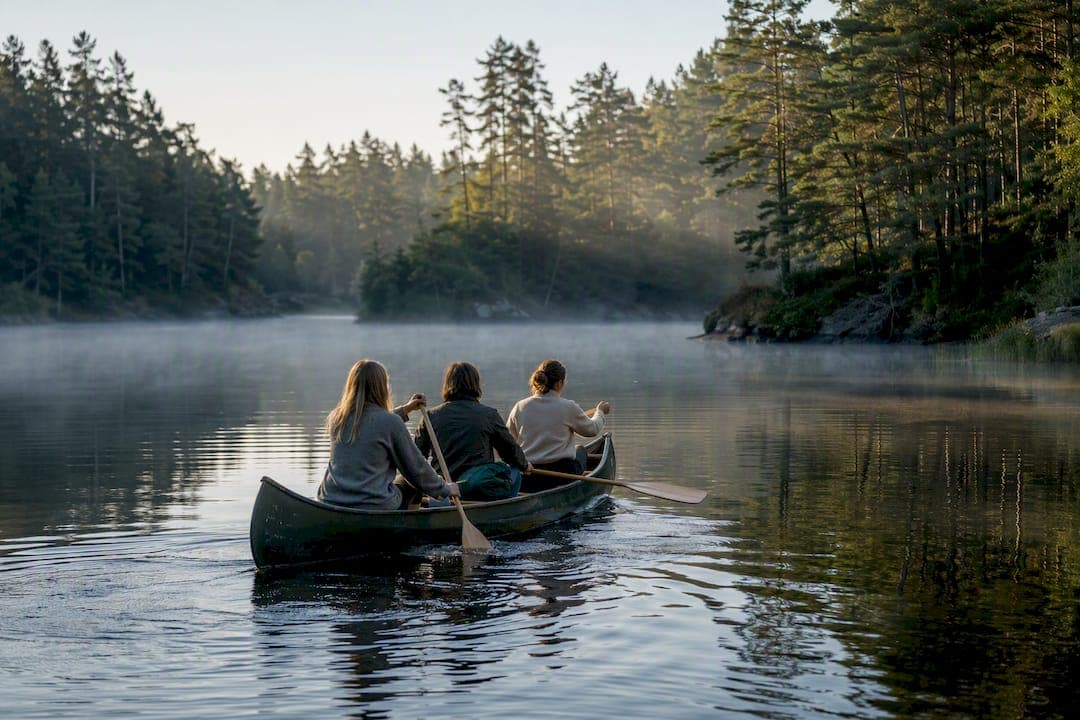
Outdoor and adventure activities anchor most Swedish friend trips well. Hiking a marked trail, canoeing a lake system, or a half-day of cycling gives the group a shared story to tell afterwards. The Swedish Tourist Association's activity hub lists hiking, paddling, skiing and cycling as core seasonal options, and timing matters: summer favours water and forest trails, while winter opens up cross-country skiing and ice-based activities where conditions allow. Budget half a day for a proper hike, and book canoe or kayak hire at least a week ahead in peak season.
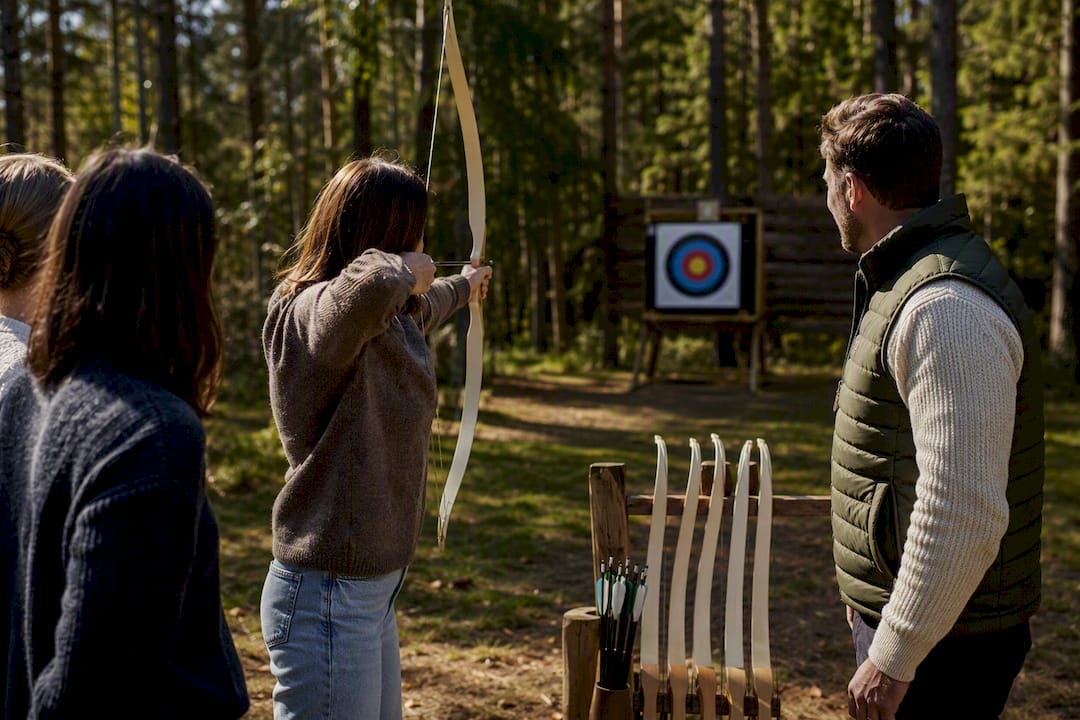
Active and instructor-led activities suit groups who want structure without much planning effort themselves. Archery, axe-throwing, and multidiscipline challenge courses (sometimes marketed as mångkamp) are widely bookable through Swedish adventure activity providers, and most sessions run two to three hours with an instructor handling safety briefings. These work particularly well for groups with mixed fitness levels, since the physical demand stays moderate and the social element carries the session.
Cultural and culinary activities give a trip texture beyond adrenaline. A guided cooking session, a local market visit, or an afternoon at a museum or historic site adds contrast to an otherwise outdoor-heavy weekend. These rarely need booking more than a few days out, except for popular cooking classes in peak season.
Low-key and social activities are the glue of any friendship trip, and the ones most groups underplay. Think:
- A slow breakfast with no fixed end time
- A lakeside afternoon with cards, books or simply conversation
- A group cook-along using local produce
- An evening sauna session followed by a swim
Evening and night-time activities close the day without demanding much energy: a bonfire, a board-game session, or a short torch-lit walk if the group is up for it. None of these need booking, which makes them the easiest category to slot in when the weather or the group's mood shifts.
How do you match activities to your group's vibe and size?
A group of six close friends who want to talk for three days needs a different plan from twelve colleagues celebrating a milestone. Matching the activity to both vibe and headcount avoids the single biggest cause of friction on a group trip: half the group wanting to hike at dawn while the other half wants to sleep until eleven.
-
The chill group (4–6 people). One anchor activity per day at most, usually late morning. A typical weekend: Friday arrival and a relaxed dinner, Saturday a mid-morning lake walk followed by a long afternoon of nothing in particular, Saturday evening a sauna and cook-along, Sunday a slow departure. This size books almost anything last-minute.
-
The mixed group (7–12 people). Split into two optional activity tracks each day; a shorter, easier version and a longer, more demanding one, then reconvene for meals. This respects fitness and interest differences without anyone feeling left out. Booking lead time matters more here: instructor-led sessions for larger groups often need advance notice, and activity marketplaces built for group bookings tend to offer better per-head rates than individual sign-ups.
-
The adventurous group (any size, high energy). Front-load one demanding activity (a full-day hike, a paddling route, an axe-throwing and archery combination) early in the trip while energy is highest, then deliberately schedule a low-key day afterwards. Adventurous groups burn out fast if every day is a peak day.
-
The budget-conscious group (any size). Prioritise free nature access and one paid anchor activity rather than several small paid extras that add up. Group discounts at commercial providers usually kick in around eight to ten people, so a slightly larger group can genuinely save per person.
For groups above twelve, contact activity providers directly rather than booking online. Group rates, private slots, and flexible timing are far easier to negotiate by phone or email than through a standard booking widget.
How do you plan and book a friends trip without the usual friction?
Group trips fall apart in predictable ways, and almost all of them trace back to unclear roles or a rushed booking timeline. Group travel research points to the same pattern repeatedly: successful trips share realistic budgets, a small number of agreed anchor activities, and clarity about what everyone actually wants from the days off.
Lock three things early, ideally six to eight weeks before departure: your dates, your accommodation, and your one or two anchor activities. Everything else can flex.
Assign roles once the group is confirmed, not after arrival:
- Trip lead — owns the overall schedule and makes the final call on disputed decisions
- Money manager — tracks shared costs and settles the split at the end
- Food organiser — plans meals and shopping so the kitchen doesn't become a free-for-all
- Activity booker — handles reservations, deposits and instructor bookings
Budgets work best when split into two categories: fixed costs (accommodation, transport) divided evenly from day one, and optional extras (a paid activity, a nicer dinner) paid only by those who join in. This avoids the awkward conversation where one person subsidises an activity they never wanted to do.
Pro Tip: Agree expenses and house rules in a group chat before the trip starts, not on arrival. A five-minute conversation about who pays for what removes most of the friction that builds up over a shared weekend.
For the booking checklist itself: rent the whole property rather than separate rooms where possible, since it keeps the group together and usually works out cheaper per person; contact the host directly for groups above six, as many private houses offer better rates and more flexibility off-platform; and book instructors, guided walks or cooking sessions at least one to two weeks ahead, especially in July and August. Our planning guide for countryside group trips covers the mistakes that trip up most first-time organisers.
Using your accommodation as the activity hub
A private house does more work than most groups expect from a place to sleep. When the accommodation itself becomes the venue, half the logistics of a friends trip simply disappear, and the downtime between activities gets better rather than worse.
At a property like Villa Sakis, a log house with private sauna and lake access, the house itself supplies several activities without a single booking:
- A communal cooknight using the self-catering kitchen, with shopping done as a group the day before
- A rotating sauna schedule, so everyone can have an evening slot without waiting
- A guided or self-led walk straight into the surrounding forest and meadows, no transport required
- A simple wellness session, such as a stretching routine or quiet morning by the lake
Rotate kitchen duties across the stay rather than leaving one person to cook every night; a shopper, main cook and dishwasher rota (agreed on day one, as in the meal planning approach that works well for shared-house stays) prevents both burnout and the kitchen turning into a bottleneck at 7pm. For wet or cold days, keep an indoor backup ready, whether that's cabin-friendly games and rotating chores or simply a long lunch that runs into the afternoon.
Pro Tip: Ask your host in advance whether groceries can be pre-ordered or whether they have local supplier contacts. A short list of nearby bakeries, farm shops or fishmongers turns one cooknight into the trip's best evening.
What are the best low-cost and DIY activities for friends?
Not every anchor activity needs a booking fee. Free nature access, a few printed game templates and a simple competition format cover most of what a group actually wants from downtime.
- A forest or lakeside walk with no fixed route or endpoint
- A DIY quiz night using questions written by each person the night before
- A photo challenge with a short list of prompts, judged over dinner
- An outdoor games session (rounders, frisbee, or a simple relay) that scales from four players to twenty
Print a one-page rules sheet for any game before the trip; it saves an argument later and works whether four people or twenty show up.
Staying safe and considerate outdoors
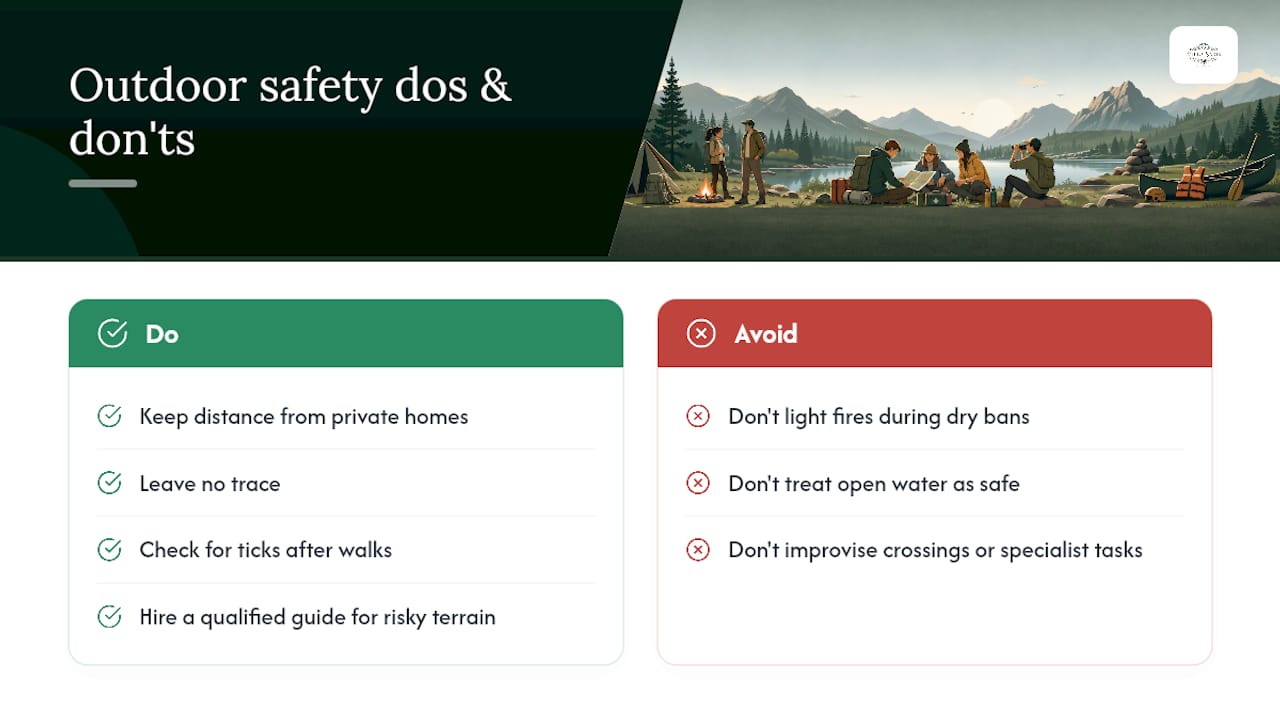
Sweden's allemansrätten (the right of public access) allows walking, foraging and camping on most land, but it comes with real obligations: keep a respectful distance from private homes, leave no trace, and never light fires during dry-ground bans. Ticks are a genuine seasonal risk from spring to autumn, so check skin after forest walks; ice and cold water carry real danger in winter and early spring, and open water should never be treated as safe without checking local conditions first. For anything involving specialist equipment, water crossings, or terrain you don't know, book a qualified guide rather than improvising.
What an experienced host wants you to know
Most friendship trips fail not from a bad destination but from over-scheduling. The groups that come back happiest picked one or two anchors, assign clear roles before arrival, and chose accommodation with enough shared space that the "activity" could simply be sitting together. A house that lets everyone gather around one table does more for a friendship trip than a third excursion ever will.
— Christian
Book a house that does the hard work for you
Some properties offer a whole historic log house with amenities like a sauna, direct lake access, and surrounding forest and meadows, enabling groups to enjoy anchor activities on-site without needing transport.
A sample weekend might run like this: arrival and a shared dinner on the first night, a guided forest walk or lake session as the trip's anchor activity the next morning, a sauna evening with a communal cooknight to follow, and a slow, unhurried departure on the last day. The self-catering kitchen means meals stay flexible and cheap per head, and because the whole property is yours, there's no need to coordinate around other guests or shared corridors. For groups who'd rather arrive somewhere restorative than spend the first evening working out logistics, The House has the space and privacy to make that possible. Check availability and enquire about dates on the Villa Sakis booking page to see whether it suits your group's timing.
Where to go for more planning inspiration
For broader seasonal activity ideas, the STF activity hub covers hiking, paddling and skiing year-round. For bookable group experiences, see activity marketplaces and instructor-led adventure providers, or explore combining food and lodging via this gastronomy and lodging guide.
Sources
- En Grupp Som Provar — group travel reflections
- Aktiviteter i Sverige – upplevelser året runt | STF
- Aktiviteter till företagsevent, kick off & teambuilding
- Aktiviteter - Fartfyllda äventyr, kreativa samtal eller festlig ...
FAQ
What can you do for activities with friends?
Outdoor options like hiking, paddling and cycling work well as anchor activities, alongside cultural visits, guided cooking sessions and simple low-key social time such as a shared meal or sauna evening. The STF activity hub lists seasonal options that suit most fitness levels and budgets.
What fun team activities can a group do together?
Instructor-led options such as archery, axe-throwing and multi-discipline challenge courses are widely bookable and scale well for groups of eight or more. Adventure activity providers run most sessions in two to three hours, which keeps energy high without exhausting the group.
What can you do if you're bored with a friend?
A short walk, a DIY quiz using questions each person writes themselves, or a simple outdoor game like frisbee or rounders all need no booking and almost no preparation. These scale easily from just two people to a much larger group later in the trip.
How long should a friends trip base itself in one place?
Two to three nights per base tends to work best, since it cuts transit time and gives the group more shared downtime rather than packing and moving constantly. Choosing accommodation that can host the whole group together, such as Villa Sakis, also reduces the daily logistics of coordinating separate rooms or properties.
Does Villa Sakis suit a group of friends?
Yes; the whole house is rented privately, with a sauna, lake access and a self-catering kitchen that supports communal cooking and shared downtime. Current pricing and availability are listed on the booking page.