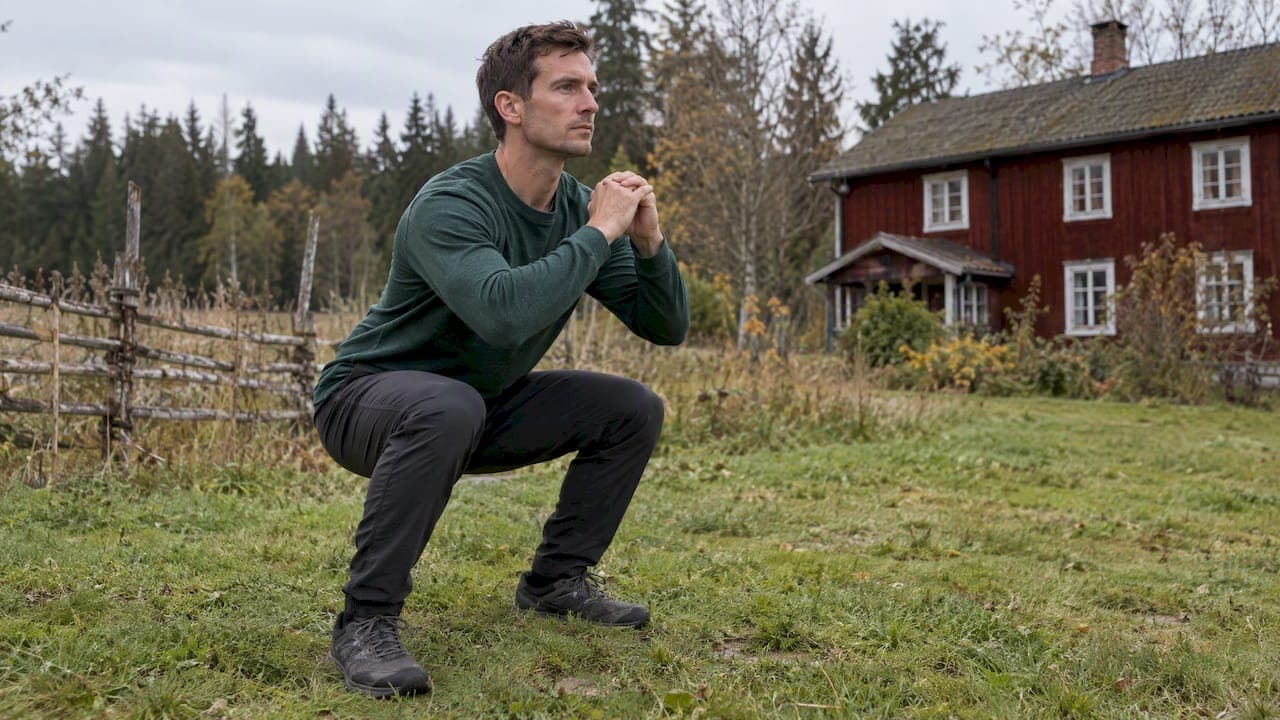
You can train effectively outdoors without equipment, and a balanced session can include a short warm-up, bodyweight strength, a cardio block and a gentle cool-down. Stacked across a week, sessions like this can meet the WHO Europe activity recommendations, the same guidance Folkhälsomyndigheten follows. This guide gives you the templates, the cues and the safety checks.
TL;DR:
- Adults should aim for 150–300 minutes of moderate or 75–150 minutes of vigorous activity weekly, with muscle strengthening at least twice.
- A beginner session takes about 20–30 minutes, including a 5–10 minute warm-up, five exercises, and two to three rounds with rests.
- The HIIT template alternates one minute fast with one minute easy for ten rounds; beginners can reduce pace or repetitions.
- Increase repetitions or rounds before reducing rest or using harder variations, and change only one training variable at a time to judge its effect.
- Before using park equipment, check for movement and damage, assess the surface, and ensure room to move; use floor exercises if conditions are unsafe.
Table of Contents
- What should a no-equipment outdoor session include?
- Which sample routines can I start today?
- What bodyweight moves should I know, and how do I progress them?
- How can I use park features and terrain safely?
- How do I warm up, cool down and avoid injury?
- How often should I train, and how do I progress week by week?
- How do I stay motivated when training outdoors without equipment?
- What mistakes should I avoid during no-equipment outdoor workouts?
- How do I track progress and set realistic goals outdoors?
- Host tips from Villa Sakis: training on a countryside stay
- FAQ
- Sources
What should a no-equipment outdoor session include?
Think of the session as four short chapters. Each one has a job, and including them can make a session feel more balanced.
- Warm-up: a brisk walk or light jog, then dynamic mobility such as arm circles, leg swings and hip rotations. Walking to the park can double as the first half of this.
- Strength: full-body bodyweight moves for legs (squats, lunges), push (push-ups) and core (planks). Pulling is the awkward one without a bar, so we lean on single-leg hip hinges to work the back of the body instead.
- Cardio: brisk walking, running, stair climbs or hill repeats. A simple interval alternates fast and easy efforts. Beginners can reduce the pace or number of repetitions. If jumping bothers your knees, swap sprints for fast walking up a slope.
- Mobility and cool-down: a slow walk, then gentle stretching held only within a comfortable range.
Why it counts: the WHO Europe fact sheet recommends adults get 150–300 minutes of moderate aerobic activity a week, or 75–150 minutes of vigorous activity, plus muscle-strengthening for all major muscle groups at least twice a week. One well-built outdoor session can tick both boxes.
The MedlinePlus outdoor fitness routine splits outdoor training into aerobic work, strength, flexibility and balance, which is a useful checklist when you are planning a week rather than a single visit.
A practical point for newcomers: the weekly total matters more than any single perfect workout, as WHO's physical activity initiative stresses. Regular, achievable sessions beat a heroic first day followed by a fortnight of recovery.
Which sample routines can I start today?
Here are three templates. These templates include a warm-up and cool-down. Adjust the session length to your needs. Choose one, do it as written for a couple of weeks, then scale it.
Beginner routine
A typical beginner session on MedlinePlus combines a 5–10 minute warm-up with five bodyweight exercises, done for 5–10 repetitions or short timed intervals, for two to three rounds with rest between sets.
- Warm up for 5–10 minutes with a brisk walk and easy mobility.
- Squat, 5–10 repetitions.
- Reverse lunge, 5–10 repetitions per leg.
- Push-up (knee or incline version if needed), 5–10 repetitions.
- Hip bridge, 5–10 repetitions, squeezing at the top.
- Plank, a short timed hold, stopping while your form is still clean.
- Rest a few minutes, repeat for 2–3 rounds in total, then walk to cool down.
Intermediate circuit
Keep the same movements and adjust the repetitions and rest to your ability. You can build toward three sets of 15 repetitions. Add mountain climbers as another station if you like. The goal is a steady, breathless-but-controlled rhythm rather than racing.
HIIT template
Warm up for five to ten minutes. Then run one minute fast and one minute easy, ten times. The interval format comes from the Healthline warm-up and cardio guidance, which also suggests beginners reduce pace or repetitions. Good outdoor options include stair runs, sprints along a path or a bodyweight circuit; Healthline's outdoor workout ideas note that outdoor interval training needs little or no equipment. For lower impact, replace sprints with fast walking uphill or step-ups on a low, stable step.

Pro Tip: Scale by changing one thing at a time: either the repetitions, or the rest, or the interval pace. Changing all three at once makes it impossible to tell what is working.
To make any template easier, shorten the holds, use incline push-ups and cut a round. To make it harder, add repetitions, slow the lowering phase of each move or trim the rest.
What bodyweight moves should I know, and how do I progress them?
You do not need many exercises. You need a handful you can do well, with an easier and a harder version of each.
- Squat: feet shoulder-width apart, chest up, sit back as if toward a chair. Easier: squat to a bench. Harder: pause briefly at the bottom, or move to a split squat.
- Lunge: step back, lower under control, push through the front heel. Easier: shorter steps, holding a rail for balance. Harder: walking lunges across a lawn.
- Step-up: drive through the heel of the leading leg onto a stable step or low bench. Harder: slow the lowering phase.
- Push-up: body in one line from head to heels. Easier: knees down or hands on a bench. Harder: feet raised on a bench for a decline version. If you use a bench, test it for movement first.
- Plank: forearms down, hips level, breathing steadily. Easier: from the knees. Harder: side planks or shoulder taps.
- Mountain climbers: from a high plank, drive the knees in turn toward the chest. Slow them down on wet or rough ground.
- Hanging knee raises: only where a bar is clearly safe, dry and solid.
- Pulling alternatives: the MedlinePlus routine notes it is harder to target the back directly without a bar. Where a sturdy bar exists, inverted rows are an option. Otherwise, single-leg hip hinges (a slow bow forward on one leg) train the muscles along the back of the body, and good posture work fills part of the gap.
- Jump squats and jumping jacks: quick conditioning options. Do them on grass rather than asphalt, and skip them if your joints complain.
If you want more depth on building strength away from a gym, our article on strength training without a gym goes through it at home and outdoors.
How can I use park features and terrain safely?
A public park can offer useful places to exercise, but inspect any equipment before using it. Municipal outdoor gyms in Sweden are often free and open to everyone, as Helsingborg's utegym page describes, with no membership card or set opening hours. That can make a spontaneous session convenient.
Before you use anything, check:
- Stability: push and pull on benches, rails and bars. Anything that wobbles, shifts or creaks stays unused.
- Condition: look for splinters, rust, loose bolts and cracked paint.
- Surface: wet wood and slick metal are poor grips. If conditions are bad, switch to floor-based moves such as squats, lunges and planks.
- Space: make sure you have room to step off and fall safely.
Benches work well for incline push-ups, step-ups and, once you are confident, dips. To test for tipping, sit on the near edge and rock your weight. If it moves, choose another bench or a lower step.
Terrain changes the work. Grass can be uneven, while asphalt is a firmer surface. Choose a surface and movements that feel comfortable and stable. Finish on a calm walk either way.
Pro Tip: Do your hardest balance moves on firm ground and your jumping on grass. It can help you choose movements that feel more comfortable and stable.
A final courtesy: leave shared equipment as you found it, keep the way clear for other users and move aside when someone needs a particular station.
How do I warm up, cool down and avoid injury?
A gradual warm-up and a controlled finish can help make a session feel more comfortable. A sensible order keeps both in check.
- Walk briskly to raise your heart rate.
- Add dynamic mobility: arm circles, leg swings, hip rotations and a few bodyweight squats.
- Start the main session with the easiest version of each move.
- Finish with a slow walk until your breathing settles.
- Stretch gently, holding each position within a comfortable range and never into pain.
Healthline recommends 5–10 minutes of dynamic warm-up and advises avoiding very hard moves such as burpees at the start. If your technique falters, consider an easier variant such as knee push-ups or elevated squats.
For progression, raise volume before intensity: more repetitions or rounds first, then shorter rest or harder variations. Stop exercising and seek immediate emergency care if you experience sharp pain, severe dizziness or chest discomfort.
Footwear matters more than most people expect. Wear shoes with grip for grass and cushioning for hard surfaces, and shorten your session if the ground is icy or soaked.
How often should I train, and how do I progress week by week?
Start from the adult guidance in the WHO Europe fact sheet: 150–300 minutes of moderate activity or 75–150 minutes of vigorous activity weekly, plus muscle-strengthening at least twice a week. It also notes that all movement is better than none.
Your minimum target: muscle-strengthening at least twice a week, according to WHO Europe. Two of the routines above already cover it.
Here are three sample weeks.
- Short on time: two 20-minute strength circuits plus a brisk 30-minute walk on other days.
- Moderate time: a strength circuit, an interval session and a long walk, with rest days between.
- More time: alternate circuits and interval sessions, add a hill walk and take one full rest day.
To progress, add a few repetitions or a round first, then trim rest, then raise interval effort. Treat recovery as part of the plan, not an apology for missing a day.
If you are new, begin with shorter sessions and aim for consistency. Regular, manageable sessions can be more sustainable than a single punishing workout.
How do I stay motivated when training outdoors without equipment?
Motivation is mostly logistics. Make it easy to start and hard to talk yourself out of.
Pick a fixed slot, perhaps straight after breakfast, and lay out your shoes the evening before. Give the session a single place: the same bench, the same patch of grass. Familiar ground lowers the threshold to begin.
Keep a short fallback routine for the days energy is low. A shortened session still counts toward the week, and it keeps the habit alive.
Vary the scenery rather than the effort. A lakeside path on Saturday and a quiet lane on Tuesday keep the same workout feeling fresh. Training with a friend adds gentle accountability, and a shared plan makes cancelling feel awkward in the best way.
Finally, let weather be a decision rather than an excuse. Rain on a Tuesday means a shorter session under a tree or at a sheltered bench. Sun on a Sunday means the long one.
What mistakes should I avoid during no-equipment outdoor workouts?
A few errors repeat themselves.
Skipping the warm-up. Stepping straight into jumps on cold muscles is the quickest route to a strain. Give yourself time to warm up.
Starting with the hardest moves. Burpees and deep jumping work look efficient, but poor technique piles up quickly. Begin with easier versions and earn the harder ones.
Trusting equipment blindly. A bar or bench that looks solid may not be. Test it, or choose floor-based moves instead.
Ignoring surface and weather. Wet or uneven surfaces can affect how stable a movement feels. Adjust the exercise, not just your confidence.
Doing too much, too soon. Changing volume and intensity together can make it harder to judge how your body is responding. Change one variable at a time.
Forgetting balance in the plan. Many people push and squat plenty but neglect pulling and mobility. Add hip hinges, a gentle stretch and a slow cool-down walk to even things out.
Training through pain. Pay attention to how your body feels, and stop if you experience sharp pain.
How do I track progress and set realistic goals outdoors?
Without machines and weights, progress needs a simple, honest record. A notebook or a phone note works well.
Log what you did: the routine, the rounds, the repetitions and how it felt. After a few weeks, patterns appear. Perhaps your push-ups have progressed to a harder variation, or your interval workout feels more manageable.
Choose measures that fit the setting:
- Repetitions completed in a consistent, self-chosen time.
- Plank hold length with clean form.
- Time to walk or jog a familiar loop.
- How many intervals you finish at the same pace.
Set goals you can verify, such as completing the intermediate circuit without extra rest. Those are specific, and they reward behaviour you control.
Retest the same measures every few weeks, in similar conditions, so the comparison is fair. Weather and sleep change numbers, so look for the trend rather than a single day.
Host tips from Villa Sakis: training on a countryside stay
Holiday training works best when it is small, gentle and fits around the day. In a farmhouse setting, meadows and forest surroundings do most of the work for you. Choose a comfortable outdoor spot for your workout.
Keep mornings short. A little walking, mobility and a handful of squats before breakfast can set the tone without eating into the day. For the evening, choose restorative movement: slow stretching, easy walking, and a few minutes of calm breathing. Our forest breathing routine pairs well with that, and our notes on low-pressure training on holiday offer ideas for fitting movement into a relaxed schedule.
Keep courtesy in mind. If you train near fields or private land, stay on paths, leave gates as you found them and give animals and neighbours space. On shared facilities, share the equipment.
Eating well supports all of this, and this healthy eating on holiday guide has practical ideas. If you would like a quiet base for it, you can look at our farmhouse and book your stay.
— Christian
FAQ
Can I get a full workout without any equipment?
Yes, a full session is possible with bodyweight moves alone. Combine squats, lunges, push-ups and planks with walking or interval cardio, and finish with a cool-down. Adults should also include muscle-strengthening at least twice a week, as WHO Europe recommends.
How long should a beginner outdoor workout last?
Aim for roughly 20–30 minutes in total. That covers a 5–10 minute warm-up, five bodyweight exercises and two to three rounds with rest, following the MedlinePlus beginner outline.
Are outdoor gyms free to use?
Many municipal outdoor gyms in Sweden are free and need no membership or booking. Helsingborg describes its utegym as free, without a gym card or set opening hours.
What should I do if I have no pull-up bar?
Focus on movements that train the back of the body, such as single-leg hip hinges. Without a bar it is harder to target the back directly, so keep pulling work light and add it only where a bar is clearly safe.
Is it safe to do HIIT outdoors?
Generally yes, if you warm up first and choose safe ground. Start with easier moves, keep intervals manageable and avoid slippery surfaces. Healthline notes outdoor interval training needs little or no equipment.