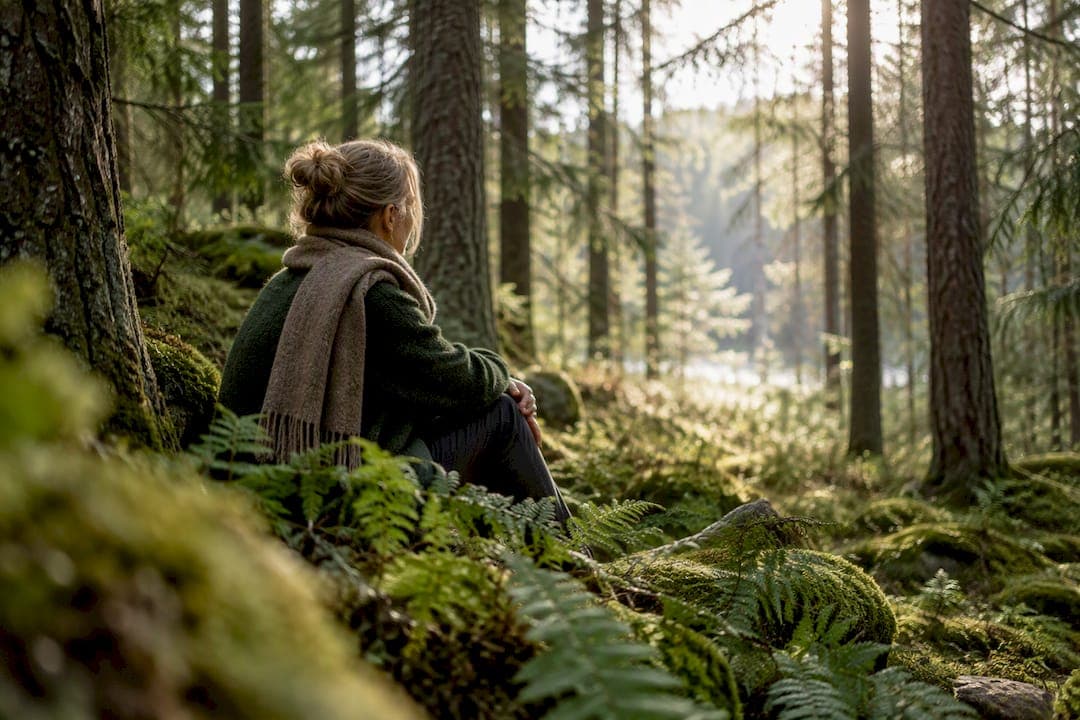
Skogsbada, known internationally as shinrin-yoku, is a slow, sensory way of spending time among trees, and a single short session can leave you with calmer attention and a lighter sense of stress. It works by inviting you to notice, rather than to exercise. Think of it as a supportive habit for everyday wellbeing, not a medical treatment or a cure for anything more serious.
TL;DR:
- Short sessions of twenty minutes or less are effective for beginners and can be easily integrated into daily routines, especially in urban green spaces.
- Evidence of health benefits, including heart-rate reduction and mood improvement, is promising but remains low-certainty, so skogsbada should be seen as a supportive habit.
- The activity emphasizes noticing sensory details rather than covering distance, making it accessible and beneficial even on simple parks, gardens, or urban settings.
- Longer sessions of 60 to 90 minutes are suitable for weekends once the habit is established, with adaptations for limited mobility or small outdoor spaces.
- Safety precautions include checking weather and terrain, respecting private land rules, and adapting sessions for health conditions or mobility limitations.
Table of Contents
- What skogsbada actually means, and how it differs from a walk
- What the evidence shows, and where it falls short
- How to skogsbada: a step-by-step first session
- Kit, timing and building the habit
- Staying safe and respecting shared land
- Putting skogsbada into practice at Villa Sakis
- A note on realistic expectations
- A restorative stay at Villa Sakis
- Sources
- FAQ
What skogsbada actually means, and how it differs from a walk
The word combines the Swedish for forest and bathing, echoing the Japanese term shinrin-yoku, which translates roughly as "forest bathing" and describes immersing the senses in a wooded setting rather than covering distance. It began as a practice encouraged in Japan in the 1980s and has since spread into wellbeing routines across many countries.
A skogsbada session is built from three things: a slower pace than ordinary walking, a series of sensory invitations that draw attention to sound, smell, texture and light, and a period spent still in one place, often called a sit-spot. A 2024 scoping review frames this through what it calls the Forest Therapy Conceptual Model, which separates the person, the forest setting, the interaction between them and the outcome, a structure that helps explain why pace and attention matter more than mileage. The most common beginner mistake is treating it as a brisk hike: the value comes from noticing, not from steps covered.

What the evidence shows, and where it falls short
The research on forest bathing is encouraging but modest, and it is worth being honest about both sides. A 2026 systematic review screened 718 records and included 11 studies, finding an average heart-rate reduction of around 4 beats per minute alongside lower tension-anxiety and depression-despondency scores. The same review rated the certainty of this evidence as very low, citing considerable variation between studies.
A 2026 systematic review found forest bathing linked to a mean heart-rate drop of roughly 4 bpm and improved mood scores, though the certainty of evidence was rated very low. That gap between promising results and weak certainty matters: it means the direction looks encouraging, but the size and reliability of the effect are not yet settled.
Earlier work points the same way. Systematic reviews from 2017 and 2019 describe consistent but low-certainty signals for mood and some physiological measures, and call for larger, better-designed trials before firmer claims can be made.
Population-level evidence adds a different, more practical angle. Sweden's Public Health Agency notes that people living near green space visit it more often, and that this proximity is linked to better stress management, concentration and everyday wellbeing. None of this supports treating skogsbada as a clinical intervention. It supports treating it as a complementary, low-risk habit worth building into ordinary weeks, and that is the framing this guide uses throughout.
How to skogsbada: a step-by-step first session
You do not need a forest reserve or specialist kit to begin. A tree-lined park, a woodland edge or a quiet path with some greenery is enough for a first attempt.
- Choose a familiar, safe spot within easy reach, ideally somewhere you could return to often rather than a once-only destination.
- Arrive and pause for a minute before moving: put your phone on silent, take three slow breaths, and let your shoulders drop.
- Walk slowly, well below your normal pace, using sensory invitations: notice five sounds, then the temperature of the air on your skin, then a scent carried on the breeze.
- Choose a sit-spot, somewhere you can settle for 10 to 20 minutes, and simply observe light, movement and sound without narrating it to yourself.
- Close gently, with a few slow stretches, a warm drink if one is to hand, and a moment to notice how your attention feels compared with when you started.
Pro Tip: Keep your first few sessions short and close to home. A twenty-minute version done weekly builds the habit faster than one long trip done rarely.
For beginners, twenty minutes is plenty. A longer version, stretching to 60 to 90 minutes, allows time for several sit-spots and works well as a weekend routine. If mobility is limited, the whole session can be adapted into a single seated sit-spot near a window, doorway or bench, since the sensory attention matters far more than distance covered.
Kit, timing and building the habit
You do not need much to start, and that is part of the appeal.
- Clothing: layers suited to the weather, plus sturdy, comfortable footwear.
- Water: a small bottle, particularly for longer sessions.
- A small mat or cushion: useful for sit-spot comfort on damp ground.
- Phone: carried for safety, set to silent or aeroplane mode during the session itself.
Short daily sessions of ten to twenty minutes suit weekday routines, while a longer weekend outing gives more room for stillness. Seasonal light changes the experience considerably: winter sessions reward warmer layers and shorter durations, while long summer evenings suit an unhurried closing ritual outdoors. Habits stick best when paired with something you already do, a cup of tea afterwards, a sauna, or a regular walk, so the sit-spot becomes an addition rather than a new obligation.
Staying safe and respecting shared land
A little preparation keeps skogsbada straightforward and enjoyable.
- Tell someone your plans if you are heading somewhere unfamiliar or going alone.
- Check the weather and terrain beforehand, and dress for both.
- Watch for ticks and insects, particularly when sitting still in longer grass or undergrowth.
- Respect private land and local access rules, and follow Leave No Trace principles wherever you go.
Accessibility matters too: a sit-spot in a garden, a bench in an urban green space, or a shortened seated template all count as genuine skogsbada, and often prove easier to repeat than a longer trip into deeper woodland. That repeatability, choosing what is nearby over what is impressive, tends to matter more for building a lasting habit than the size of the forest itself.
Putting skogsbada into practice at Villa Sakis
A private house surrounded by forest and meadow, with lake access and a sauna close by, makes repeatable sessions genuinely easy rather than aspirational. Guests can begin at a lakeside sit-spot in the morning, spend time in a sauna, then return to a short seated session before settling at a table to note down what they noticed. That rhythm, pairing sauna warmth with quiet outdoor stillness, mirrors the habit-pairing that helps skogsbada stick once you are home again.

Pro Tip: If you are staying somewhere with easy forest access, choose one sit-spot for the whole visit rather than a new one each day. Familiarity deepens the noticing.
A note on realistic expectations
Guests often mention that it is the small, repeated pauses, not one dramatic outing, that leave them calmer by the end of a stay. Skogsbada rewards modest, regular attention rather than a single perfect session. Start short, stay curious about what you notice, and let the changes arrive quietly.
— Christian
A restorative stay at Villa Sakis
This accommodation offers whole-house privacy in an eighteenth-century log farmhouse, with direct access to forest and meadow, lake swimming, a sauna and a self-catering kitchen, all features that make a repeatable skogsbada routine easy to build into a short stay rather than something you have to plan around.
A restorative two to three day visit might include a slow forest walk and sit-spot on arrival afternoon, a sauna and lakeside sit-spot the next morning, and a final quiet walk before departure.
- Explore The House for availability and details.
- Read more about the property on The House page.
- Browse the Journal for seasonal ideas and guest routines.
If you are still weighing up accommodation options generally, a guide to choosing holiday homes covers useful factors to consider before booking anywhere. Villa Sakis offers no published price for The House; details are available on request through the booking pages above.
This article is general information, not a substitute for advice from a qualified doctor. Consult a qualified healthcare professional about your own circumstances before acting on anything here.
Sources
- PubMed: 2026 systematic review on forest bathing
- Shinrin-Yoku: A scoping review (PMC)
- Folkhälsomyndigheten: outdoor recreation and health
- International reviews on forest therapy and health (2019)
FAQ
What is skogsbada in simple terms?
Skogsbada is a slow, sensory way of spending time in nature, focused on noticing sound, smell and light rather than covering distance. It shares its meaning with the Japanese term shinrin-yoku, or forest bathing.
How long should a beginner session last?
Twenty minutes is enough for a first attempt, and a 2026 systematic review included studies with varied session lengths while still finding mood and heart-rate benefits. Longer sessions of 60 to 90 minutes suit weekends once the habit feels familiar.
Does forest bathing have proven health benefits?
Research shows encouraging signals, including a mean heart-rate reduction of around 4 beats per minute and improved mood scores in a 2026 review, but the same review rates this evidence as very low certainty. It is best treated as a supportive wellbeing habit rather than a clinical treatment.
Can I practise skogsbada without a big forest nearby?
Yes, a park, garden or urban green space works well, and public-health guidance notes that nearby, frequently visited green space is linked to stronger everyday wellbeing than occasional trips further afield. A seated sit-spot is a valid adaptation for anyone with limited mobility.
Is skogsbada safe for everyone?
For most people it carries little risk beyond ordinary outdoor precautions such as checking weather, terrain and ticks. Anyone with a health condition affecting mobility or circulation should treat it as a gentle, low-effort activity and adapt the session, such as staying seated, rather than pushing pace or distance.