
Yes. Short, intentional periods of silence measurably lower physiological stress and sharpen mood and attention. A two-minute pause after music has been shown to reduce heart rate and blood pressure more effectively than slow, relaxing music alone, and controlled studies link brief silent intervals to improved present orientation and relaxation. Environments with low ambient noise appear to support this recovery best.
- Try a two-minute silent pause before your next meeting or meal
- Notice your breath rate slow within the first thirty seconds
- Aim for quiet spaces under 30 dB when you can find them
Pro Tip: Set a phone timer for two minutes, sit somewhere without music or conversation, and simply notice what your body does. Most people feel their shoulders drop before the timer ends.
Key Takeaways
Short, intentional silence lowers stress hormones and heart rate while improving focus and mood, with effects measurable in as little as two minutes.
| Point | Details |
|---|---|
| Start small | A one to two minute silent pause already produces measurable heart rate and blood pressure changes. |
| Mind the decibels | Aim for environments under roughly 30 dB; noise above 70 dB is linked to increased stress and inflammation. |
| Choose structured quiet | Silence paired with a directed mental task produced stronger relaxation effects than passive silence alone. |
| Expect initial discomfort | Early unease during silence often reflects a temporary vagal brake release, not harm. |
| Favour organic quiet | Natural ambient sound, like birdsong or wind, tends to support recovery better than sterile silence. |
This article is general information, not a substitute for advice from a qualified doctor. Consult a qualified healthcare professional about your own circumstances before acting on anything here.
Table of Contents
- Tystnadens effekt på hälsa: how silence works in the body and brain
- What the research shows about silence and recovery
- What benefits can you actually expect from silence?
- How to add silence to your day without a retreat
- When silence can backfire, and how to adapt
- The Villa Sakis approach to organic quiet
- Sources
Tystnadens effekt på hälsa: how silence works in the body and brain
The nervous system treats silence as a signal to stand down. When sound drops away, the body tends to shift towards a calmer autonomic balance associated with social safety. This is the core mechanism behind the impact of silence on health, and it is well documented in a systematic review of 37 studies examining silence and autonomic function.
The measurable effects follow a clear chain. Cortisol and adrenaline, the two main stress hormones, taper off. Heart rate slows and blood pressure eases, changes the Cleveland Clinic has documented in patients practising brief daily silence. In the brain, the auditory cortex stops processing incoming noise, and activity in the amygdala, the region driving threat response, tends to settle.
Not all quiet works equally well. Ambient sound above roughly 70 decibels, think traffic or an open-plan office, is associated with elevated inflammation markers and sustained stress responses. Below about 30 decibels, closer to a whisper or a still forest clearing, the body tends to shift towards recovery instead. This matters because "organic" quiet, birdsong, wind through pine trees, a distant stream, differs from sterile, engineered silence. The nervous system generally responds better to natural low-level sound than to a soundproofed room with no acoustic texture at all.
- Sympathetic activation drops as ventral vagal tone rises
- Cortisol and adrenaline decrease with sustained quiet
- Heart rate and blood pressure may ease within minutes
- Auditory cortex and amygdala activity settle
Pro Tip: Judge a soundscape by texture, not volume alone. A quiet room with a ticking clock can feel more agitating than a slightly louder outdoor space with natural, irregular sound.
What the research shows about silence and recovery
The strongest evidence comes from a handful of distinct study types, and it is worth knowing which is which before you decide how much weight to give a claim.
Controlled experimental work, including waiting-room and "just thinking" conditions, found that a few minutes of quiet increased relaxation and present orientation, with silence combined with directed reflective mental tasks (DRMT) or habitual mental tasks (HMT) producing stronger effects than silence alone. This was human, randomised, and directly practical: it suggests structured quiet beats passive quiet.

The two-minute post-music cardiovascular study, cited widely by the Cleveland Clinic, found that a short silent pause after music lowered heart rate and blood pressure more than continued listening to calm music. The takeaway: silence itself, not just quiet music, is the active ingredient.
An animal study offers a longer-range signal. Mice exposed to two hours of near-silence daily showed increased hippocampal neurogenesis, the growth of new brain cells in a region tied to memory. It is a preclinical finding, so it cannot be assumed to transfer directly to humans, but it points towards a biological mechanism worth taking seriously.
Finally, the systematic review ties these findings together: inner silence supports autonomic recovery, while unfamiliar outer silence can briefly raise alertness in untrained individuals.
What benefits can you actually expect from silence?
The physical and mental gains from regular quiet time are consistent across the research, even if the size of the effect varies by person.
On the physical side, expect potentially lower blood pressure, a slower resting heart rate, reduced cortisol, and a lower inflammation risk tied to chronic noise exposure. Working or studying in silence has also been shown to reduce cognitive load and stress compared with background speech, according to a 2021 study of 59 participants.
Psychologically, people often report deeper relaxation, less rumination, and a stronger sense of present orientation after silent intervals. Concentration, creativity, and sleep quality often improve with consistent practice.
- Potential for lower blood pressure and reduced resting heart rate
- Possible reductions in cortisol and inflammation risk
- Less rumination and improved present-moment focus
- Improvements in concentration, creativity, and sleep quality are often reported
Not everyone responds identically. Introverts often report faster, more pronounced relaxation from silence, while extroverts sometimes need a gentler introduction, perhaps starting with natural ambient sound rather than absolute quiet. Training matters too: the more familiar you become with silence, the faster your nervous system settles into it.
How to add silence to your day without a retreat
You do not need a week away to benefit. The research points towards small, repeatable practices that scale up as comfort grows, echoing what clinicians at the Cleveland Clinic recommend to patients starting from zero.
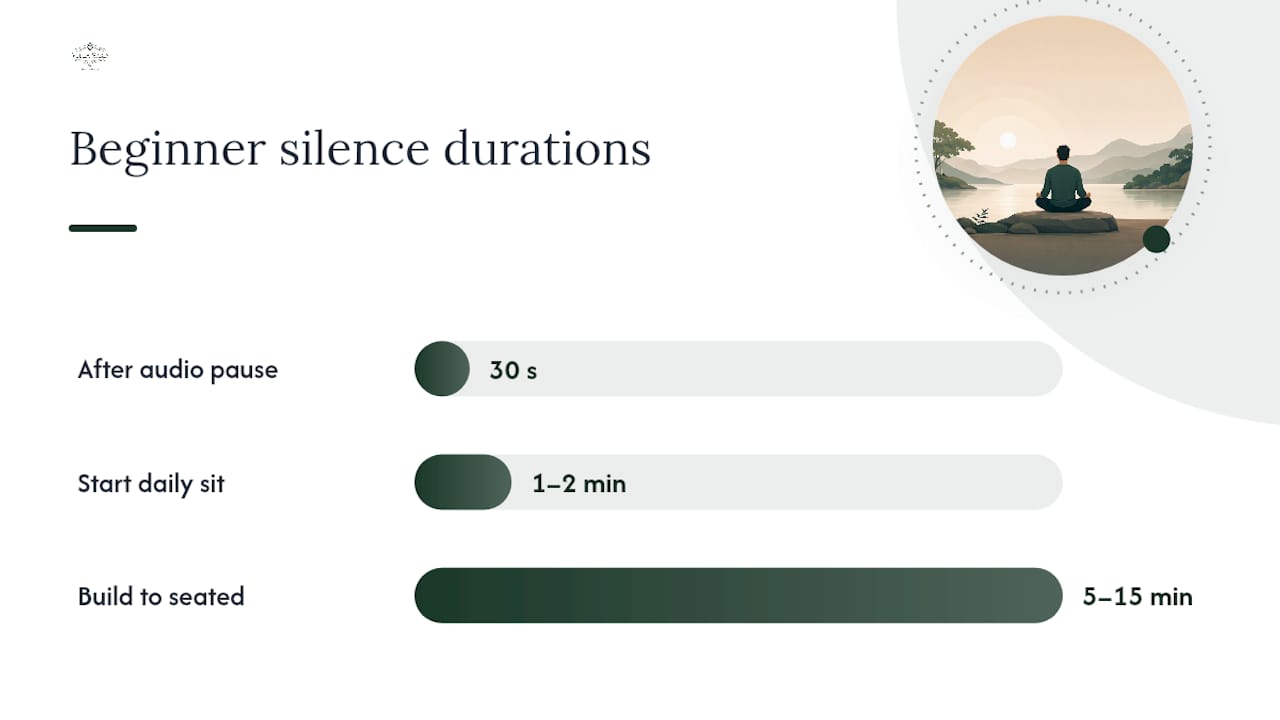
- Start with one to two minutes. Sit without music, notifications, or conversation. This single habit, repeated daily, is where most of the measurable cardiovascular benefit begins.
- Let music end in silence. After any song or podcast, resist the urge to queue the next one immediately. Sit in the quiet for thirty seconds first.
- Take a device-free coffee. One drink a day, no phone, no radio. Notice how much longer it takes to reach for something to fill the gap.
- Walk without headphones. Even ten minutes of silent walking outdoors combines movement with the autonomic benefits of natural, low-level sound.
- Build to five to fifteen minutes. Once short pauses feel comfortable, extend into a seated practice, ideally paired with a directed mental task rather than pure blankness, which the DRMT/HMT research suggests deepens the effect.
Aim for environments under roughly 30 decibels where you can find them, a garden at dawn, an empty room, a forest path. When true silence is not available, natural ambient sound is the next best option; it tends to support the ventral vagal response better than mechanical background noise like air conditioning or traffic hum.
Pro Tip: If total silence feels uncomfortable at first, that discomfort is common and usually temporary. Start with natural sound, not a soundproofed room, and let the duration grow gradually rather than forcing a long sit on day one.
When silence can backfire, and how to adapt
Silence is not universally calming. For some people, particularly those unfamiliar with quiet or carrying unprocessed trauma, the sudden absence of external noise removes what researchers call the vagal brake, allowing internal thoughts and bodily sensations to surge into awareness. This can briefly increase anxiety rather than ease it.
Practitioners note that initial discomfort during silence commonly reflects a temporary release of the vagal brake rather than a sign that silence is harmful. With regular, progressive practice, the nervous system typically shifts towards calmer ventral vagal activity, making silence easier over time.
- Avoid long, unsupervised silence during acute trauma responses or severe anxiety episodes
- Try guided silence or brief micro-pauses instead of extended solo sitting
- Practise in a group or supervised setting if solo silence feels overwhelming
- Seek professional support if silence consistently triggers distress rather than relief
The Villa Sakis approach to organic quiet
At Villa Sakis, quiet is not manufactured. It arrives through open windows, meadow paths, and the particular hush of an 18th-century timber house set among pine forest. Guest flow is deliberately staggered, and the private sauna and lake access give people somewhere to sit with silence rather than simply endure an absence of noise.
Modern life has grown considerably louder than a century ago, which is part of why organic pockets of quiet matter more than they once did. Rather than asking guests to sit in a bare, soundproofed room, Villa Sakis leans on the nature immersion already built into its grounds, the kind of low-level, textured quiet the research suggests the nervous system responds to best.
Sources
- Waiting, thinking, and feeling: variations in the perception of time during silence - PMC
- How listening to silence changes our brains — Time
- An ode to silence: Why you need it in your life — Cleveland Clinic
- Are there health benefits to silence? Research says yes — Healthline