
Regular sauna use genuinely reduces anxiety. Research published in 2025 found that using a sauna 1–4 times monthly is linked to lower anxiety levels, with 66% of participants reporting improved general and mental health. The relief isn't incidental. Heat exposure triggers beta-endorphin release, activates the parasympathetic nervous system, and interrupts the loop of anxious rumination that keeps so many people stuck in their own heads.
The primary mechanisms behind sauna's calming effect include:
- Beta-endorphin release: Heat stimulates the same opioid pathways activated by exercise, producing a natural sense of calm.
- Parasympathetic activation: After the initial cardiovascular response, the body shifts into a rest-and-digest state, lowering heart rate and tension.
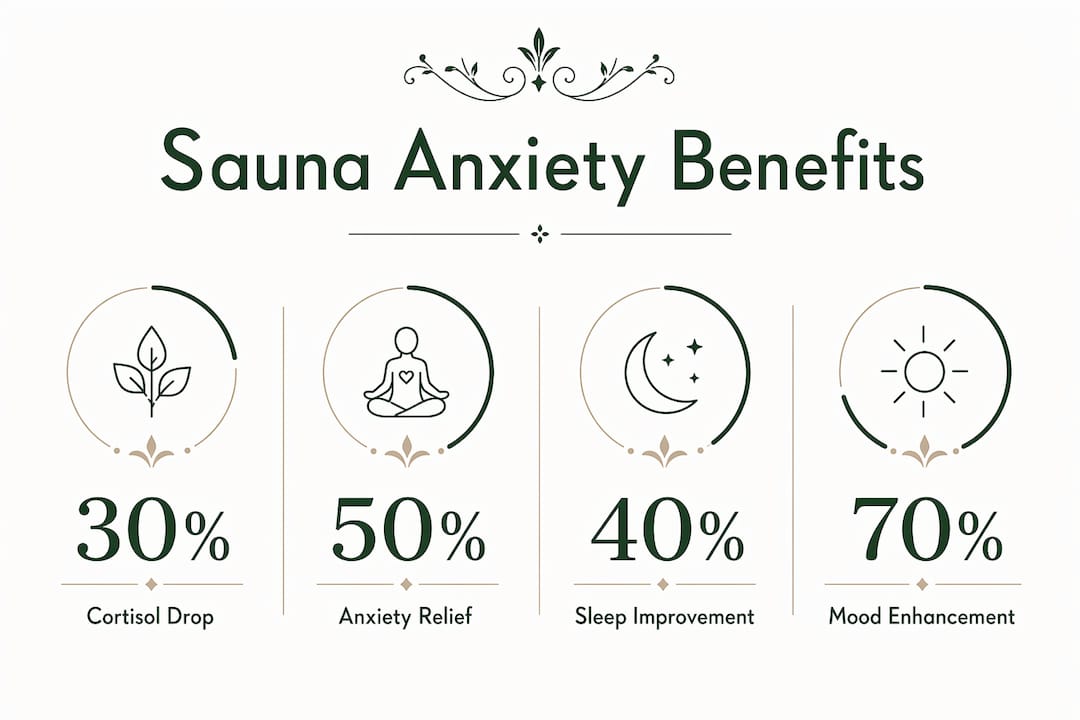
- Cortisol reduction: Regular sauna use reduces resting cortisol levels by about 29%, indicating lower chronic stress and anxiety.
- Rumination interruption: The enforced stillness of a sauna session forces mental disengagement from future worries, redirecting attention to immediate physical sensation.
How sauna use supports mental health beyond anxiety
The benefits extend well past anxiety relief. Regular sauna users report improved energy, better mood, deeper sleep, and fewer hypertension diagnoses, suggesting that heat therapy touches nearly every dimension of mental wellness.
Sleep quality, in particular, responds well to sauna use. The body's post-session temperature drop mirrors the natural cooling that precedes sleep onset, making it easier to fall and stay asleep. Better sleep, in turn, reduces the emotional reactivity that feeds anxiety the following day.
The nervous system benefits are equally concrete. Frequent sauna bathing improves heart rate variability, a reliable marker of how well the autonomic nervous system handles stress. Higher heart rate variability means the body recovers faster from stressors rather than staying locked in a heightened state. There's also a social dimension: communal sauna sessions contribute meaningfully to mental health outcomes, with cohort studies noting that shared bathing amplifies the mood benefits of solo use.
Additional mental health advantages include:
- Reduced symptoms of mild to moderate depression
- Greater mental clarity and reduced cognitive fatigue
- A sense of emotional reset after high-stress periods
- Improved stress resilience through repeated, controlled heat exposure
Recommended protocol for mental wellness: Sessions of moderate duration and temperature, performed multiple times per week, offer the most consistent benefits. Frequency matters more than extreme temperature or duration.
What the research actually shows about heat therapy and mental health
The science here is more specific than most wellness coverage suggests. A randomized trial of whole-body hyperthermia found that a single session can produce anxiety and depression relief lasting up to six weeks, driven by activation of heat-sensitive serotonergic pathways and beta-endorphin release. That's not a minor effect. Six weeks of measurable mood improvement from one session points to a genuine neurobiological mechanism, not a placebo response.

High heat exposure also increases heat shock proteins, which help reduce systemic inflammation. Since chronic inflammation is closely linked to depression and anxiety disorders, this pathway offers a physiological explanation for why consistent sauna use produces lasting mood improvements rather than just temporary relief.
Infrared sauna, which runs at lower temperatures for longer durations, appears to offer overlapping but distinct benefits compared to traditional Finnish-style sauna. Both formats activate heat-sensitive pathways; the choice often comes down to personal tolerance and access.
One finding that rarely makes it into popular coverage: the mental benefit of sauna derives not only from heat but from the enforced disconnection from screens and constant digital input. That stillness, uncommon in daily life, can be more effective than active meditation for people whose anxiety makes sitting quietly feel impossible.

Pro Tip: Benefits scale with frequency rather than intensity. Two to four moderate sessions per week consistently outperform occasional high-heat endurance sessions for mental health outcomes.
When to skip the sauna or approach it carefully
Sauna use is not appropriate for everyone, and knowing the contraindications matters as much as knowing the benefits.
Conditions and situations that warrant caution or avoidance:
- Cardiovascular conditions: Uncontrolled hypertension, recent heart attack, or arrhythmia require medical clearance before any sauna use.
- Pregnancy: Heat exposure poses risks to fetal development, particularly in the first trimester.
- Active fever or infection: Adding external heat to an already elevated core temperature increases the risk of overheating.
- Certain medications: Diuretics, beta-blockers, and some psychiatric medications alter how the body regulates heat and fluid balance.
- Severe anxiety or panic disorder: Rapid heart rate and flushing during a session can mimic panic attack sensations. Without prior education on this response, the experience can worsen anxiety rather than relieve it.
Beginners should start at moderate intensity, around 10–15 minutes per session, and build tolerance gradually. Cardiovascular responses during sauna can feel alarming at first. Understanding that a racing heart is a normal thermoregulatory response, not a sign of danger, prevents the misinterpretation that turns a calming ritual into a source of distress.
Safety practices worth keeping in mind:
- Hydrate before and after every session.
- Exit immediately if you feel dizzy, nauseated, or short of breath.
- Avoid alcohol before or during sauna use.
- Rest for at least 10 minutes after each session before resuming activity.
- Treat sauna as a complement to professional mental health care, not a replacement.
Villasakis: where sauna meets genuine stillness
At Villasakis, the sauna isn't an amenity. It's part of the rhythm of the place. The historic Swedish log farmhouse, built in the 1700s and surrounded by pine forest and open meadow, offers the kind of setting where the science of heat therapy and the experience of deep rest actually converge.

The retreat's private sauna, combined with direct access to forest and meadow, creates conditions that amplify the mental health benefits described throughout this article. Nature immersion after heat exposure deepens the parasympathetic response. The absence of screens, ambient noise, and the pace of modern life removes the stimuli that keep anxiety running in the background.
Pro Tip: Pair your sauna session with 15–20 minutes of quiet time outdoors afterward. The contrast between heat and cool air, combined with natural surroundings, extends the calming effect well beyond the session itself.
Villasakis welcomes guests seeking a slower, more restorative kind of stay, whether that means a week of quiet recovery from burnout or simply a few days of unhurried mornings and evening sauna rituals by the forest.
Key Takeaways
Regular sauna use reduces anxiety through measurable physiological changes, including cortisol reduction, beta-endorphin release, and improved heart rate variability, with benefits that scale with consistent, moderate use.
| Point | Details |
|---|---|
| Frequency over intensity | Two to four sessions per week produces better mental health outcomes than occasional high-heat sessions. |
| Cortisol reduction | Regular sauna use reduces resting cortisol levels by about 29%, indicating lower chronic stress and anxiety. |
| Six-week mood effect | A single whole-body hyperthermia session can produce anxiety and depression relief lasting up to six weeks. |
| Beginners need gradual exposure | Start at 10–15 minutes to avoid misinterpreting cardiovascular responses as panic symptoms. |
| Stillness is part of the benefit | Enforced disconnection from digital stimuli during sauna use offers a mental reset that active meditation often cannot replicate. |