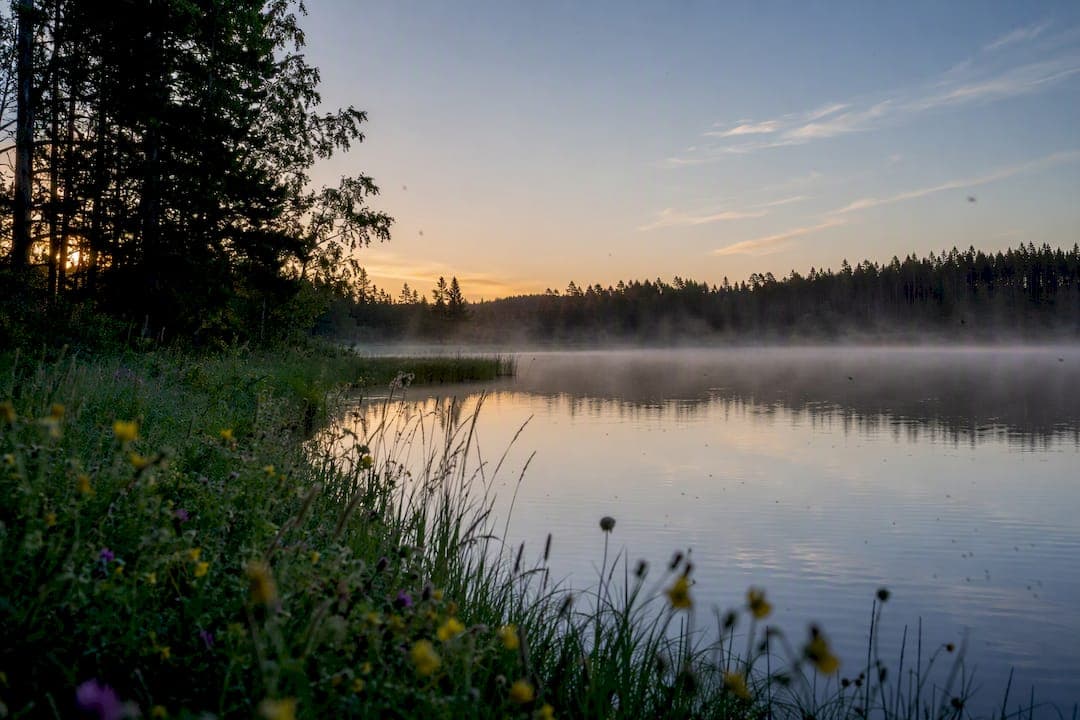
The most reliable way to handle mosquitoes in a Swedish forest is a layered defence: physical barriers, careful timing, and a repellent suited to how long you'll be out. No single product solves it. A mygghatt, a well-timed walk, and a targeted spray each solve a different part of the problem; the combination is what actually keeps you comfortable.
Before you set out, three things matter most:
- Cover cuffs, ankles and neck with a repellent that suits your exposure level, whether that's MyggA for a family walk or something stronger for a long evening sit.
- Wear light, loose, tightly woven clothing rather than relying on spray alone.
- Carry a head net or a stationary device such as a Thermacell for still moments around camp, and check SVA if you're heading somewhere with reports of unusual mosquito activity.
Key Takeaways
A layered defence combining timing, clothing, targeted repellents, and stationary devices like Thermacell is the most reliable way to manage mosquitoes in Swedish forests.
| Point | Details |
|---|---|
| Time your trip | Peak mosquito activity runs from midsummer to around 10 August, with regional variation between south and north. |
| Layer your defences | Combine loose, light clothing with a repellent matched to exposure length rather than relying on one measure alone. |
| Match the product to the situation | Use MyggA or Sjö & Hav for family trips, Care Plus DEET for high-exposure adult use, and Thermacell for seated moments. |
| Treat larvae, not landscapes | Use Bti for unavoidable standing water instead of broad insecticide spraying, which harms pollinators. |
| Choose a breezy, prepared stay | Villa Sakis offers screened sleeping areas, a windy terrace, and forest routes chosen to avoid boggy, mosquito-heavy ground. |
Where to check conditions and learn more
For live monitoring of species and outbreak patterns, SVA's research pages are the most reliable Swedish source. Krypfritt offers detailed species biology and product guidance, while Villa Sakis's journal covers guest-focused planning for a countryside stay.
Table of Contents
- Preparing before you head into the forest
- Tactics for managing mosquitoes once you're in the forest
- What to do if you get bitten
- Repellents and gear you'll actually find in Swedish shops
- Why Swedish conditions shape mosquito behaviour
- Sources
Preparing before you head into the forest
Timing shapes everything else. In southern Sweden, mosquitoes typically stir once night temperatures reach around 10°C, often from late April. Further north, that threshold arrives closer to early June. Wherever you are, the real crush comes from midsummer through to around 10 August, with a secondary flush possible after heavy September rain. Planning a forest trip around that window, rather than against it, saves you most of the trouble before you've even packed a bag.
Clothing does more work than most people credit. Loose, light-coloured, tightly woven fabric denies mosquitoes an easy landing spot and makes it harder for them to bite through material pressed against skin. For longer stretches in the forest, particularly at dusk, permethrin-treated garments are worth considering. They're a specialised option rather than an everyday one, but for multi-day hikes or work in dense undergrowth, they add a layer that spray alone can't match.
What to pack, in order of priority:
- A repellent matched to your trip length, whether DEET, picaridin, or PMD (citriodiol).
- A mygghatt or head net for still periods, especially around water.
- A small Thermacell or battery fan for camp and mealtimes.
- Spare light layers for evening temperature drops.
- A basic first-aid kit with antihistamine and a cooling compress.
Site choice matters as much as kit. Avoid pitching near boggy ground, slow-moving water, or dense reed beds. These are breeding grounds, not just scenic backdrops. Where possible, choose a spot with some elevation and airflow. Wind is one of the few things mosquitoes genuinely can't fight, and a breezy clearing will always beat a sheltered hollow near still water.
- Check the forecast for wind direction and pitch your tent or seating area to use it.
- Favour sunlit, open ground over shaded, damp undergrowth.
- Scout for standing water within 50 to 100 metres of any campsite before settling in.
Pro Tip: Pack your repellent and net in an outer pocket, not buried in your bag. The moment you stop moving is exactly when mosquitoes find you, and fumbling through a pack while being bitten teaches most people this lesson the hard way.
Tactics for managing mosquitoes once you're in the forest
Application technique matters more than most people realise. Mosquitoes tend to find their way to cuffs, the neck, and ankles before anywhere else, so concentrate repellent there rather than spraying broadly across exposed skin. Reapply according to the product's stated duration, not by feel. For children, always check age guidance on the packaging. Sjö & Hav's PMD-based spray, for instance, is suitable from age three, while high-strength DEET products from brands like Care Plus are generally reserved for adults in heavy-exposure situations.
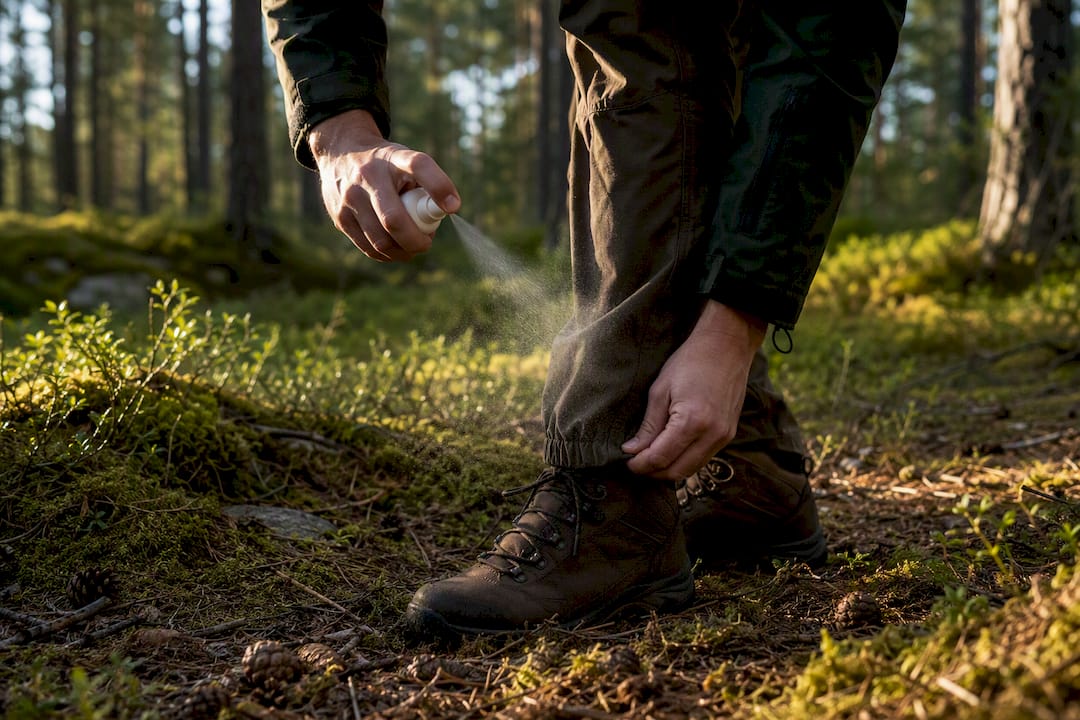
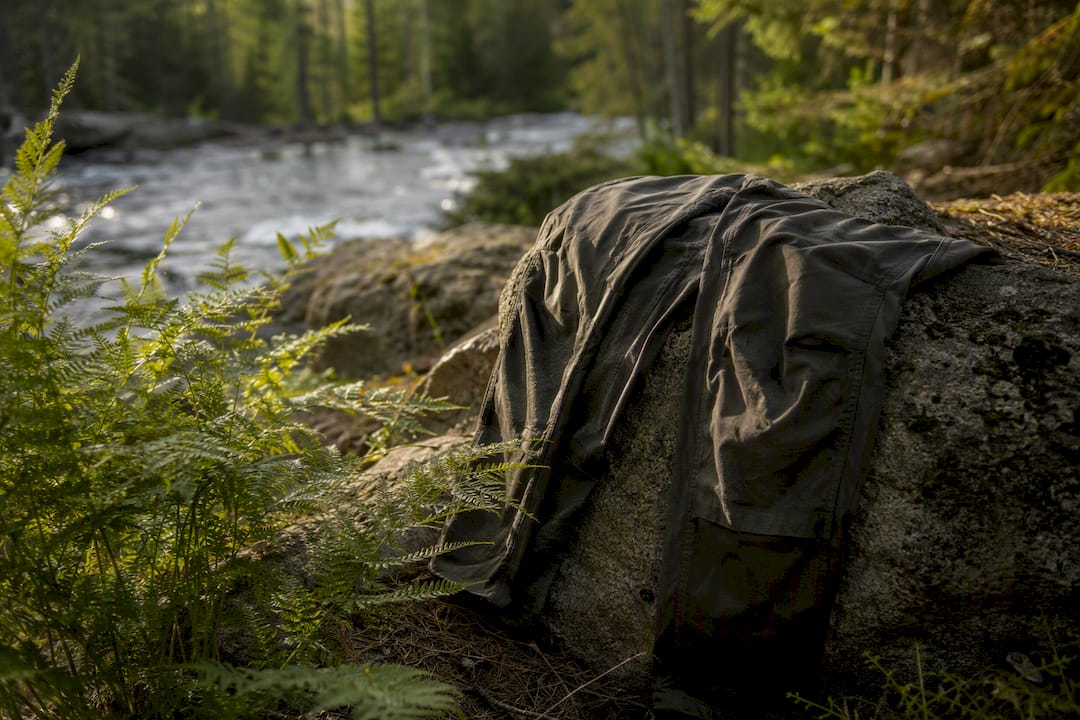
Permethrin and topical repellents solve different problems, and knowing which to reach for matters. Permethrin goes on clothing and gear, not skin, and remains effective through several washes, making it ideal for pre-treating hiking trousers or a mygghatt brim before a longer trip. A topical repellent covers the skin permethrin doesn't reach. Independent outdoor testing consistently finds that combining permethrin-treated clothing with a topical DEET or picaridin product on exposed skin outperforms either measure alone, particularly during peak season.
Devices like Thermacell earn their keep in specific situations rather than universally. They create a protected zone covering a modest area around you, which suits a seated dinner, a card game at the picnic table, or an evening around the fire. Step outside that zone, though, and the protection disappears instantly. A simple fan works on the same principle: mosquitoes are weak fliers, and even modest airflow disrupts their ability to land, which is why a breezy terrace often feels more comfortable than a still, sheltered one even without any device running.
Campsite layout is worth thinking through properly, not just improvising on arrival.
- Position your cooking and seating area upwind of where you'll sleep, so smoke and activity don't push mosquitoes toward your tent.
- Keep tent doors zipped at all times, even for brief trips outside.
- Check inner netting for tears before you leave home, not once you're already lying awake at 11pm listening to a whine near your ear.
Pro Tip: If you're travelling with children, treat their outer clothing with permethrin before the trip and reserve topical repellent for their hands, ankles, and neck. It cuts down on how much product touches their skin without reducing overall protection.
What to do if you get bitten
Most mosquito bites need nothing more than basic care. Clean the area, apply something cool, such as a damp cloth or an aloe vera gel, and resist scratching, which is what turns a mild bite into a stubborn, weeping irritation. Topical hydrocortisone cream calms the itch for most adults, and oral antihistamines help when several bites are causing real discomfort. For children, always check the product's minimum age and stick to paediatric dosing guidance rather than estimating from an adult dose.
Watch for signs that go beyond a normal reaction:
- Redness that spreads outward over a day or two rather than fading.
- Increasing pain, warmth, or swelling around the bite site.
- Fever, chills, or a general feeling of being unwell following a bite.
Any of these warrant a visit to a healthcare provider rather than home treatment. It's a small number of cases, but worth knowing the difference. On the safe side, a cooled compress and plain aloe vera remain reliable choices; avoid strong essential oils or undiluted alcohol directly on broken skin, since they tend to irritate rather than soothe. If ticks are also a concern where you're walking, checking for them alongside mosquito bites is worth building into the same evening routine.
Repellents and gear you'll actually find in Swedish shops
Choosing a product comes down to matching it to the trip rather than reaching for whatever's on the shelf. MyggA Original Spray is the familiar choice for family day trips and short forest walks, and the brand's roll-on format suits situations where a spray feels like overkill, such as a quick top-up on a child's ankles before an afternoon at a picnic in the meadow. For longer exposure, particularly at dusk in dense woodland, a higher-strength Care Plus DEET product gives adults more staying power, though these formulations aren't intended for small children.
Families who prefer to avoid DEET entirely have a genuine alternative in Sjö & Hav's Mygg & fästing spray, a PMD-based (citriodiol) product made in Sweden that claims up to six hours of protection and is recommended from age three. It won't match high-DEET products for raw staying power in brutal conditions, but for a normal forest walk or campsite evening, it holds up well and sidesteps the skin-sensitivity concerns some people have with DEET.
For stationary situations, the gear changes shape entirely:
- Thermacell or a similar device suits a fixed seating area, a picnic table, or a tent porch where you'll be still for an hour or more.
- Bti (Bacillus thuringiensis israelensis) targets mosquito larvae directly in standing water you can't drain, such as a rain barrel or a persistent puddle near a cabin, without harming other insects the way a broad-spectrum spray would.
Why Swedish conditions shape mosquito behaviour
Sweden's mosquito populations respond sharply to weather patterns from one year to the next, which is exactly why local monitoring matters more here than a generic seasonal calendar. Researchers at SVA track how milder winters and shifting rainfall alter both abundance and which species show up where, since warmer, wetter conditions can extend the season and shift ranges northward.
Mild winters and inconsistent precipitation don't just mean more mosquitoes in a given year. They can shift which species are present, which matters for anyone tracking disease-carrying types rather than just the general nuisance kind.
The flood-driven emergence pattern is worth understanding if you camp near floodplains or wetland edges. Aedes and Ochlerotatus species lay eggs that can lie dormant for extended periods, then hatch en masse once flooding occurs. This is what causes those sudden, localised swarms after spring melt or heavy rain, rather than a gradual build-up you'd notice coming.
Responsible control matters as much as personal protection. Broad insecticide spraying over water or meadow habitat harms pollinators and other wildlife far beyond its target. Bti offers a more selective route, treating standing water you genuinely can't remove without the collateral damage of wider spraying.
A host's view on mygg season at Villa Sakis
At Villa Sakis, the terrace catches a steady breeze off the meadow most evenings, which does more to keep guests comfortable than any product we hand out. We keep nets and a couple of fans on hand for still nights, and we point new arrivals toward the sunnier, more open paths rather than the shaded route past the lower pond. Timing dinner slightly earlier, before the evening lull in the wind, makes a noticeable difference too. Guests who've packed a light head net for the quieter forest walks tend to enjoy them far more than those who haven't.
— Christian
Staying comfortable at Villa Sakis during mygg season
Villa Sakis sits on grounds chosen for airflow as much as beauty, with a terrace that catches a natural breeze and forest paths that stay clear of the boggy pockets mosquitoes favour. 
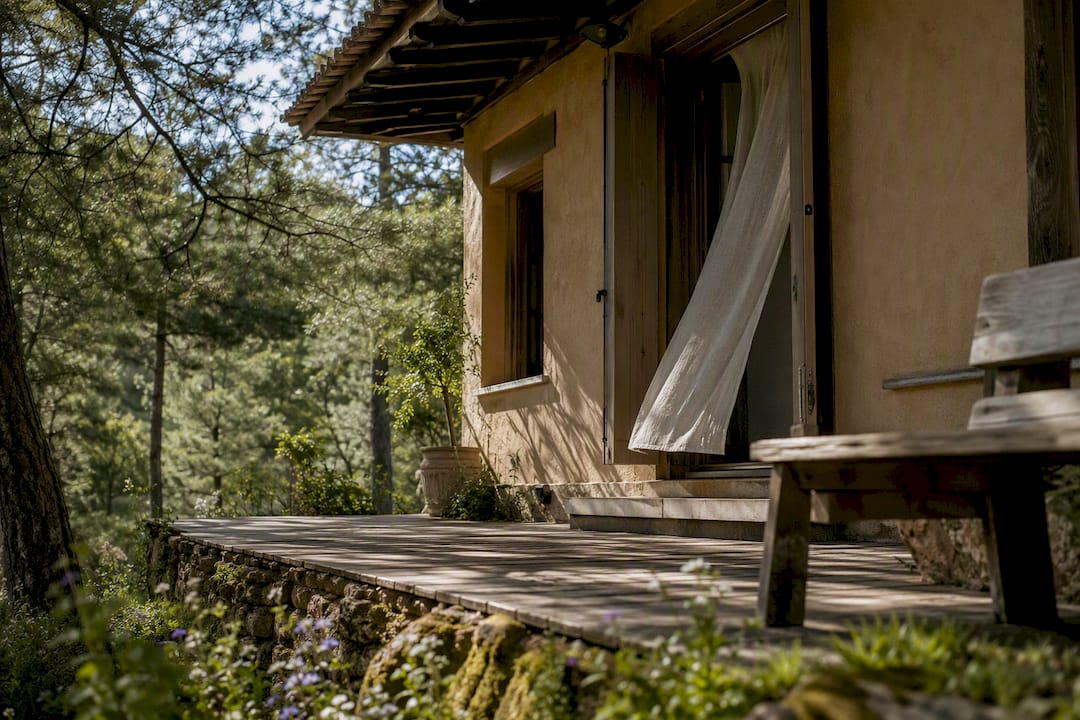
The house keeps spare head nets, fans, and topped-up repellent on hand for guests who'd rather not pack every item themselves, and you're welcome to request extra kit when you book if you're travelling with young children or planning longer forest walks. The grounds offer several route options away from the lower marsh, and the house itself has screened sleeping areas that make peak-season evenings genuinely restful rather than something to endure.
Villa Sakis suits families and small groups who want a forest-adjacent stay without the guesswork of a fully self-sufficient campsite, particularly during the midsummer to August window when preparation matters most. If that sounds like your kind of trip, check availability and book your stay directly, or browse the journal for more on planning a summer visit.
Sources
- Köp MyggA Original Spray 75 ml | Apohem
- SJÖ & HAV - Mygg & fästing spray 75 ml | Naturkompaniet
- Bästa myggmedlet 2026 – min guide till att slippa mygg - Outdoor Wilda