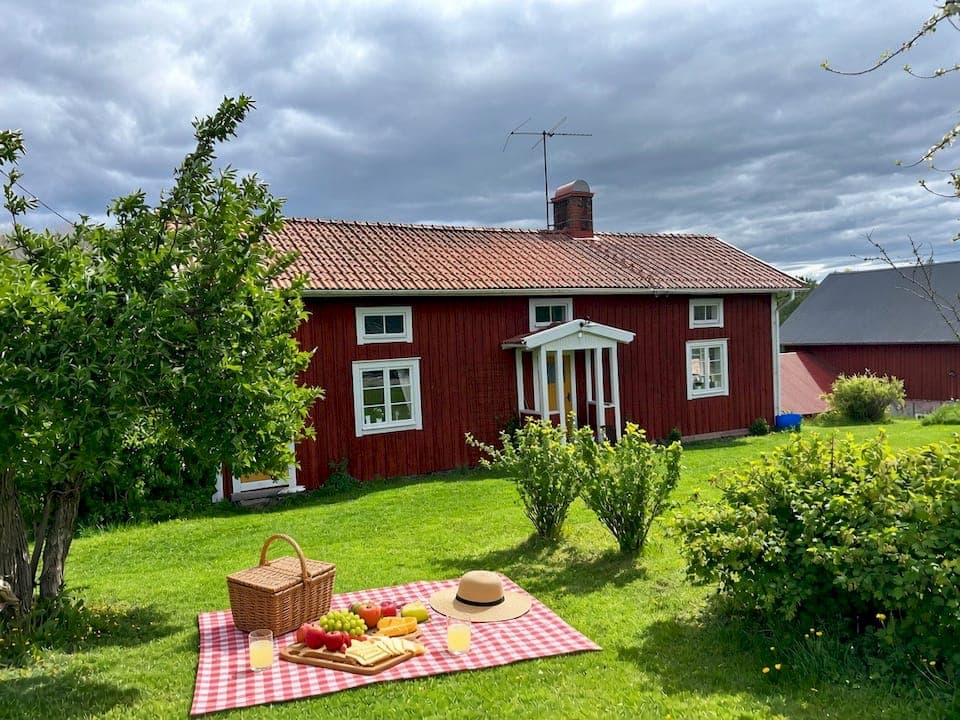
You can picnic on most public meadows, commons, and nature reserves in the UK as long as you respect access rules, stay on worn paths, and leave no trace behind. The single most important rule: never trample wildflower patches or disturb ground-nesting birds.
Best places to start looking:
-
Nature reserves and slåtterängar (traditionally mown meadows)
-
Commons and village greens with public access
-
National Trust and RSPB managed sites
-
City park meadow zones and restored grasslands
Legal note: public footpaths and open access land are generally free to use, but private meadows require the landowner’s permission. Open fires and disposable barbecues are prohibited on most managed sites.
Key takeaways
A successful meadow picnic depends on choosing the right type of site, packing for damp and uneven ground, and leaving the habitat exactly as you found it.
| Point | Details |
|---|---|
| Check access before you go | Confirm whether the site is open access land, a public park, or private; rules differ significantly. |
| Pack a waterproof groundsheet | Meadow grass holds moisture; a PEVA or ripstop base keeps you dry and comfortable. |
| Follow leave-no-trace principles | Remove all waste including food scraps; avoid trampling flower patches or long grass in nesting season. |
| Find events through local listings | Council pages, wildlife trust groups, and local news sites list guided meadow walks and community picnics. |
| Respect wildlife and insects | Cover food, carry tick-removal tools, and give ground-nesting birds a wide berth from March through July. |
Table of Contents
-
What are the access rules for picnicking on meadows in the UK?
-
How do you handle insects and wildlife during a meadow picnic?
Where can you find a meadow picnic spot near you?
The most reliable starting point is your local council’s parks and green spaces pages. Many municipalities maintain managed meadow areas specifically for recreation, with signage, mown paths, and designated picnic spots that balance visitor enjoyment with habitat protection. Municipal descriptions of managed sites typically distinguish short-mown grass for play from higher meadow zones kept for biodiversity, which tells you exactly where to spread your blanket without causing harm.
Beyond council pages, the National Trust and RSPB both offer online site locators with map coordinates. Restored slåtterängar, such as Levene Äng in Västergötland, are particularly appealing for family picnics: cut in late spring or early summer, they offer open, walkable ground and seasonal wildflower colour that peaks from May through July.
| Meadow type | What to expect | How to find it |
|---|---|---|
| Nature reserve / slåtteräng | Wildflowers, mown paths, signage, often seasonal access | Local authority nature pages, RSPB site finder |
| Common or village green | Open public access, short grass, informal use | Parish council websites, OS maps |
| National Trust site | Managed paths, facilities nearby, conservation rules | nationaltrust.org.uk site locator |
| City park meadow zone | Accessible year-round, mixed mown/long grass | Council parks pages, Google Maps |
| Restored grassland project | Guided visits, educational signage, picnic areas | Municipal event calendars, volunteer group pages |
Quick search checklist:
-
Search your council’s parks pages for “meadow” or “grassland”
-
Use the National Trust and RSPB site finders with your postcode
-
Check local Facebook groups and parish noticeboards for informal spots
-
Look for OS map symbols indicating open access land (light yellow shading)
How do you find meadow events and community picnics?
Organised meadow events are more common than most people realise, and they tend to be genuinely good days out. Guided walks and community picnics in places like Linnéängen are advertised on local news and events sites, often with a simple brief: bring a blanket, wear suitable footwear, and bring refreshments. The format is unhurried and welcoming for families.
Municipal and voluntary meadow projects often pair restoration work with public engagement events, creating a model of local stewardship that visitors can join or replicate. Guided visits to restored sites like Skogholms ängar show how municipalities add picnic places, paths, and signage to make sensitive areas accessible without damaging them.
Where to look for events:
-
Local authority event calendars (search “meadow picnic” or “guided walk”)
-
Parish noticeboards and village hall newsletters
-
Wildlife trust and RSPB local group pages
-
Volunteer restoration group social media (often Facebook or Eventbrite)
-
Local news sites for your area
When you attend, expect a gentle pace: a short guided walk, time to sit and observe, and usually a shared picnic. Bring a blanket, a flask, and something to sit on if the ground is damp.
What should you pack for a meadow picnic?
A well-packed picnic kit makes the difference between a restorative afternoon and a damp, uncomfortable one. Meadow terrain is uneven, often slightly damp underfoot, and exposed to wind and sun in equal measure.
-
Waterproof groundsheet or picnic blanket with a fleece upper layer — meadow grass holds moisture even on dry days
-
Insulated cool bag for perishables; cold salads in sealed containers and wrapped sandwiches travel far better than anything that needs refrigeration
-
Reusable plates, cups, and cutlery — a compact 21-piece picnic set covers a small group without generating single-use waste
-
Plenty of water in a reusable bottle; meadow walks in warm weather dehydrate faster than expected
-
Sun protection and insect repellent — both matter more in open meadow than in woodland
-
Basic first-aid kit including tick-removal tweezers (see the wildlife section below)
-
A small rubbish bag for all waste, including food scraps and tea leaves
Pro Tip: Choose a groundsheet with a PEVA or ripstop nylon underside rather than a standard fleece blanket. The waterproof layer keeps you dry on damp grass, and the material is light enough to fold into a day pack without adding significant weight.
Event listings for community meadow picnics typically advise attendees to bring their own blanket and refreshments, so a compact picnic kit is worth assembling even for organised events.
What are the access rules for picnicking on meadows in the UK?
Public footpaths give you the right to walk through land, not to stop and picnic on it. Open access land (designated under the Countryside and Rights of Way Act 2000) does allow you to sit and rest, but it does not automatically permit fires, dogs off leads near livestock, or camping. For any meadow that is not clearly signposted as public open space, it is worth checking with the landowner or local authority before settling in.
Key rules at a glance:
-
Open fires and disposable barbecues are prohibited on most managed meadows and nature reserves
-
Dogs must be kept on leads near livestock and during ground-nesting bird season (roughly March through July)
-
Picking wildflowers is illegal on nature reserves and inadvisable anywhere
-
Private land requires explicit permission, even if a gate is open
Practical safety checklist:
-
Check the Met Office forecast before you go; exposed meadows offer little shelter
-
Wear ankle-supporting footwear for uneven ground
-
Inspect for ticks after any time in long grass (check hairline, behind knees, and armpits)
-
Tell someone where you are going if the site is remote
Always consult the specific site’s local authority or land manager page for rules that apply to that location, as conditions vary considerably between a managed municipal park and a remote nature reserve.
How do you picnic without harming meadow habitats?
The most damaging thing a picnic group can do in a meadow is not litter. It is repeated trampling of the same flower-rich patch, which compacts soil and breaks plant stems over a season. Choose a spot on previously mown grass or at the edge of the meadow where the ground is already worn, and move on rather than returning to the same patch every visit.
Do:
-
Stay on worn paths when walking through the meadow
-
Set up on already-mown or low-vegetation areas
-
Remove all waste, including food scraps, tea leaves, and fruit peel
-
Keep dogs under close control at all times
Don’t:
-
Pick wildflowers or pull up plants
-
Walk through dense flower patches when a path exists
-
Leave any food waste, which attracts rodents and disrupts local wildlife
-
Arrive during early spring bulb emergence (March to April) without checking site guidance
Seasonal timing matters. Ground-nesting birds such as skylarks and lapwings are active from March through July; during this period, avoid sitting in long grass away from established paths.
Pro Tip: Pack out microscopic waste deliberately: shake food crumbs into your rubbish bag, pour leftover tea or coffee into a sealable container rather than onto the ground, and check under your blanket before you leave. What seems trivial accumulates across hundreds of visitors.
What gear makes a meadow picnic more comfortable?
The right kit is light, waterproof on the base, and reusable throughout. You do not need much.
-
Waterproof groundsheet (ripstop nylon or PEVA base): the single most useful item for meadow use
-
Insulating picnic blanket with a fleece upper: warmth matters even in summer when you are sitting still
-
Compact insulated cool bag or basket: a two-person insulated picnic basket with integrated crockery keeps food safe and reduces loose items to carry
-
Reusable plate and cup set: search for “picnic set for four” at IKEA, outdoor retailers, or kitchen shops
-
Folding stools or sitting pads: useful for anyone who finds ground-level sitting uncomfortable for long periods
For longer walks across meadow terrain, distribute weight evenly between two bags rather than loading one rucksack. Keep the cool bag separate from the groundsheet so neither gets compressed.
How do you handle insects and wildlife during a meadow picnic?
Open meadows are rich with insects, and that is precisely what makes them worth visiting. The practical approach is to work with the habitat rather than against it.
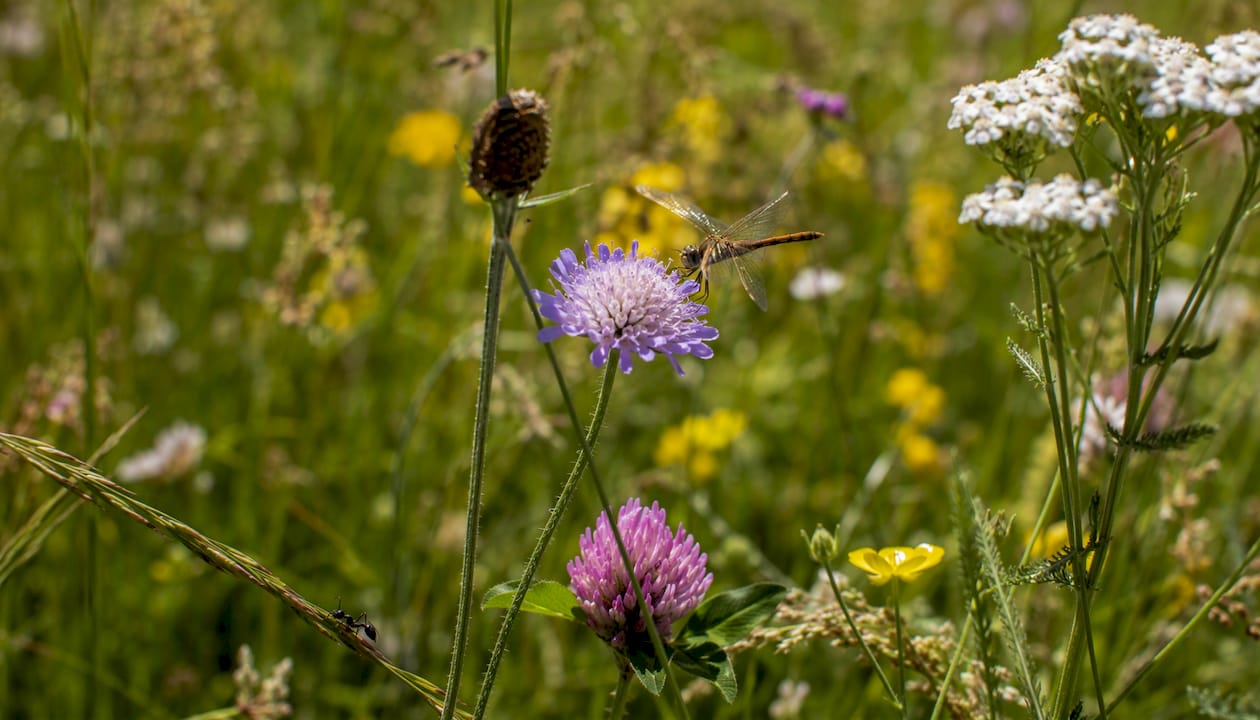
Keep food covered until you are ready to eat. Wasps and bees are drawn to sweet drinks and fruit; use cups with lids or pour drinks just before drinking. Avoid wearing strongly scented sun cream or perfume, which attracts insects more than plain skin does.
For ticks, the risk is real in long grass and woodland edges from spring through autumn. Wear long trousers tucked into socks when walking through vegetation, and carry a tick-removal tool. Check thoroughly after every meadow visit, paying particular attention to warm skin folds.
Wildlife encounters are mostly benign. If you see a ground-nesting bird displaying distress behaviour (dragging a wing, calling loudly), move away calmly and give the nest a wide berth. Adders are present in some UK grasslands; they are shy and will move away from vibration, so walking steadily rather than sitting silently in long grass reduces the chance of a surprise encounter.
Ants are the most common nuisance at ground level. A groundsheet with a sealed edge, rather than a loose blanket, keeps them from reaching food.
A host’s perspective on making a meadow picnic memorable
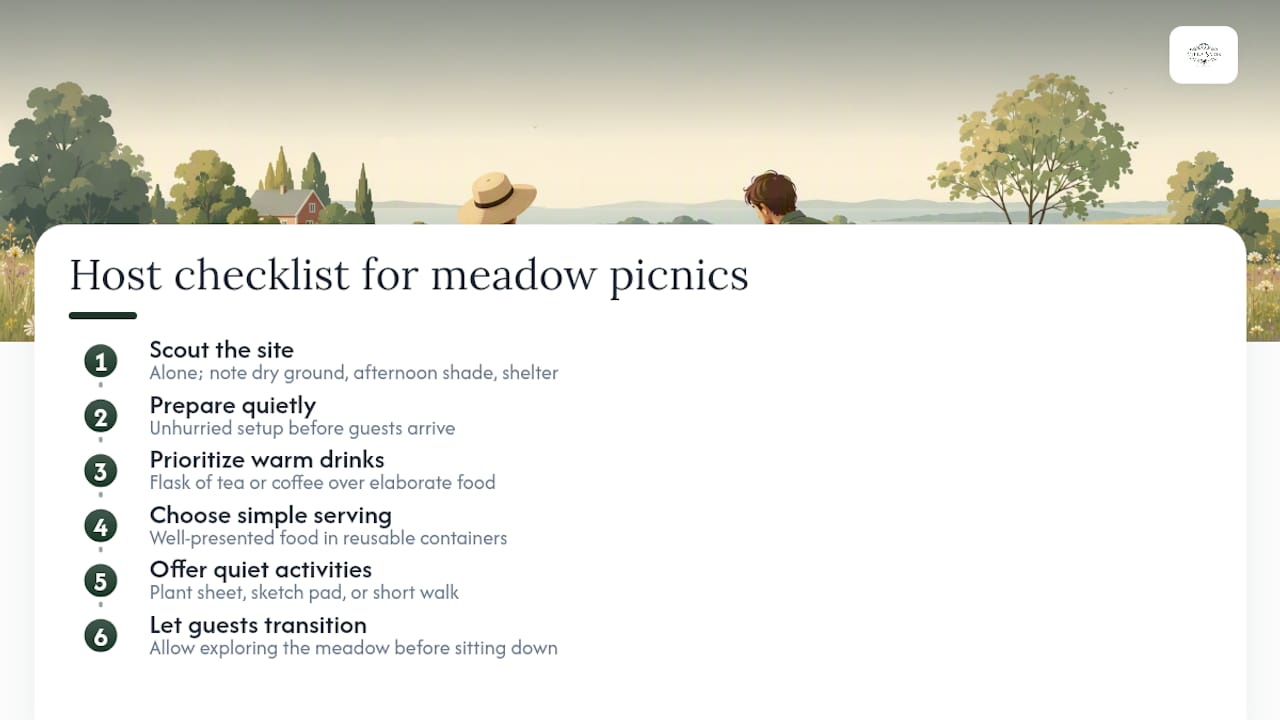
A meadow picnic works best when the preparation is quiet and the experience is unhurried. Before any group outing, it is worth visiting the site once alone: note where the ground is driest, where the shade falls in the afternoon, and whether there is a sheltered spot for a contingency if the weather turns.
For guests, small details carry the most weight. A flask of warm tea or coffee matters more than elaborate food when the air is cool. Simple, well-presented food in reusable containers feels considered without being fussy. A few quiet nature activities — a simple plant identification sheet, a sketch pad, or a short guided walk before sitting down — give the group something to do together before settling into the slower rhythm of the afternoon.
At Villa Sakis, the surrounding meadows and pine forests are part of what guests come for. The property’s 18th-century log farmhouse sits within a landscape that rewards exactly this kind of slow, attentive visit. Guests exploring the grounds find that the transition from the house to the meadow is itself part of the restorative experience. For those planning a longer stay with meadow time built in, the Swedish countryside vacation guide offers practical notes on responsible exploration of the surrounding landscape.

For a stay where the meadow is already at your door, Villa Sakis offers the whole farmhouse for private use, with direct access to forest and open ground from the first morning.
Sources
The sources below are reliable starting points for planning a meadow picnic in the UK or Scandinavia.