The quickest routes to lokala råvaror på landet are a farm shop, a REKO-ring pickup, a local market stall, or a small-scale fisher selling straight off the boat with limited foraging as a seasonal bonus. Availability shifts with the calendar and with opening hours, so it pays to check ahead. For anything beyond the basics, Livsmedelsverket's guidance on small-scale sales is worth a glance before you buy.
TL;DR:
- Producer pickup groups require advance orders, usually closing one or two days before collection, so check the local group's schedule and confirm the pickup point.
- Summer brings berries and new potatoes, while autumn brings mushrooms and game; coastal areas favor fish and shellfish, and southern plains produce root vegetables and grain.
- Small quantities of unprocessed eggs, vegetables, and fish qualify for simplified sales rules; processed goods such as jam or smoked fish generally require municipal registration.
- You may pick berries and mushrooms for personal use, but commercial scale gathering on private land requires the landowner's permission.
- Farm shops may open only on summer weekends, and remote stalls may not reliably accept cards, so confirm hours and carry cash.
Table of Contents
- Where to find local ingredients in the Swedish countryside
- What grows, swims and ripens: countryside ingredients by season
- The rules behind buying direct from producers in Sweden
- Making the most of local ingredients during your stay
- How Villa Sakis guests source and cook local ingredients
- Local food festivals and events worth timing your visit around
- Why buying local still matters in the Swedish countryside
- A self-catering base for cooking with local produce
- FAQ
- Sources
Where to find local ingredients in the Swedish countryside
REKO-rings remain one of the most practical ways to buy directly from producers. The system works through closed Facebook groups: you place an order in advance, the farmer or grower confirms it, and you collect at a fixed time and place, often a car park or village square. SVT reported over a hundred active REKO groups still operating across Sweden, a sign of how embedded this bakluckehandel culture has become for small producers who might otherwise struggle to reach customers.
Gårdsbutiker and gårdscaféer offer a slower alternative. Many farms open a small shop alongside a café, selling whatever they grow or rear that season, sometimes with baked goods or preserves made on site. Hours tend to be seasonal, often weekends only outside summer, so a quick call or a check of a Facebook page saves a wasted trip.
Bondemarknader and village market stalls suit browsing rather than planning. You can compare a handful of producers side by side, ask questions, and buy smaller amounts than a REKO order typically requires.
Along the coast, small-scale fishers and smokehouses sell straight from the harbour or a roadside stall, often the freshest fish you will find that day. A few points worth keeping in mind when exploring these channels:
- REKO orders usually close a day or two before pickup, so plan around the group's posted schedule.
- Gårdsbutiker rarely take card payment reliably in remote areas, so carry some cash.
- Harbour stalls sell what was caught that morning, which means the choice changes daily.
- Foraging for berries and mushrooms is allowed under allemansrätten for personal use, but commercial-scale picking on private land needs the landowner's permission.
What grows, swims and ripens: countryside ingredients by season
Sweden's countryside produce follows the seasons closely, and knowing the rhythm helps you shop with intention rather than hope.
- Spring: early greens, nettles, wild garlic and the first rhubarb.
- Summer: wild strawberries, blueberries, lingonberries and new potatoes, often the highlight of a midsummer table.
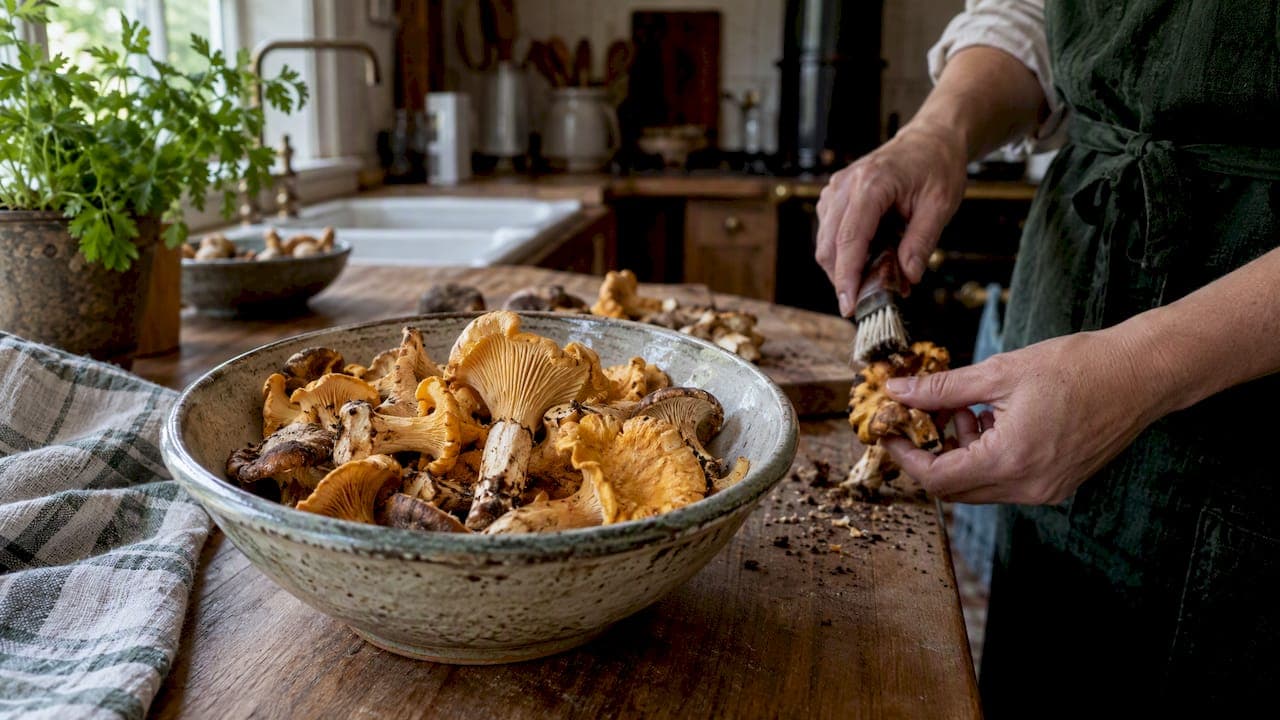
- Autumn: chanterelles and porcini, root vegetables, and game such as elk or venison as hunting season opens.
- Winter: cured and preserved goods, smoked fish, root cellar vegetables and dairy specialities like filmjölk and farmhouse cheese.
National statistics give a sense of scale behind this seasonal rhythm. Jordbruksverket's 2025 agricultural compilation tracks harvested hectares and tonnages for crops including potatoes and rapeseed, underlining how much of what reaches a gårdsbutik shelf depends on that year's harvest.
What is typical also depends on where you are. Coastal regions favour fish and shellfish, forested inland areas lean towards berries and mushrooms, and the arable plains of Skåne or Västergötland produce more root vegetables and grain.
The rules behind buying direct from producers in Sweden
Buying straight from a farmer feels informal, but there is a legal framework behind it that is worth understanding, both for your own confidence and out of fairness to the producer.
- Primary products sold in small quantities, such as fresh eggs, unwashed vegetables or whole fish, can be sold directly to consumers under simplified rules, according to Livsmedelsverket's guidance on small-quantity sales.
- Processed goods, including jam, pickles or smoked products, generally require the seller to be registered as a food business with their municipality.
- Primary production itself is controlled by länsstyrelsen, the county administrative board, rather than the municipality, and this includes thresholds for small-quantity deliveries of items such as honey, as set out in Livsmedelsverket's Kontrollwiki guidance.
- Raw milk and poultry sales carry extra limits, and a producer selling either should be able to explain their handling and storage practice if asked.
- If in doubt, ask. Most small producers are happy to explain how their eggs are labelled or how fresh their fish is, and a polite question is the simplest way to check.
Making the most of local ingredients during your stay
Sourcing well is only half the job. What you do with a box of chanterelles or a crate of lingonberries once you are back in a holiday kitchen matters just as much.
Start with planning: message a REKO seller or farm shop a day or two ahead, confirm pickup windows, and build your shopping around that rather than the other way round. A short list of what is in season saves a wasted detour.
- Keep eggs and dairy cool in transit, ideally in a bag with an ice pack if the drive home is long.
- Berries bruise easily, so a single shallow layer in a box outlasts a deep bucket.
- Fresh fish should go straight into a cool bag or fridge within an hour or two of purchase.
- Leafy greens keep best wrapped loosely in a damp cloth rather than a sealed plastic bag.
Simple preserving extends a good haul well beyond your stay. Berries freeze easily on a tray before bagging, a quick stovetop jam needs little more than sugar and time, and a basic home-salted fish cures in a day or two in the fridge.
Pro Tip: Ask the seller how they would cook or serve what you are buying. Most producers know their own ingredients better than any recipe book.
How Villa Sakis guests source and cook local ingredients
Over seasons of hosting, we have noticed the same rhythm among guests who enjoy cooking with what the countryside offers that week. Berry picking in the nearby forest tends to happen in the first quiet morning of a stay, and a short walk often fills a bowl with blueberries or lingonberries depending on the month. Local farm shops nearby reward a little patience, and pre-orders through REKO groups generally need a day or two of lead time.
For cooking, simplicity wins: a pan of fried chanterelles with butter, a quick fish supper from the morning's catch, or berries over filmjölk need little more than a good self-catering kitchen. Our guest-tested dinner ideas for self-catering stays and notes on berry picking in the forest cover both in more detail.
Local food festivals and events worth timing your visit around
Food festivals and market days offer a concentrated way to meet several producers at once, which suits visitors who have only a short window to explore. Many Swedish regions hold harvest markets or skördefester in late summer and early autumn, when stalls selling honey, cheese, smoked fish and freshly dug potatoes cluster in a single square or farmyard.
Coastal towns often mark the fish season with their own gatherings, pairing a harbour market with smokehouse tastings, while inland forest regions sometimes hold mushroom or berry-themed days tied to the autumn foraging peak. Christmas markets in December bring out cured meats, preserves and baked goods that reflect a different, slower side of the countryside calendar.
These events rarely appear on national listings, so a regional tourism office, a village noticeboard, or a REKO group's own posts are often the best way to hear about one in time. Timing a countryside stay around a known market day, even a small one, tends to reward visitors with a wider spread of produce than a single farm shop could offer on an ordinary afternoon, and gives a chance to talk directly to the people growing or catching what is for sale.

Why buying local still matters in the Swedish countryside
Every direct purchase, a dozen eggs here, a bag of chanterelles there, keeps a small producer afloat and a landscape under cultivation rather than left to scrub. Local food initiatives in regions such as Dalarna report growing demand that supports rural jobs and open land. Supply is thin and seasonal, so patience and a genuine interest in the producer, not just the product, go further than treating every purchase as a transaction.
— Christian
A self-catering base for cooking with local produce
Staying somewhere with a proper kitchen changes how you shop. At Villa Sakis, our self-catering farmhouse kitchen, forest access for berry picking, and host notes on nearby farm shops make it straightforward to turn a REKO order or a morning's foraging into supper.
| What you get | Why it helps local sourcing |
|---|---|
| Self-catering kitchen | Lets you cook whatever a farm shop or REKO pickup brings home |
| Forest and meadow access | Puts berry and mushroom picking within walking distance |
| Host notes on local shops | Saves time working out opening hours and pickup points |
We are one option among many for a countryside stay, not the only way to do it, but if a kitchen with room to cook and land to forage sounds right, our house page has the details, and our guide to planning a countryside stay covers more on settling in before you shop.
FAQ
What is a REKO-ring and how does it work?
A REKO-ring is a local buying group, usually run through Facebook, where you order directly from producers and collect at a fixed time and place. SVT's reporting notes these groups have kept many small producers in business, and orders typically close a day or two before pickup.
Can small farms sell food without registering as a food business?
Primary producers can sell small quantities of unprocessed goods like eggs or whole vegetables directly to consumers under simplified rules. According to Livsmedelsverket's guidance, processed products such as jam usually need municipal registration instead.
Is foraging for berries and mushrooms legal in Sweden?
Picking berries and mushrooms for personal use is allowed under allemansrätten, the Swedish right of public access. Picking at a commercial scale, or on clearly private or cultivated land, needs the landowner's permission first.
What can I cook at Villa Sakis with local ingredients?
Villa Sakis offers a self-catering kitchen suited to simple dishes built around whatever is in season, from fried chanterelles to fish picked up that morning. Our self-catering dinner ideas cover meals guests have made work well during past stays.
When is the best season to buy local produce in the Swedish countryside?
Berries and new potatoes peak in summer, mushrooms and game in autumn, and cured or preserved goods carry the offer through winter. Spring brings the first greens, so timing a visit around a specific ingredient is worth checking with local sellers directly.
Sources
- Bakluckan blev odlarens räddning: ”Annars hade jag försvunnit” | SVT Nyheter
- Försäljning av små mängder (Livsmedelsverket)
- Leverans av små mängder honung och andra biodlingsprodukter - Kontrollwiki
- Jordbruksverket