Sauna bathing can genuinely improve sleep quality and ease pain for many people, but only when the timing is right. A recent Swedish study found reduced pain and better sleep among women who bathed regularly, and researcher Dr Rhonda Patrick points to the cooling period afterwards as the mechanism that matters most. The practical rule: finish your session roughly two hours before bed, so your body has time to cool.
TL;DR:
- Regular sauna bathing about three to four times weekly is linked to better long-term cardiovascular health and greater improvements in sleep quality.
- The key to sleep benefits is allowing around two hours after the sauna session to cool down, promoting melatonin release and deep sleep stages.
- Shorter, cooler sessions of 5 to 10 minutes are safer, especially for beginners, while longer sessions or higher temperatures do not necessarily increase benefits.
- Avoid sauna use if pregnant, has unstable heart conditions, or takes medications affecting blood pressure or heart rhythm, and always rehydrate beforehand.
- Removing screens and noise during sauna sessions enhances relaxation and may amplify health benefits beyond the heat exposure itself.
Table of Contents
- What recent studies actually found about sauna and sleep
- Why timing and cooling matter for sleep
- A practical evening sauna routine to support sleep
- Who should be careful with sauna, and how to stay safe
- Villa Sakis: a calm sauna ritual for guests
- Why the "hotter is better" instinct gets sauna wrong
- Sources
- FAQ
What recent studies actually found about sauna and sleep
A study widely reported across Swedish media found that women who bathed in sauna regularly reported measurably less pain and noticeably better sleep than before they started. Coverage from Forskning described participants as keen to continue the habit once they noticed the change, and the Vårdfokus report echoed those findings, with women describing both physical relief and a calmer transition into sleep.
Worth flagging honestly: this kind of research typically relies on self-reported pain and sleep scores rather than objective measures like polysomnography, and sample sizes in this field tend to be modest. That doesn't make the findings meaningless. It means the effect is real for many, but the size of the benefit for any one person will vary.
Broader physiological evidence backs the general direction of travel. PubMed-indexed research has linked passive heat exposure to changes in sleep-related physiology and recovery markers, and a landmark cohort study published in JAMA Internal Medicine associated frequent sauna sessions, roughly three to four times weekly, with better long-term cardiovascular outcomes. Recovery and cardiovascular health don't guarantee sleep improvement on their own, but they sit on the same physiological pathway.
What the current evidence points to, in short:
- Reduced self-reported pain in women following regular sauna bathing
- Improved subjective sleep quality reported in the same population
- Population-level cardiovascular benefits linked to frequent sauna use
- Supportive but observational data from wearable trackers on sleep architecture
A standout figure worth sitting with: cohort data tracking sauna frequency found that bathing three to four times a week was associated with meaningfully better long-term outcomes than bathing once a week or less, according to the JAMA Internal Medicine cohort research. Frequency, not just duration, appears to matter.
Why timing and cooling matter for sleep
The mechanism is simpler than it sounds. Sauna raises your core body temperature. What happens next, as your body cools back down, is where the sleep benefit lives. That drop in temperature mirrors the natural dip your body needs to fall asleep, and researchers believe it helps trigger the release of melatonin and encourages slow-wave sleep, the deep, restorative stage most associated with feeling rested.
Dr Rhonda Patrick has discussed how evening heat exposure followed by adequate cooling time supports this process, and generally recommends allowing around two hours between your last sauna session and bedtime. Sauna sessions are also associated with shifts in growth hormone and prolactin, along with a move towards parasympathetic dominance, the "rest and digest" state that lowers heart rate and improves heart rate variability (HRV).
None of this is fully settled science. The University of Portsmouth is actively running research into exactly how sauna affects sleep and heat adaptation, which tells you the mechanistic detail is still being worked out even as the population-level evidence accumulates.
Real world tracking adds a useful, if modest, layer of support:
- Oura ring users tagging sauna-linked nights showed slightly increased deep sleep and improved HRV
- The effect was consistent but modest, not dramatic, across the tracked sample
- Data of this kind is observational, so it cannot prove sauna caused the change
For readers who train hard or push their bodies physically, the same cooling and parasympathetic mechanisms are worth understanding in the context of recovery and muscle repair, where the sleep and pain benefits often overlap.
A practical evening sauna routine to support sleep
Getting the timing right matters more than getting the temperature right. Here's a routine that reflects both the research and common practitioner guidance:
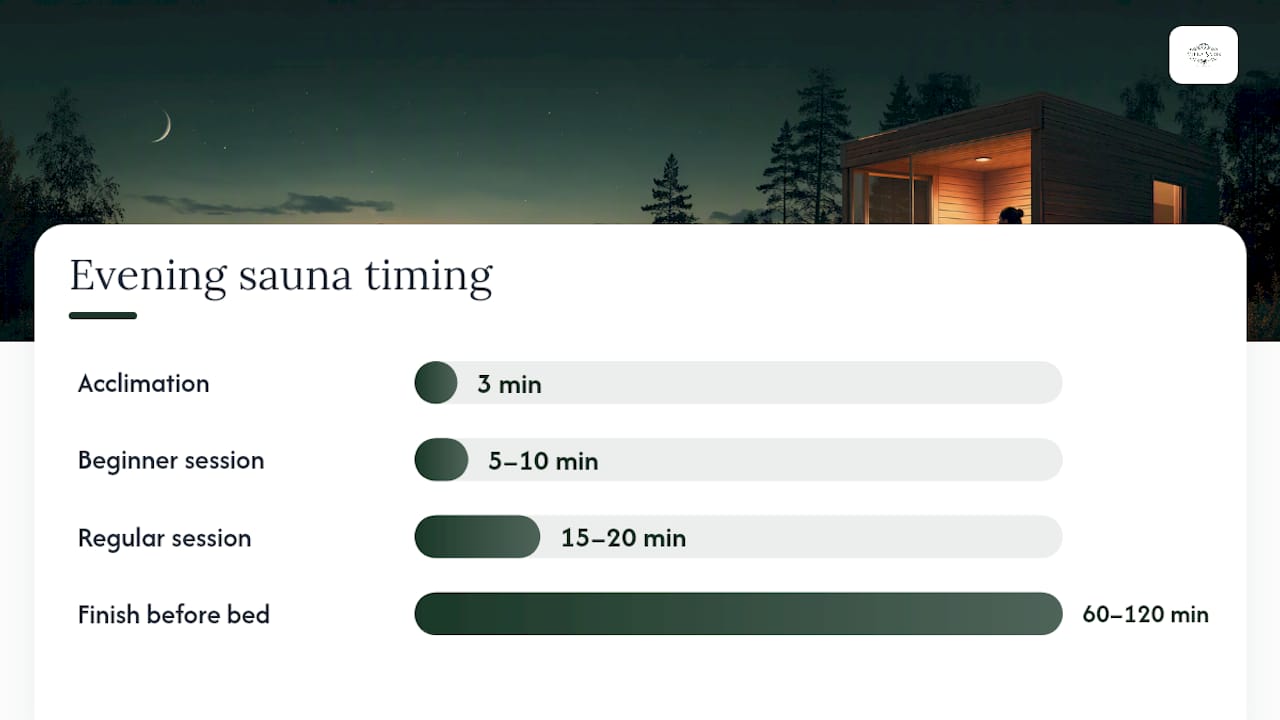
- Finish 60 to 120 minutes before bed. People who cool down quickly can sit nearer the 60-minute mark; those who run warm, or who bathe in a hotter sauna, should lean towards the full two hours Dr Rhonda Patrick recommends.
- Choose your session length by experience. Beginners generally do well with 5 to 10 minutes; those more accustomed to heat can extend to 15 to 20 minutes.
- Aim for two to four sessions a week. This mirrors the frequency associated with the strongest long-term outcomes in cohort research, rather than one long session.
- Start with three minutes of silent acclimation. Sit still, breathe through your nose, and let your body adjust before doing anything else, a practice recommended by sauna practitioner guides to support parasympathetic engagement.
- Leave while you still feel good. The therapeutic window is about comfort, not endurance. Pushing for longer or hotter sessions tends to backfire rather than deepen the benefit.
- Cool down deliberately afterwards. A cold shower or brief plunge can sharpen the contrast that supports the temperature drop your body needs before sleep.
- Rest and rehydrate before moving on with your evening. Give yourself a quiet window rather than rushing straight into screens or chores.
For a ready-made version of this sequence, the 15 to 20 minute sauna paired with a short cold exposure is a well-tested Nordic pattern worth trying as written.
Pro Tip: Leave your phone outside the sauna room entirely, not just on silent. The first few minutes of nasal, diaphragmatic breathing do far more for your nervous system when there's no screen pulling your attention away from it.
Who should be careful with sauna, and how to stay safe
Sauna isn't risk-free for everyone. Take extra care, and speak to a clinician first, if you are pregnant, have an unstable cardiac condition, or take medication that affects blood pressure, hydration, or heart rhythm.
Some simple rules apply to everyone:
- Hydrate well before and after your session, not during a rushed pre-sauna rush
- Never combine sauna with alcohol; the combination strains your cardiovascular system
- Stop immediately if you feel dizzy, nauseous, or unusually short of breath
- Re-enter the heat slowly after any break, rather than diving straight back to your previous session length
- Treat lightheadedness on standing, a racing heart, or a pounding headache as your cue to stop and cool down straight away
If in doubt, shorter and cooler is always the safer choice.
Villa Sakis: a calm sauna ritual for guests
The sauna experience at this type of countryside accommodation isn't treated as a quick fix. It's part of a slower rhythm: silence, the smell of pine outside the window, no notifications waiting to be answered. Guests are encouraged to leave phones in their rooms, sit quietly for those first few minutes, and let the heat do its work without narration.
That tech-free approach isn't just atmospheric preference. Research into sauna's relaxation effects suggests the deliberate removal of screens and noise is itself a meaningful contributor to the benefit, not merely a nice-to-have. In the private timber sauna at Villa Sakis, set among meadows and forest, that quiet is easy to find. Guests wanting to understand the fuller etiquette of shared or private sauna use can read our sauna etiquette guide before their stay.
If you're planning an evening built around rest rather than rushing, Villa Sakis offers whole-house private stays with a sauna as part of the experience, alongside lake access and direct forest and meadow paths. Full details on the accommodation and facilities sit on The House page, and for a sense of what a slower, restorative stay actually looks like day to day, our journal piece on what to expect from a Swedish countryside stay is worth a read before you book. Travellers weighing up different wellness rituals as part of a holiday may also find this mountain evening ritual guide a useful comparison point.
Why the "hotter is better" instinct gets sauna wrong
The biggest misconception about sauna and sleep isn't about temperature at all. It's about restraint. Most people assume more heat, longer sessions, and pushing through discomfort must mean a bigger payoff. The evidence points the other way: the therapeutic window sits at the edge of comfort, not beyond it, and leaving while you still feel good preserves the parasympathetic response that actually drives the benefit.
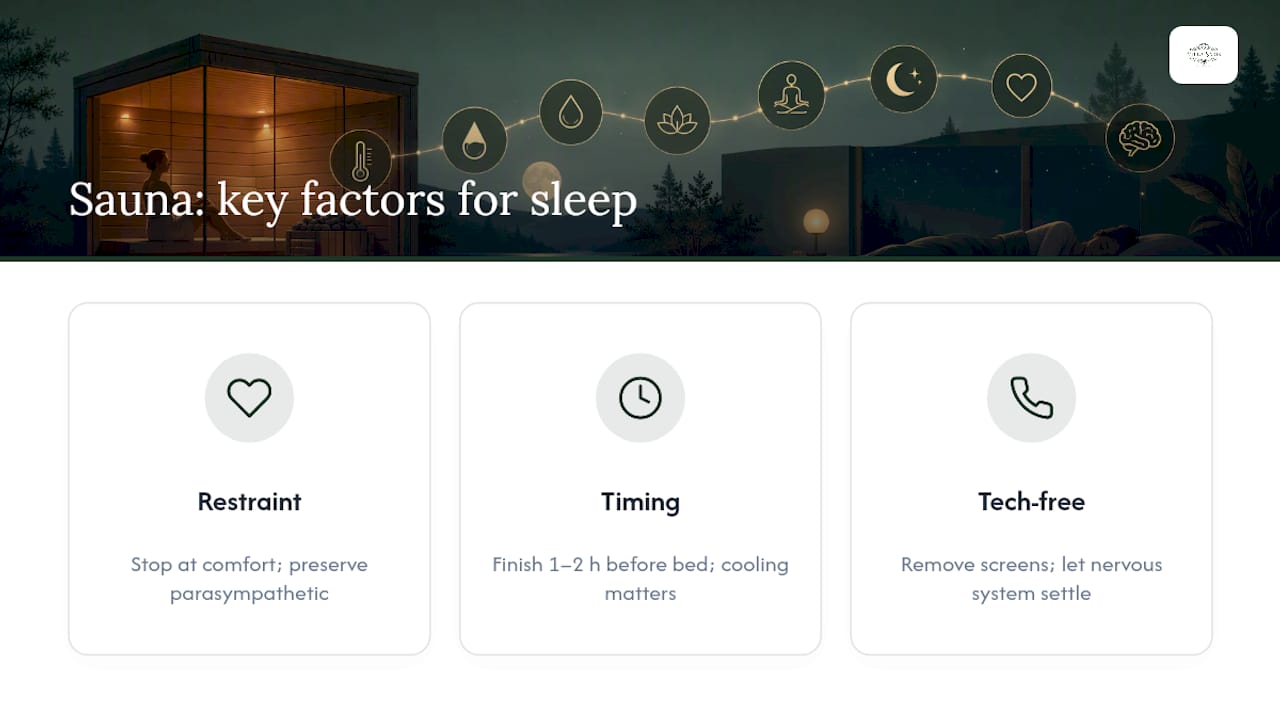
The second thing overlooked constantly is timing. People treat sauna as a pre-bed ritual, sometimes minutes before lying down, when the research consistently points to a cooling gap of an hour or two as the part doing the real work. It's the temperature drop, not the heat itself, that nudges the body towards sleep. Skip that gap and you may undercut the very effect you're chasing.
What strikes me most, working through this research, is how much the tech-free element gets dismissed as atmosphere rather than mechanism. Removing screens and noise isn't a wellness aesthetic bolted onto sauna bathing. It appears to be doing genuine physiological work, letting the nervous system settle in a way that a phone in hand simply doesn't allow. That's a detail worth taking seriously, not just for sleep, but for anyone using sauna to manage chronic pain or stress.
— Christian
This article is general information, not a substitute for advice from a qualified doctor. Consult a qualified healthcare professional about your own circumstances before acting on anything here.
Sources
- How Evening Sauna Use May Support Sleep — FoundMyFitness (Dr Rhonda Patrick)
- PubMed entry relevant to sauna and health outcomes
- JAMA Internal Medicine cohort study (DOI)
FAQ
What are the disadvantages of sauna bathing?
The main risks come from dehydration, overheating, and interactions with alcohol or certain medications, particularly those affecting blood pressure or heart rhythm. People with unstable cardiac conditions or who are pregnant should consult a clinician first, and everyone should stop immediately if they feel dizzy or nauseous.
How does sauna affect the body?
Sauna raises core body temperature, which triggers sweating, increased heart rate, and shifts towards parasympathetic nervous system activity as you cool down afterwards. Research also links regular sessions to changes in growth hormone and prolactin, along with improvements in heart rate variability.
What effects does sauna have on sleep and pain?
A Swedish study found women who bathed regularly reported reduced pain and improved sleep quality. The likely mechanism involves the post-sauna cooling period, which supports melatonin release and slow-wave sleep, according to Dr Rhonda Patrick.
How long should you sauna for the best effect?
Beginners typically do well with 5 to 10 minute sessions, while more experienced bathers often extend to 15 to 20 minutes. Frequency matters too: cohort research associates three to four sessions a week with the strongest long-term outcomes, rather than one long occasional session.