A winter stay in a log cabin is genuinely comfortable and rewarding — provided you arrive with layered clothing, confirmed access and heating, and a compact emergency kit. Those three things settle most of what can go wrong. Pack your base, mid and outer layers following field-tested cabin packing guidance; confirm road ploughing and heating type with your host before you travel; and carry a power bank and CO detector as non-negotiables. Properties like Villa Sakis — a historic 18th-century Swedish log farmhouse with a private sauna and self-catering kitchen — show what a well-prepared winter log-cabin stay can look like when the groundwork is done.
-
Pack layered clothing: base, mid and outer layers plus insulated waterproof boots and spare wool socks
-
Confirm access and heating: ask the host about road ploughing, heating type and hot water before you leave home
-
Bring an emergency kit: power bank, CO detector, headlamp and a basic first-aid kit in your hand luggage
Key takeaways
A successful winter log-cabin stay comes down to preparation: the right clothing layers, confirmed logistics, and a handful of safety items cover almost every scenario you will encounter.
| Point | Details |
|---|---|
| Check access and heating first | Confirm road ploughing, heating type and hot water with your host before you travel. |
| Pack layered clothing and spare socks | Bring 1–2 base layer sets, a midlayer, an insulated puffy, a waterproof shell and at least 3 pairs of wool socks. |
| Carry emergency power and safety kit | A high-capacity power bank, CO detector and headlamp are non-negotiable for remote winter stays. |
| Ask the host eight key questions | Heating, access, sauna, drying, groceries, emergency contact and power backup — confirm all before arrival. |
| Villa Sakis | A historic Swedish log farmhouse with private sauna, self-catering kitchen and whole-house privacy for winter stays. |
Table of Contents
What do you pack for a winter log-cabin stay?
A short, grouped checklist keeps packing honest. For a 2–3 night stay, Outdoor Sports Nation recommends 1–2 base layer sets, three pairs of socks, one midlayer, one insulated puffy and a waterproof shell — enough to layer up outdoors and strip back indoors without overpacking.
Clothing and footwear
-
1–2 merino or synthetic base layer sets (top and bottom)
-
1 fleece or wool midlayer
-
1 insulated puffy jacket
-
1 waterproof, windproof outer shell
-
Insulated, waterproof boots rated for sub-zero temperatures
-
3+ pairs of wool socks; 1 pair of warm indoor slippers or booties
-
Thermal hat, gloves and neck gaiter
Sleep and bedding
-
Merino thermals double as sleepwear, reducing luggage weight considerably — a practical tip from Lapland packing guides
-
Light sleeping bag liner if you run cold
Cooking and food
-
Meal plan written before departure, favouring one-pot soups and stews
-
Insulated food containers and a thermos
-
Small camp stove or single-burner unit if the host flags limited power — remote cabins often need it
Safety and emergency
-
CO detector (compact, clip-on)
-
First-aid kit
-
Headlamp with spare batteries
-
Ice traction aids (microspikes or Yaktrax)
-
Folding shovel
Electronics and batteries
-
High-capacity power bank (20,000 mAh or above)
-
Spare batteries for headlamp
-
Offline maps downloaded before departure
Local paperwork
-
Host contact number saved offline
-
Emergency services number for the region
-
Nearest pharmacy and grocery store address noted
| Category | Item | Quantity (2–3 nights) |
|---|---|---|
| Base layers | Merino or synthetic top and bottom | 1–2 sets |
| Socks | Wool hiking socks | 3 pairs |
| Midlayer | Fleece or wool | 1 |
| Outer insulation | Insulated puffy | 1 |
| Shell | Waterproof, windproof jacket | 1 |
| Footwear | Insulated waterproof boots | 1 pair |
| Indoor footwear | Warm slippers or booties | 1 pair |
| Power | High-capacity power bank | 1 |
| Safety | CO detector, headlamp, microspikes | 1 each |
Pro Tip: Pack your headlamp, charger and first-aid kit in an outer jacket pocket or the top compartment of your bag. Arriving in low winter light with numb fingers and a fully zipped rucksack is avoidable.
How should you dress for a winter cabin stay?
Layering is the foundation of cold-weather comfort: a base layer wicks moisture away from the skin, a mid layer traps warm air close to the body, and an outer layer blocks wind and snow. Get the sequence right and you stay warm both outdoors on a snowshoe walk and indoors by the stove.
Base layer: merino wool or a technical synthetic such as Polartec Power Dry. Merino regulates temperature across a wide range and resists odour, making it practical for multi-day stays. Merino thermals are among the most versatile cold-weather items you can carry, functioning equally well as sleepwear.
Mid layer: a fleece jacket (Polartec 200 or similar) or a heavy wool knit. Its job is insulation, not weather protection, so prioritise loft and warmth over appearance.
Outer layer: a waterproof, breathable shell for active days, and a down or synthetic insulated jacket for static cold — waiting at a trailhead, watching the stars, or walking between buildings.
| Layer | Purpose | Recommended materials | Packing example |
|---|---|---|---|
| Base | Wick moisture from skin | Merino wool, Polartec Power Dry | Lightweight long-sleeve top and leggings |
| Mid | Trap warm air | Fleece (Polartec 200), heavy wool | Zip-up fleece or wool jumper |
| Outer (active) | Block wind and snow | Gore-Tex or equivalent shell | Hardshell jacket and trousers |
| Outer (static) | Add insulation in extreme cold | Down or synthetic fill | Insulated parka or puffy coat |
Footwear
Insulated, waterproof boots are non-negotiable. Look for insulated boots rated for sub-zero temperatures. Pack several pairs of wool socks and rotate them to keep some dry. Warm indoor slippers protect your feet on cold timber floors and keep outdoor moisture out of the living space.
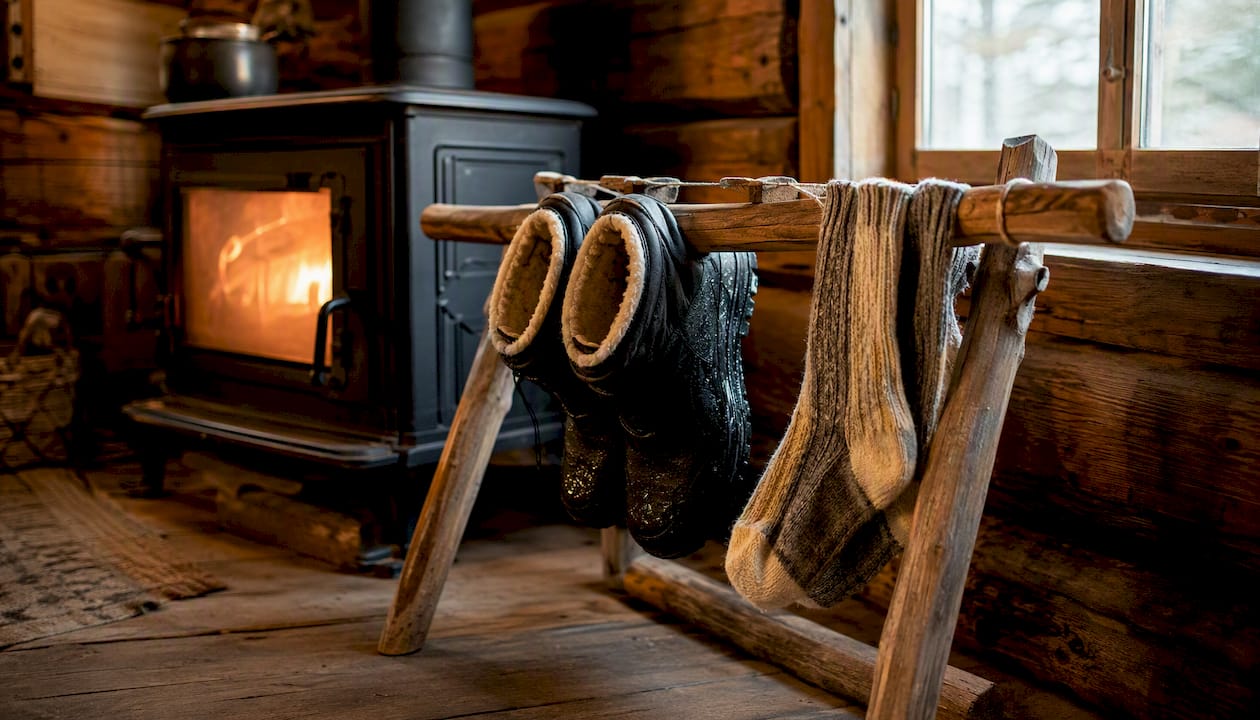
Pro Tip: Designate a drying spot near the stove or radiator on arrival — wet socks and boot liners left overnight will be warm and dry by morning. A small travel drying rack weighs almost nothing and earns its place every single day.
What does a winter log-cabin stay typically include?
Cabins vary more than hotels do, so confirming specifics before you book saves real disappointment. Most well-maintained log cabins offer central or wood-stove heating, hot water, a self-catering kitchen, bed linen and towels, and a designated boot and coat area. A private sauna is common in Scandinavian properties — though whether it is wood-fired or electric, and how far in advance it needs lighting, is worth asking. For a deeper look at what to expect from a Swedish countryside property, the Villa Sakis countryside stay guide covers amenities and preparation in detail.
-
Heating: confirm whether it is a wood stove, electric panel, or central system — and who is responsible for loading the stove
-
Hot water: ask whether it is continuous or tank-based, and how long the tank takes to reheat
-
Sauna: confirm type (wood-fired or electric), how to operate it, and any house rules on timing
-
Linen and towels: most properties include them; confirm to avoid packing unnecessarily
-
Drying facilities: a drying rack, heated towel rail or boot room makes a genuine difference on a multi-day stay
-
Kitchen equipment: pots, pans, a kettle and basic utensils are standard; a coffee maker and oven are worth confirming
Wet boots left in a warm room release a surprising amount of moisture. Store them in a boot room or on a mat near the entrance, and stuff them with newspaper overnight to draw out dampness.
How do you get there and what should you confirm first?
Always confirm road ploughing before you travel. Rural roads in winter can be narrow, icy and unlit, and the difference between a ploughed track and an unploughed one is not always visible on a map. Ask the host directly whether the access road is maintained, what vehicle type they recommend (winter tyres are a legal requirement in Sweden during winter months; chains may be needed in heavier snow), and whether snow-clearing tools are available on site.
Confirmations to request from your host:
-
Is the access road ploughed, and how frequently?
-
What vehicle type do you recommend — are winter tyres sufficient, or are chains advisable?
-
What are the arrival instructions if we arrive after dark?
-
Where is the nearest grocery store and pharmacy, and what are their winter opening hours?
-
Is there a generator or backup power source, and how is it operated?
-
Who is the emergency contact, and what is the best number to reach them?
Transport tips:
-
Plan to arrive during daylight hours. Winter daylight is limited, and navigating an unfamiliar rural track in darkness adds unnecessary stress.
-
If you are flying in, consider hiring a 4x4 locally rather than relying on a standard rental in heavy snow.
-
Download offline maps and the host’s address before you lose mobile signal on the approach road.
-
Local shops often keep reduced hours in winter; stock up on essentials before leaving the nearest town.
What safety risks should you prepare for?
Simple precautions reduce most winter risks. Pack a CO detector, keep a charged power bank, and know the emergency number for your region before you leave home. Cold temperatures reduce battery performance significantly, so store phones and cameras close to your body and keep the power bank in an inner pocket rather than a bag.
-
CO detector: wood stoves and gas appliances in enclosed spaces carry a real risk; a compact clip-on detector costs little and matters enormously
-
Headlamp and spare batteries: essential for outdoor movement in low light and for any power outage
-
Power bank (20,000 mAh+): keeps communication devices alive when mains power fails
-
Microspikes or Yaktrax: icy paths around the cabin are the most common cause of minor injuries
-
Folding shovel: useful if a vehicle gets stuck or a doorway drifts over
-
First-aid kit: include blister plasters, pain relief, and a thermal emergency blanket
For wood-stove use: open the flue fully before lighting, never burn treated wood or rubbish, and keep a window cracked slightly when the stove is running in a tightly sealed room. If heating fails, layer up immediately, move to the warmest room, and contact the host. If power fails, switch to battery lighting, avoid opening the fridge unnecessarily, and use your offline emergency contacts.
Pro Tip: Keep the CO detector, a headlamp and the host’s phone number in the same drawer on arrival — one place, always accessible, no searching.
What activities can you do from a winter cabin?
You can plan a genuinely varied week from a cabin base without overcomplicating logistics. Snowshoeing, short cross-country ski outings, ice-skating on a frozen lake, sauna sessions followed by a cold-water dip, and gentle forest walks are all low-stress and deeply satisfying. For something more structured, snowmobiling, dog sledding and guided Aurora tours are available through local operators in many Scandinavian regions — book these in advance, as availability is limited and many providers supply outer suits and boots, meaning you need only your mid-layers underneath.
-
Snowshoeing and winter hiking on marked trails
-
Cross-country skiing (equipment hire available locally in most areas)
-
Ice-skating on frozen lakes — check ice thickness with a local guide before venturing out
-
Sauna and cold-water therapy sessions
-
Guided snowmobile or dog-sled excursions (book at least a week ahead)
-
Stargazing and Aurora watching from the cabin grounds
-
Indoor cooking, board games and restorative rest — a legitimate and underrated part of any cabin stay
Travel writers and hosts consistently note that one major outdoor activity per day, with evenings kept for shared indoor rituals, produces the most satisfying stays.
Pro Tip: Schedule demanding outdoor activities for mid-day when daylight is at its peak. Save the late afternoon for sauna, cooking and quieter pleasures — the rhythm suits the season and leaves everyone with energy for the next morning.
What questions should you send to your host before you arrive?
Send these in a single message before booking or immediately after confirming. A straightforward list of questions avoids most on-arrival surprises and signals to the host that you are a prepared, considerate guest.
-
Is the access road ploughed? Confirms whether a standard car with winter tyres is sufficient or whether a 4x4 is needed.
-
What heating system does the property use, and how do we operate it? Avoids arriving cold and confused about a wood stove or electric panel.
-
Is hot water continuous or tank-based? Matters for families or groups with back-to-back showers after outdoor activities.
-
Is the sauna available, and how do we light or start it? Wood-fired saunas need 1–2 hours to heat; knowing this in advance changes your first evening.
-
Is there a drying area for wet boots and outerwear? Confirms whether to bring a travel drying rack.
-
Where is the nearest grocery store and pharmacy, and what are their winter hours? Lets you plan a supply stop on the way in rather than discovering a closed shop on arrival.
-
Who is the emergency contact, and what is the best number? Non-negotiable for remote locations.
-
Is there a generator or backup power source? Shapes how much battery backup and how many offline resources you need to bring.
What hosts wish guests knew before they arrived
Three things come up again and again from a host’s perspective, and none of them are complicated.
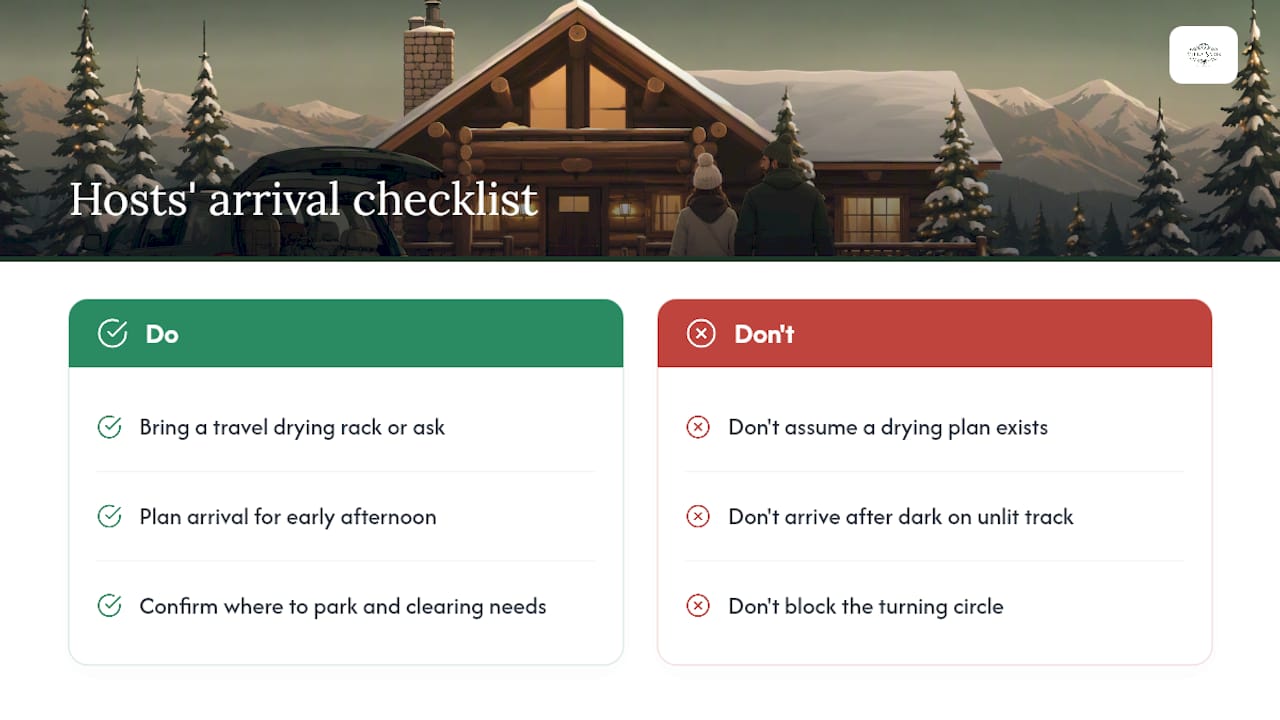
The first is wet gear. Guests frequently underestimate how much moisture accumulates after a day outdoors — boots, gloves, base layers, hats. A cabin without a clear drying plan becomes damp and uncomfortable by day two. Arriving with a small travel drying rack, or simply asking the host where to hang things, solves it entirely.
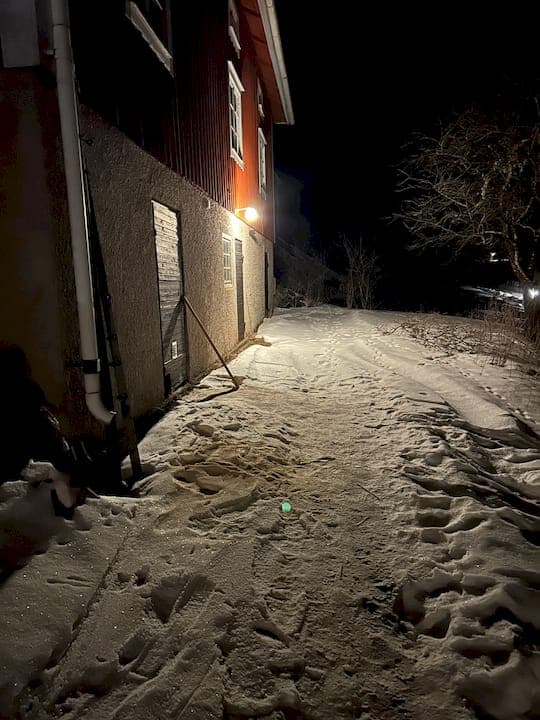
The second is daylight. Arriving after dark at an unfamiliar rural property, especially one accessed by an unlit track, adds stress that is entirely avoidable. Guests who plan their arrival for early afternoon settle in calmly, find the wood store, light the stove, and are warm before the sun sets. Those who arrive at 6 PM in January are navigating by phone torch and guessing which door is the right one.
The third is parking. A snow-covered entrance looks different from a summer photograph. Knowing in advance where to leave the car, whether the driveway needs clearing, and where not to park (blocking a turning circle, for instance) prevents an awkward start. At Villa Sakis, the grounds and access information is available before arrival — the kind of practical detail that makes the difference between a smooth first hour and a frustrating one.
Guests who confirm these three things beforehand consistently have the most settled, restorative stays. The cabin itself does the rest.
Villa Sakis: a historic log farmhouse for winter stays
Villa Sakis is a private, whole-house winter retreat in a way that most short-term rentals simply are not. Built in the 1700s and set within meadows and pine forest in Bergslagen, Sweden, the farmhouse offers heated timber rooms, a private sauna, a fully equipped self-catering kitchen, and dedicated space for drying boots and outerwear. It is the kind of property where the practical details — heating, access, linen, sauna — are already in place, so guests arrive and settle rather than troubleshoot.

-
Private sauna (wood-fired, on-site)
-
Self-catering kitchen with full equipment
-
Boot room and drying facilities
-
Direct access to forest, meadows and lake
-
Whole-house private rental for families, couples and groups
Read guest stories and seasonal dispatches in the Villa Sakis Journal, or check availability and book your winter stay directly at Villasakis.