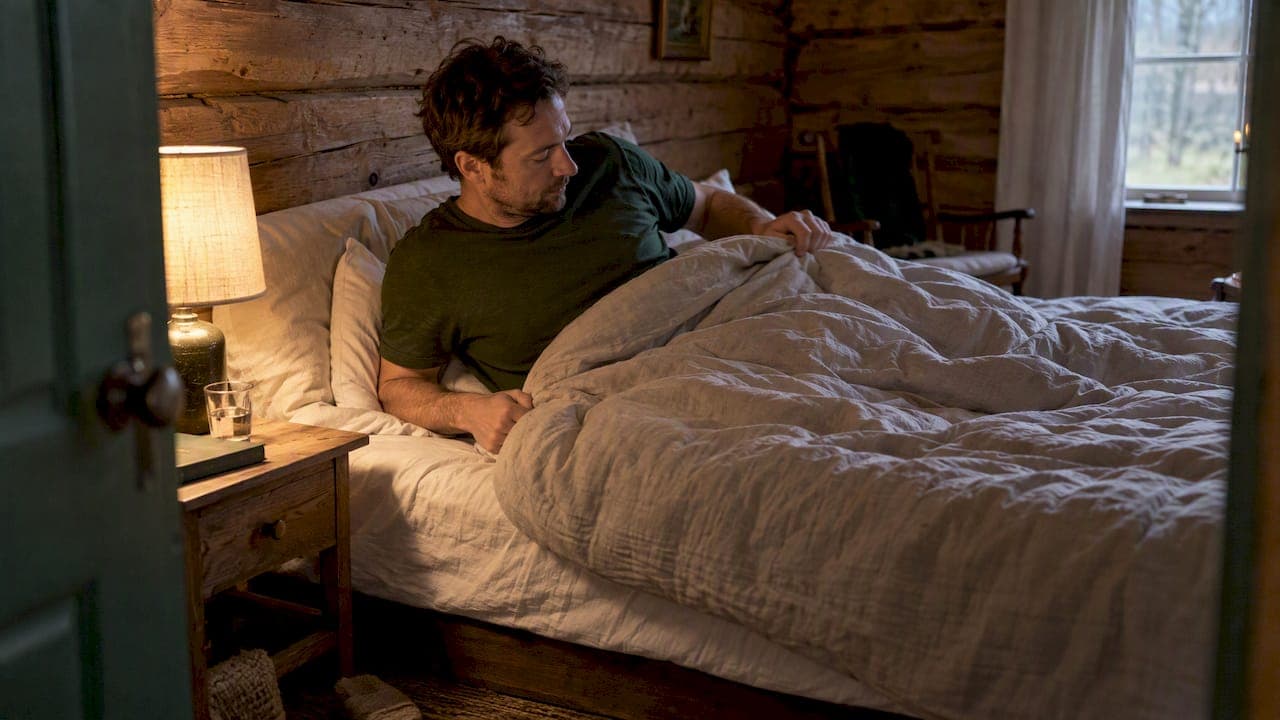
Most of us can sleep well on holiday by protecting a few simple habits rather than chasing anything complicated. Keeping a steady wake time, skipping alcohol in the hours before bed, and packing an eye mask and earplugs are the three changes that matter most. The rest, as we see it, is about trusting a slower rhythm once you arrive.
TL;DR:
- Sleeping in after a late night to compensate can push the problem into the following night, so preserve your usual morning anchor.
- For jet lag, time daylight exposure to your destination’s clock, use naps of 20 to 30 minutes, and follow travel clinic advice before taking melatonin.
- Sauna studies link use with better sleep, mood, and energy but do not prove cause; keep sessions to 15 to 20 minutes, well before bed.
- Alcohol may speed sleep onset, but avoiding it for two to three hours before bed can reduce sleep disruption later that night.
- Contact a doctor for persistent sleep trouble that affects daily life, especially with loud snoring, witnessed breathing pauses, or daytime sleepiness.
Table of Contents
- Practical sleep hygiene tips to use while on holiday
- Managing travel and jet lag: flight choices, light timing and melatonin basics
- First-night effect and ways to make a new room feel familiar
- Sauna, warm baths and holiday recovery: timing and what the evidence says
- Alcohol, caffeine and other substances: what to avoid and when
- Naps and recovery: how to use daytime sleep without spoiling the night
- Preparing a sleep-supportive room in temporary accommodation
- Bedtime routines and daily rhythm while on holiday
- When to seek help: persistent sleep problems and signs of sleep apnoea
- Christian's perspective: what guests find helpful for sleep
- A restorative stay built around better sleep
- FAQ
- Sources
Practical sleep hygiene tips to use while on holiday
A consistent wake time, even after a late night out, gives your body an anchor point that 1177 guidance treats as the simplest first step toward better rest. Oversleeping to compensate tends to push the problem into the following night instead of solving it.
A wind-down before bed can help: put devices away, dim the lights, and let your body ease down through gentle stretching or slow breathing.
- Set a device curfew before lights out.
- Dim overhead lighting and switch to lamps in the evening.
- Pack an eye mask, earplugs, and a pillowcase that smells of home.
- Adjust bedding layers so you can regulate temperature through the night.
Pro Tip: Lay out your sleep kit on the bed the moment you check in, before unpacking anything else.
Managing travel and jet lag: flight choices, light timing and melatonin basics
Jet lag responds well to timing, not willpower. The CDC Yellow Book frames light exposure as the main lever: seeking daylight at the right moments nudges your body clock toward the new time zone, while avoiding it at the wrong moments slows the drift in the wrong direction.
- Choose flights that let you land at a time when useful daylight is available, and consider a jet-lag calculator to time light exposure and any melatonin use to your route.
- Use short naps of 20 to 30 minutes to stay alert during the day rather than collapsing into a long sleep that resets nothing.
- Stay hydrated throughout the journey and keep alcohol and long daytime naps to a minimum, since both work against the adjustment.
- If using melatonin, follow travel-clinic guidance on timing rather than guessing, and treat dosage conservatively.
None of this fixes jet lag overnight. It simply gives your circadian rhythm fewer reasons to resist the new schedule.
First-night effect and ways to make a new room feel familiar
Many of us sleep lighter on the first night somewhere unfamiliar. Part of the brain stays semi-alert, scanning for anything unusual, which is a known response rather than a sign of fragile sleep. Vivid dreams in the nights that follow are often a form of catching up, nothing to worry about.
A few small moves help the room feel less foreign:
- Bring a familiar pillowcase or a cloth scented with lavender and place it on the bed as soon as you arrive.
- Seal light gaps around curtains with clothes pegs, and keep an eye mask within reach.
- Where possible, request a quieter room away from lifts, stairwells, or the street when booking.
Sauna, warm baths and holiday recovery: timing and what the evidence says
Heat before bed has a long history in Swedish routines, and recent research backs the instinct. Studies from Uppsala University found that sauna users report better sleep, mood, and energy, though the findings do not establish that sauna use caused these differences.
Timing matters more than frequency. We find it useful to finish a sauna session well before bed, giving the body time to cool and settle. Our guide to sauna and sleep timing walks through the practical steps in more detail, and our notes on Nordic sauna and cold-water routines cover a simple recovery sequence worth trying.
- Keep sessions moderate, around 15 to 20 minutes, and drink water before and after.
- Finish well before bed rather than right before lights out.
- Avoid the sauna entirely if you have been drinking.
Alcohol, caffeine and other substances: what to avoid and when
A nightcap might help you drop off faster, but 1177 guidance notes that alcohol fragments sleep later in the night, pulling you out of deeper stages just when you need them most.
- Avoid alcohol in the two to three hours before bed.
- Limit caffeine in the hours before bedtime.
- Watch hydration on travel days: both alcohol and caffeine dehydrate you, which worsens jet lag symptoms and fragments sleep further.
- Swap an evening drink for herbal tea or sparkling water with lime, something that still feels like a treat.
Naps and recovery: how to use daytime sleep without spoiling the night
- Keep naps short and take them before mid-afternoon so they can boost alertness without interfering with your night.
- After a long-haul flight, a longer nap can be reasonable, but avoid it once evening approaches.
- Set an alarm, nap somewhere reasonably dark, and treat it as a top-up rather than a replacement for proper sleep.
Preparing a sleep-supportive room in temporary accommodation
The room itself does more work than most people expect. A space that is dark, cool, and quiet solves most of what goes wrong on holiday nights.
- Ask for a room away from lifts, stairwells, or the street when you book.
- Seal light gaps with clothes pegs or a travel blackout clip, and keep earplugs and an eye mask within reach.
- Cover or turn away any bright digital clock.
- Keep the room cool and ventilated, and layer bedding so you can adjust through the night.
Pro Tip: Check the room's light and noise before unpacking: a quick scan now may help you avoid a restless first night later.
Bedtime routines and daily rhythm while on holiday
Holidays tempt us to abandon routine altogether, yet 1177 guidance points to keeping a steady wake time as an anchor for the circadian rhythm.
- Wake at roughly the same time each morning, holiday or not.
- Spend the last 60 to 90 minutes before bed in low light, away from screens, perhaps after a warm shower or earlier sauna.
- Close with a few minutes of slow, deliberate breathing.
- When social plans run late, protect the wake time rather than the bedtime: it keeps the rhythm intact even when the evening doesn't go to plan.
When to seek help: persistent sleep problems and signs of sleep apnoea
Occasional poor nights are ordinary and usually resolve on their own. 1177 guidance suggests contacting primary care or a sleep clinic when sleep trouble persists and starts affecting daily life, rather than waiting it out indefinitely.
Watch for loud snoring paired with daytime tiredness, witnessed breathing pauses, or excessive sleepiness during the day: these warrant a conversation with a doctor rather than another holiday fix. Effective treatments exist for both chronic insomnia and sleep apnoea, so there is little reason to carry the problem home unaddressed.

Christian's perspective: what guests find helpful for sleep
Guests who stay with us often mention the same few things when they talk about sleeping well: quiet mornings with nothing scheduled, an early sauna rather than a late one, and a wake time that barely shifts from the one they keep at home. We think the lesson travels well beyond any one place. If you try only one thing on your next trip, move your sauna or warm bath earlier in the evening and watch what it does to how quickly you drift off.
— Christian
A restorative stay built around better sleep
We built the farmhouse around the conditions this guide describes rather than around novelty. Our private sauna offers a place to unwind, and the timber rooms invite you to settle into the quiet.

- A private sauna to fit your own evening rhythm.
- Quiet, natural surroundings.
- Cosy timber rooms.
- A self-catering kitchen, so evenings stay unhurried.
If a few restful nights sound like what your next break is missing, you can check availability for The House and see whether the quiet suits you.
This article is general information, not a substitute for advice from a qualified doctor. Consult a qualified healthcare professional about your own circumstances before acting on anything here.
FAQ
Är det bättre att sova 3 timmar eller inget alls?
Even a short stretch of sleep gives your body some recovery, so getting some sleep is generally better than staying awake all night. 1177 guidance notes that occasional short nights are rarely harmful, since deeper, more efficient sleep the following night tends to compensate.
Varför är jag utmattad men kan inte sova?
Exhaustion without sleep often points to a mismatch between your body clock and your actual schedule, something common after travel or prolonged stress. If this pattern continues and starts affecting daily life, 1177 guidance recommends speaking with primary care rather than waiting for it to resolve on its own.
Vad är sömnstörning?
A sleep disturbance covers any pattern that disrupts normal rest, from difficulty falling asleep to frequent waking or poor-quality sleep overall. It becomes worth addressing with a doctor when it persists and begins affecting how you function during the day.
Varför sover jag så mycket?
Sleeping more than usual for a few days, especially after travel or a stretch of poor sleep, often reflects the body catching up rather than a problem in itself. If unusually long sleep continues without an obvious cause, it is worth mentioning to a doctor.
Sources
The practical tips above draw on national health guidance, recent Swedish sauna research, and travel-health recommendations, listed below for anyone who wants to read further.