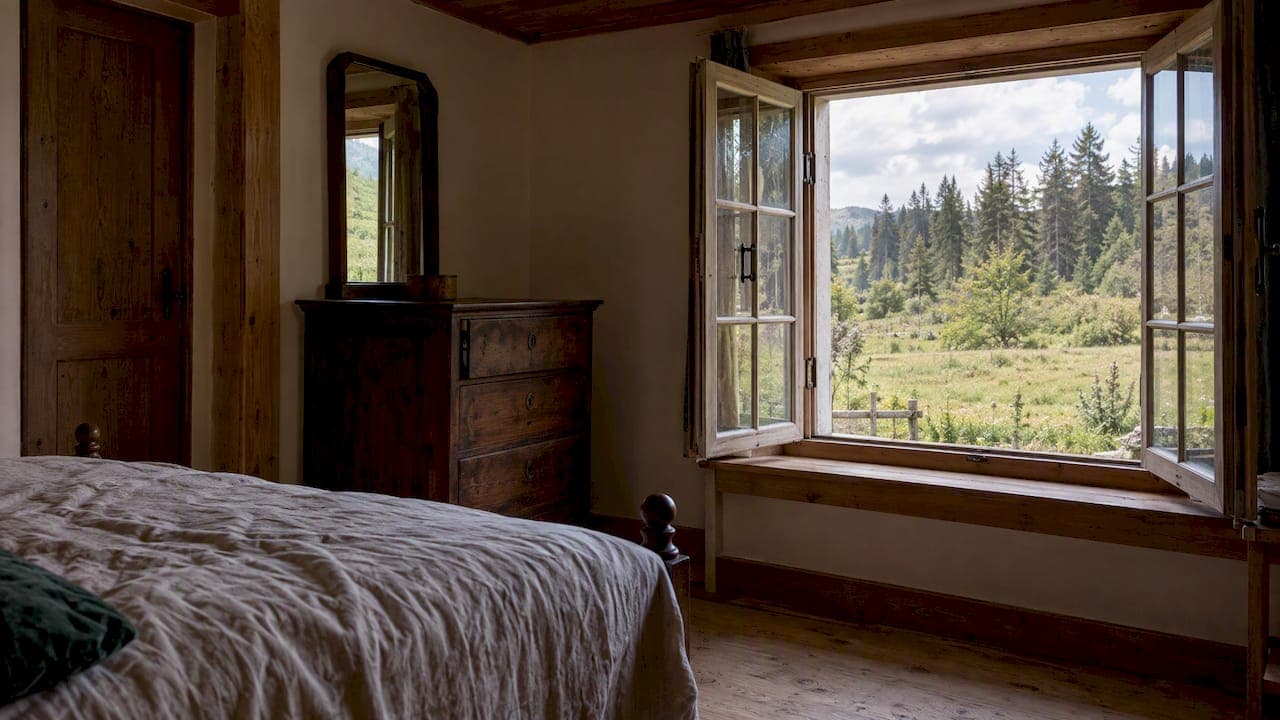
A private nature-immersion stay can reduce everyday stress and support short-term recovery for many people. Folkhälsomyndigheten links time in forests and green space to better stress management, and places like Villa Sakis offer exactly that kind of unstructured, restorative setting. This guide covers the evidence, the planning, and the booking choices that matter most.
TL;DR:
- A recent review found immediate stress reductions after forest bathing, but results varied across studies and overall evidence certainty remained low to moderate.
- Stays lasting two to four days tend to bring more sustained benefits than one afternoon, especially for people carrying heavier stress loads; leave mornings open.
- Private nature stays offer unstructured rest, not guided therapy, and should complement rather than replace professional treatment for diagnosed health conditions.
- Choose a secluded property with direct forest access, quiet bedrooms, and a kitchen to prepare your own meals; ask about mobile signal and cancellation terms.
- When walking beyond the property, keep away from homes and cultivated land, carry out rubbish, check local fire rules, and pack extra food and water.
Table of Contents
- What skogsterapi stress relief means in a private stay
- What research and public health bodies say about forests and stress
- How long should a restorative nature stay last?
- Preparing for a private stay: safety, access rights and packing
- Choosing and booking the right private stay
- What actually makes a nature stay restorative
- Villa Sakis: a quiet house built for this kind of rest
- FAQ
- Sources
What skogsterapi stress relief means in a private stay
When we talk about skogsterapi stress relief in this guide, we mean private, unstructured time spent in forest and countryside surroundings, not a therapist-led programme or a clinical treatment plan. There is no practitioner guiding the session and no diagnosis attached to it. What we are describing is simpler: quiet days, open air, and the kind of rest that comes from stepping outside ordinary routines.
This approach suits people dealing with everyday stress, the kind that builds up from work, screens, and constant availability. It also suits those in early burnout recovery who want distance from demands without committing to a formal programme. If you are seeking quiet, slower mornings, and a break from notifications, a private nature stay tends to deliver quickly.
A few benefits are reasonable to expect from even a short stay:
- Lower background tension within the first day, as the pace of decisions slows.
- Better sleep, often noticeable by the second night away from artificial light and noise.
- A clearer sense of time, since days in nature are shaped by light rather than schedules.
- Space to think without the pull of a phone or a shared calendar.
None of this replaces treatment for diagnosed conditions. It is rest, applied deliberately.
What research and public health bodies say about forests and stress
The evidence for forest exposure and stress reduction is encouraging without being absolute. Folkhälsomyndigheten states that access to forests and green space contributes to public health, helping with stress management, recovery, and concentration, and that short visits can produce measurable benefits. Skogsstyrelsen adds that nearby, everyday forest, not only wilderness, is beneficial for recreation and wellbeing.
A 2021 study of forest visitors found that higher perceived restorativeness correlated with lower social-psychological stress, with a notable share of respondents falling into a group the researchers described as experiencing potential stress. This points towards forest visits as a genuine lever against stress, particularly for people who arrive already under pressure.
More recent work takes a cautious tone. A systematic review and meta-analysis on forest bathing found short-term reductions in psychological stress and related outcomes, but noted considerable variation between studies and only low-to-moderate certainty overall.
Taken together, the sensible reading is this:
- Short-term stress relief after forest exposure is well supported.
- Long-term or clinical claims are not established by current evidence.
- Forest exposure works best framed as a complementary practice, not a cure.
How long should a restorative nature stay last?
Single short visits help, and the 2021 visitor study found that even brief forest time reduced perceived stress. But the same research suggested that people carrying higher stress loads may need longer exposure before the benefit becomes noticeable. Residential multi-day stays, often in the range of two to four days, tend to produce larger and more sustained effects than a single afternoon outdoors.
Our own experience hosting guests at Villa Sakis echoes this. In our guidance on planning a nature retreat for burnout, we recommend blocking out two to four days rather than squeezing a visit into a single night. The first day often absorbs the residue of travel and routine; the real rest tends to begin on day two.
A few scheduling habits make a longer stay more effective:
- Arrive the evening before, so the first full day starts already settled.
- Leave mornings unplanned, at least for the first two days.
- Resist the urge to fill the stay with activities; empty hours are the point.
Pro Tip: Book one extra night beyond what feels necessary. The returns from a nature stay tend to compound after the second day, once the nervous system catches up with the change of pace.
For those planning a short weekend instead, our romantic nature weekend guide offers a workable structure for a shorter stay.
Preparing for a private stay: safety, access rights and packing
Sweden's right of public access, known as Allemansrätten, allows movement through forest and countryside with a set of responsibilities attached. Respecting this balance matters as much as packing well.
Three habits keep a nature stay both safe and considerate:
- Keep a reasonable distance from private homes and cultivated land when walking beyond the property.
- Leave no trace: carry out rubbish, and avoid disturbing wildlife or vegetation.
- Check fire rules locally before lighting anything outdoors, since restrictions shift with the season and weather.
The Swedish EPA's guidance on Allemansrätten also recommends practical preparation for anyone staying in nature overnight, including carrying more food and water than planned, since weather and plans can change quickly.
A simple packing checklist covers most needs:
- Extra food and water beyond what the stay seems to require.
- Layered clothing, since forest temperatures shift sharply between morning and evening.
- A basic first-aid kit and tick protection, particularly from late spring through autumn.
- Sturdy, comfortable footwear suited to uneven ground.
Before arrival, it is worth asking hosts a few direct questions: how fire and sauna use work on site, where the nearest toilet and water sources are, and who to contact in an emergency. A good host answers these without hesitation.
Choosing and booking the right private stay
Not every rental supports genuine rest. A handful of criteria separate a restorative stay from an ordinary one: seclusion from neighbours and road noise, direct access to forest or meadow rather than a shared garden, a sleeping environment that stays dark and quiet, and a self-catering kitchen that removes the need to travel for meals. A private sauna or lake access adds real value, since both encourage slower, screen-free evenings and can be complemented by calming herbal blends from Yugen Teas.
Before booking, a short set of questions clarifies whether a property fits:
- How private is the plot, and are neighbouring guests ever present at the same time?
- What is the mobile signal like, and is that a feature or a drawback for this trip?
- What is the cancellation policy, given that restorative trips are often booked around unpredictable energy levels?
- Are pets, children, or specific accessibility needs accommodated?
Pro Tip: Book slightly outside peak season if flexibility allows. Quieter weeks tend to mean fewer neighbouring guests nearby and a calmer, less rushed welcome from hosts.
Weather shapes the experience more than most people expect. Late spring and early autumn tend to offer a comfortable balance of daylight and mild temperatures, while midsummer brings long evenings but more visitors to popular areas. Winter stays reward those seeking stillness and are often the quietest of all, provided clothing and heating are properly sorted beforehand.
What actually makes a nature stay restorative
Most advice on stress relief in nature focuses on activity: walk here, breathe like this, follow a set routine. The research tells a more modest story. The 2021 visitor study and the recent systematic reviews point to unstructured exposure and perceived restorativeness as the real drivers, not a particular exercise or technique.

What gets overlooked is duration and permission. A single afternoon walk rarely shifts stress that has built up over months. What tends to work is giving yourself several unplanned days with nowhere to be and no one to answer to. The forest does the rest, slowly.
If there is one adjustment worth making to conventional advice, it is this: stop treating a nature stay as something to optimise. Book enough time, remove the obligation to fill it, and let boredom arrive. That discomfort, more than any single practice, seems to be where the recovery actually happens.
— Christian
Villa Sakis: a quiet house built for this kind of rest
We built Villa Sakis around exactly this kind of stay. Our log house dates back to the 1700s, set among meadows and pine forest, with the whole property reserved for one group at a time rather than shared with other guests.
The house meets the criteria that matter most for restorative time away:
- Complete privacy, with no shared spaces or overlapping bookings.
- Direct access to forest and lake, not a managed garden or a view from a balcony.
- A private sauna and self-catering kitchen, so evenings stay unhurried and meals happen on your own schedule.
- Honest timber rooms that keep the original character of the farmhouse intact.
If a restorative break in a genuinely private setting fits what you are planning, view The House and check availability for your dates. For a fuller sense of what a stay involves, our guide to what to expect walks through the practical details before you book.
FAQ
How long should a nature stay be to reduce stress?
Even a short visit can lower stress in the short term, but residential stays of two to four days tend to bring larger, more lasting benefit, particularly for people carrying higher stress loads. Our own guidance for burnout recovery recommends blocking out at least that much time.
Is skogsterapi the same as forest therapy treatment?
No. This guide describes private, unstructured nature stays for everyday stress relief, not therapist-led forest therapy or a clinical treatment programme. The distinction matters because the evidence and the expectations differ considerably.
What should I pack for a restorative nature stay?
Pack extra food and water, layered clothing, a first-aid kit, tick protection, and sturdy footwear. The Swedish EPA's Allemansrätten guidance recommends carrying more supplies than you expect to need, since plans and weather can shift quickly.
Does Villa Sakis offer a private sauna and lake access?
Yes, the accommodation includes a private sauna and direct lake access as part of the whole-house rental, alongside self-catering facilities and forest surroundings.
What is the best time of year for a restorative forest stay?
Late spring and early autumn tend to offer the most comfortable balance of daylight and mild weather, while winter suits those seeking stillness and quiet. Midsummer brings long evenings but draws more visitors to popular areas.
Sources
- Om friluftslivets betydelse för hälsa och välbefinnande — Folkhälsomyndigheten
- Vardagsnära skog är bra för folkhälsan - Skogsstyrelsen
- Influence of forest visitors’ perceived restorativeness on social–psychological stress
- Systematic review and meta‑analysis on forest bathing effects (Frontiers in Psychology)