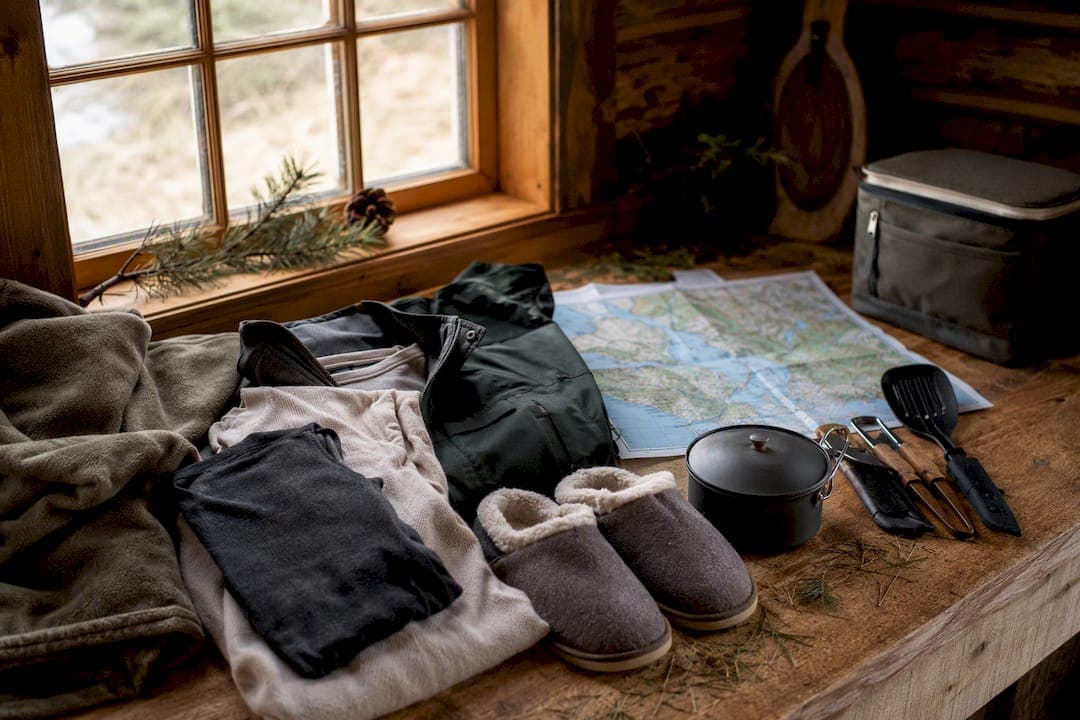
Pack these first: bedding (unless the cabin confirms otherwise), bath and dish towels, a small kitchen starter kit, a basic first-aid pouch, layered clothing, sturdy outdoor shoes, indoor slippers, a headlamp, and phone chargers. Everything else builds outward from this core.
Check the cabin's own equipment list before you pack a single item. Half the weight in most cars is duplicate kitchenware nobody needed.
- Bedding and pillowcases (if not supplied)
- Bath towels and a dish towel
- Basic first-aid kit
- Layered clothing for variable weather
- Sturdy outdoor shoes and indoor slippers
- Headlamp or torch
- Phone and device chargers
- A small kitchen starter kit (knife, pan, dishcloth)
Key Takeaways
A well-planned self-catering cabin stay depends on confirming what's provided, layering clothing for shifting weather, and building a daily meal backup into your food plan.
| Point | Details |
|---|---|
| Confirm the inventory first | Message the host about bedding, towels, and cookware before packing anything duplicate. |
| Layer clothing in three parts | Pack a moisture-wicking base, an insulating mid-layer, and a waterproof outer shell. |
| Pack a daily backup meal | Limited fridge space makes one spare meal per person per day a practical buffer. |
| Separate indoor and outdoor footwear | Bring sturdy outdoor shoes plus slippers to keep cabin floors clean. |
| Carry your own light and power | Pack a headlamp per person and a powerbank in case outlets or lighting are limited. |
Table of Contents
- Full packlista stugsemester, by category
- Meal planning and kitchen kit for a self-catering stay
- Sleeping and bathroom items cabins often skip
- How does the layering system work for a cabin trip?
- What safety and repair items should you pack?
- Entertainment and family essentials for a cabin week
- What should you check the night before you leave?
- Why layering and a meal backup actually matter
- Handdukar: packing the right towels for a cabin stay
- Editorial take: what to pack for a family self-catering stay
- Frequently asked questions
- Sources
Full packlista stugsemester, by category
A self-catering cabin rewards a little foresight. Most disappointments on a stugsemester trace back to one thing: assuming the cottage has something it doesn't. Work through categories rather than a single long list, and you'll pack faster and forget less.
Kitchen. Unless the listing states otherwise, bring a sharp knife, a frying pan, one saucepan, a cutting board, basic utensils, coffee filters if you're a coffee household, and washing-up liquid. Cabins vary enormously in what's stocked, and a concise stuga packlist built around dishcloths, dishwasher tablets and toilet paper covers most of the common gaps.
Sleeping and bathroom. Sheets, pillowcases, and bath towels top the list of things guests assume are included and often aren't. Pack toilet paper and hand soap too, particularly for remote cabins where the nearest shop is a genuine drive away.
Clothing and footwear. Layer for the weather rather than the season on the calendar. Bring outdoor shoes built for uneven ground, plus slippers so the cabin floors stay clean.
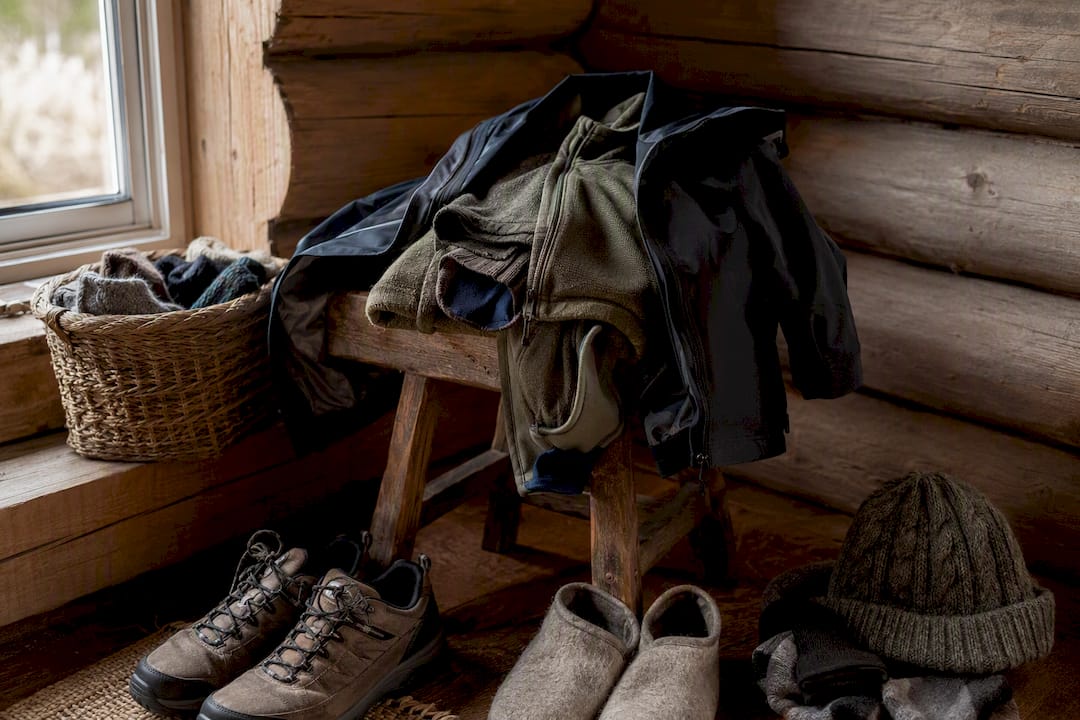
Housekeeping and waste. Bin bags, a multipurpose cleaning spray, and resealable bags for leftovers earn their small weight in the boot many times over.
Electronics and documents. Pack chargers, a powerbank, your booking confirmation, ID, and insurance card together in one folder or pouch, so nothing gets left in a drawer at home.
Meal planning and kitchen kit for a self-catering stay
Before you shop for food, find out what the cabin's kitchen can actually do. A two-ring hob and a compact fridge cook very differently to a full kitchen, so check appliance sizes and cookware inclusions while you're still able to adjust your meal plan at home.
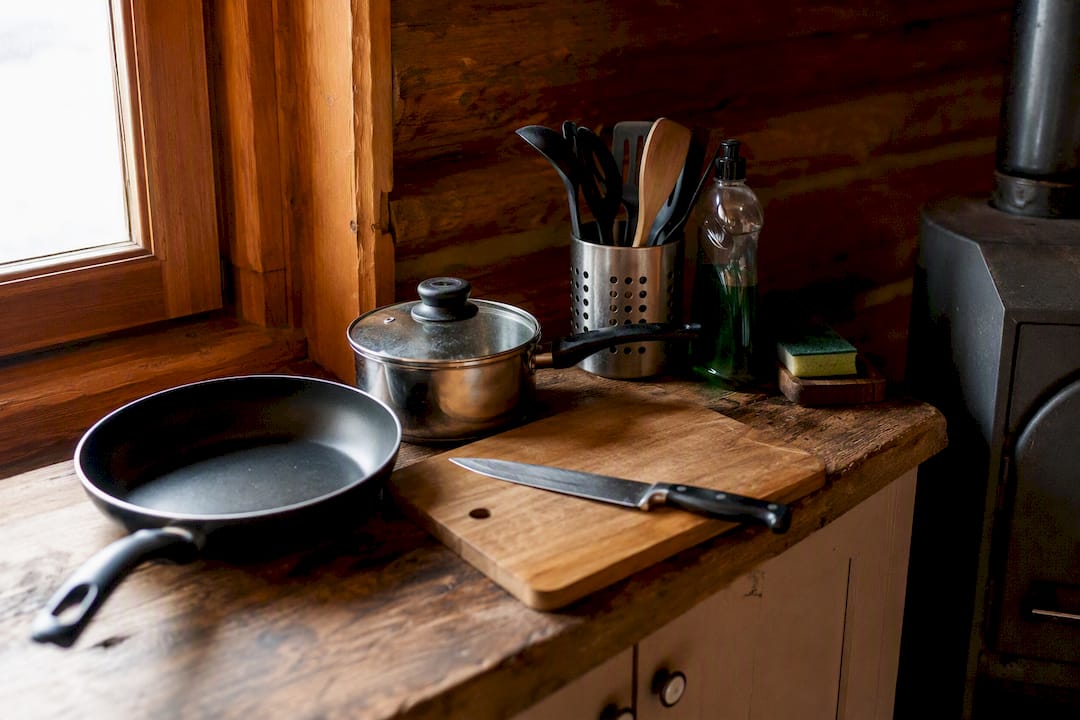
When in doubt, bring a compact kitchen kit: one good knife, a frying pan, a saucepan, a cutting board, basic utensils, dishcloths, dish soap, and a couple of dishwasher tablets. A short, standard starter set like this covers nearly every simple self-catering meal without doubling up on gear the cabin might already own.
Plan your core meals, then add one backup meal per person per day. Weather changes plans on a stugsemester more often than people expect, and a spare pasta bake or tinned soup saves a stressed evening drive to a shop that might already be shut. A cooler is worth packing even when the cabin has a fridge, since it absorbs overflow food and keeps travel snacks fresh on the way there.
Bring resealable containers, cling film, and foil for leftovers, plus an extra ice pack or two if your cool box needs topping up mid-week.
Pro Tip: Decant staples like coffee, oats, and spices into small containers before you leave. It saves space and means you're not hauling a full bag of flour home for two spoonfuls used.
Sleeping and bathroom items cabins often skip
Assume the cabin provides nothing soft or absorbent unless the booking confirms it directly. Bring sheets, pillowcases, duvet covers, and bath towels as your default, then adjust once you've heard back from the host.
Many public cabin checklists list bedding, towels, and cleaning supplies as the three items travellers most often discover missing on arrival, usually after the shops have closed.
Bathroom basics matter just as much: toilet paper, hand soap, shower gel, toothbrushes, and any sanitary items your group needs. For laundry and cleaning, pack a dish towel, dishrag, washing-up liquid, bin bags, and one small multipurpose cleaner.
- Sheets, pillowcases, duvet covers, bath towels
- Toilet paper, hand soap, shower gel
- Toothbrushes and sanitary items
- Dish towel, dishrag, washing-up liquid
- Bin bags and a small multipurpose cleaner
Message the host before you travel and ask specifically about linens and towels. A one-line question saves a car boot full of things you didn't need.
How does the layering system work for a cabin trip?
Northern weather shifts quickly, and a three-layer system for your upper body handles that better than any single heavy coat. Start with a moisture-wicking base layer, add a fleece or light down mid-layer for insulation, and finish with a reliable waterproof outer shell. For your lower body, two layers, thermal leggings under trousers, cover most conditions without bulk.
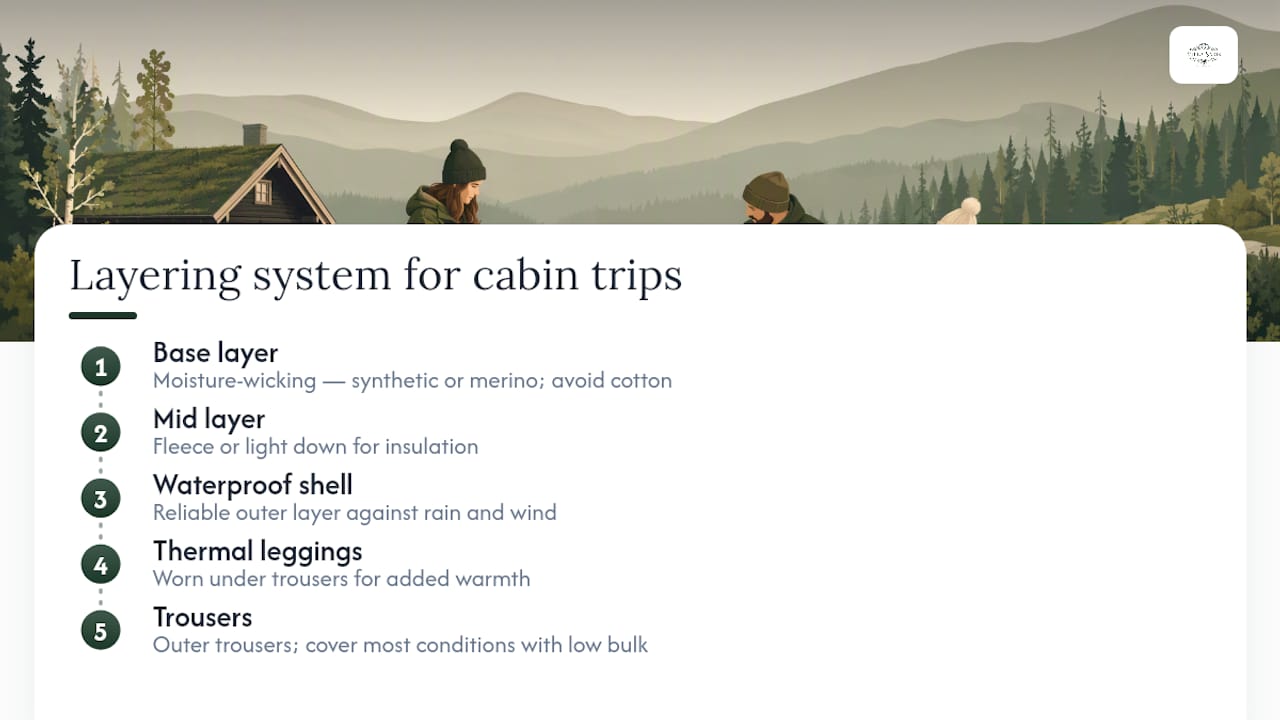
Practical counts for a long weekend include multiple base layers, a mid-layer, a waterproof outer layer, and several pairs of socks per person, since wet or muddy socks are the fastest way to end a walk early.
Footwear splits into three roles. Sturdy outdoor shoes handle uneven forest paths and wet grass. Lighter shoes suit driving and short errands. Slippers keep cabin floors clean and your feet warm on cold timber in the evening, a detail experienced cabin travellers flag as easy to forget and surprisingly high-impact.
Swap in swimwear and sun protection for summer stays; add thermals, an insulated jacket, and a warm hat once you're into shoulder season or winter.
Pro Tip: Choose synthetic or merino base layers over cotton. Cotton holds moisture against your skin and stays cold once you've worked up a sweat outdoors.
What safety and repair items should you pack?
A basic first-aid kit covers most small mishaps: plasters, a wound-cleaning spray, pain relief, and any prescription medicines your group needs for the week. Bring a headlamp per person and one lantern for the table, plus a powerbank rated around 10,000 mAh so devices don't die halfway through the stay.
Pack a multi-tool, a roll of duct tape, and spare batteries for anything battery-powered you're bringing.
Older cabins can have unreliable smoke or CO detectors. Test whichever the cabin has on arrival, and carry a small battery alarm of your own if you're at all unsure.
Bring extra bin bags and a few cleaning cloths so leaving the cabin tidy at checkout takes minutes, not an hour.
Entertainment and family essentials for a cabin week
Books, card games, a drawing pad, and a board game suited to your group size tend to outlast any screen once the evening settles in, especially somewhere signal is patchy. For younger children, pack a favourite small toy, nappies if needed, a nightlight, and child-friendly cutlery.
Outdoors, a ball, a frisbee, or binoculars for spotting wildlife round out slow afternoons.
- Books, cards, drawing pads, one board game
- Nappies, nightlight, child-friendly cutlery
- Ball, frisbee, or binoculars for outdoor play
Pro Tip: Pack a small "rain bag" of indoor activities separately, so a wet afternoon doesn't derail the whole day's plan.
What should you check the night before you leave?
Run through this the evening before departure:
- Confirm what the cabin supplies, linens, towels, cookware, cleaning products, and cross duplicates off your list.
- Check the local weather forecast and adjust your outer layers accordingly.
- Verify travel time and pack any vehicle essentials if the cabin sits somewhere remote.
- Save or print your booking confirmation, the host's contact details, and any route maps offline.
- Do a final sweep for documents, medication, your food plan, chargers, and keys.
Pro Tip: Screenshot the cabin listing's inventory page or your message thread with the host. It's the fastest way to settle an "is that included?" argument once you're already there.
Why layering and a meal backup actually matter
The three-layer clothing rule and the extra pair of socks aren't fussy advice, they're what independent packing guidance for Swedish trips consistently recommends, because weather here genuinely can shift within a single afternoon.
A daily backup meal solves a quieter problem: limited fridge space. Self-catering cabins rarely match a home kitchen's storage, and one spare meal per person removes the pressure to shop again mid-week.
Villa Sakis, a restored 18th-century farmhouse, provides a full self-catering kitchen alongside its private sauna and lake access, so guests can confirm exactly what's on hand before they travel.
Pro Tip: Ask any host directly what the kitchen includes. It's a two-minute message that prevents an hour of unnecessary packing.
Handdukar: packing the right towels for a cabin stay
Towels are one of the most commonly forgotten items on any stugsemester, and they're also one of the easiest to get wrong even when you remember them. A family of four needs more than bath towels: bring separate dish towels and cloths for the kitchen, since using a bath towel to dry dishes is a habit that spreads bacteria and leaves the kitchen smelling faintly of damp cotton by day three.
Pack at least one bath towel per person, plus a couple of hand towels for the bathroom, and two dedicated dish towels for the kitchen. If anyone in your group plans to use the sauna or swim in a nearby lake, add a separate quick-dry towel for that purpose, cotton bath towels take far longer to dry between uses and quickly turn musty in a cabin without a tumble dryer.
Confirm with the host whether towels come with the booking. Many self-catering listings supply bedding but not towels, and the common gaps identified in cabin checklists put towels near the top, right alongside dishcloths and toilet paper. If you're travelling with young children, pack one extra towel for spills and wet swimwear. It's a small addition that saves a scramble on day two when the "spare" towel is already damp on the line.
Editorial take: what to pack for a family self-catering stay
The conventional packing list treats a cabin holiday like a hotel stay with extra steps: pack clothes, pack toiletries, done. That misses the real risk, which isn't forgetting your toothbrush. It's assuming the kitchen and linen situation will sort itself out on arrival.
The families who arrive relaxed are the ones who checked the cabin's inventory before they left home, planned one backup meal a day, and packed clothing in layers rather than "outfits." Everything else on a good packlista stugsemester is detail work around those three decisions.
Where most guides overreach is entertainment. You don't need a bag of gadgets. A pack of cards and a decent book do more for a self-catering week than most people expect, particularly once the restorative pull of a slower routine takes over by the second day. Prioritise the boring logistics first: bedding, towels, a meal backup. The relaxation tends to follow on its own.
Frequently asked questions
What should be on every packlista stugsemester regardless of season? Bedding (unless confirmed provided), towels, a small kitchen kit, first-aid basics, layered clothing, a headlamp, and chargers form the non-negotiable core for any self-catering cabin stay.
Do most Swedish cabins provide bed linen and towels? It varies by listing. Many self-catering cabins supply neither, so it's worth messaging the host directly rather than assuming, as common checklist gaps show towels and linen are frequently missing.
How many socks should I pack for a weekend cabin trip? At least four pairs per person is a sensible minimum, since wet socks from outdoor activity are one of the fastest ways to cut a walk short.
What kitchen items are worth packing even if the cabin has a kitchen? A good knife, a frying pan, a saucepan, a cutting board, and dish soap cover most gaps, since cookware quality varies widely between self-catering properties.
Should I bring a cooler even if the cabin has a fridge? Yes, a cooler helps with overflow food and keeps travel snacks fresh, particularly useful if the cabin's fridge turns out smaller than expected.
Sources
- This is what you need to pack for a trip to Sweden
- Cottages & holiday homes packing list
- Packlista stugsemester - Allt du behöver ha med dig på ...
- Cabin Trip Packing List: 36 Essentials You Will Actually Use