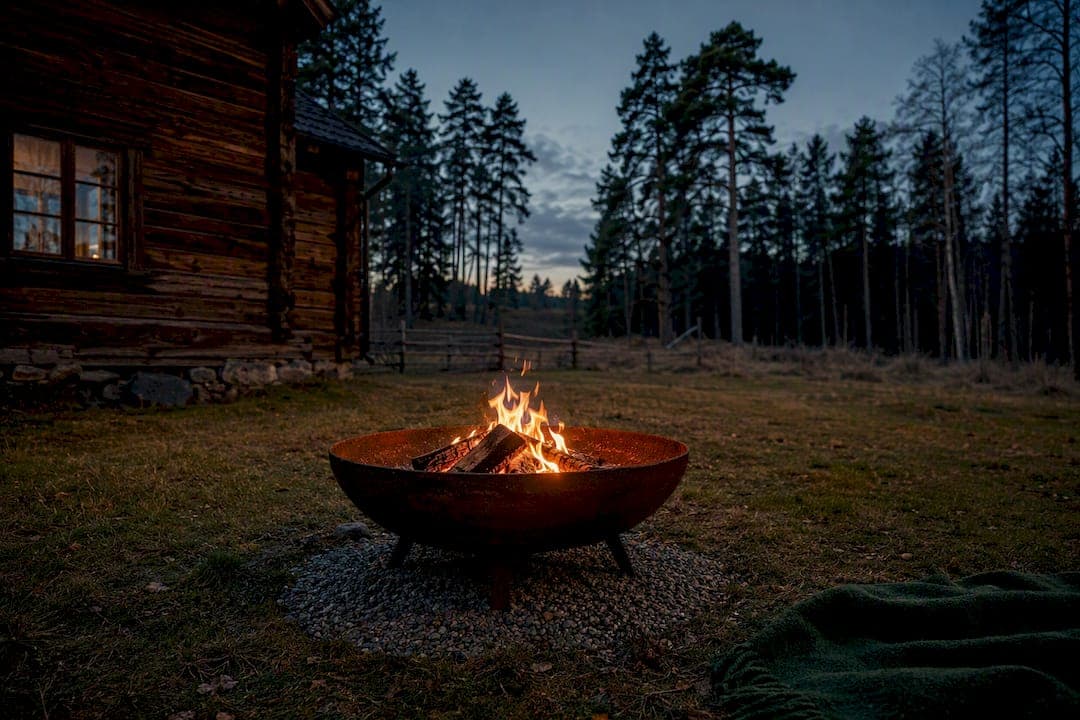
Yes, you can use an eldfat on your own land, but you carry full legal responsibility for whatever it does. Before you strike a match, do three things: check whether your municipality has an active burn ban, choose a spot well clear of buildings and vegetation, and set out a hose, buckets, or an extinguisher within reach.
TL;DR:
- Always check local burn bans before lighting an outdoor fire, as regulations can vary weekly between municipalities and regions.
- Keep at least fifteen meters distance from buildings and woodland, and use non-combustible surfaces like gravel or concrete to prevent underground embers.
- Burn only dry, seasoned hardwood such as birch, avoiding treated, painted, or waste materials that produce toxic fumes or hazardous smoke.
- Supervise the fire constantly, use small amounts of kindling, and thoroughly extinguish embers with water before leaving the site.
- Follow extra precautions for setups like decks, shared plots, or large bonfires, including certified heat mats and notifying authorities for public fires.
Table of Contents
- Quick safety checklist before lighting an eldfat på gården
- Is eldfat use allowed? checking municipal rules and burn bans
- Choosing and placing an eldfat: distances and surfaces that reduce risk
- What to burn in your eldfat, and what to leave out
- Preparing, supervising and extinguishing: the full procedure
- Special cases: decking, shared plots and organised bonfires
- How Villa Sakis manages fires on the property
- A host's responsibility and the courtesy of good neighbours
- Where to check before you light
- Sources
Quick safety checklist before lighting an eldfat på gården
Before anything else touches flame, work through this short sequence. It takes minutes and removes most of the risk that turns a quiet evening into a call to the fire brigade.
- Check the burn ban status for your municipality via its website or the Krisinformation grass and forest fire guidance, since rules shift with weather and season.
- Pick a non-combustible surface such as gravel, stone or concrete, and keep the recommended clearance from anything that burns.
- Set out your extinguishing kit — hose, buckets or a fire extinguisher — before lighting, not after.
- Stay with the fire the whole time it burns. Never walk away, even for ten minutes.
- Check the wind and your fuel. Avoid banned materials and keep smoke away from neighbours' washing lines and open windows.
Skipping any one of these steps is how a pleasant summer evening around an eldfat ends with a visit from the local räddningstjänst.
Is eldfat use allowed? checking municipal rules and burn bans
The short answer is: it depends on where you live, and it depends on the week. Burn bans, known locally as eldningsförbud, are issued by individual municipalities, sometimes with input from the länsstyrelsen, and enforced by your regional Räddningstjänsten. There is no single national switch. A ban can be active in one municipality and lifted in the next, and conditions can change within days during a dry spell.
Check these sources before every single burn, not just the first time:
- Your municipality's official website, which publishes current eldningsförbud status for its area.
- Krisinformation's grass and forest fire guidance, the national portal for hazard updates.
- The Brandrisk Ute app, which maps live fire-risk levels across Sweden using weather data.
- Länsstyrelsen guidance for region-specific rules that sit above municipal ones.
Larger or public bonfires need extra clearance. If you're planning something bigger than a family gathering, you may need to notify or apply through the police, and it's worth informing your local rescue service in advance so a passing patrol or a concerned neighbour doesn't trigger an unnecessary call-out, a point Räddningstjänsten Mälardalen makes clear in its outdoor burning guidance. Interestingly, some fixed and prepared grill sites remain usable even under a burn ban, though RTÖG's guidance on grilling during bans notes that stricter bans can withdraw even that exemption. Always check the specific level in force, not just whether a ban exists.
Choosing and placing an eldfat: distances and surfaces that reduce risk
Distance is the single biggest factor in whether a small fire stays small. A commonly cited guideline from rescue services is to keep about fifteen metres between an open fire and any building or woodland edge, adjusted upward if the wind is strong or the ground is dry, according to Räddningstjänsten Mälardalen.
Surface choice matters almost as much as distance:
- Good bases: gravel, stone slabs or bare concrete, which won't smoulder or feed a fire from below.
- Avoid: peat, moss and rich garden soil, which can hold embers underground for days and reignite unexpectedly.
- On decking or grass: use a raised stand, a heat shield or a metal protective plate underneath the eldfat.
- Overhead: keep clear of low branches, washing lines and anything that could catch a rising spark.
Municipal guidance also recommends ringing the fire site with a non-combustible border, stones or gravel work well, and wetting the surrounding ground beforehand as a preventive step, per the Myndigheten för civilt försvar.
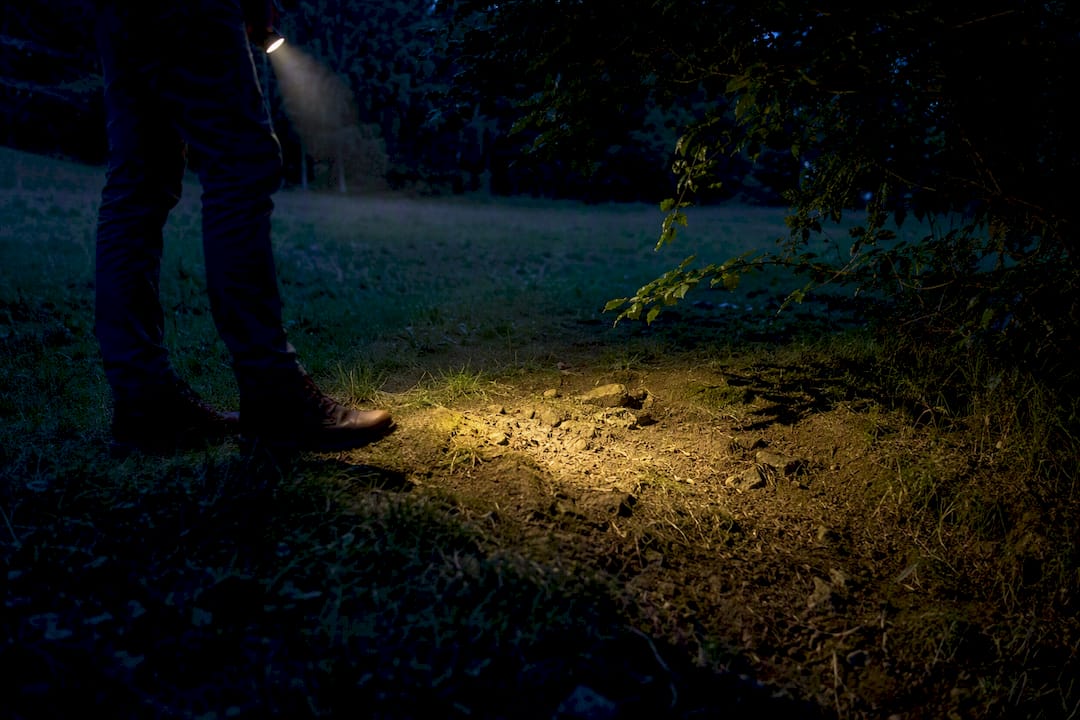
Pro Tip: Walk the perimeter of your chosen spot after dark once, before you ever light a fire there. Shadows and slopes that look harmless in daylight often reveal overhanging branches or uneven ground you'd otherwise miss.
What to burn in your eldfat, and what to leave out
Fuel choice decides how clean, controlled and predictable your fire behaves. Dry, seasoned hardwood, birch is the classic Swedish choice, burns steadily with fewer sparks and less smoke than damp or resinous wood.
Some materials should never go anywhere near your eldfat:
- Treated, painted or impregnated wood, which releases toxic fumes as it burns.
- Plastics, rubber and household waste, all of which produce hazardous smoke and residue.
- Old mattresses or upholstered furniture, a surprisingly common but dangerous choice.
- Garden and park waste, which many municipalities now require you to recycle rather than burn, following updated local rules that took effect from February 2025, as Brandskyddsforeningen explains.
If you're unsure whether something counts as garden waste under your local rules, take it to the recycling centre instead. It's rarely worth the risk of a fine, or worse, a fire that gets away from you.
Preparing, supervising and extinguishing: the full procedure
Getting a fire lit safely matters less than what you do while it burns and after it's out. Follow this sequence every time:
- Light with small amounts of dry kindling. Never use petrol, lighter fluid or other accelerants.
- Keep the fire small and manageable throughout, adding fuel gradually rather than piling it on.
- Stay with it constantly. Boden's rescue service is explicit that you must remain until the fire is completely cold, not just until the flames die down.
- Drown the embers with water, then stir the ash thoroughly to expose any remaining hot spots.
- Re-drench and stir again. One pass rarely gets everything.
- Re-check the site several hours later, and again the next morning if conditions are dry.
- Call 112 immediately if the fire spreads beyond your control.
Fire services consistently point to unattended embers as the cause behind most reignitions, which is why the repeated dousing matters more than it might seem. A fire pit that looks dead at midnight can still hold enough heat in the ash to smoulder through till dawn, particularly if the ground beneath is soil rather than stone.
Special cases: decking, shared plots and organised bonfires
Not every eldfat sits on open ground, and not every fire is a small family affair. A few situations need extra care.
- Wooden decking or altans need a certified heat mat or metal tray beneath the eldfat, plus a safe clearance from anything combustible, and the metal should cool fully before you move or cover it.
- Large public bonfires typically require a police permit, and you should notify the rescue service in advance to avoid triggering unnecessary emergency call-outs.
- Shared plots or rented properties need a clear line of responsibility. If you're hosting guests, put your fire rules in writing rather than assuming everyone shares your caution.
- Neighbours deserve a heads-up if you're planning anything larger than a routine evening fire, especially where gardens sit close together.
Our guide to Sweden's right to roam covers similar ground on checking local requirements before using outdoor space, which is worth reading alongside any fire planning.
How Villa Sakis manages fires on the property
Running a farmhouse means turning general guidance into rules a guest can actually follow. We keep ours short and specific, covering fire safety alongside the same house guidance we give for our private sauna:
- Check the current burn ban before lighting anything, every single stay.
- Supervise the fire at all times; never leave it once it's lit.
- No treated, painted or waste wood, ever, regardless of what's available.
- Extinguishing water and buckets stay at a fixed, marked spot near the grounds.
- Log the time a fire was put out and who supervised it, useful if a neighbour raises a concern later.
Our grounds and area page shows where on the property outdoor fires are appropriate, based on the same distance and surface principles covered above.
A host's responsibility and the courtesy of good neighbours
Responsibility for a fire doesn't end when the flames do, and it doesn't stop at your own boundary either. Smoke drifts, sparks travel further than you'd guess, and a neighbour's worry is reasonable even when your fire is perfectly controlled. When conditions turn dry or windy, we'd rather guests use a permanent grill or an electric patio heater than push their luck with open flame.
— Christian
Where to check before you light
Before lighting anything, check Krisinformation for national fire-risk updates, your municipality's own website for local eldningsförbud status, länsstyrelsen guidance where regional rules apply, and your regional Räddningstjänsten for specific advice on your area. Each covers a different layer of the same decision.
Sources
- Krisinformation — grass and forest fire guidance
- Brandskyddsforeningen — Eldning i trädgården
- Räddningstjänsten Mälardalen — Elda utomhus
- Boden rescue service — outdoor burning advice
- Myndigheten för civilt försvar — safety when burning in garden