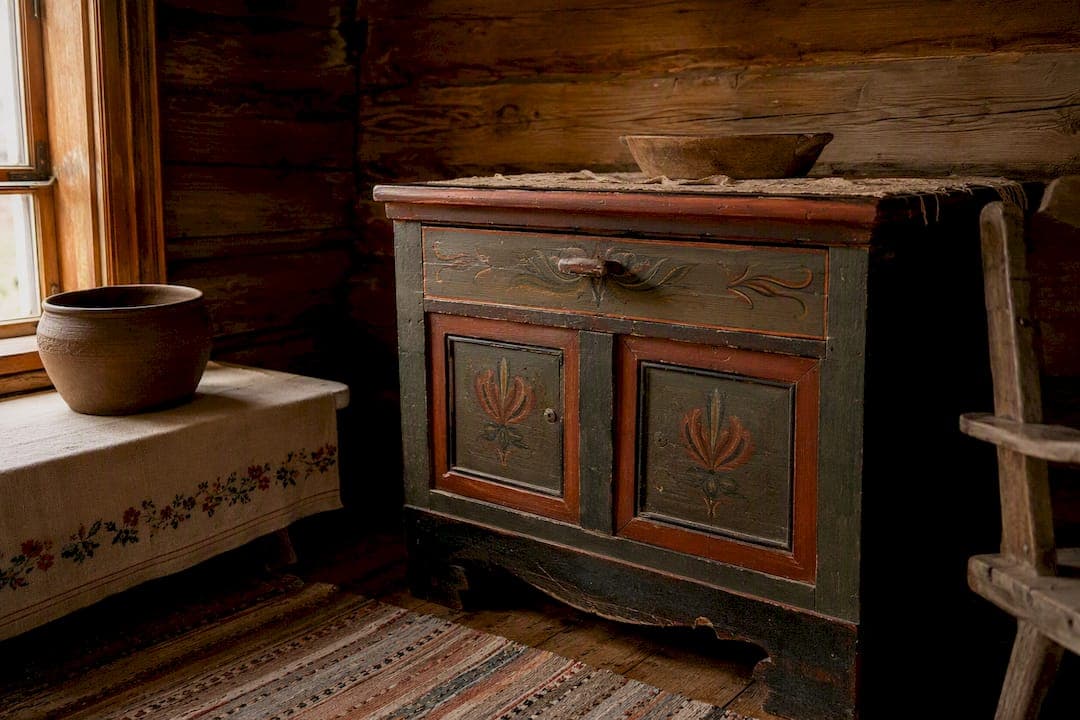
Allmogestil is the rustic, hand-crafted design language of Sweden's farming communities, roughly 1650 to 1900, built on locally made timber furniture, painted motifs and honest textiles. The fastest way to bring it into a room is to choose one authentic pigment (rödockra or kromoxidgrönt work well) and pair it with a single statement piece, a painted chest or a long bench. Everything else follows from there.
What comes next in this guide:
- The history and regional character behind the style
- The furniture, motifs and fixtures worth recognising
- A practical, room-by-room approach to using it today
- Honest advice on sourcing and restoring genuine pieces
Key Takeaways
Authentic allmogestil interiors succeed by pairing one or two genuine pigment choices and statement pieces with restrained, modern surfaces rather than saturating a room in folk pattern.
| Point | Details |
|---|---|
| Start with one focal piece | Choose a single painted chest, bench or table before adding anything else. |
| Use pigment sparingly | Apply rödockra, kromoxidgrönt or engelskt rött on one surface, not throughout the room. |
| Apply the 3–5–7 rule | Cap your room at three colours, five materials and seven patterned elements. |
| Test colour in situ | Check swatches in morning and evening light before committing to paint. |
| Ask before you restore | Query provenance, paint layers and structural condition before choosing to restore or reproduce. |
Table of Contents
- What is allmogestil? Origins, timeline and why authenticity matters
- Furniture, motifs, textiles and fixtures worth recognising
- Bringing allmogestil into a modern room
- Sourcing and restoration: what to ask before you buy
- Villa Sakis: allmogestil as a lived-in reality
- Why fewer, better choices beat a full folk makeover
- Sources
What is allmogestil? Origins, timeline and why authenticity matters
Allmoge originally described the farming population itself, ordinary rural households rather than nobility or town dwellers. Over the eighteenth and nineteenth centuries, the word gradually attached itself to the objects those households made and used: chairs, chests, textiles, tools. Allmoge as a style term spans roughly 1650 to 1900, the working lifetime of farm craft before industrial furniture arrived.
That shift, from a description of people to a description of decoration, matters because it explains why so much allmogestil furniture looks handmade rather than designed. Pieces were built on the farm or by a local joiner, painted with whatever pigment was available, and repaired rather than replaced. Regional variation was considerable. Dalarna's kurbits painting differs from the restrained geometric bands found further north, and each district had its own preferred proportions for chests and benches. The preservation movement of the late nineteenth and early twentieth centuries, tied to a broader interest in national heritage, is what turned scattered farmhouse craft into a recognised decorative vocabulary, as Swedish Wikipedia's overview of allmogestil sets out. Knowing that history helps you tell a genuine piece from a later revival copy, which matters as much for your wallet as for your walls.
Furniture, motifs, textiles and fixtures worth recognising
Genuine allmoge interiors rest on a fairly short list of recurring elements, and recognising them is the first skill worth building.
- Furniture forms. Painted chests (kistor), long refectory-style tables, simple benches, and built-in kitchen seating along a wall are the backbone pieces. Proportions tend to be generous and joints are visibly hand-cut.
- Painted motifs. Kurbits, the flowing floral and vine designs associated with Dalarna, sit alongside simpler rosettes and painted colour bands on drawer fronts and chair rails.
- Textiles. Handwoven rälsmattor (rag rugs), embroidered linen runners, and woven wall hangings soften the timber and add pattern without needing much furniture.
- Period fixtures. A kakelugn, the tiled ceramic stove, remains one of the most desirable original features. Houzz's guide to modern allmoge notes that kakelugnar were the dominant heating source in Swedish homes before central heating and are now kept largely for their character. Wide-plank wooden floors and panelled or mirrored doors (spegeldörrar) complete the architectural picture.
Pro Tip: Before buying anything, photograph the room empty and mark where daylight falls longest. Allmoge pieces are meant to catch low, warm light, and placing a painted chest in a shadowed corner wastes its best feature.
Most of these elements were made by hand and often by the farm's own occupants, which is part of why Swedish Wikipedia treats craft provenance as central to the style's later heritage status. A piece with slightly uneven brushwork or an asymmetric drawer pull isn't a flaw. It's the signature.
Bringing allmogestil into a modern room
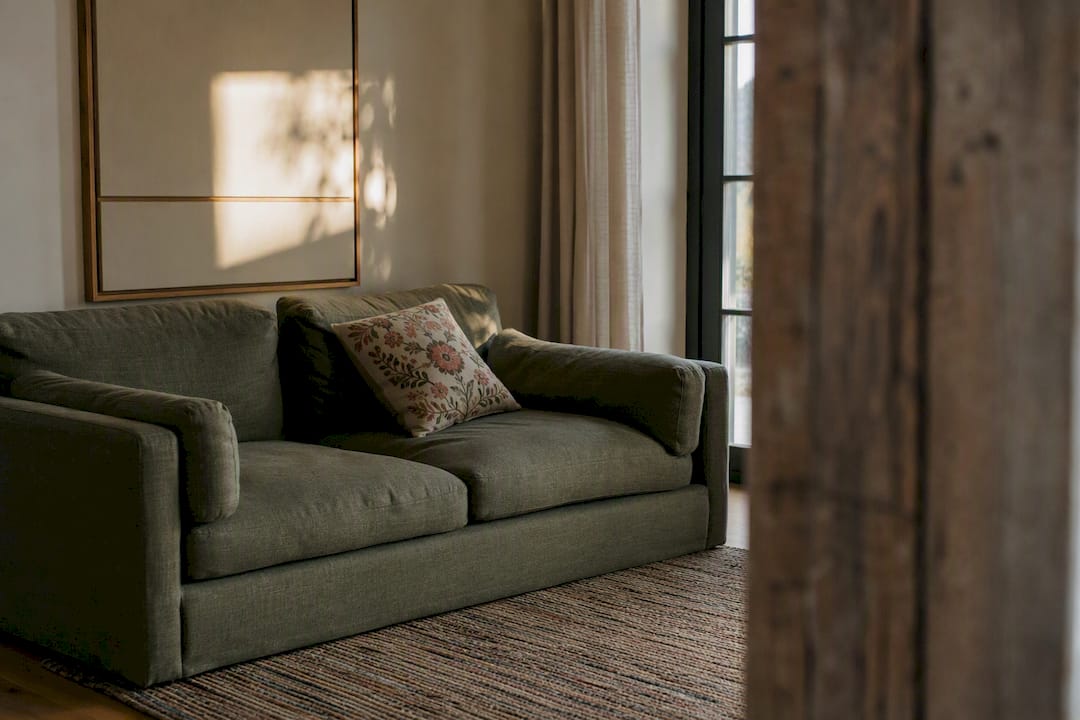
Colour is where most people start, and it's where most people also overdo it. The traditional palette relies on a small set of mineral and earth pigments: red ochre (rödockra), chromium oxide green (kromoxidgrönt), lamp black (kimrökssvart) and English red (engelskt rött), each used historically because it was durable and locally available, as detailed by Houzz. These colours were never meant to cover every surface. They were meant to punctuate timber and whitewash.
A useful discipline is the 3–5–7 rule: choose a small number of main colours, a limited variety of materials or textures, and keep patterned elements moderate across a room. It sounds arithmetic, but it stops a folk-inspired room tipping into costume drama.
- Reserve strong pigment for one wall, a door, or a single piece of furniture, not the whole room.
- Keep large surfaces (walls, ceilings, floors) in muted whites, greys or natural timber tones.
- Test paint swatches directly on site and check them morning and evening. As Polar Life Haus points out, colour perception shifts substantially with natural light and the surrounding wood tone, so a shade that looks right on a card can read very differently by a window.
- Mix in one contemporary textile, such as a flatwoven kelim, alongside handwoven Swedish pieces for a layered rather than costume-like effect, an approach Houzz's editorial guidance recommends explicitly.
Restraint is the real skill here. The same source suggests that a single well-chosen allmoge piece set against plain, modern furniture tends to read as considered rather than themed, whereas filling a room with painted furniture and kurbits can tip quickly into pastiche. In kitchens, this might mean one painted dresser against otherwise plain joinery. In a bathroom, it could be a single embroidered linen blind rather than patterned tile throughout.
Sourcing and restoration: what to ask before you buy
Genuine allmoge furniture and fixtures turn up in a handful of reliable places: regional antique fairs, specialist restoration workshops, and building conservation suppliers who deal specifically in older joinery and period doors. Auction houses with a rural or provincial focus are often a better bet than general antique dealers, since allmoge pieces rarely carry famous makers' names and get valued on craft quality instead.
Before buying, ask direct questions:
- What's the provenance? Ask where the piece came from and whether any documentation exists, even informal family history.
- How many paint layers are there? A piece repainted several times may have an earlier, more valuable scheme underneath, worth investigating before any new work begins.
- Is the structure sound? Check joints, drawer runners and any woodworm history separately from the surface finish.
- Restore or reproduce? Specialist joiners and conservators can advise, as Allmoge sets out, whether an original surface should be preserved as-is or whether a faithful reproduction serves the room better. Heavily overpainted, purely functional furniture is often a reasonable candidate for careful repainting to a documented earlier scheme, while rare or architecturally fixed pieces usually deserve conservation instead.
Kakelugnar deserve particular care. A working stove needs proper flue servicing before use, and a decorative-only stove can often be retained for its visual weight even where a home has since moved to modern heating.
Villa Sakis: allmogestil as a lived-in reality
Villa Sakis offers a working example rather than a styled photoshoot. The house dates from the 1700s, and its timber rooms have been cared for through generations rather than restored to a showroom finish, which is precisely the difference between allmogestil and a themed interior.
The lesson Villa Sakis offers isn't a shopping list. It's proportion: one strong palette choice, one focal piece of furniture, and a great deal of restraint around both. Original timber panelling is left to speak for itself, period details are preserved rather than replaced, and colour is used sparingly against plain wood.
Readers wanting to see how these principles hold up in a genuinely preserved farmhouse, rather than a recreation, can view the house's rooms and features directly.
Why fewer, better choices beat a full folk makeover
The conventional advice on allmogestil tends to treat it as a shopping exercise: buy the painted chest, add the rag rug, hang the embroidered runner, done. That advice undersells the actual discipline involved. What separates a considered allmoge room from a costume version isn't how many folk objects it contains but how much restraint surrounds them.
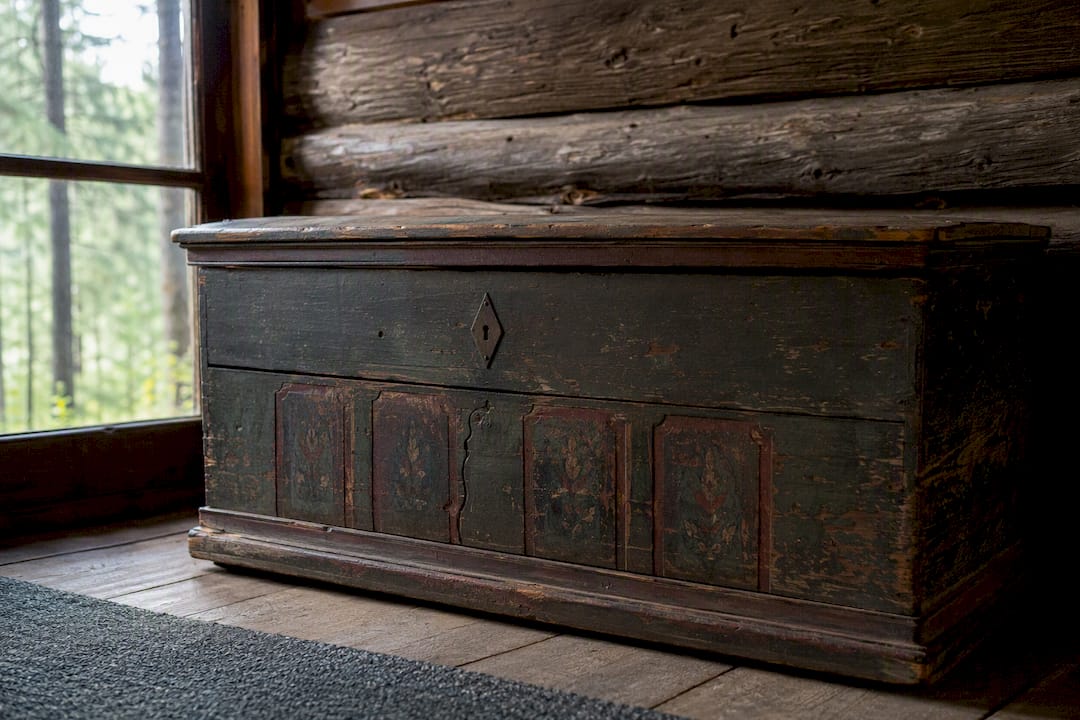
Readers restoring an older house often assume more original material equals more authenticity. Sometimes the opposite is true. A single well-documented piece, correctly conserved, tells a more honest story than five reproduction pieces crowded into the same room. Prioritise provenance and condition over volume, and treat colour as punctuation rather than wallpaper.
If there's one thing worth doing differently from most guides, it's this: decide on your one focal piece and your one pigment before you buy anything else. Everything in this guide, from the 3–5–7 rule to the sourcing questions, exists to protect that single decision from being diluted by enthusiasm.
Sources
- allmoge — Wiktionary
- Älskade allmoge: En alltigenom modern stil som passar alla hem — Houzz
- Allmogestil — Swedish Wikipedia